
Malenadu Food
Malenadu food is the everyday cooking of the rain-fed hill country of the Western Ghats in Karnataka. It is built on rice, coconut, sour kokum, sharp black pepper, sweet joni bella and ghee, with greens picked from the backyard and the forest edge. This guide explains what makes Malenadu food different, what people eat through the day and the year and what to keep in your pantry.
On this page
What is Malenadu food?
Malenadu food is home cooking from the hilly, forested belt of Karnataka where the monsoon is long and heavy. Think of Shivamogga, Chikkamagaluru, Uttara Kannada, Kodagu and the hill taluks of Hassan. Most families here have grown their own rice, areca nut, pepper, coconut and bananas for generations, so the kitchen follows the farm.
If you are new to the region itself, our page on Malenadu in Karnataka explains the name and where it lies. The list of districts and taluks that make up Malenadu shows how wide the belt is. Across all of it, Malenadu food shares a few habits: it is light on oil, fond of sour and peppery tastes and always cooked with what the season gives.
Malenadu food is not restaurant food. You rarely find it on a hotel menu outside the region, because many dishes depend on a leaf, a fruit or a shoot that grows only in the wet months. That is also why it tastes so different from the Bengaluru plate most people know.
What makes Malenadu cuisine different?
Malenadu cuisine stands apart because of seven things: rice, coconut, gentle souring, pepper heat, jaggery, ghee and forest produce. None of these is rare on its own. What makes it Malenadu food is how they come together on one banana leaf.
- Rice at the centre. Rice is eaten at lunch and dinner. Rice flour or soaked rice turns into breakfast as rotti, dose and kadubu (steamed rice dumplings). Ragi is eaten too, but rice is the base.
- Coconut in almost everything. Fresh grated coconut is ground into gravies, sprinkled over palya (a dry stir-fried vegetable) and pressed for oil. In Malenadu food, coconut softens sourness and heat.
- Souring with kokum and vate huli. Tamarind is used, but many homes reach first for murugalu (dried kokum rind) or vate huli (dried monkey jack fruit). These give a fruity, clean sourness.
- Pepper heat. Black pepper grows on the shade trees of almost every thota (garden plantation). Older Malenadu food takes its heat from pepper and from tiny gandhari menasu (bird eye chilli) rather than from heaps of red chilli powder.
- Jaggery and joni bella. A little bella (jaggery) goes into saaru, huli and gojju (a sweet, sour and spicy relish) to round off the sour. Joni bella is the runny, liquid jaggery that Malenadu families pour over dose and stir into payasa.
- Ghee on hot rice. The first handful of rice at lunch is often mixed with a spoon of ghee and a little saaru or tambuli.
- Greens and forest produce. Bamboo shoot (kalale), wild mushrooms (anabe), raw and ripe jackfruit, colocasia leaves for pathrode and appe midi (small, sharp wild tender mangoes for pickle) all come from the land around the house.
Kokum deserves a special word. The fruit grows on the windward slopes of the Ghats. The ICAR Indian Institute of Spices Research notes that it ripens between March and May and that its dried rind is used as a souring agent. In Malenadu food that rind goes into saaru, gojju and buttermilk drinks through the year.
From the malenadu pantry
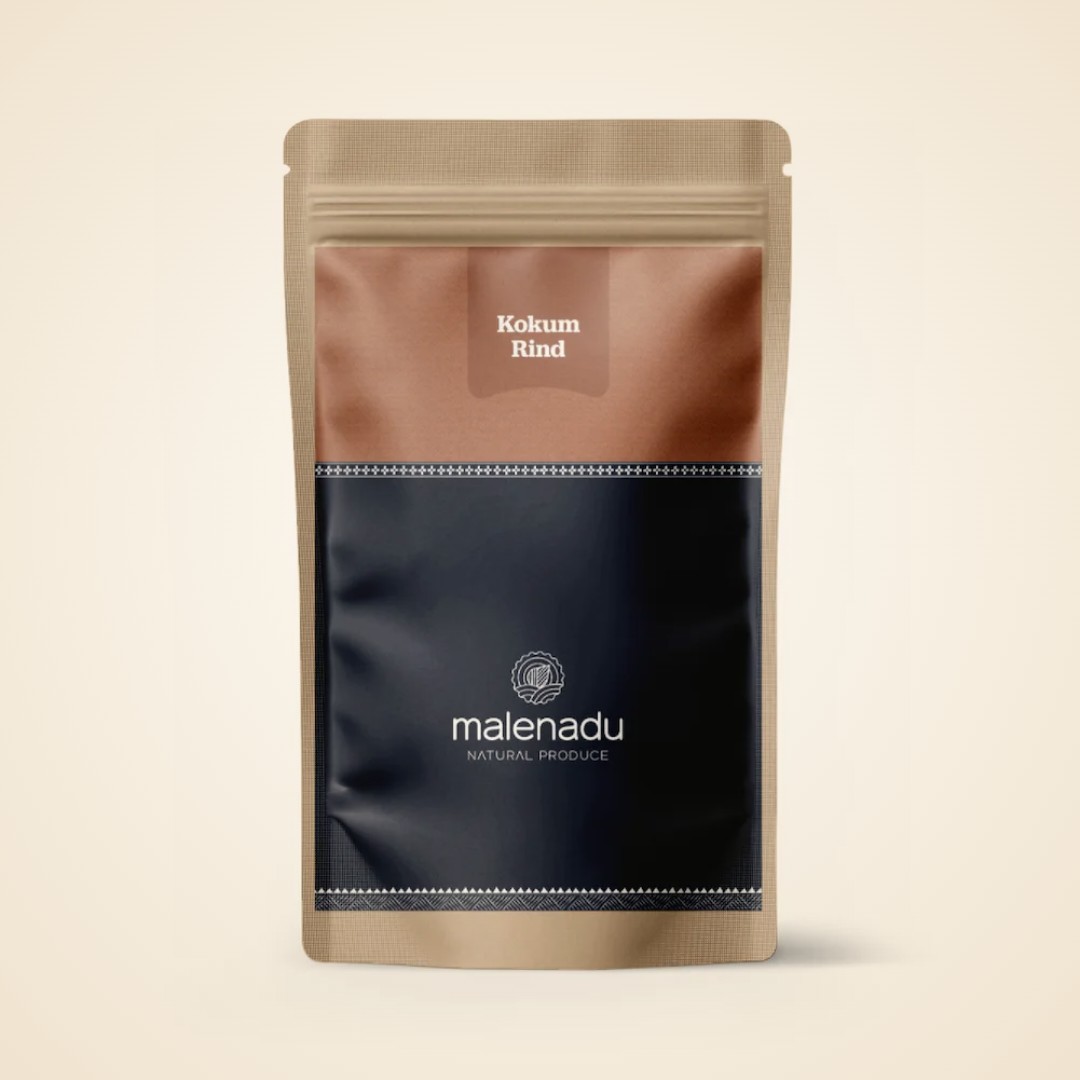
Our kokum rind is sun dried from fruit grown in Malenadu. Soak a few pieces in warm water and you have the souring base for saaru, gojju or a cooling summer drink.
Vate huli is the other sour you will meet in Uttara Kannada and Shivamogga homes. It is sliced and dried monkey jack fruit with a deeper, slightly fruity tang. Our monkey jack powder is the ground form, handy when you want that taste without soaking whole slices.
What does a typical day of Malenadu food look like?
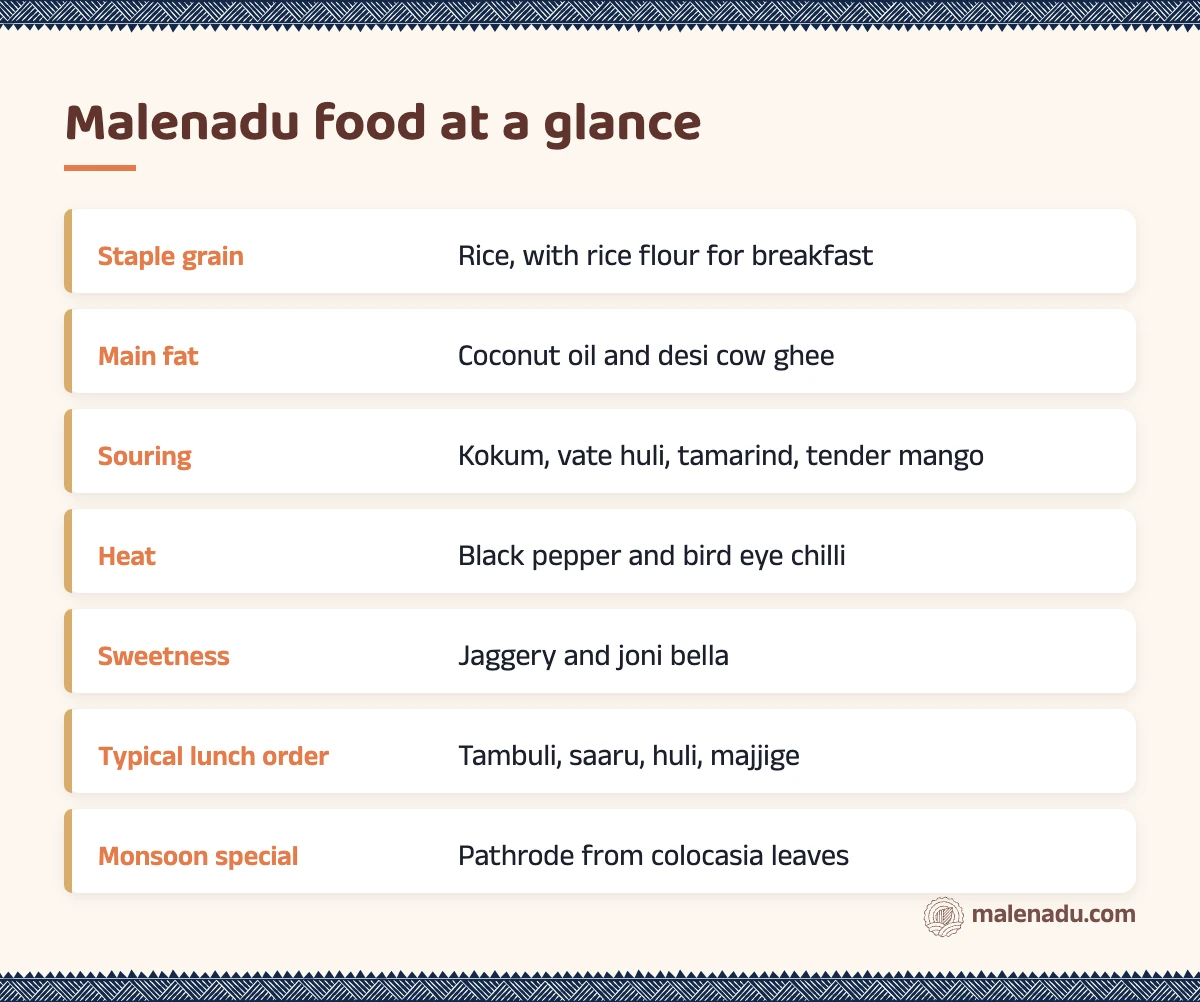
A typical day of Malenadu food starts with a rice-based breakfast, moves to a long rice lunch in courses and ends with a light dinner. In farming homes the evening also brings tea or coffee with a snack. Here is how it usually runs.
What is a Malenadu breakfast?
A Malenadu breakfast is almost always made from rice. The four you will see most often are below, served with coconut chutney, a spoon of ghee, butter or joni bella.
- Akki rotti: a thin flatbread of rice flour, often mixed with grated coconut, chopped onion or dill, patted out by hand and roasted on a griddle.
- Neer dose: a soft, lacy dose made from a thin, unfermented batter of soaked rice. The name means “water dosa”, because the batter is as thin as water.
- Kadubu: steamed rice dumplings or cakes, sometimes steamed in leaves. Hot kadubu with coconut chutney and a little ghee is a classic.
- Sihi dose: a sweet dose made with jaggery in the batter, eaten plain or with butter.
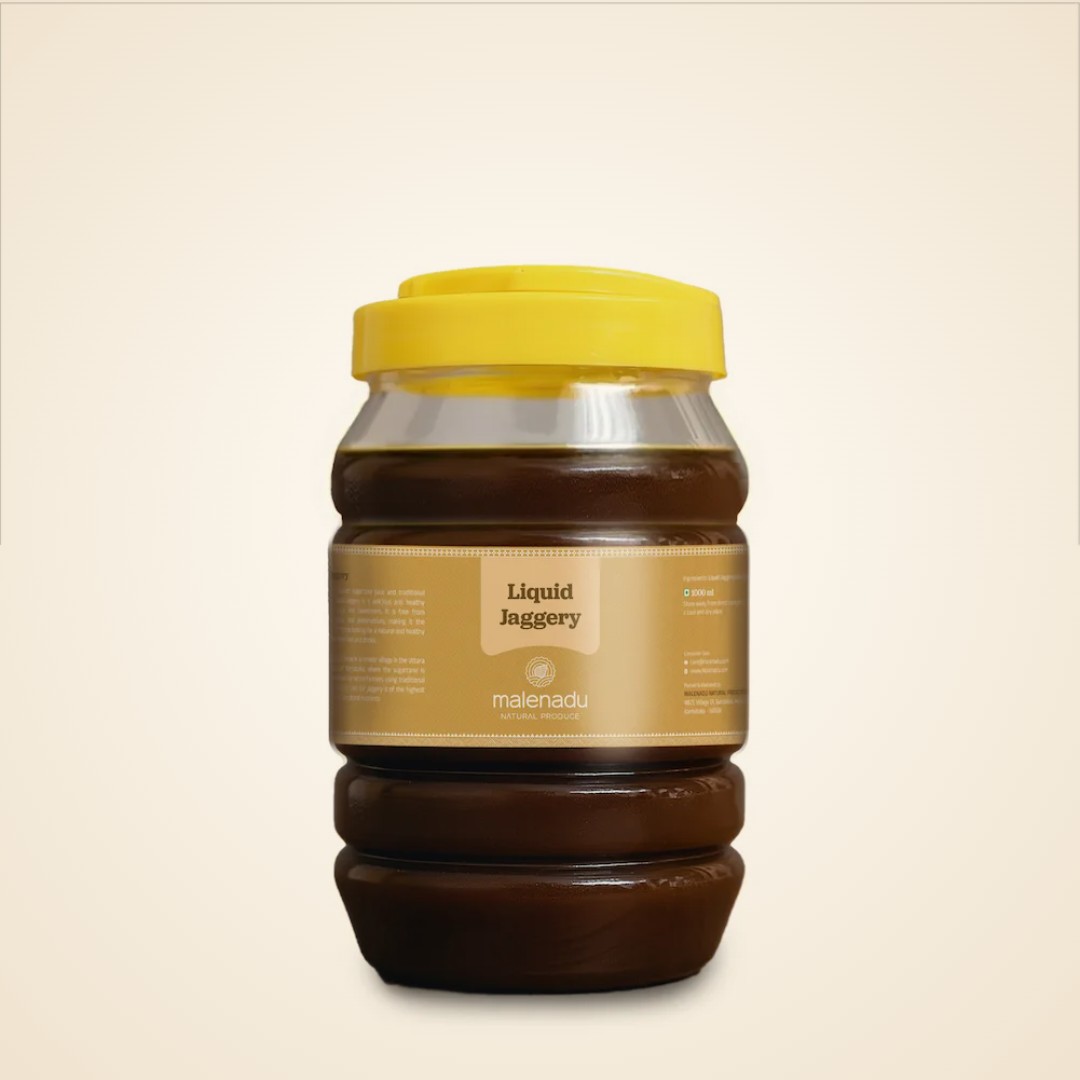
From the malenadu pantry
Joni bella is how most Malenadu children first meet neer dose. Pour a little of our liquid jaggery on a hot dose with a spoon of grated coconut and you have the simplest Malenadu breakfast there is.
What is served at a Malenadu lunch?
Lunch is the big meal of Malenadu food and it is eaten in courses with rice. A traditional order looks like this, though every family has its own habits.
- Rice with ghee and tambuli. Tambuli is a cool, raw curry of ground greens or spices with coconut and curd or buttermilk. It is often the first course.
- Saaru. A thin, peppery rasam. It may be made with dal, tomato, kokum or tender mango.
- Huli. A thicker curry of vegetables and dal, similar to sambar, ground with coconut and spices.
- Palya. A dry vegetable side dish, finished with grated coconut.
- Majjige. Buttermilk or curd with rice to end the meal.
Pickles made from appe midi, a crisp happala (papad) of jackfruit or rice and a gojju often sit at the side of the leaf. On festival days a payasa comes in the middle of the meal.
What do people eat in the evening?
Evening is for tea or coffee with a snack. Dinner is lighter than lunch. Snacks change with the season: fried jackfruit chips, kodubale, rice happala, a plate of avalakki (beaten rice) or leftover kadubu fried in a little oil. Dinner is often rice with saaru and majjige or another round of rotti.
How does Malenadu food change with the seasons?
Malenadu food changes sharply with the seasons, because so much of it comes straight from the garden and the forest. The monsoon brings leaves and shoots. Summer brings jackfruit and mangoes, while winter brings fresh jaggery. The table below is a simple food calendar.
| Season | What you will find on the plate | Why |
|---|---|---|
| Monsoon (June to September) | Pathrode, kesuvina gojju, bamboo shoot palya, wild mushroom saaru, hot saaru with pepper | Colocasia, bamboo and mushrooms come up with the rain |
| After the rains | Fresh greens, tambuli of many kinds, banana stem and banana flower palya | Gardens recover and greens are tender |
| Winter | Joni bella with dose, jaggery payasa, holige | Sugarcane is crushed and fresh liquid jaggery is boiled |
| Summer | Jackfruit in every form, appe midi pickle, kokum saaru and kokum juice, happala drying in the sun | Jackfruit, mango and kokum ripen in the heat |
Pathrode is the monsoon dish everyone waits for. Colocasia leaves (kesuvina ele) are spread with a paste of ground rice, coconut, spices, tamarind and jaggery, rolled, steamed and then sliced. Kesuvina gojju uses the same leaves cooked into a sweet and sour relish.
Summer is jackfruit time. Raw jackfruit goes into palya and happala. Ripe jackfruit goes into kadubu, dose and payasa. Summer is also when tender mangoes are pickled whole and when kokum rinds are dried for the year.
Local tip
Colocasia leaves can make the throat itch if they are not cooked with enough sour. That is why Malenadu food always pairs them with tamarind or kokum and cooks the leaves well.
How do Malenadu dishes differ from region to region?
Malenadu dishes change as you move across the hills, from the vegetarian Havyaka kitchens of Uttara Kannada to the pork curries of Kodagu. The core of Malenadu food (rice, coconut, sour and pepper) stays the same. What changes is the community, the crops and how much meat is cooked.
Uttara Kannada and Havyaka cooking
Havyaka cooking in Uttara Kannada and parts of Shivamogga is vegetarian and careful. Many traditional Havyaka homes cook without onion and garlic, so flavour comes from coconut, ghee, cumin, pepper, kokum and vate huli. Tambuli of a dozen kinds, appe huli (a thin sour saaru of tender mango) and dishes with joni bella are typical.
Shivamogga and Chikkamagaluru
In the Shivamogga and Chikkamagaluru hills you will find akki rotti, kadubu, kesuvina gojju and bamboo shoot palya in many homes. Coffee estates in Chikkamagaluru add a strong cup to every meal. Malenadu food in these districts also includes chicken, mutton and fish curries with plenty of pepper and coconut.
Kodagu
Kodagu (Coorg) has its own Kodava kitchen. Its most famous dish is pandi curry, a dark and peppery pork curry. Karnataka Tourism describes pandi curry as a signature dish served with rice or akki rotti. Kadambuttu (steamed rice balls), bamboo shoot curry and many dishes soured with kachampuli (a dark vinegar made from a Garcinia fruit) are typical of Kodava homes.
Hassan and Sakleshpur
The hill taluks of Hassan, such as Sakleshpur, sit among coffee and pepper estates. Malenadu food here meets the food of the plains: akki rotti and kadubu, but also more ragi mudde. Pepper from the estates goes into saaru and meat curries.
What is in a Malenadu kitchen pantry?
A Malenadu kitchen pantry holds a short list of things that do most of the work: a souring agent, pepper, jaggery, ghee, coconut oil and a few spices. With these you can cook most Malenadu food in any city. Here is what to stock and what each one does.
| Pantry item | Kannada name | What it does in Malenadu food |
|---|---|---|
| Kokum rind | murugalu | Clean, fruity sour for saaru, gojju and drinks |
| Black pepper | menasu | Main source of heat in saaru and meat curries |
| Liquid jaggery | joni bella | Sweetness for dose, payasa and to balance sour dishes |
| Desi cow ghee | tuppa | On hot rice, in tempering, in sweets |
| Wood pressed coconut oil | tengina enne | Everyday cooking oil for tempering and frying |
| Monkey jack powder | vate huli | Deeper, fruity sour for gojju and saaru |
| Turmeric powder | arishina | Colour and earthiness in huli and palya |
| Bird eye chilli | gandhari menasu | Sharp, fresh heat in chutneys and tambuli |
| Cardamom | elakki | Flavour for payasa and festival sweets |
| Rice and rice flour | akki, akki hittu | Rotti, dose, kadubu and every meal |
Not sure what a word means? Our guide to spice and ingredient names in Kannada gives each item in English, Kannada and Hindi. Of everything in the table, ghee (tuppa) is the one item no Malenadu kitchen likes to run out of.
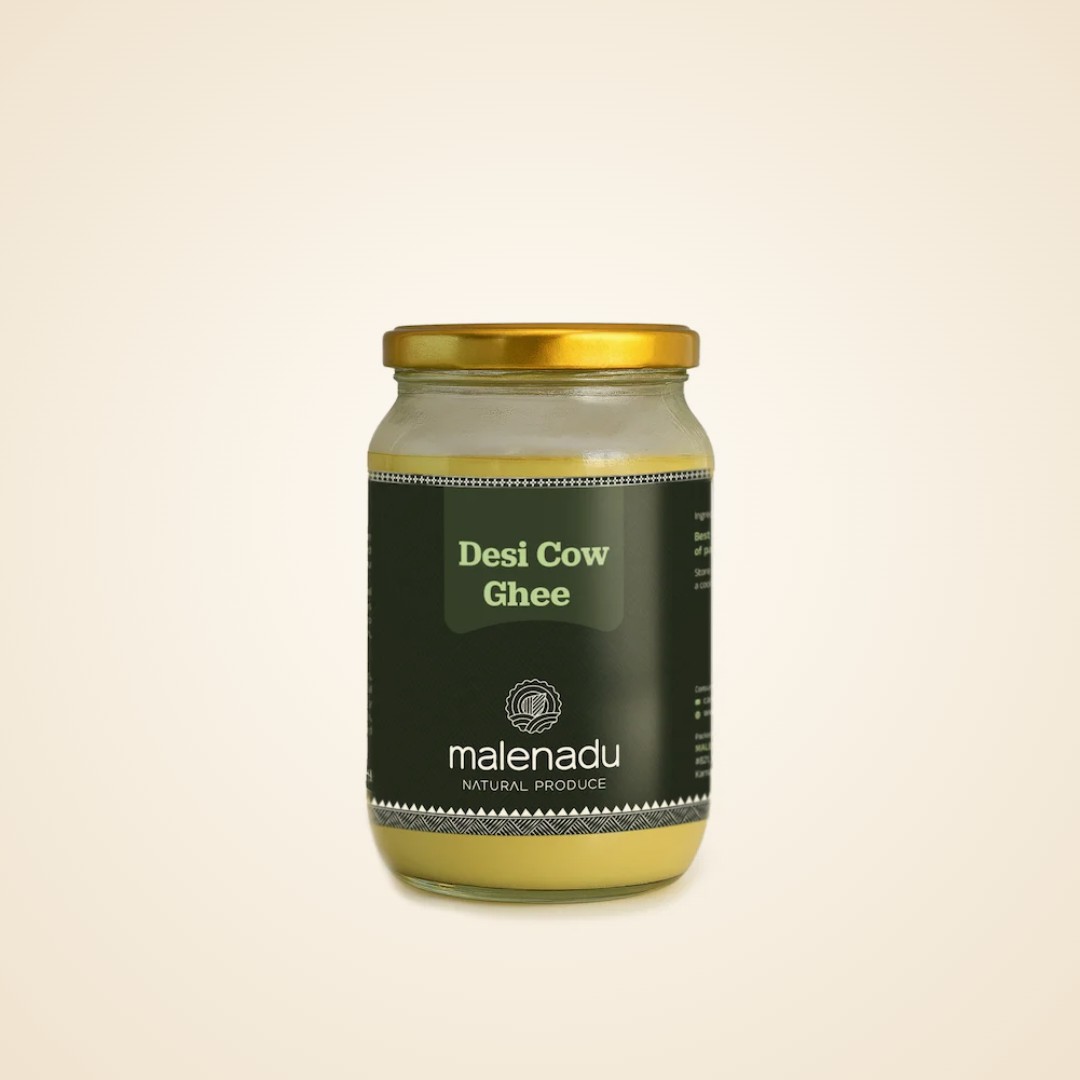
From the malenadu pantry
Ghee on hot rice is the first taste of a Malenadu lunch. Our desi cow ghee is hand churned by farmer families from the milk of desi breeds, including Malenadu Gidda.
Which sweets are made for festivals in Malenadu homes?
Festival sweets in Malenadu homes are made with jaggery, coconut, rice flour and ghee. Sugar has crept into Malenadu food, but the older recipes use bella or joni bella. Three sweets turn up again and again.
- Holige (obbattu): a thin flatbread stuffed with a filling of chana dal or coconut cooked with jaggery, roasted and served with ghee or milk.
- Kajjaya: a fried sweet of rice flour and jaggery, made at Deepavali in many Malenadu homes.
- Payasa with joni bella: a pudding of rice, wheat, vermicelli or ripe jackfruit, cooked in coconut milk or milk and sweetened with liquid jaggery and cardamom.
Payasa sweetened with joni bella has a darker colour and a deeper, slightly caramel taste than payasa made with sugar. Many cooks add it at the end, off the heat, so the milk does not split.
Which Malenadu recipes should you cook first?
Start with simple Malenadu recipes that use pantry items and teach you the balance of sour, pepper and sweet. Each of the guides below explains one dish or topic in full.
- Kokum saaru: the everyday sour, peppery rasam of Uttara Kannada homes. Our kokum saaru recipe shows how to soak the rind, balance it with jaggery and temper it in ghee.
- Menthya tambuli: a cool, mild curry of roasted fenugreek seeds, coconut and buttermilk, eaten with the first course of rice. Read the menthya tambuli guide.
- Kara kadubu: spiced steamed rice dumplings for breakfast or tea time. See the kara kadubu recipe.
- Halasina kadubu: sweet jackfruit cakes steamed in leaves in the summer. The halasina kadubu recipe walks through it.
- Ingredient names: a bilingual reference so you can shop and cook with confidence.
These four dishes cover breakfast, the first course of lunch, the saaru course and a seasonal sweet. Together they give you a fair picture of Malenadu food without any special equipment.
How can you cook Malenadu style in a city kitchen?
You can cook Malenadu style in a city kitchen with a mixie, a heavy pan and a few pantry items. The trick is to keep the balance of Malenadu food: sour, then pepper, then a touch of sweet, finished with coconut or ghee. Here are some simple rules.
- Use kokum when a recipe says sour. Soak the rind in warm water and use the water. It is cleaner than tamarind for thin saaru.
- Crush pepper fresh. Pound it in a mortar or pulse it once in the mixie. Ready ground pepper loses its sharpness quickly.
- Add jaggery in small amounts. A teaspoon is often enough. It should round off the sour, not make the dish sweet.
- Temper in ghee or coconut oil. Mustard, cumin, dry red chilli, curry leaves and a pinch of hing are the usual tempering.
- Grind coconut fresh. Frozen grated coconut works well if fresh is hard to find.
Local tip
If you can only buy three things, buy kokum rind, black pepper and joni bella. With rice, dal and coconut, these three let you cook saaru, tambuli and a sweet the Malenadu way.
Malenadu food is also forgiving. If you cannot find colocasia leaves or bamboo shoot, cook the pantry dishes first and save the forest dishes for a trip to the hills in the rains.
Where should you go next?
The best way into Malenadu food is to cook one dish this week. Start with kokum saaru and rice, then try a tambuli and a kadubu. If you would like to cook with the same ingredients Malenadu farmers grow, browse our spices, ghee, jaggery and kokum in the shop below.
Bring Malenadu home
Grown and made by Malenadu farmer families, packed by malenadu, a farmer owned producer company in Honnavar.
-
17% OFF
Kokum Rind
Original price was: ₹240.₹200Current price is: ₹200. -
14% OFF
Liquid Jaggery
Original price was: ₹349.₹299Current price is: ₹299. -
40% OFF
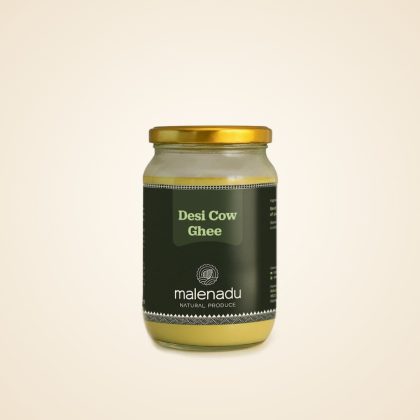
Desi Cow Ghee
Original price was: ₹1,500.₹899Current price is: ₹899. -
8% OFF
Black Pepper
Price range: ₹165 through ₹299 -
24% OFF
Wood Pressed Coconut Oil
Original price was: ₹899.₹679Current price is: ₹679. -
6% OFF
Monkey Jack Powder
Original price was: ₹399.₹375Current price is: ₹375.
Frequently asked questions about Malenadu food
What is Malenadu food famous for?
Malenadu food is known for rice dishes like akki rotti, neer dose and kadubu, for sour saaru made with kokum, for peppery curries and for monsoon dishes like pathrode. It uses coconut, jaggery and ghee generously and very little oil.
Is Malenadu cuisine vegetarian?
Not always. Havyaka homes in Uttara Kannada and Shivamogga are vegetarian, while many families in Chikkamagaluru, Hassan and Kodagu cook chicken, mutton, pork and fish.
What is a typical Malenadu breakfast?
The most common breakfasts are akki rotti, neer dose, kadubu and sihi dose. They are served with coconut chutney, ghee, butter or joni bella.
What is the difference between saaru and huli?
Saaru is a thin, peppery rasam that you drink or mix with rice. Huli is thicker, with vegetables, dal and ground coconut. It is closer to sambar.
What is tambuli?
Tambuli is a cool, raw curry made by grinding greens or spices with coconut and mixing them with curd or buttermilk. It is usually eaten with rice as the first course of lunch.
What is joni bella?
Joni bella is liquid jaggery, a thick syrup made by boiling sugarcane juice. It is poured on dose and used to sweeten payasa.
What are the main spices in Malenadu food?
Black pepper, cumin, mustard, fenugreek, dry red chilli, turmeric and hing are the everyday spices. Cardamom and clove go into sweets and festival dishes.
Explore more of Malenadu
Malenadu FoodHalasina KadubuSweet jackfruit dumplings steamed in leaves
Malenadu FoodSpices Names in KannadaEnglish, Kannada and Hindi names for a Malenadu kitchen
Malenadu FoodKara KadubuSpicy steamed rice dumplings from Malenadu kitchens
Malenadu FoodKokum SaaruThe sour, peppery everyday rasam of Malenadu homes
Malenadu FoodMenthya TambuliA cool fenugreek and curd side for the first rice course
Malenadu FoodMalenadu Akki RottiSoft rice flour rotti patted by hand on a banana leaf
Malenadu FoodMalenadu Koli SaaruHill style chicken curry with roasted coconut and pepper
Malenadu FoodMaragenasu DoseTapioca and rice dosa from Malenadu backyards
Malenadu FoodKesuvina GojjuThe sweet and sour colocasia leaf relish of the monsoon
Malenadu FoodAppe Midi PickleThe whole tender mango pickle of Malenadu homes
Malenadu FoodMalenadu FruitsJackfruit, kokum, wild mango and the fruits of the forest
Malenadu FoodPatrodeColocasia leaves, rice paste and the smell of rain
Malenadu FoodKalale PalyaTender bamboo shoot, soaked, boiled and spiced
Malenadu FoodOttu ShavigeFresh rice noodles pressed hot, with sweet coconut milk
Malenadu FoodAnabe SaaruMonsoon mushroom curry with roasted coconut and pepper
Malenadu FoodHalasina HappalaRaw jackfruit papad, sun dried in summer for the rains
Malenadu FoodPandi CurryKodagu dark pork curry with roasted spice and kachampuli
Malenadu CultureMalenadu CulturePeople, arts and old ways of Karnataka’s rain hills
Malenadu FarmingMalenadu CropsWhat grows in Karnataka’s rain hills and why it grows
Malenadu TravelMalenadu Travel GuideRoutes, stays and seasons for the rain hills of Karnataka
Start hereMalenadu in KarnatakaWhere Malenadu is, what the name means