
Malenadu Food
This page lists spices names in Kannada next to English and Hindi, with the Kannada script, a simple transliteration and a short note on each. It also covers souring agents, sweeteners, oils, flours, greens and fruits used in Malenadu cooking. Use these spices names in Kannada to read a family recipe, shop at a Sirsi market or understand a label.
On this page
How to read these Malenadu ingredient names
Each table of spices names in Kannada gives the English name, the Kannada word in Kannada script, a transliteration you can read aloud, the Hindi name and a short note. Where we were not fully sure of a script spelling, we have left only the transliteration. That way you never copy a wrong word into a shopping list.
Kannada changes from place to place, so a spice may have a slightly different name in Uttara Kannada, in Shivamogga and on the Udupi coast. Havyaka, Konkani and Tulu speaking homes add their own words too. The spices names in Kannada below are the ones most people in Malenadu will recognise. The notes mention common local names.
Many Malenadu ingredient names describe what a thing is. Kaayi means an unripe fruit or pod, hannu means a ripe fruit, soppu means leafy greens, hittu means flour, ele means leaf and gadde means a root or tuber. Once you know these, a lot of spices names in Kannada and vegetable names start to make sense on their own.
Spices names in Kannada: the main table
Here are the everyday spices names in Kannada, from pepper and cardamom to hing and curry leaves. The first eight are spices we sell.
| English | Kannada | Transliteration | Hindi | Notes |
|---|---|---|---|---|
| Black pepper | ಕರಿಮೆಣಸು | kari menasu, menasu | kali mirch | The main heat in Malenadu saaru |
| White pepper | ಬಿಳಿ ಮೆಣಸು | bili menasu | safed mirch | Ripe pepper with the skin removed |
| Green cardamom | ಏಲಕ್ಕಿ | elakki, yalakki | elaichi | For payasa, sweets and tea |
| Clove | ಲವಂಗ | lavanga | laung | Dried flower buds |
| Nutmeg | ಜಾಯಿಕಾಯಿ | jaayikaayi, jaajikaayi | jaiphal | Seed of the nutmeg fruit |
| Mace | ಜಾಪತ್ರೆ | jaapatre | javitri | Red covering of the nutmeg seed |
| Bird eye chilli | ಗಾಂಧಾರಿ ಮೆಣಸು | gandhari menasu | no common Hindi name | Tiny and very hot |
| Turmeric | ಅರಿಶಿನ | arishina, arisina | haldi | Used as powder or fresh root |
| Black cardamom | ದೊಡ್ಡ ಏಲಕ್ಕಿ | dodda elakki | badi elaichi | Smoky, used in rice dishes |
| Cinnamon | ದಾಲ್ಚಿನ್ನಿ | daalchinni, chakke | dalchini | Tree bark |
| Cumin | ಜೀರಿಗೆ | jeerige | jeera | In tambuli and tempering |
| Coriander seeds | ಕೊತ್ತಂಬರಿ ಬೀಜ | kottambari beeja | sabut dhaniya | Roasted for saaru powder |
| Mustard seeds | ಸಾಸಿವೆ | saasive | rai, sarson | First into hot oil |
| Fenugreek seeds | ಮೆಂತ್ಯ | menthya, mente | methi dana | Fried for tambuli and pickles |
| Asafoetida | ಇಂಗು | ingu | hing | A pinch in tempering |
| Dry red chilli | ಒಣ ಮೆಣಸಿನಕಾಯಿ | ona menasinakaayi | sukhi lal mirch | Byadgi is the common variety |
| Green chilli | ಹಸಿ ಮೆಣಸಿನಕಾಯಿ | hasi menasinakaayi | hari mirch | Hasi means fresh or raw |
| Dry ginger | ಒಣ ಶುಂಠಿ | ona shunthi | saunth | Fresh ginger is hasi shunthi |
| Fennel seeds | ಸೋಂಪು | sompu, badesoppu | saunf | Badesoppu is common in Uttara Kannada |
| Carom seeds | ಓಮ | oma | ajwain | Added to fritters and rotti |
| Poppy seeds | ಗಸಗಸೆ | gasagase | khus khus | For gasagase payasa |
| Sesame seeds | ಎಳ್ಳು | ellu | til | Ellu bella at Sankranti |
| Curry leaves | ಕರಿಬೇವು | karibevu | kadi patta | In almost every tempering |
If you remember one of these spices names in Kannada, make it menasu. Our black pepper grows on vines that climb the shade trees of Malenadu gardens.
From the malenadu pantry
Black pepper is the spice that carries most Malenadu cooking. Ours comes from these hills, so it is the same menasu that goes into saaru, gojju and meat curries in Malenadu homes.
Souring agents: kokum in Kannada and other sours
The most important souring agents in Malenadu kitchens are kokum, vate huli, tamarind and tender mango. Huli means sour in Kannada, which is why so many sour dishes have huli in the name. Learn these next to the spices names in Kannada, because recipes use them together.
| English | Kannada | Transliteration | Hindi | Notes |
|---|---|---|---|---|
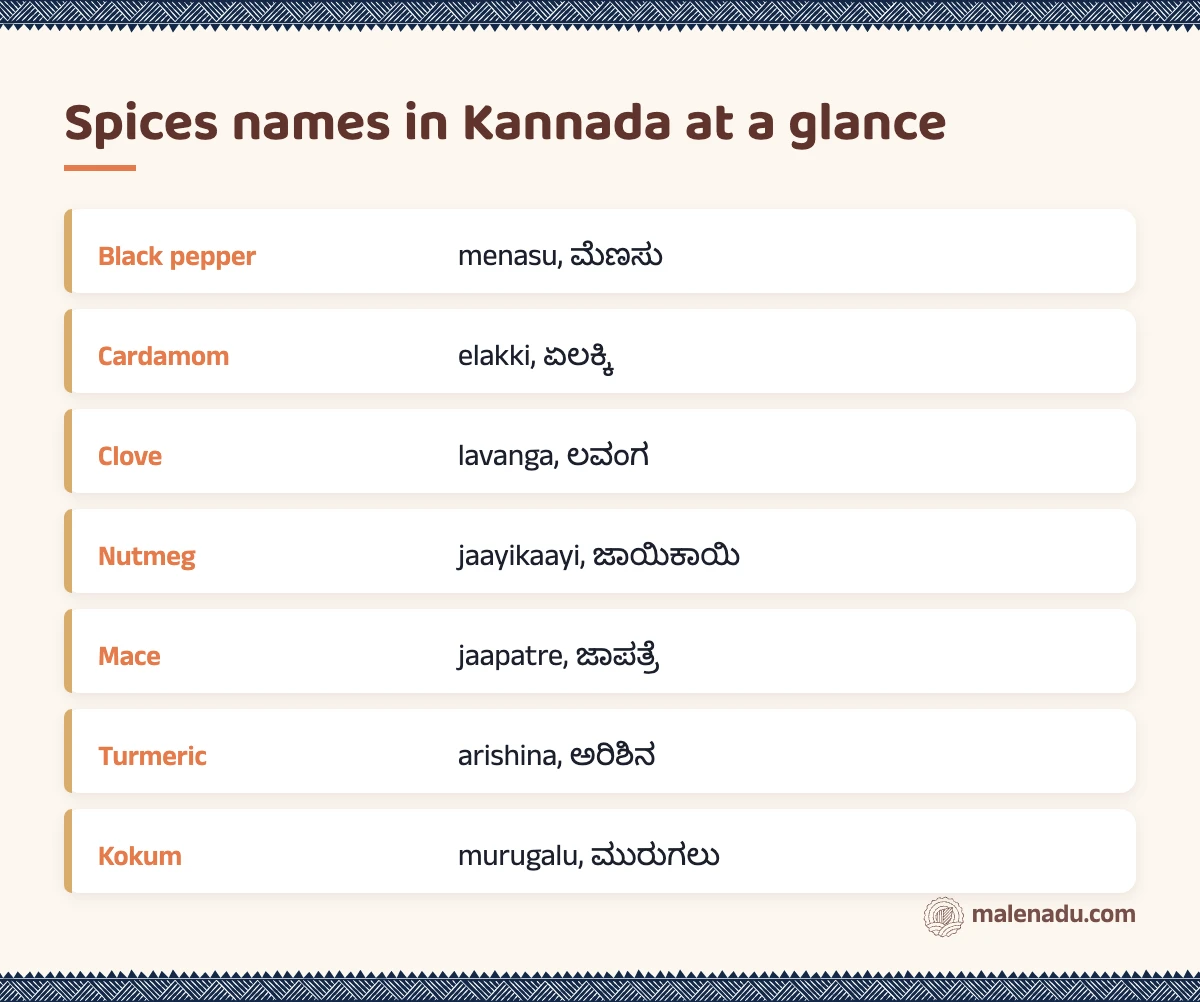
| Kokum rind | ಮುರುಗಲು | murugalu, punarpuli | kokum | Amsul in Marathi and Konkani |
| Dried monkey jack | ವಾಟೆಹುಳಿ | vate huli, ote huli | barhal, lakuch | Dried slices of Artocarpus lacucha |
| Tamarind | ಹುಣಸೆಹಣ್ಣು | hunasehannu | imli | The most common sour across Karnataka |
| Tender mango | ಮಾವಿನ ಮಿಡಿ | maavina midi | kachchi kairi | Very young mangoes for pickles |
| Wild tender mango | ಅಪ್ಪೆ ಮಿಡಿ | appe midi | no common Hindi name | Prized Malenadu pickle mangoes |
| Raw mango | ಮಾವಿನಕಾಯಿ | maavinakaayi | kachcha aam | For chitranna, gojju and saaru |
| Malabar tamarind | (transliteration only) | uppage, upagi | no common Hindi name | Garcinia gummi-gutta, used on the coast |
| Lemon | ನಿಂಬೆಹಣ್ಣು | nimbehannu | nimbu | Squeezed in at the end |
| Curd | ಮೊಸರು | mosaru | dahi | Base for tambuli |
| Buttermilk | ಮಜ್ಜಿಗೆ | majjige | chhaachh | Ends the meal |
What is kokum in Kannada?
Kokum in Kannada is murugalu (ಮುರುಗಲು) and the tree is the murugalu mara. On the Udupi and Mangaluru coast many people call the dried rind punarpuli, while Marathi and Konkani speakers say amsul.
The fruit grows on the western slopes of the Ghats. The ICAR Indian Institute of Spices Research notes that it ripens between March and May and that the dried rind is used to sour curries and dals.
Most families in Uttara Kannada dry the rind in the sun after the summer harvest and keep it in a jar for the whole year. Soaked in warm water, it gives a deep red, fruity sour liquid for saaru and drinks. Our page on how to make kokum saaru shows the classic way to cook with it.
From the malenadu pantry
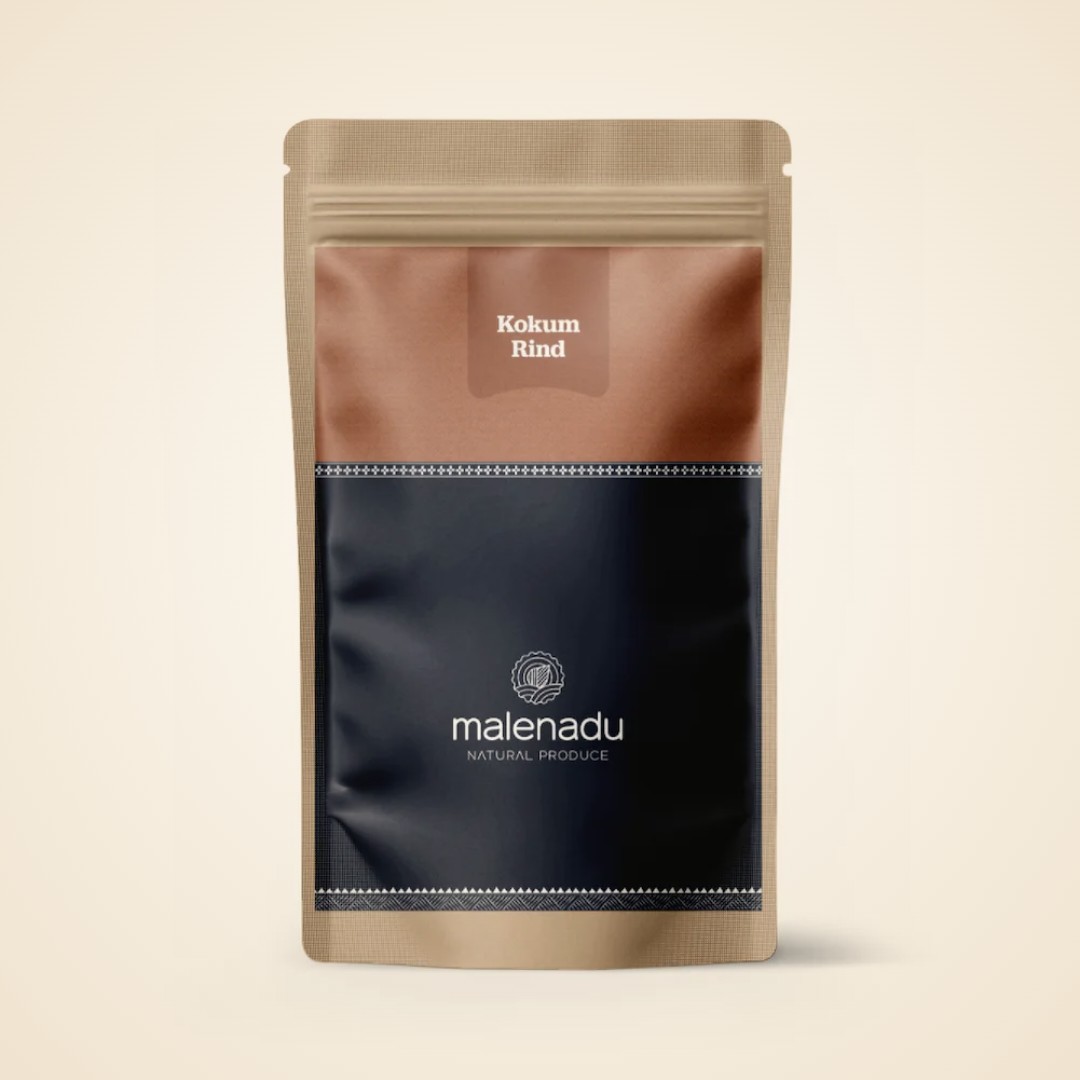
Our kokum rind is murugalu from Malenadu farms, sun dried and ready to soak. A few pieces give enough sour for a pot of saaru or a jug of kokum juice for the family.
What is vate huli in English?
Vate huli in English is dried monkey jack, the fruit of Artocarpus lacucha, a cousin of jackfruit. In Kannada it is written ವಾಟೆಹುಳಿ and some people say ote huli. The fruit is sliced and dried, then used like kokum to sour saaru, gojju and chutneys. Because it is so local, vate huli is worth adding to your own list of spices names in Kannada.
In Hindi the tree is known as barhal or lakuch. Vate huli is a little earthier and less sharp than kokum, with a light brown colour instead of red. If you cannot get the dried slices, monkey jack powder is the same fruit in ground form. A teaspoon goes a long way.
Sweeteners: joni bella meaning and other sweet words
The main sweeteners in a Malenadu kitchen are bella (jaggery), joni bella (liquid jaggery) and honey. Sugar is used too, but most older recipes call for jaggery alongside the spices names in Kannada you saw above.
| English | Kannada | Transliteration | Hindi | Notes |
|---|---|---|---|---|
| Jaggery | ಬೆಲ್ಲ | bella | gur | Solid blocks or balls |
| Liquid jaggery | ಜೋನಿ ಬೆಲ್ಲ | joni bella | no single Hindi name | Called kakvi in Marathi |
| Honey | ಜೇನುತುಪ್ಪ | jenutuppa | shahad | Jenu means honeybee |
| Sugar | ಸಕ್ಕರೆ | sakkare | cheeni | |
| Rock sugar | ಕಲ್ಲುಸಕ್ಕರೆ | kallusakkare | mishri | Kallu means stone |
| Sugarcane | ಕಬ್ಬು | kabbu | ganna | Source of bella and joni bella |
What is the joni bella meaning?
The joni bella meaning is simple: it is liquid jaggery, a thick, golden brown syrup made by boiling sugarcane juice and stopping before it sets into solid jaggery. Bella means jaggery while joni describes its runny, pouring form. In Malenadu it is poured over neer dose and akki rotti, stirred into payasa and eaten with ghee.
Fresh joni bella is made in the winter months when sugarcane is crushed in the village aalemane (the cane crushing shed). It keeps for months in a closed jar and may crystallise a little in cold weather, which is normal.
Local tip
Never give jaggery, joni bella, sugar or honey to babies under one year old. For everyone else, joni bella is the easiest way to sweeten payasa without boiling it again.
Oils and ghee: what are they called in Kannada?
In Kannada, enne means oil and tuppa means ghee. These words turn up in recipes as often as the spices names in Kannada, so they are worth learning.
| English | Kannada | Transliteration | Hindi | Notes |
|---|---|---|---|---|
| Ghee | ತುಪ್ಪ | tuppa | ghee | Poured on hot rice |
| Butter | ಬೆಣ್ಣೆ | benne | makkhan | Churned from curd at home |
| Coconut oil | ತೆಂಗಿನ ಎಣ್ಣೆ | tengina enne, kobbari enne | nariyal tel | Daily oil in hill homes |
| Dry coconut | ಕೊಬ್ಬರಿ | kobbari | khopra, gola | Sun dried coconut |
| Sesame oil | ಎಳ್ಳೆಣ್ಣೆ | ellenne | til ka tel | For pickles and some sweets |
| Wood pressed oil | ಗಾಣದ ಎಣ್ಣೆ | gaanada enne | kachi ghani tel | Gaana is the traditional oil press |
| Kokum butter | ಮುರುಗಲ ಎಣ್ಣೆ | murugala enne | kokum butter | Fat from kokum seeds |
Flours and starches: arrowroot in Kannada and more
Hittu means flour in Kannada, so rice flour is akki hittu and ragi flour is ragi hittu. Like the spices names in Kannada, these flour names follow simple patterns.
| English | Kannada | Transliteration | Hindi | Notes |
|---|---|---|---|---|
| Rice | ಅಕ್ಕಿ | akki | chawal | Cooked rice is anna |
| Rice flour | ಅಕ್ಕಿ ಹಿಟ್ಟು | akki hittu | chawal ka atta | For akki rotti and kadubu |
| Rice rava | ಅಕ್ಕಿ ತರಿ | akki tari | chawal ki rava | Coarse rice grits |
| Red boiled rice | (transliteration only) | kusubalakki | no common Hindi name | Coastal and ghat staple |
| Beaten rice | ಅವಲಕ್ಕಿ | avalakki | poha | |
| Ragi flour | ರಾಗಿ ಹಿಟ್ಟು | ragi hittu | mandua atta | For ragi mudde and rotti |
| Semolina | ರವೆ | rave | suji | For uppittu and kesari |
| Urad dal | ಉದ್ದಿನ ಬೇಳೆ | uddina bele | urad dal | In dose batter and tempering |
| Toor dal | ತೊಗರಿ ಬೇಳೆ | togari bele | arhar dal | For saaru and huli |
| Arrowroot powder | ಕೂವೆ ಹಿಟ್ಟು | koove hittu | ararot | A fine white starch |
What is arrowroot in Kannada?
Arrowroot in Kannada is koove (ಕೂವೆ). The powder is koove hittu. Some people say koova, which is the Malayalam word, so you will see both in lists of spices names in Kannada. The Kannada dictionary uses koove for both the East Indian arrowroot plant and the West Indian arrowroot plant.
The root is grated, washed and settled until a pure white starch is left, which is then dried. In many Malenadu homes it is cooked with milk or water into a smooth porridge. It also thickens payasa.
Greens and forest produce in Kannada
Soppu means greens and ele means leaf, so most leafy vegetables end in one of the two. Many grow wild in the monsoon around Malenadu homes and are cooked with the same spices names in Kannada listed above.
| English | Kannada | Transliteration | Hindi | Notes |
|---|---|---|---|---|
| Colocasia leaves | ಕೆಸುವಿನ ಎಲೆ | kesuvina ele | arbi ke patte | For pathrode and gojju |
| Colocasia root | ಕೆಸುವಿನ ಗಡ್ಡೆ | kesuvina gadde | arbi | |
| Bamboo shoot | ಕಳಲೆ | kalale, kanile | baans ki kopal | A monsoon dish in the hills |
| Mushroom | ಅಣಬೆ | anabe | khumbi | Wild ones come up in the rains |
| Indian pennywort | ಒಂದೆಲಗ | ondelaga | mandukparni | For tambuli |
| Indian borage | ದೊಡ್ಡಪತ್ರೆ | doddapatre | patharchur | For tambuli and bajji |
| Drumstick leaves | ನುಗ್ಗೆ ಸೊಪ್ಪು | nugge soppu | sahjan ke patte | |
| Amaranth leaves | ಹರಿವೆ ಸೊಪ್ಪು | harive soppu | chaulai | |
| Banana stem | ಬಾಳೆ ದಿಂಡು | baale dindu | kele ka tana | For palya and juice |
| Banana flower | ಬಾಳೆ ಹೂವು | baale hoovu | kele ka phool | For palya and vade |
| Elephant foot yam | ಸುವರ್ಣ ಗಡ್ಡೆ | suvarna gadde | jimikand | |
| Mangalore cucumber | ಮಗೆ ಕಾಯಿ | mage kaayi | no common Hindi name | Yellow cucumber for huli and dose |
Fruits used in cooking: jackfruit, kokum and more
The fruits used in Malenadu cooking are mostly jackfruit, mango, kokum and monkey jack, eaten both raw and ripe. Hannu means a ripe fruit and kaayi means an unripe one, so halasina hannu is ripe jackfruit and halasina kaayi is raw jackfruit. These fruit words sit beside the spices names in Kannada in almost every hill recipe.
| English | Kannada | Transliteration | Hindi | Notes |
|---|---|---|---|---|
| Ripe jackfruit | ಹಲಸಿನ ಹಣ್ಣು | halasina hannu | kathal | For kadubu, dose and payasa |
| Raw jackfruit | ಹಲಸಿನ ಕಾಯಿ | halasina kaayi | kachcha kathal | For palya and happala |
| Jackfruit seeds | ಹಲಸಿನ ಬೀಜ | halasina beeja | kathal ke beej | Roasted or added to saaru |
| Kokum fruit | ಮುರುಗಲು ಹಣ್ಣು | murugalu hannu | kokum | Fresh fruit for juice, rind for drying |
| Ripe mango | ಮಾವಿನ ಹಣ್ಣು | maavina hannu | aam | For seekarane and gojju |
| Monkey jack fruit | (transliteration only) | vate | barhal, lakuch | Dried as vate huli |
| Hog plum | ಅಮಟೆಕಾಯಿ | amatekaayi | amra | Sour fruit for pickles |
| Bitter orange | ಹೇರಳೆಕಾಯಿ | heralekaayi | no common Hindi name | Large bitter citrus for pickles |
| Breadfruit | ದೀವಿ ಹಲಸು | deevi halasu | no common Hindi name | Sliced and fried as chips |
| Raw banana | ಬಾಳೆಕಾಯಿ | baalekaayi | kachcha kela | For palya and chips |
| Indian gooseberry | ನೆಲ್ಲಿಕಾಯಿ | nellikaayi | amla | Pickles and tambuli |
| Coconut | ತೆಂಗಿನಕಾಯಿ | tenginakaayi | nariyal | Grated into almost everything |
Which spices names in Kannada confuse people most?
The spices names in Kannada that confuse people most are the ones that come in pairs or sound alike: mace and nutmeg, cardamom and black cardamom, pepper and chilli. Here are short notes on each, plus a few more spices names in Kannada worth knowing well.
What is mace in Kannada?
Mace in Kannada is jaapatre (ಜಾಪತ್ರೆ) while nutmeg is jaayikaayi (ಜಾಯಿಕಾಯಿ). Both come from the same fruit. As the ICAR Indian Institute of Spices Research explains on its nutmeg and mace page, the seed kernel is nutmeg and the lacy red aril around it is mace.
Mace is softer and more delicate, so it goes into sweets, biryani and garam masala. Nutmeg is grated in small amounts into payasa and sweets. Of all the spices names in Kannada, jaapatre and jaayikaayi are the pair most often mixed up, so check which one a recipe asks for.
From the malenadu pantry
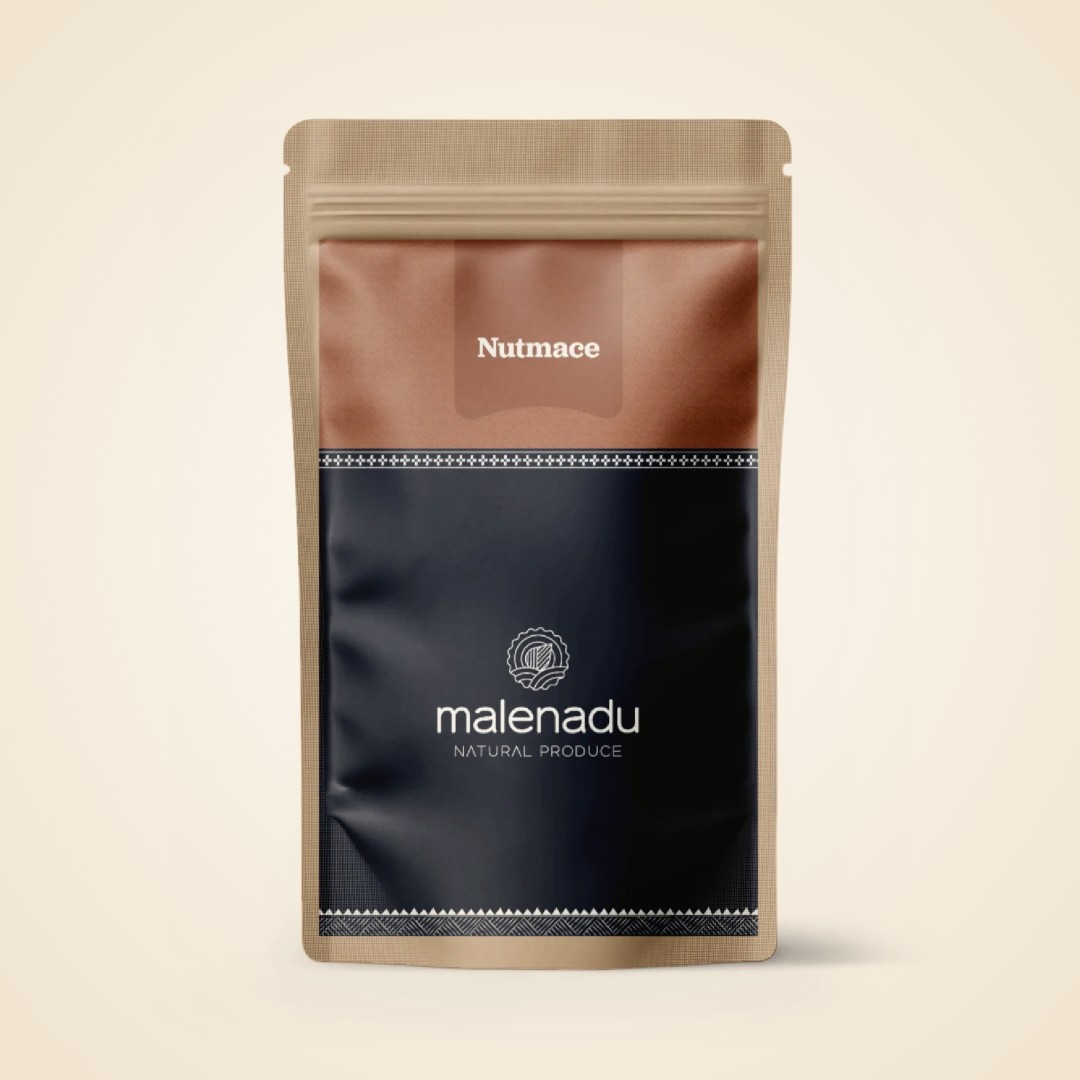
Our nutmace is mace, the dried red aril that wraps the nutmeg seed. In Kannada recipes it is called jaapatre. A single blade is enough to scent a pot of rice or a sweet.
Spices names in Kannada for clove, cardamom and turmeric
Some spices names in Kannada sound close to Hindi: clove is lavanga (ಲವಂಗ), almost the same as laung. Cardamom is elakki (ಏಲಕ್ಕಿ), which many people in Malenadu say as yalakki. Turmeric is arishina (ಅರಿಶಿನ), also spelt arisina. It is used both as a powder and as fresh root.
Pepper and chilli: why menasu matters
Pepper in Kannada is menasu (ಮೆಣಸು) and black pepper is kari menasu. The word for chilli, menasinakaayi, literally means “pepper pod”. Pepper was the original heat in South Indian food, so chilli took its name. This pair of spices names in Kannada tells that story.
Two words worth learning
Gandhari menasu is the tiny, very hot bird eye chilli that grows in Malenadu backyards. Kalale (or kanile) is bamboo shoot, cooked in the monsoon. Add these two to the spices names in Kannada you already know and you can follow almost any hill recipe.
Shopping tips: using spices names in Kannada at the market
The easiest way to use spices names in Kannada at a market is to say the Kannada name and show the spice if you can. Local items like vate huli, joni bella and appe midi are known only by their Kannada names.
- Say the short form. Shopkeepers understand short spices names in Kannada like menasu, elakki, lavanga and arishina.
- Ask for murugalu, not kokum, in small towns in Uttara Kannada and Shivamogga.
- Check the season. Fresh kalale, anabe and appe midi are sold only in their season.
Local tip
Write your list with spices names in Kannada and English side by side. If one name does not ring a bell, the other usually will.
Where to go next with these spices names in Kannada
Now that you know the spices names in Kannada, try cooking with them. Our Malenadu food guide explains the daily meals and seasons, with kokum saaru as a good first dish. Keep this page of spices names in Kannada open while you cook and read about the region on our page on Malenadu in Karnataka.
Bring Malenadu home
Grown and made by Malenadu farmer families, packed by malenadu, a farmer owned producer company in Honnavar.
-
8% OFF
Black Pepper
Price range: ₹165 through ₹299 -
19% OFF
Cardamom
Price range: ₹130 through ₹330 -
6% OFF
Clove
Price range: ₹150 through ₹440 -
8% OFF
Nutmeg
Original price was: ₹60.₹55Current price is: ₹55. -
8% OFF
Nutmace
Original price was: ₹60.₹55Current price is: ₹55. -
13% OFF
Turmeric Powder
Price range: ₹70 through ₹120
Frequently asked questions about spices names in Kannada
What is kokum called in Kannada?
Kokum is called murugalu (ಮುರುಗಲು) in Kannada. On the Udupi and Mangaluru coast the dried rind is also called punarpuli.
What is mace called in Kannada?
Mace is called jaapatre (ಜಾಪತ್ರೆ) in Kannada. It is the red covering around the nutmeg seed. Nutmeg itself is jaayikaayi.
What is vate huli in English?
Vate huli is dried monkey jack, the fruit of Artocarpus lacucha. It is used as a souring agent like kokum or tamarind.
What does joni bella mean?
Joni bella means liquid jaggery. It is a thick syrup made by boiling sugarcane juice and is poured over dose or used in payasa.
What is arrowroot called in Kannada?
Arrowroot is called koove (ಕೂವೆ) in Kannada. Arrowroot powder is koove hittu. In Hindi it is called ararot.
What is the Kannada name for black pepper?
Black pepper is kari menasu (ಕರಿಮೆಣಸು) in Kannada, often just menasu. It is the most used of all spices names in Kannada. White pepper is bili menasu.
What is cardamom called in Kannada?
Cardamom is called elakki (ಏಲಕ್ಕಿ) in Kannada, often pronounced yalakki. Black cardamom is dodda elakki.
Are spices names in Kannada the same across Karnataka?
Mostly yes, though some words change by region and community. For example, kokum is murugalu in Uttara Kannada but punarpuli on the Udupi coast.
Explore more of Malenadu
Malenadu FoodMalenadu FoodRice, kokum, pepper and joni bella from the hills
Malenadu FoodHalasina KadubuSweet jackfruit dumplings steamed in leaves
Malenadu FoodKara KadubuSpicy steamed rice dumplings from Malenadu kitchens
Malenadu FoodKokum SaaruThe sour, peppery everyday rasam of Malenadu homes
Malenadu FoodMenthya TambuliA cool fenugreek and curd side for the first rice course
Malenadu CultureMalenadu CulturePeople, arts and old ways of Karnataka’s rain hills
Malenadu FarmingMalenadu CropsWhat grows in Karnataka’s rain hills and why it grows
Start hereMalenadu in KarnatakaWhere Malenadu is, what the name means