
Malenadu Food
Anabe saaru (ಅಣಬೆ ಸಾರು) is the mushroom curry Malenadu homes cook when the first monsoon rains bring wild anabe up from the forest floor and termite mounds. This page explains the dish and the safety rules every cook must follow with wild mushrooms, then gives a roasted coconut and pepper recipe that works just as well with oyster or button mushrooms from the market.
On this page
What is anabe saaru?
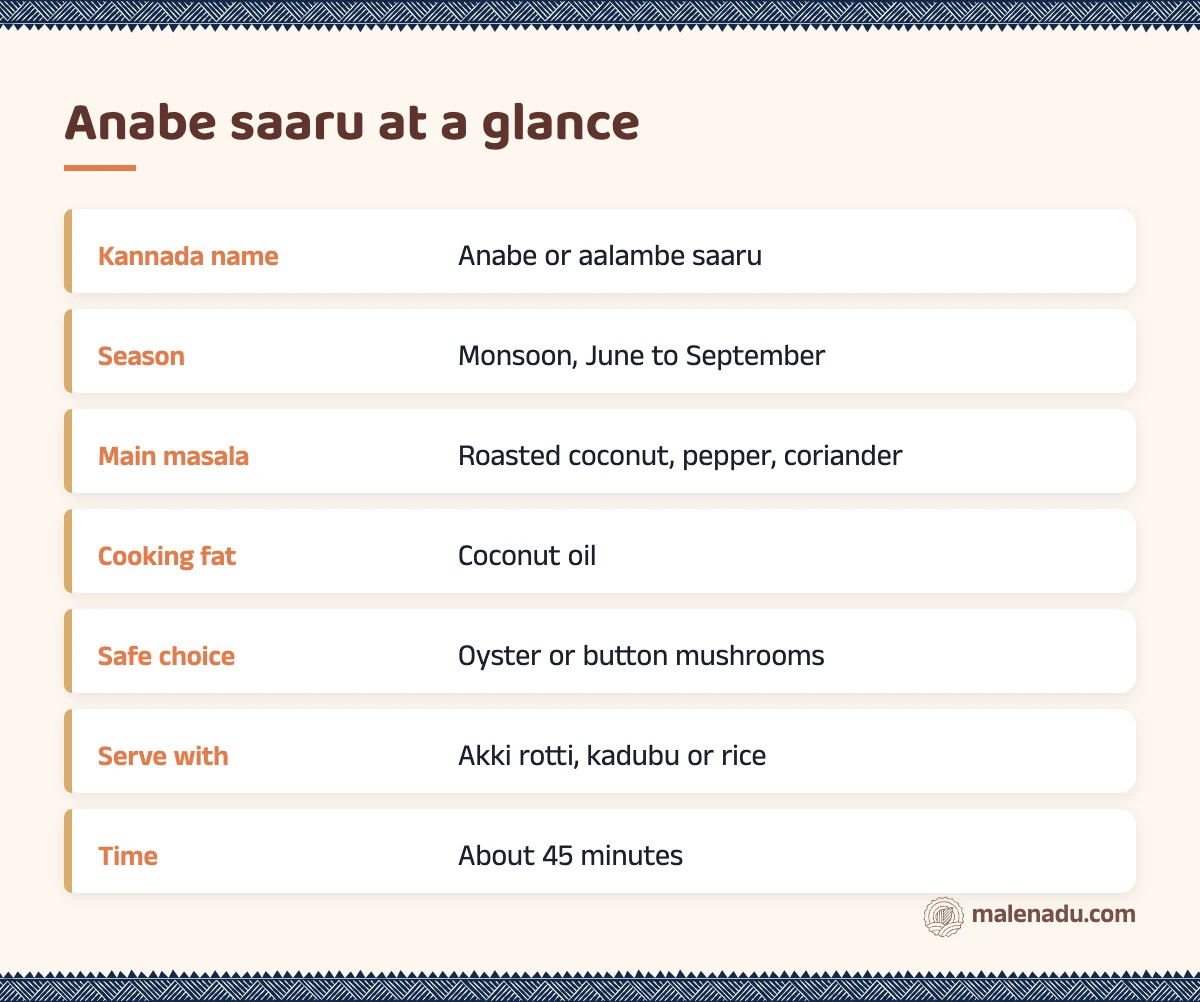
Anabe saaru is a mushroom curry with a thin to medium gravy, made with a ground paste of roasted coconut, black pepper, coriander seeds and red chillies, finished in coconut oil. Anabe (ಅಣಬೆ) is the Kannada word for mushroom and saaru is any thin curry you pour over rice. So anabe saaru simply means mushroom saaru. In Malenadu it belongs to the monsoon.
For hill families anabe saaru is a seasonal treat. When wild anabe come up after the early rains, someone in the house who knows them brings home a small basket and that evening there is a pot of anabe saaru with rotti or rice. Outside the short season, many families make the same curry with market mushrooms.
The masala is close to the one in Malenadu koli saaru, but lighter, because mushrooms cook in minutes. Anabe saaru is a wild mushroom curry in spirit, but this recipe is written so you can make it safely with mushrooms you buy.
Anabe, aalambe and other local names
Mushrooms go by a few names in Malenadu. Anabe is the common Kannada word, while aalambe or allambe is heard in many villages, so anabe saaru may also be called aalambe saaru. People also name mushrooms by where they grow.
- Hutta anabe: mushrooms that come up on or around termite mounds (hutta). These are among the most prized.
- Mara anabe: mushrooms that grow on trees, logs and stumps (mara means tree).
- Beru anabe: mushrooms that come up straight from the soil.
These names describe where a mushroom grows, not which species it is. A survey of mushrooms in the Shivamogga region recorded local names such as huthada anabe and mara anabe and found that the same name was given to more than one kind of fungus. That is why a name alone never tells you a mushroom is safe.
Is it safe to eat wild mushrooms in anabe saaru?
Wild mushrooms are safe only when a local person who has picked that exact kind for years looks at them and confirms it. Some mushrooms that grow in the same forests and gardens are poisonous and a few are deadly. To an untrained eye, many poisonous kinds look very like the edible ones.
Deccan Herald has reported deaths in Dakshina Kannada after family members ate mushrooms brought home from the forest. If you are a visitor or a city cook or you are simply not sure, make your anabe saaru with market mushrooms. The curry still tastes of the hills, because the flavour comes from the masala.
Safety rules before you cook a wild mushroom curry
- Never pick or eat a wild mushroom unless a local person who knows that kind well confirms it, in person, on the day it is picked.
- Do not trust folk tests. A silver coin turning dark, insects eating a mushroom or a cap that peels easily tells you nothing about safety.
- Cooking, boiling or adding tamarind does not make a poisonous mushroom safe.
- Cook only fresh, firm, young mushrooms. Throw away any that are soft, slimy, wormy or smell bad.
- Never mix an unknown mushroom into a basket of known ones. If one piece looks different, leave it out.
- If anyone feels sick after eating wild mushrooms (vomiting, stomach pain, loose motions or dizziness), go to a hospital at once and carry a leftover piece or a photo. Some poisonings show signs only many hours later, so do not wait.
- Respect the forest. Do not enter reserved forests without Forest Department permission, never pick inside a devara kadu or sacred grove and always leave plenty behind.
Local tip
If a neighbour gives you wild anabe, ask them to show you how they cleaned the first few. Cook them the same day and keep one raw piece aside in the fridge until the next morning, just in case anyone needs to show a doctor.
Monsoon mushrooms in Karnataka: when do anabe come up?
Anabe come up in the monsoon, usually within days of the first heavy rains in June and keep appearing in flushes until about September. A Deccan Herald feature on wild mushrooms in Karnataka notes that they appear after the first rains and can disappear within a day. That is why the people who know them go looking early in the morning.
Hutta anabe grow in partnership with termites, which farm the fungus inside their nest. After rain the mushrooms push up through the soil on long stems. Nobody has managed to grow these on a farm, so they remain a true wild food of the season. The Shivamogga survey above recorded them in the forests near Agumbe.
Other monsoon mushrooms Karnataka villagers know come up on fallen logs, in areca and coffee gardens, on bamboo and in grass at the forest edge. The wetter the hills, the more kinds appear. Read about the rains that make this happen on our Malenadu monsoon page.
Picking every mushroom or breaking open a termite mound harms next year’s flush. Families who have gathered anabe for generations take a few and never dig into the mound.
What goes into a Malenadu mushroom curry?
A Malenadu mushroom curry is built on a paste of dry roasted coconut and whole spices, ground smooth and simmered briefly with the mushrooms. Each ingredient has a clear job.
| Ingredient | What it does |
|---|---|
| Grated coconut, roasted golden | body, colour and a nutty sweetness |
| Coriander seeds | the base flavour of the gravy |
| Black pepper | a warm heat that suits a wet evening |
| Dry red chillies (byadagi) | colour and gentle heat |
| Cumin and poppy seeds | earthiness and a little thickness |
| Onion and garlic | sweetness and depth (left out in some homes) |
| Tamarind or kokum | a little sourness to lift the gravy |
| Coconut oil and curry leaves | the aroma of a Malenadu kitchen |
In the hills, pepper vines climb the shade trees in areca and coffee gardens, so pepper is used generously. Freshly roasted and ground with the coconut, it gives anabe saaru a warm heat that builds slowly. Use whole black pepper and roast it lightly with the coriander seeds, because pre-ground pepper tastes flat.
From the malenadu pantry
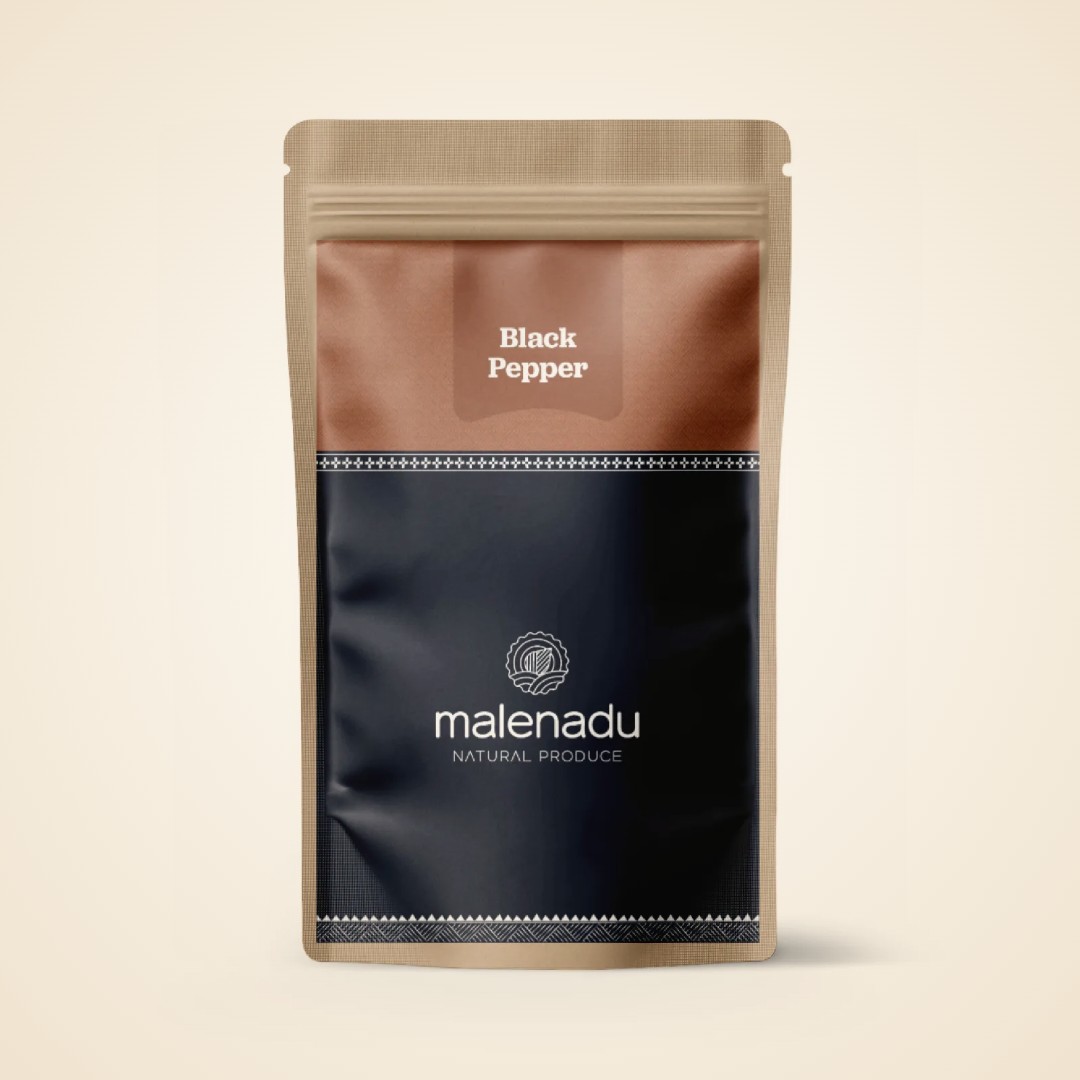
malenadu Black Pepper is grown in the same hills where anabe come up each monsoon. One teaspoon, roasted and ground with the coconut, gives anabe saaru its gentle, warming heat.
Which market mushrooms work best?
Oyster mushrooms come closest to many wild anabe. They are soft and a little chewy and they soak up the gravy of anabe saaru well. Tear them into strips along the gills.
Button mushrooms are easy to find and firmer, with a mild taste. Halve or quarter them so they stay juicy. A mix of oyster and button mushrooms gives the best texture. For anabe saaru for four people, 400 g is enough.
Anabe recipe: how to make anabe saaru at home
This anabe recipe serves four and takes about 45 minutes, most of it spent roasting the masala. It is written for market mushrooms. If you are using wild anabe, follow the safety rules above first.
Recipe card
Anabe Saaru
Malenadu monsoon mushroom curry in a roasted coconut, pepper and coriander masala, cooked in coconut oil.
Ingredients
- 400 g mushrooms (oyster, button or a mix)
- 1 cup freshly grated coconut
- 1 tablespoon coriander seeds
- 1 teaspoon black pepper
- 1/2 teaspoon cumin seeds
- 4 to 5 dry red chillies (byadagi)
- 1 teaspoon poppy seeds (gasagase), optional
- 4 cloves of garlic
- 1 medium onion (half sliced for the masala, half finely chopped)
- 1/4 teaspoon turmeric powder
- 1 small marble-sized ball of tamarind or 2 to 3 pieces kokum rind, soaked in 1/4 cup warm water
- 3 tablespoons coconut oil, divided
- 10 to 12 curry leaves
- 1 teaspoon salt (adjust to taste)
- 2 to 2 1/2 cups water
- 2 tablespoons chopped coriander leaves
Method
- Clean the mushrooms as shown in the next section. Tear oyster mushrooms into strips and cut button mushrooms into halves or quarters. Keep them on a dry plate.
- In a dry pan on medium heat, roast the coriander seeds, pepper, cumin and red chillies for about 2 minutes until fragrant. Add the poppy seeds for the last 30 seconds and tip everything onto a plate.
- In the same pan, roast the grated coconut for 5 to 7 minutes, stirring all the time, until it is evenly golden brown.
- Heat 1 teaspoon of the coconut oil and fry the sliced onion and garlic until soft and lightly browned.
- Cool everything and grind it with about 3/4 cup water into a smooth, thick paste.
- Heat the rest of the coconut oil in a heavy pot. Add the curry leaves and chopped onion and fry until golden.
- Add the mushrooms, turmeric and a pinch of salt. Fry on high heat for 4 to 5 minutes until the mushrooms let out their water and most of it dries up.
- Add the ground masala, the tamarind or kokum water, the rest of the salt and 1 1/2 cups water. Simmer uncovered for 8 to 10 minutes, stirring now and then, until the raw smell is gone and oil shows at the edges.
- Taste and adjust the salt and sourness. Add the coriander leaves, add a little hot water if it is too thick and rest for 5 minutes before serving.
When it is ready, anabe saaru should be a light brown gravy that pours easily, with soft but not mushy mushrooms. It should smell of coconut oil, pepper and roasted coconut. Wild anabe that a local person has confirmed are cooked the same way, but give them the full simmer so they are cooked through.
From the malenadu pantry
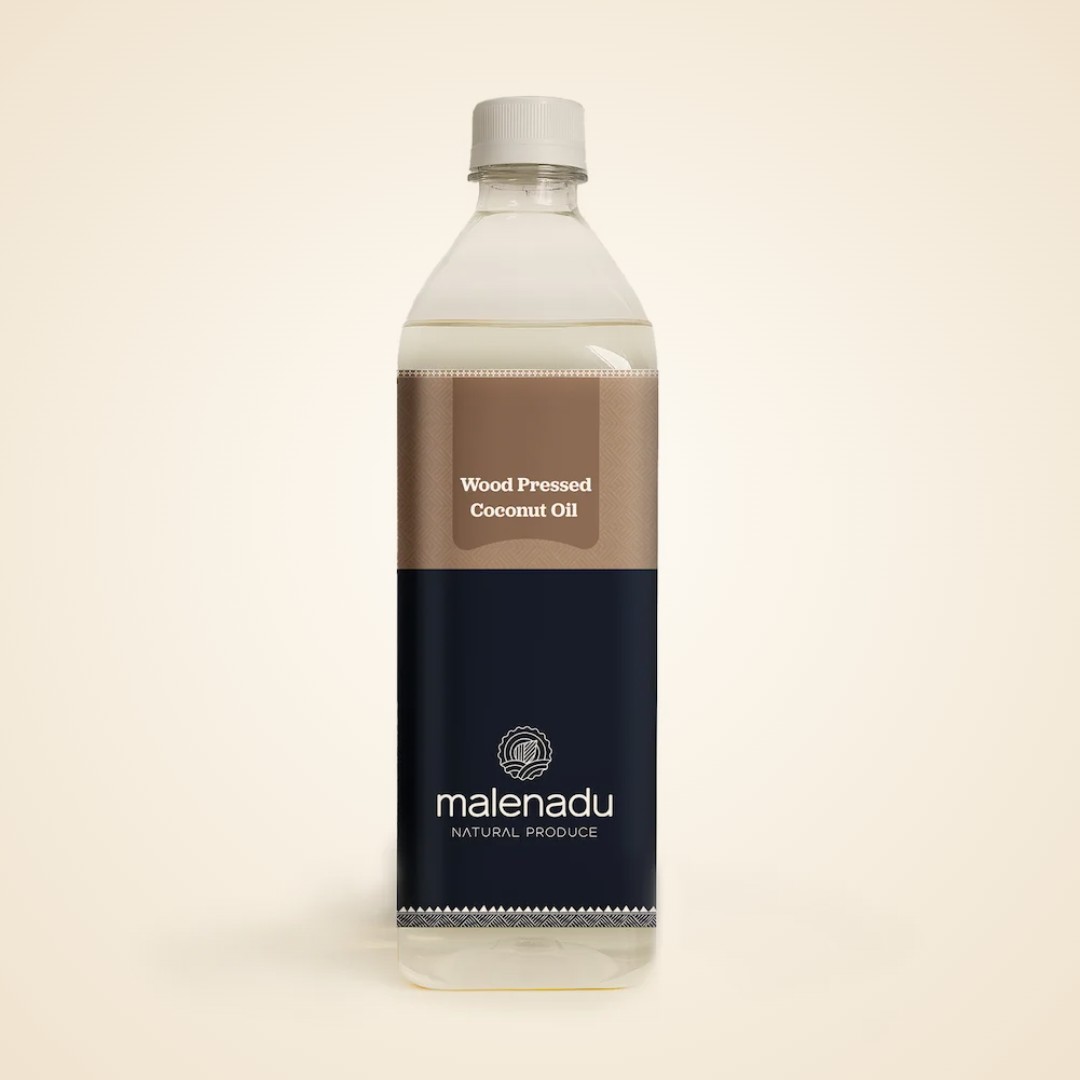
malenadu Wood Pressed Coconut Oil is made from sun dried copra in a wooden ghani. Frying the mushrooms and curry leaves in it gives anabe saaru the coconut aroma of a hill kitchen.
How do you clean mushrooms for anabe saaru?
Clean mushrooms quickly and never soak them, because they drink water and turn soggy. The method depends on where they came from.
- Market mushrooms: rinse them for a few seconds in a colander or wipe them with a damp cloth, then pat dry. Trim the dry end of the stem.
- Hutta anabe: their long stems carry soil from the mound. Scrape the stem with a knife, cut off the earthy root end and rinse two or three times in a basin, lifting the mushrooms out so the grit stays behind.
- Mara anabe: brush off bark and leaves and cut away any hard or woody part of the stem.
Check every piece as you clean it and throw away anything with worm holes, dark wet patches or a sour smell. Wild anabe spoil fast, so cook anabe saaru the day they are picked. Market mushrooms keep in a paper bag in the fridge for two or three days.
Mushroom saaru variations from Malenadu homes
Mushroom saaru changes from house to house, but the roasted coconut base stays. These are the versions you are most likely to meet in the hills.
Without onion and garlic
Some families never cook with onion or garlic. For this anabe saaru, leave both out, add a pinch of hing to the oil and grind a little extra coconut into the masala. The mushroom taste comes through more clearly.
Soured with kokum
In Uttara Kannada and the ghat taluks above the coast, many cooks use kokum rind (murugalu) in place of tamarind. Soak two or three pieces in warm water for 15 minutes and add the red water in step 8. The sourness is cleaner and the gravy takes a pinkish tint.
From the malenadu pantry
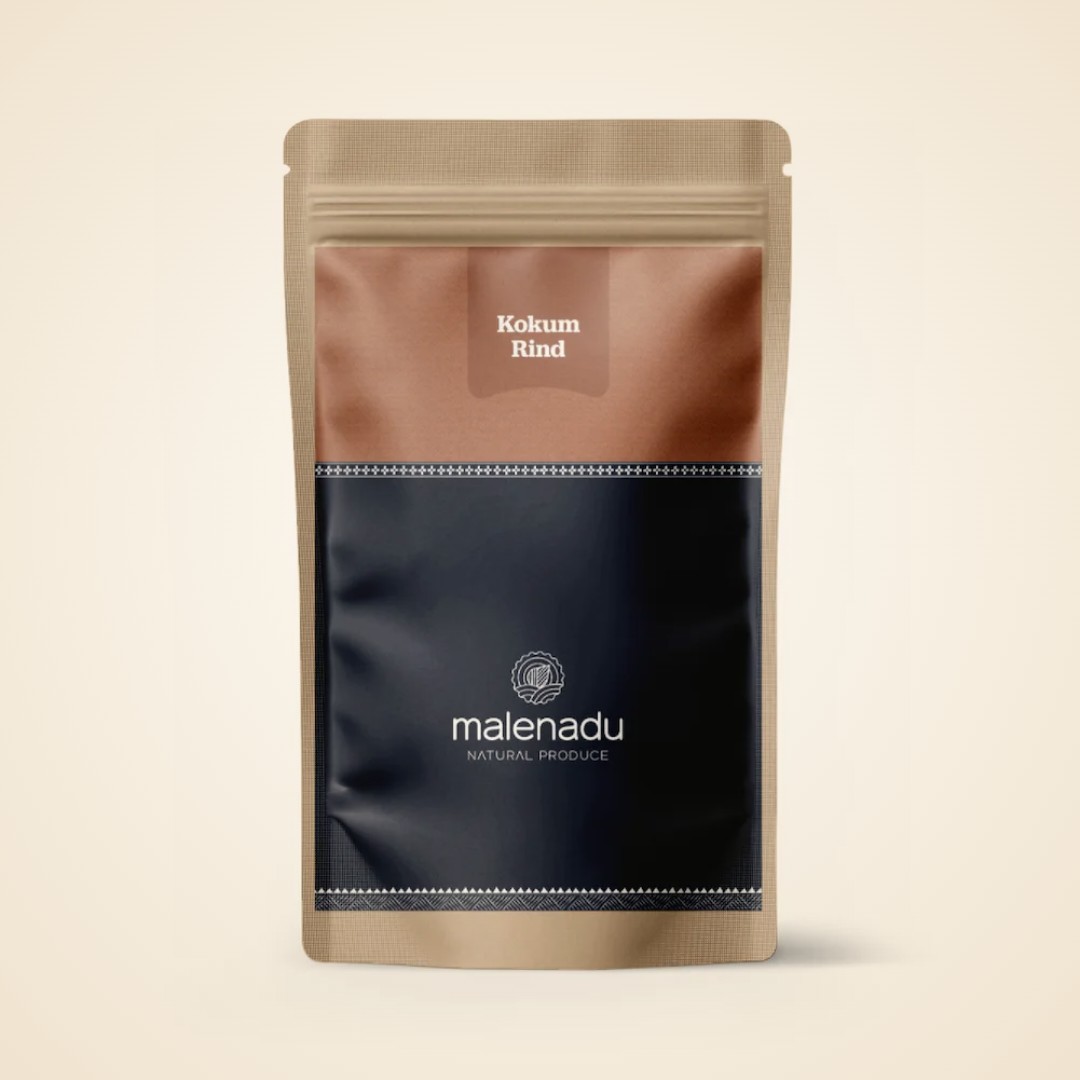
malenadu Kokum Rind is sun dried murugalu from the Western Ghats. Two or three soaked pieces give anabe saaru a fresh, clean sourness in place of tamarind.
Anabe palya (dry)
For a side dish instead of anabe saaru, fry the mushrooms with onion, curry leaves, crushed pepper and a little grated coconut until dry. Serve it with rice and a thin saaru such as kokum saaru.
Extra heat
Add one crushed bird eye chilli (gandhari menasu) with the curry leaves in step 6. It gives a sharp heat on top of the pepper, so start with one.
What to serve with anabe saaru
Anabe saaru is best with soft rice flatbreads, rice dumplings or plain hot rice. The gravy is thin enough to soak in, so pick something that drinks it up.
- Akki rotti: thin Malenadu akki rotti torn and dipped in the gravy is the classic monsoon pairing.
- Kadubu: plain steamed rice kadubu soaks up the saaru well.
- Rice: hot rice with a ladle of anabe saaru, followed by curd rice or buttermilk.
- Happala: a fried or roasted halasina happala from the summer store adds crunch on a rainy day.
A spoon of ghee on the rice and a slice of pickle make anabe saaru a full meal on a cold evening. Finish with buttermilk if the pepper is strong.
Common anabe saaru mistakes and how to fix them
Most problems with anabe saaru come from wet mushrooms, burnt coconut or overcooking. This table shows what went wrong and how to fix it.
| Problem | Likely cause | Fix |
|---|---|---|
| Watery, bland gravy | mushrooms not fried dry first | fry on high heat until their water dries up |
| Rubbery mushrooms | cooked too long | add masala soon after frying, simmer 8 to 10 minutes only |
| Bitter gravy | coconut roasted too dark | roast on medium, stop at golden brown |
| Raw, powdery taste | masala not simmered enough | simmer until oil shows at the edges |
| Gritty bite | soil left on wild stems | scrape stems and rinse in a basin, not under a tap |
| Too sour | too much tamarind or kokum | add a little water and coconut paste |
Salt the mushrooms lightly when you fry them, so they release water faster. Do not leave cooked anabe saaru standing on a warm stove for hours. Cool it and put it in the fridge.
Where to go next after anabe saaru
If you liked anabe saaru, make a stack of akki rotti to go with it next time. Our Malenadu food guide brings the hill recipes together by season. The list of spice and ingredient names in Kannada helps with words like gasagase and murugalu. For whole pepper, chillies and turmeric for your masala, see the spices section of our shop.
Bring Malenadu home
Grown and made by Malenadu farmer families, packed by malenadu, a farmer owned producer company in Honnavar.
-
8% OFF
Black Pepper
Price range: ₹165 through ₹299 -
24% OFF
Wood Pressed Coconut Oil
Original price was: ₹899.₹679Current price is: ₹679. -
17% OFF
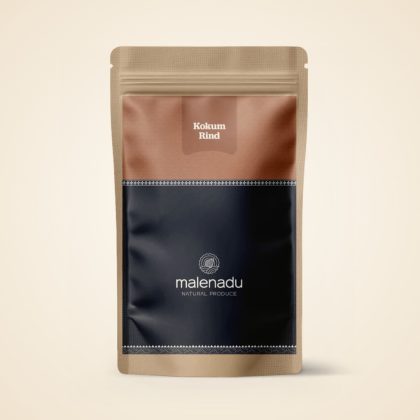
Kokum Rind
Original price was: ₹240.₹200Current price is: ₹200. -
13% OFF
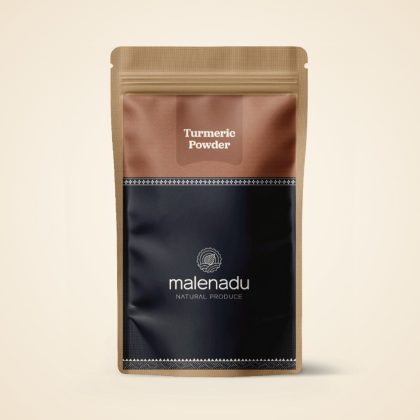
Turmeric Powder
Price range: ₹70 through ₹120 -
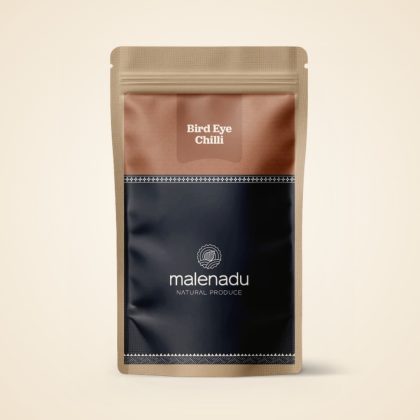
Bird Eye Chilli
₹200 -
40% OFF
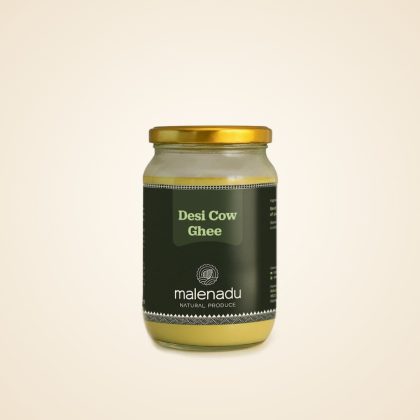
Desi Cow Ghee
Original price was: ₹1,500.₹899Current price is: ₹899.
Frequently asked questions about anabe saaru
What is anabe in English?
Anabe is the Kannada word for mushroom. In many Malenadu villages mushrooms are also called aalambe or allambe.
What is hutta anabe?
Hutta anabe are wild mushrooms that come up around termite mounds after the monsoon rains. They grow only with termites and cannot be farmed, so they are a seasonal treat.
Is it safe to eat wild mushrooms from the forest?
Only when a local person who knows that exact kind confirms it in person. Some wild mushrooms are deadly and cooking does not make them safe, so use market mushrooms if you are not sure.
Can I make anabe saaru with button mushrooms?
Yes. Button, oyster or a mix of both work well. Fry them dry before adding the roasted coconut masala.
When is the season for wild mushrooms in Karnataka?
Wild mushrooms come up in the monsoon, usually from the first heavy rains in June until about September. Each flush lasts only a day or two.
What do you eat with anabe saaru?
Akki rotti, kadubu and hot rice are the usual partners. A fried happala on the side is common on rainy days.
How long does mushroom saaru keep?
Kept covered in the fridge, it is good for a day. Reheat it until it boils and do not keep reheating the same pot.
Explore more of Malenadu
Malenadu FoodMalenadu FoodRice, kokum, pepper and joni bella from the hills
Malenadu FoodHalasina KadubuSweet jackfruit dumplings steamed in leaves
Malenadu FoodSpices Names in KannadaEnglish, Kannada and Hindi names for a Malenadu kitchen
Malenadu FoodKara KadubuSpicy steamed rice dumplings from Malenadu kitchens
Malenadu FoodKokum SaaruThe sour, peppery everyday rasam of Malenadu homes
Malenadu FoodMenthya TambuliA cool fenugreek and curd side for the first rice course
Malenadu FoodMalenadu FruitsJackfruit, kokum, wild mango and the fruits of the forest
Malenadu FoodKesuvina GojjuThe sweet and sour colocasia leaf relish of the monsoon
Start hereMalenadu in KarnatakaWhere Malenadu is, what the name means