
Malenadu Food
Patrode (ಪತ್ರೊಡೆ) is a monsoon dish of colocasia leaves spread with a spiced rice paste, rolled, steamed and sliced, then eaten plain, shallow fried or tempered. Malenadu and coastal Karnataka homes make it all through the rains. This page explains why the leaves itch and how to stop it, gives a home recipe and shows three ways to serve the slices.
On this page
What is patrode?
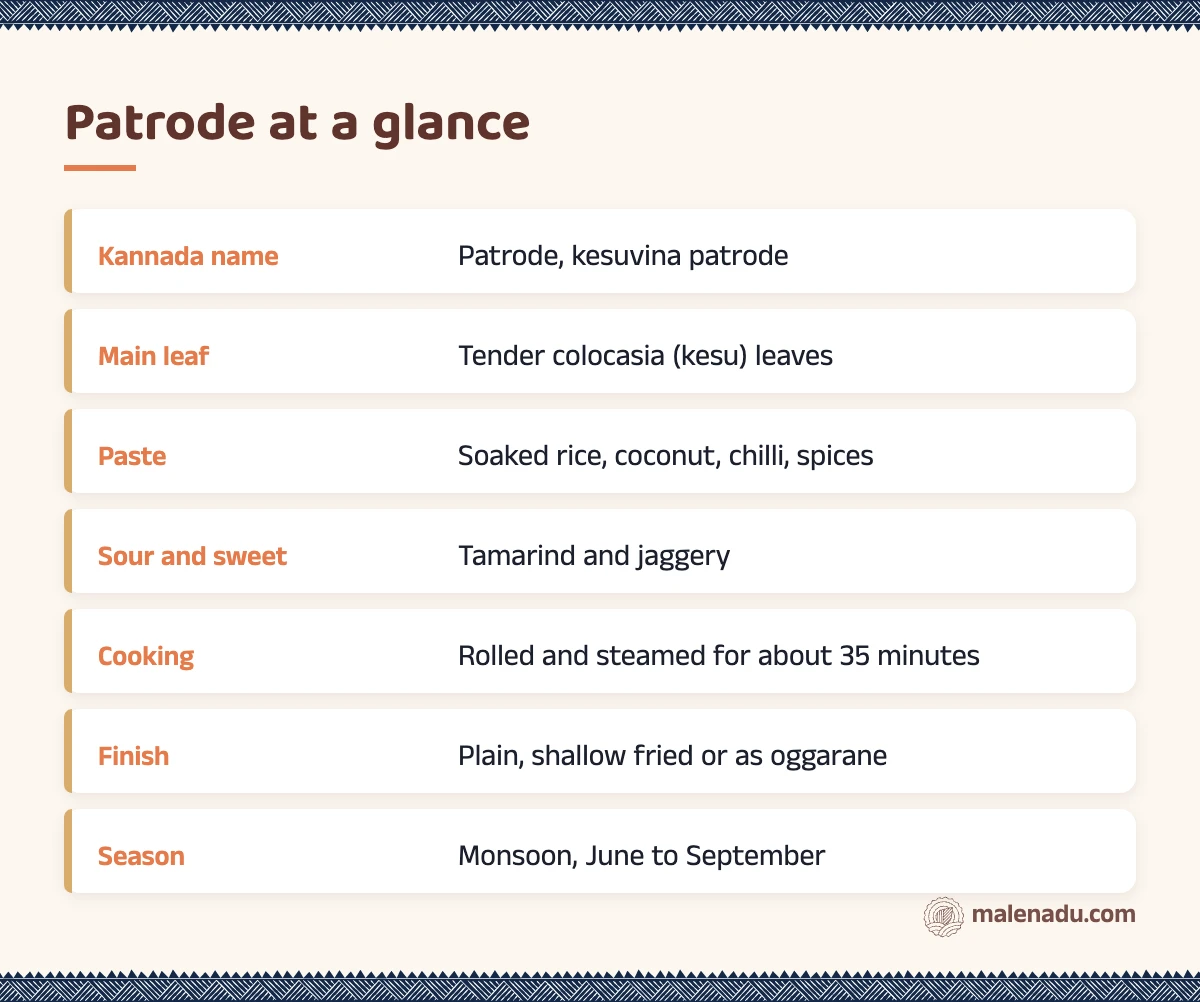
Patrode is a steamed roll of colocasia leaves layered with a thick paste of ground rice, coconut, red chilli, tamarind and jaggery. Once cooked, the roll is cut into rounds that show a swirl of dark green leaf and orange paste. The taste is sour, sweet and hot at the same time, with the earthy taste of the leaves underneath.
The leaves are called kesu (ಕೆಸು) in Kannada, so many families call the dish kesuvina patrode or kesuvina ele patrode. Kesu is colocasia, the same plant as taro or arbi. Its big heart shaped leaves come up beside streams, wells and garden channels as soon as the rains begin.
In most homes it is a tea time snack or a side dish with rice and saaru. On a wet afternoon, hot fried slices with a cup of coffee are what the whole house waits for.
Is pathrode the same as patra or alu vadi?
Pathrode is the same dish, only spelt differently. Patra in Gujarat and alu vadi in Maharashtra are close cousins made the same way, by spreading a paste on colocasia leaves, rolling them and steaming. The difference is the paste. Those use gram flour (besan), while the Karnataka dish uses soaked rice ground with coconut, tamarind and jaggery.
Where and when is Malenadu patrode made?
Malenadu patrode is made in the monsoon, from about June to September, when kesu leaves are tender and growing everywhere. It belongs to the wet hill and coastal belt of Karnataka, from Uttara Kannada and Shivamogga down to Chikkamagaluru, Udupi and Dakshina Kannada. You can see which taluks make up the hills on our page of Malenadu districts and taluks.
Karnataka Tourism describes patrode as a coastal Karnataka dish of colocasia leaves coated with a rice and urad dal mix, spices, tamarind and jaggery, then rolled and steamed. It notes that the leaves are picked from plants near streams and that the dish is eaten with plenty of coconut oil and jaggery. Hill homes follow the same idea, with a few habits of their own:
- A sharper paste. More tamarind and less coconut, because local leaves can itch.
- Coconut oil everywhere. On the slices, in the frying pan and in the tempering.
- Joni bella on the side. A spoon of liquid jaggery with the hot slices is common.
On the Tulu coast the month of Aati, in July and August, is the season of rain greens like kesu. Our guide to the Malenadu monsoon explains why everything grows so fast in these months.
Why do colocasia leaves itch and how does patrode stop it?
Colocasia leaves itch because they hold tiny needle shaped crystals of calcium oxalate that prick the mouth and throat when the leaves are undercooked. A bulletin from ICAR’s Central Tuber Crops Research Institute names calcium oxalate as the cause of this “acridity” and notes that some kinds of taro are much more acrid than others. It also says that boiling, steaming, frying and pressure cooking reduce it.
The rolled dish deals with the itch in four ways at once. That is why it works even with leaves that would itch in a quick stir fry.
- Long steaming. The rolls steam for 35 minutes or more, so the leaves cook right through.
- A strong sour. A large ball of tamarind goes into the paste. Every Malenadu cook will tell you that kesu without enough huli (sour) will itch.
- No thick veins. The thick ribs on the back of each leaf are shaved off. They are tough, slow to cook and the part many cooks blame for the itch.
- A second cooking. Frying or tempering the slices gives the leaves one more round of heat.
Tamarind is the usual sour, but some hill homes use kokum (murugalu) instead. Soak 8 to 10 pieces in a little warm water, then grind the soft rind and its water into the paste in place of tamarind.
From the malenadu pantry
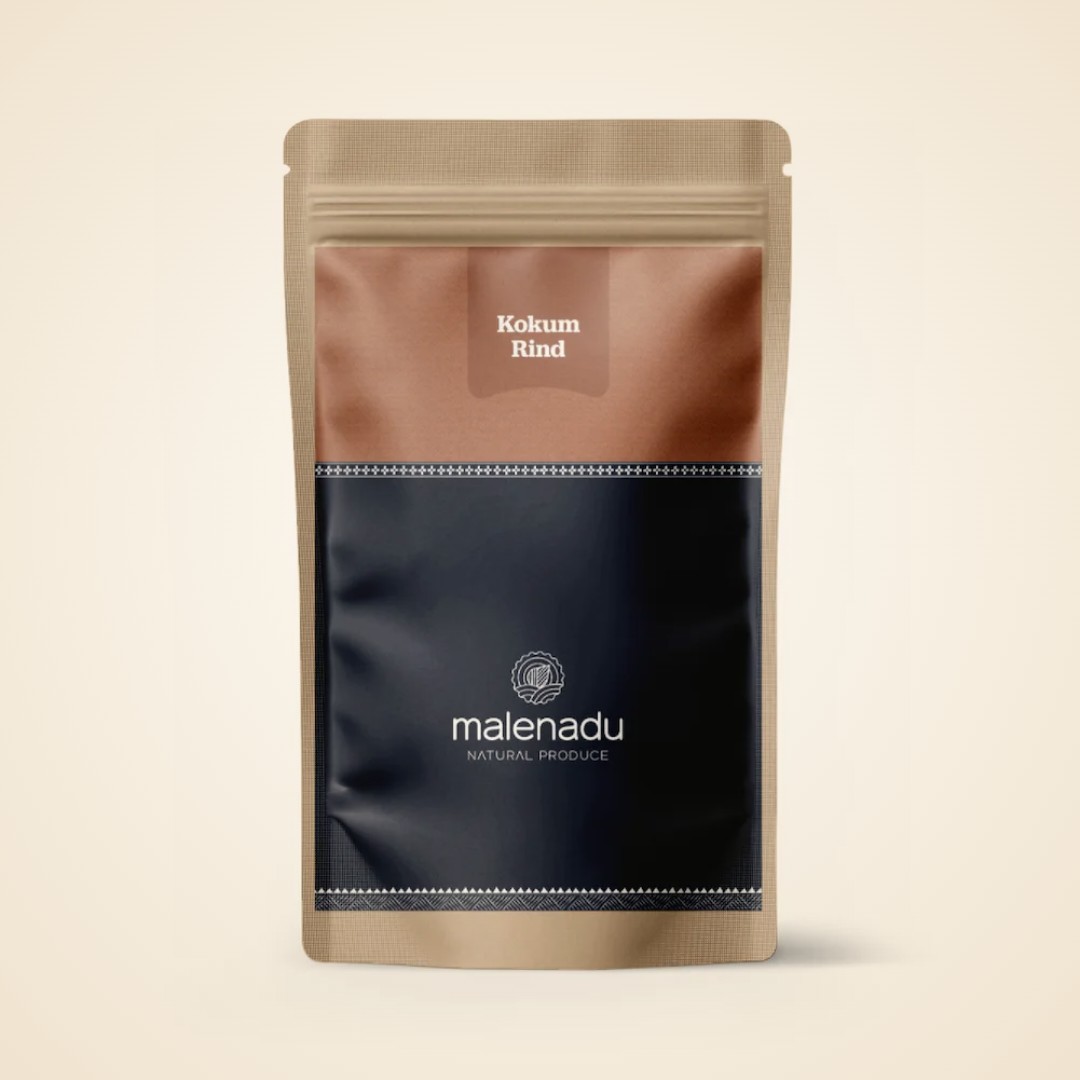
malenadu Kokum Rind is sun dried murugalu from these hills. Ground into the paste in place of tamarind, it gives a cleaner, fruitier sour and turns the slices a little reddish.
If the cooked slices still tingle on the tongue, the leaves needed more sour or more steaming. Next time add more tamarind and steam for 10 minutes longer. If one plant itches whatever you do, stop using it, because some kinds of kesu are simply too acrid.
Local tip
Rub a little coconut oil on your palms and knife before you handle the leaves. The sap can make your hands itch too. If it does, wash with plain water and rub on a little tamarind pulp.
How do you choose leaves for kesuvina patrode?
Choose tender, fresh leaves between the size of your palm and the size of your hand, with no holes, yellow patches or mud splashes. Large old leaves are fibrous and more likely to itch.
Here is what older cooks look for when they pick leaves for kesuvina patrode.
- Bright green, smooth leaves. Pale, yellowish leaves with thick veins are old.
- A plant the family trusts. Every village knows which clumps are gentle and which ones itch. Older cooks keep the gentle kind growing near the house.
- Purple or dark stalks. Many cooks prefer leaves with a dark purple stalk and say green stalked leaves need a little more tamarind.
- Clean water. Pick from clean streams and garden channels, never from roadside drains.
Some families wait for a kind of kesu that grows on tree trunks in the rains, which is prized for these rolls. Only pick a wild kind that someone in your family or village knows well. In city markets the leaves are sold in bundles as colocasia or arbi leaves, so pick medium leaves with firm, unbroken stalks.
For the thick sweet and sour relish made from the same leaves, see our kesuvina gojju recipe. Kannada names for the leaves, roots and spices used here are on our page of spice and ingredient names in Kannada.
What goes into the patrode paste?
The paste is soaked raw rice ground with coconut, roasted red chillies, coriander seeds, cumin, tamarind, jaggery, turmeric and salt. It should be thick and smooth, like a chutney you can spread with a spoon, never runny like dose batter. Each ingredient has a job.
| Ingredient | Its job in the paste |
|---|---|
| Raw rice (and a little urad dal) | holds the layers together and sets firm when steamed |
| Grated coconut | softness and a rich taste |
| Dry red chillies | heat and colour |
| Coriander seeds, cumin, fenugreek | the warm spice smell |
| Tamarind | the sour that stops the itch |
| Jaggery | balances the sour |
| Turmeric and salt | colour and seasoning |
The balance of sour and sweet is the heart of the dish. Many cooks use about twice as much jaggery as tamarind by weight. Taste the paste before you spread it: it should taste clearly sour, then sweet, then hot and a little too strong on its own, because steaming softens it.
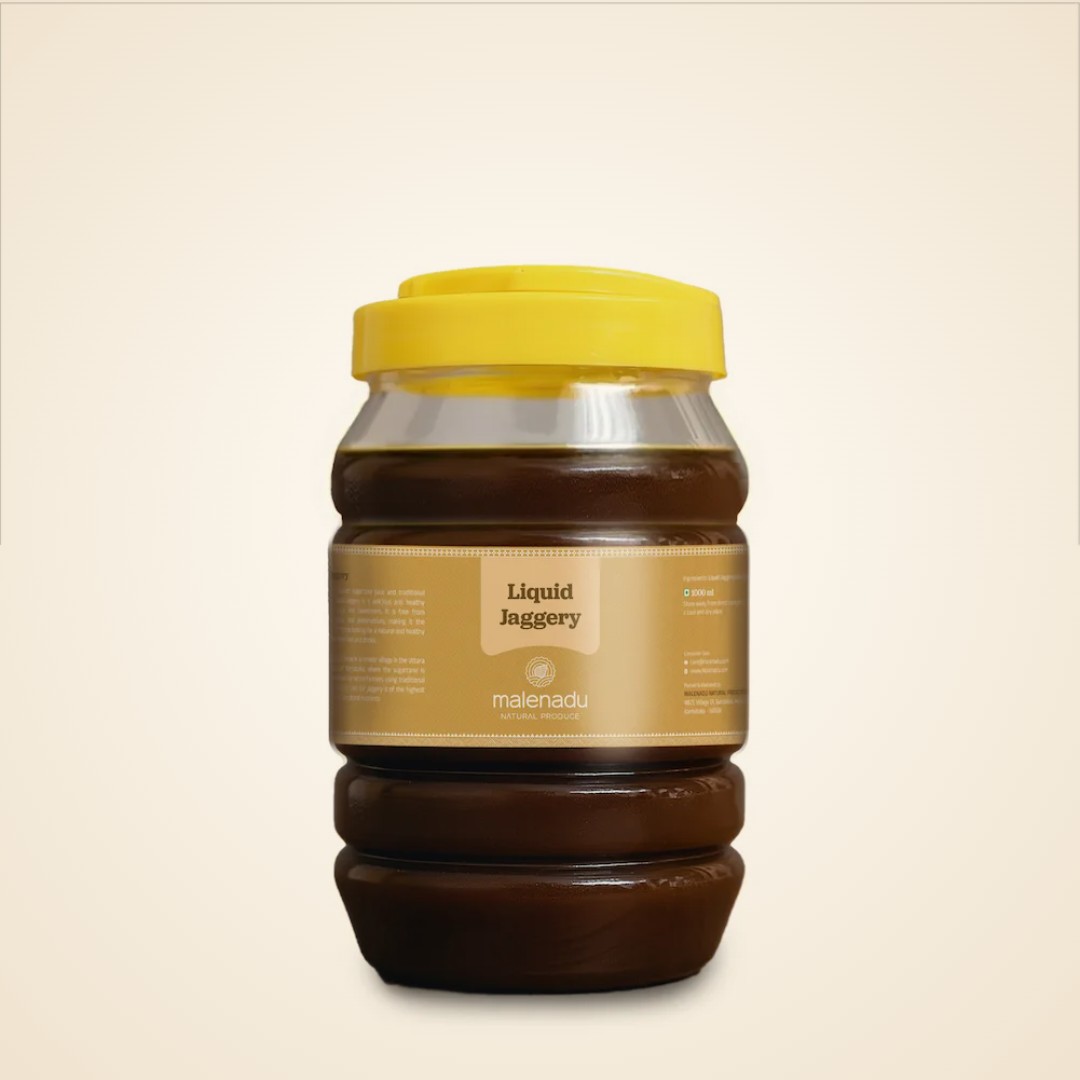
Liquid jaggery is the easiest sweetener here. It grinds straight into the paste without lumps and you can add a spoon at a time.
From the malenadu pantry
malenadu Liquid Jaggery is joni bella, the runny jaggery of Malenadu kitchens. Three to four tablespoons grind smoothly into the paste. A little more on the side is the old way to eat the hot slices.
Patrode recipe: how to make colocasia leaf rolls at home
This patrode recipe makes 4 colocasia leaf rolls, enough for a snack for four to six people. You need a steamer or a big pot with a stand, a sharp knife and about 4 hours of soaking time.
Recipe card
Patrode
Tender colocasia leaves layered with a sour, sweet and spicy rice and coconut paste, rolled, steamed and sliced the Malenadu way.
Ingredients
- 16 to 20 tender colocasia (kesu) leaves, palm to hand size
- 1 cup raw rice (dosa rice or sona masuri), about 200 g
- 2 tablespoons urad dal
- 3/4 cup freshly grated coconut
- 6 to 8 dry red chillies (use fewer if they are very hot)
- 2 tablespoons coriander seeds
- 1 teaspoon cumin seeds
- 1/4 teaspoon fenugreek (methi) seeds
- 1 lemon sized ball of tamarind, about 30 g (or 8 to 10 pieces kokum rind)
- 3 to 4 tablespoons liquid jaggery (or 1/4 cup grated jaggery)
- 1/2 teaspoon turmeric powder
- 1 1/2 teaspoons salt
- about 1/2 cup water, for grinding
- 1 teaspoon coconut oil, for roasting the spices
- 3 to 4 tablespoons coconut oil, for frying or tempering
Method
- Wash the rice and urad dal and soak them together in water for 3 to 4 hours. Soak the tamarind in 1/4 cup warm water for 15 minutes.
- Wash the leaves well and wipe them dry. Lay each leaf face down and shave off the thick veins on the back with a sharp knife, keeping the leaf whole. Cut off the stalk.
- Heat 1 teaspoon coconut oil and roast the red chillies, coriander seeds, cumin and fenugreek on low heat for 2 minutes, until they smell warm. Do not let them darken.
- Drain the rice and dal. Grind them with the roasted spices, coconut, tamarind with its water, jaggery, turmeric and salt into a thick, smooth paste, adding water a spoon at a time. Taste and adjust sour, sweet and salt.
- Put water in the steamer and bring it to a boil while you make the rolls.
- Place the largest leaf shiny side down, with the vein side facing you. Spread 2 to 3 tablespoons of paste thinly over it. Lay the next leaf on top pointing the other way and spread again. Build 4 to 5 layers.
- Fold in about 2 inches from both long sides and spread a little paste on the folds. Roll tightly from the stalk end into a log and smear a little paste over the outside to seal it.
- Place the rolls in the steamer with space between them. Cover and steam on medium heat for 35 to 40 minutes, until a knife pushed into the centre comes out clean.
- Cool the rolls for 15 minutes, then cut them into slices about 1 cm thick. Serve plain with coconut oil and jaggery, shallow fry them or make oggarane as shown below.
Well cooked rolls are firm enough to slice cleanly and dark olive green, with the paste set like a soft cake between the layers. They should smell of roasted chilli and coriander, with no raw rice smell. If the knife comes out sticky, steam for another 10 minutes.
Local tip
Make the rolls the evening before and keep them covered in the fridge. Next morning, slice and fry them cold. Cold rolls slice neater and the slices hold their shape in the pan.
How to serve patrode: steamed, fried or as oggarane
There are three ways to serve it: as plain steamed slices, as crisp shallow fried rounds or crumbled and tempered as oggarane. Most homes make all three from one batch.
Steamed slices with kobbari enne and bella
Many grandmothers prefer this simplest way. Put the warm slices on a plate, pour a spoon of raw coconut oil over them and add a spoon of jaggery or joni bella on the side. Eat with your fingers, a little jaggery with each bite.
Shallow fried slices
Heat a heavy iron tava and add a tablespoon of coconut oil. Lay the slices in a single layer and drizzle a little more oil around them. Fry on medium heat for 3 to 4 minutes on each side, until both sides are brown and crisp. For an extra crust, dip each slice in a thin batter of leftover paste or press it into rava before frying.
From the malenadu pantry
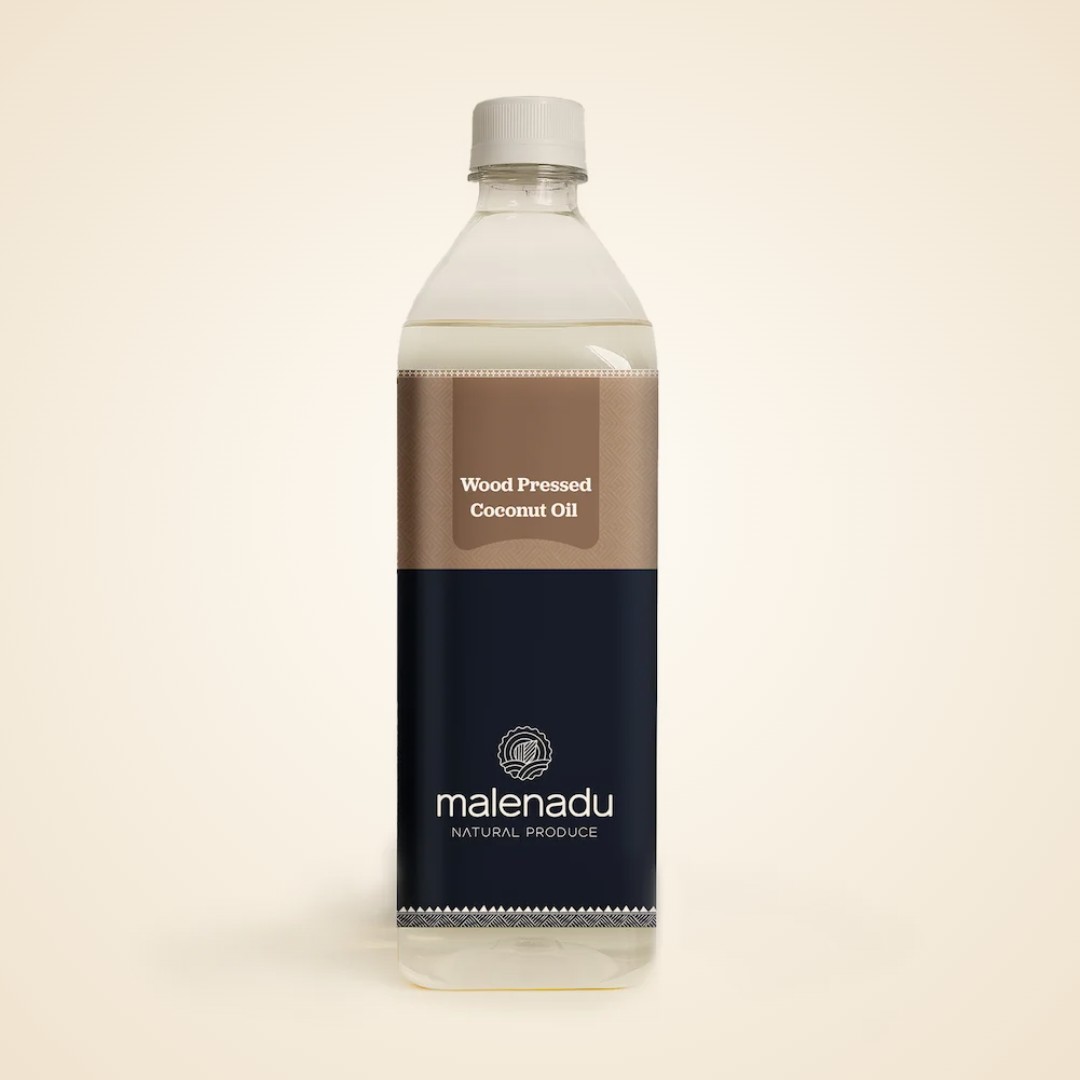
malenadu Wood Pressed Coconut Oil is pressed from sun dried copra in a wooden ghani. It is the fat Malenadu kitchens use here, poured raw over steamed slices or heated for crisp fried rounds.
Patrode oggarane (patrode usli)
Oggarane means tempering. Crumble 2 steamed rolls roughly with your fingers. Heat 2 tablespoons of coconut oil, add 1 teaspoon each of mustard seeds and urad dal, then a few curry leaves. Add the crumbled rolls, 3 tablespoons of grated coconut and 1 tablespoon of jaggery, then toss on medium heat for 4 to 5 minutes until the edges turn a little crisp.
Patrode variations from Malenadu homes
Every family is sure its own way is right. These are the variations you will meet most often.
In a plate, with chopped leaves
When the leaves are too small or torn to roll, chop them finely and mix them into the paste. Spread the mix in greased plates or idli moulds and steam for 25 to 30 minutes. Cut into squares and fry or temper them like the rolled kind.
With gandhari menasu
Grind one or two gandhari menasu, the tiny bird eye chillies of Malenadu backyards, into the paste in place of two red chillies. The heat is sharp and fresh and suits the sour paste. Our bird eye chilli is very hot, so start with one.
With vate huli
Some older cooks use vate huli, the dried monkey jack fruit of the hills, as the sour instead of tamarind. It gives a round, fruity tang. One to one and a half teaspoons of monkey jack powder can replace the tamarind ball in this recipe.
Common patrode mistakes and how to fix them
Most problems come from runny paste, thick veins left on the leaves or too little steaming. This table shows what went wrong and what to do next time.
| Problem | Likely cause | Fix |
|---|---|---|
| Itchy throat | undercooked leaves or too little sour | more tamarind, steam 10 to 15 minutes longer |
| Roll opens while steaming | paste too thin or roll too loose | thicker paste, roll tightly, seal outside |
| Raw, sticky centre | roll too thick or steamed too short | use 4 to 5 leaves only, steam until the knife is clean |
| Leaves tear while rolling | thick veins left on | shave veins flat, use tender leaves |
| Slices break in the pan | sliced while hot | cool the roll first, slice with a sharp knife |
| Tastes flat | not enough salt, sour or jaggery | the paste should taste strong before steaming |
Steamed rolls keep for 2 to 3 days in the fridge, wrapped in a clean cloth or a closed box. Fried slices are best eaten the same day, because they turn soft as they cool. If the rolls smell sour in a fermented way or grow mould, throw them out.
Where to go next after patrode
These rolls sit best in a full monsoon meal with rice, a peppery kokum saaru and a spoon of kesuvina gojju. For more rain food from these hills, start with our Malenadu food guide or try the soft rice flour akki rotti for breakfast. Coconut oil for frying the slices is in the oil and ghee section of our shop.
Bring Malenadu home
Grown and made by Malenadu farmer families, packed by malenadu, a farmer owned producer company in Honnavar.
-
24% OFF
Wood Pressed Coconut Oil
Original price was: ₹899.₹679Current price is: ₹679. -
14% OFF
Liquid Jaggery
Original price was: ₹349.₹299Current price is: ₹299. -
17% OFF
Kokum Rind
Original price was: ₹240.₹200Current price is: ₹200. -
Bird Eye Chilli
₹200 -
13% OFF
Turmeric Powder
Price range: ₹70 through ₹120 -
6% OFF
Monkey Jack Powder
Original price was: ₹399.₹375Current price is: ₹375.
Frequently asked questions about patrode
What is patrode made of?
Patrode is made of tender colocasia leaves layered with a paste of soaked rice, coconut, dry red chillies, coriander seeds, tamarind, jaggery, turmeric and salt. The rolls are steamed and then sliced.
Why does patrode make my throat itch?
Colocasia leaves contain calcium oxalate crystals. Itching means the leaves were undercooked, had thick veins left on or the paste did not have enough tamarind.
What is the difference between patrode and patra?
Both are steamed colocasia leaf rolls. The Karnataka dish uses a ground rice, coconut and tamarind paste, while patra from Gujarat uses gram flour.
Can I make it without colocasia leaves?
Some cooks use large spinach or other broad leaves, but the taste and texture are different. Colocasia leaves give the dish its earthy taste and firm layers.
How long should patrode be steamed?
Steam the rolls for 35 to 40 minutes on medium heat. They are done when a knife pushed into the centre comes out clean.
How long does patrode keep?
Steamed rolls keep for 2 to 3 days in the fridge. Slice and fry them cold and eat fried slices the same day.
When is patrode season?
It is made in the monsoon, from about June to September, when tender colocasia leaves grow beside streams and garden channels in Malenadu and on the coast.
Explore more of Malenadu
Malenadu FoodMalenadu FoodRice, kokum, pepper and joni bella from the hills
Malenadu FoodHalasina KadubuSweet jackfruit dumplings steamed in leaves
Malenadu FoodSpices Names in KannadaEnglish, Kannada and Hindi names for a Malenadu kitchen
Malenadu FoodKara KadubuSpicy steamed rice dumplings from Malenadu kitchens
Malenadu FoodKokum SaaruThe sour, peppery everyday rasam of Malenadu homes
Malenadu FoodMenthya TambuliA cool fenugreek and curd side for the first rice course
Malenadu FoodMalenadu FruitsJackfruit, kokum, wild mango and the fruits of the forest
Malenadu FoodKesuvina GojjuThe sweet and sour colocasia leaf relish of the monsoon
Start hereMalenadu in KarnatakaWhere Malenadu is, what the name means