
Malenadu Culture
Malenadu culture is the way of life that grew in the wet, forested hills of the Western Ghats in Karnataka: farm homes around areca and pepper gardens, all-night Yakshagana, painted mud walls, sacred groves left untouched for generations and a kitchen that cooks with whatever the rain brings. This guide walks through the people, arts, history and habits that hold it together.
On this page
What is Malenadu culture?
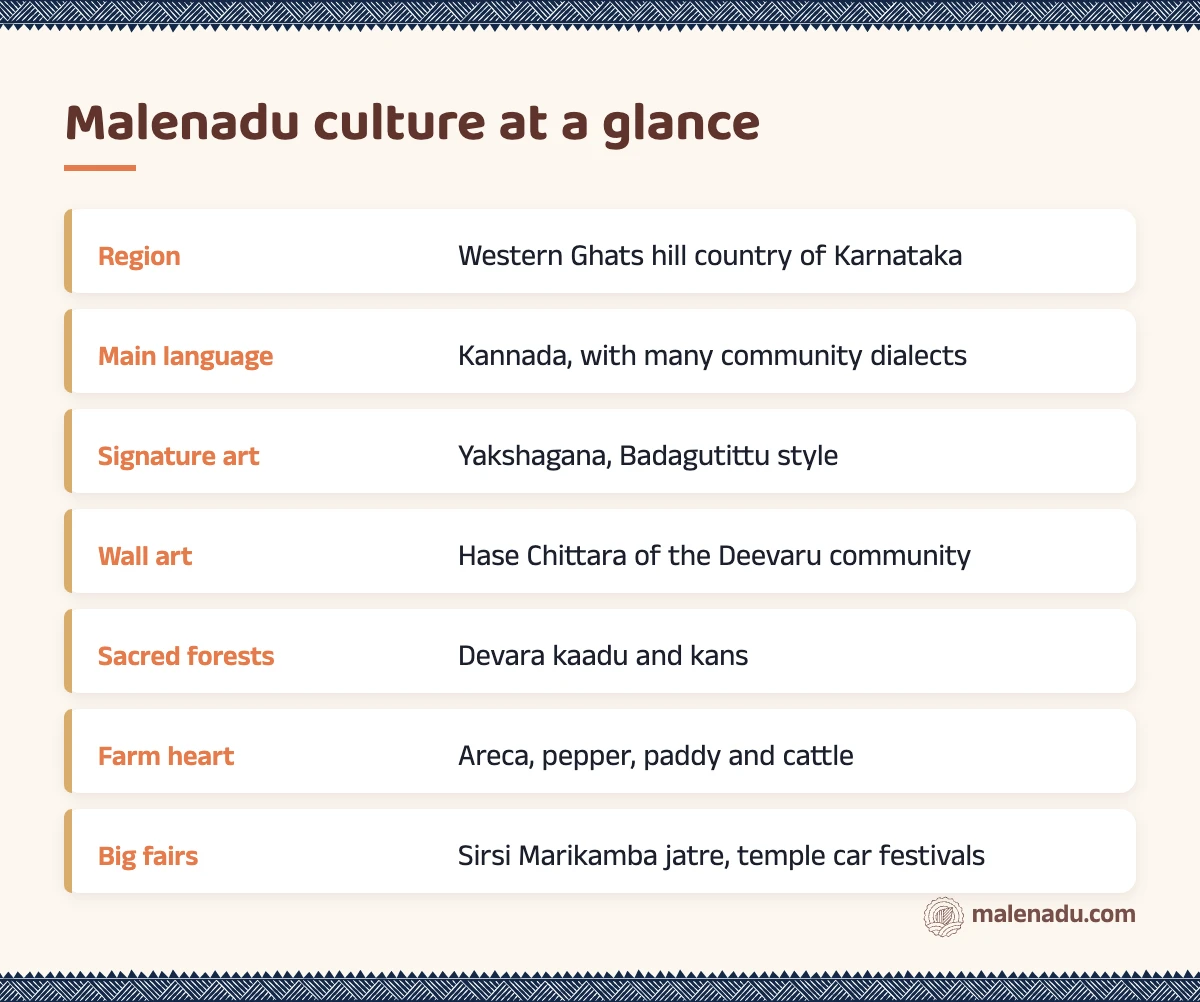
Malenadu culture is the shared way of living of the communities who farm, worship and tell stories in the hill country of Shivamogga, Chikkamagaluru, Uttara Kannada, Kodagu, Hassan and the hill edges of the coastal districts. It is shaped first by rain, then by forest and then by the thota (ತೋಟ, the mixed garden of areca, coconut, banana and pepper) that most families live on. For the map and the meaning of the word, start with our guide to Malenadu in Karnataka and the list of Malenadu districts and taluks.
What sets Malenadu culture apart from the plains is distance. Villages here are not tight clusters of houses. Each family lives on its own land, often far from the next house, so the home, the temple and the yearly jatre become the places where people meet.
A few threads run through almost every part of Malenadu culture:
- The monsoon calendar. Planting, festivals, Yakshagana and even weddings follow the rain.
- The joint farm home. Big tiled houses with a courtyard, a veranda and an attic for drying crops.
- Respect for the forest. Sacred groves, snake shrines and worship of the earth itself.
- Stage and oral arts. Yakshagana, folk songs, harvest dances and stories on the veranda.
- Food that keeps. Pickles, dried kokum, jaggery and spices stored for the wet months.
This page covers ten Malenadu traditions: the communities, the farm day, Yakshagana, folk dance, old kingdoms, writers, crafts, sacred groves, food and the festival year.
Who are the Malenadu people?
The Malenadu people are not one community but many, each with its own speech, gods, food and farming habits. What they share is the land: steep hills, heavy rain and gardens carved out of the forest. Here is a short, respectful introduction to the main groups.
| Community | Where you mostly meet them | Known for |
|---|---|---|
| Havyaka Brahmins | Sirsi, Siddapur, Yellapur, Sagara, Hosanagara, the Puttur side | Areca and pepper gardens, Havyaka Kannada |
| Vokkaligas | Chikkamagaluru, Hassan, Shivamogga hill taluks | Paddy, coffee and areca farming |
| Kodavas | Kodagu | Coffee estates, clan houses (ainmane), Kodava takk |
| Deevaru (Idiga) | Sagara, Soraba and nearby villages | Hase Chittara wall art, Bhoomi Hunnime baskets |
| Siddis | Yellapur, Haliyal and Dandeli side of Uttara Kannada | African ancestry, damami drum dance |
| Kunbis | Joida and the northern forests of Uttara Kannada | Forest farming, a Konkani-based speech |
| Gowlis | Forest hamlets (gouliwadas) of Uttara Kannada | Cattle keeping and dairy |
| Halakki Vokkaligas | Ankola, Kumta, Honnavar toward the coast | Folk songs, Suggi dance, paddy work |
| Forest communities | Kodagu, Chikkamagaluru, Shivamogga hills | Malekudiya, Jenu Kuruba, Yerava, Hasalaru and others |
Lingayat, Jain, Muslim, Christian and Gowda Saraswat families are part of Malenadu culture too, as are the Arebhashe-speaking Gowdas of the Sullia and Madikeri side. Two Halakki women from Ankola taluk, the folk singer Sukri Bommagowda and the tree planter Tulasi Gowda, received the Padma Shri for knowledge carried without books.
Local tip
Hospitality is the first rule of Malenadu culture. In a Malenadu home you will be offered water, then something sweet, before anyone asks why you came. Accept at least the water. Refusing everything can feel cold to the host.
What is daily Malenadu life like on a farm?
Malenadu life on a farm begins before sunrise and follows the garden, the cattle and the rain more than the clock. Most families are small farmers. A typical day looks like this:
- Early morning. Someone lights the fire under the hande (big copper pot) for bath water, milks the cows and sweeps the yard.
- Breakfast. Dose or kadubu (steamed rice cakes) with pickle, often with a spoon of joni bella (liquid jaggery) or ghee.
- Thota work. Weeding, mulching, spraying areca in the rains, picking pepper in the cool months, carrying leaf manure.
- Afternoon. Rice, saaru (thin rasam), huli (thick gravy) and a tambuli (cool curd dish), then a rest on the veranda with betel and areca.
- Evening. Cattle come home, the lamp is lit and the elders talk on the jagali (raised veranda).
- Night. An early dinner, then stories, TV or, in season, a walk to a Yakshagana show.
In Malenadu culture the year matters even more than the day. Areca harvest runs through the cool months, pepper is picked around the turn of the year and the monsoon is for planting paddy and staying indoors. Our Malenadu crop calendar lays out the farm year month by month.
Yakshagana in Malenadu culture
Yakshagana is a dance drama with singing, drumming, painted faces and tall headgear, performed through the night. No art is more tied to Malenadu culture. A bhagavata (lead singer) sings the story from the epics. A chande (high-pitched stick drum) and a maddale (hand drum) keep the beat while the actors dance and speak their lines on the spot. Shows run in the dry months, roughly from Deepavali until the next monsoon.
There are two broad styles:
- Badagutittu (northern style). Found from Udupi district north into Uttara Kannada, with the Karnataka chande. The Uttara Kannada form, known for its acting, is the one most hill audiences grew up with.
- Tenkutittu (southern style). Found in Dakshina Kannada and Kasaragod, with drums and costumes closer to Kerala.
Talamaddale is a seated version with no costume or dance, where actors argue the story out in prose. It is popular in Shivamogga and Chikkamagaluru as well as on the coast.
Yakshagana Malenadu centres: Keremane and Idagunji
The best known Yakshagana Malenadu name is Keremane, a village near Gunavante in Honnavar taluk of Uttara Kannada. The Keremane family of artists, Keremane Shivarama Hegde and his son Keremane Shambhu Hegde, carried this style of Yakshagana from the village to stages far beyond Uttara Kannada.
Touring troupes (melas) attached to temples still travel the hills. Towns like Sirsi, Sagara and Kumta run Yakshagana classes for children. A show in a village tent with the rain smell still in the air is Malenadu culture at its best.
Which other folk arts are part of Malenadu traditions?
Many smaller Malenadu traditions in dance, song and ritual live alongside Yakshagana. Some belong to one community and some to one season, but all are part of Malenadu culture.
- Dollu Kunitha. A powerful drum dance of the Kuruba community, linked to the worship of Beeralingeshwara and seen at fairs across Karnataka.
- Suggi Kunitha. The harvest dance of the Halakki Vokkaligas, performed around Holi with tall, colourful headgear.
- Siddi damami. The Siddi drum and dance, with an African root mixed with local rhythm, seen around Yellapur and Haliyal.
- Kodava dances. Men’s Bolakaat and women’s Ummathaat at Kodava weddings and festivals.
- Folk songs. Village bhajan groups, harvest songs and the Deepavali house-to-house singing called antige pintige.
Bhuta kola, the spirit worship ritual many people know from films, belongs mainly to the Tulu-speaking coast of Dakshina Kannada and Udupi. You may meet it where the hills touch the coast. It is fair to enjoy it as a neighbour’s tradition rather than claim it as Malenadu culture.
Which kingdoms shaped Malenadu culture?
Three home-grown dynasties left the deepest marks on Malenadu culture: the Kadambas, the Hoysalas and the Keladi Nayakas.
| Dynasty | Home base | What you can still see |
|---|---|---|
| Kadambas | Banavasi, near Sirsi | The Madhukeshwara temple town |
| Hoysalas | Origin story set at Angadi (Sosevur) near Mudigere | Belur and Halebidu temples |
| Keladi Nayakas | Keladi, then Ikkeri, then Bidanur (Nagara) | Temples at Keladi and Ikkeri near Sagara |
The Hoysala temples at Belur, Halebidu and Somanathapura were inscribed together as the Sacred Ensembles of the Hoysalas on the World Heritage list in 2023. Keladi Chennamma, the queen who sheltered Rajaram, son of Shivaji, is still a local hero in Sagara. For the wider story and places to visit, read our page on Malenadu in Karnataka.
Which writers wrote about Malenadu life?
Some of the greatest Kannada writers grew up in these hills. Their books are the best way to understand Malenadu life from the inside.
- Kuvempu (K.V. Puttappa). He grew up at Kuppali near Thirthahalli, where his family house is now a memorial. His novels Kanooru Heggadithi and Malegalalli Madumagalu are set in Malenadu villages. He received the Jnanpith for Sri Ramayana Darshanam.
- Poornachandra Tejaswi. Kuvempu’s son, who chose to farm near Mudigere. Karvalo, Jugari Cross and Chidambara Rahasya are full of forest, coffee and very funny local characters.
- U.R. Ananthamurthy. Born in the Thirthahalli area. His novel Samskara (1965) is a modern classic. He received the Jnanpith in 1994.
- Na D’Souza. From Sagara. His novel Dweepa, about a family facing the waters of a new dam, became a film by Girish Kasaravalli.
- K.V. Subbanna. Born in Heggodu near Sagara, where he built a village theatre movement. He received the Ramon Magsaysay Award.
If you read one book to understand Malenadu culture, make it Karvalo in a good translation. It is short and funny.
What crafts come from Malenadu traditions?
The best known Malenadu craft traditions are Hase Chittara painting, Gudigar wood carving and bamboo work. In Malenadu culture most began as things made for the home and the temple, not for sale.
Hase Chittara wall art
Hase Chittara is a geometric folk painting traditionally done by Deevaru women of Sagara taluk and nearby villages. Patterns are drawn on mud walls and floors with a paddy straw brush, using colours from rice flour, red earth, charcoal, turmeric and lime. The designs show farm life, weddings and rituals in circles, triangles and lines. The same art decorates the butti (bamboo basket) carried to the fields at Bhoomi Hunnime.
At malenadu we use Hase Chittara style borders in our brand design, a small nod to the women who kept this art alive.
Gudigar carving and bamboo work
The Gudigars are carvers who work in sandalwood and other woods, mainly in Sagara and Soraba taluks and in Uttara Kannada. Their figures of gods, animals and panels were once made for temples and palaces. Because sandalwood supply is restricted, many carvers now use other woods.
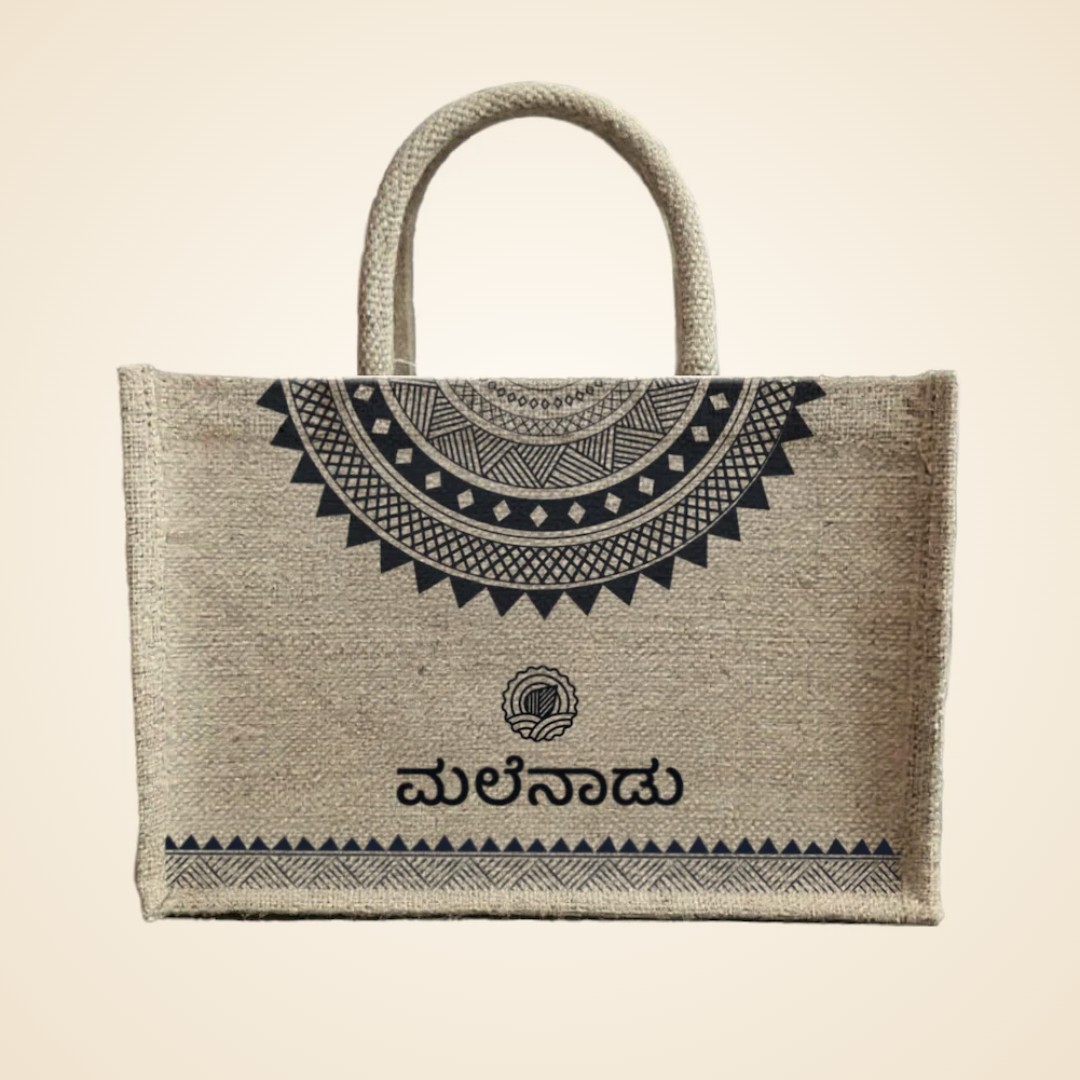
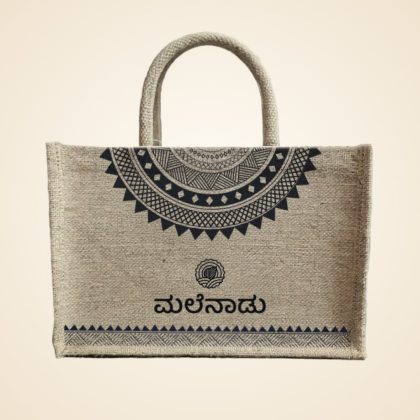
Bamboo work is everywhere in the hills: baskets for areca and paddy, winnowing trays, mats and fish traps. That habit of carrying things in something strong and simple lives on in our Kannada printed small jute bag.
From the malenadu pantry
A plain jute bag printed with Kannada lettering, sized for a box of sweets, a jar of honey or a few spice packs. It carries the spirit of the bamboo butti into a city market or an office gift.
Why are sacred groves important in Malenadu culture?
Sacred groves are patches of forest kept for a local deity. They are among the oldest and most practical parts of Malenadu culture. In Kodagu they are called devara kaadu (God’s forest). In Uttara Kannada and Shivamogga the larger village forests linked to a deity are called kans.
Inside a grove you do not cut green trees. The deity might be a forest goddess, a snake god (naga) or a local guardian. Researchers at the Indian Institute of Science have recorded more than a thousand sacred groves in Kodagu and hundreds of kans in Uttara Kannada and Shivamogga, many linked to springs and village tanks.
The practical side is simple. A grove at the head of a valley protects the spring that waters the garden below it.
Food in Malenadu culture
Food in Malenadu culture is built on rice, coconut, jaggery, sour fruits and home-grown spices. Almost every dish has a festival, a season or a rainy day attached to it.
- Sourness from the forest. Dried kokum (murugalu) and vate huli (monkey jack) replace tamarind in many homes.
- Jaggery over sugar. Joni bella, block jaggery and coconut-jaggery sweets are the everyday sweeteners.
- Leaf cooking. Kadubu steamed in jackfruit leaf cups (kotte), turmeric leaves or banana leaves.
- Tambuli. Cool curd dishes made from herbs at the garden edge.
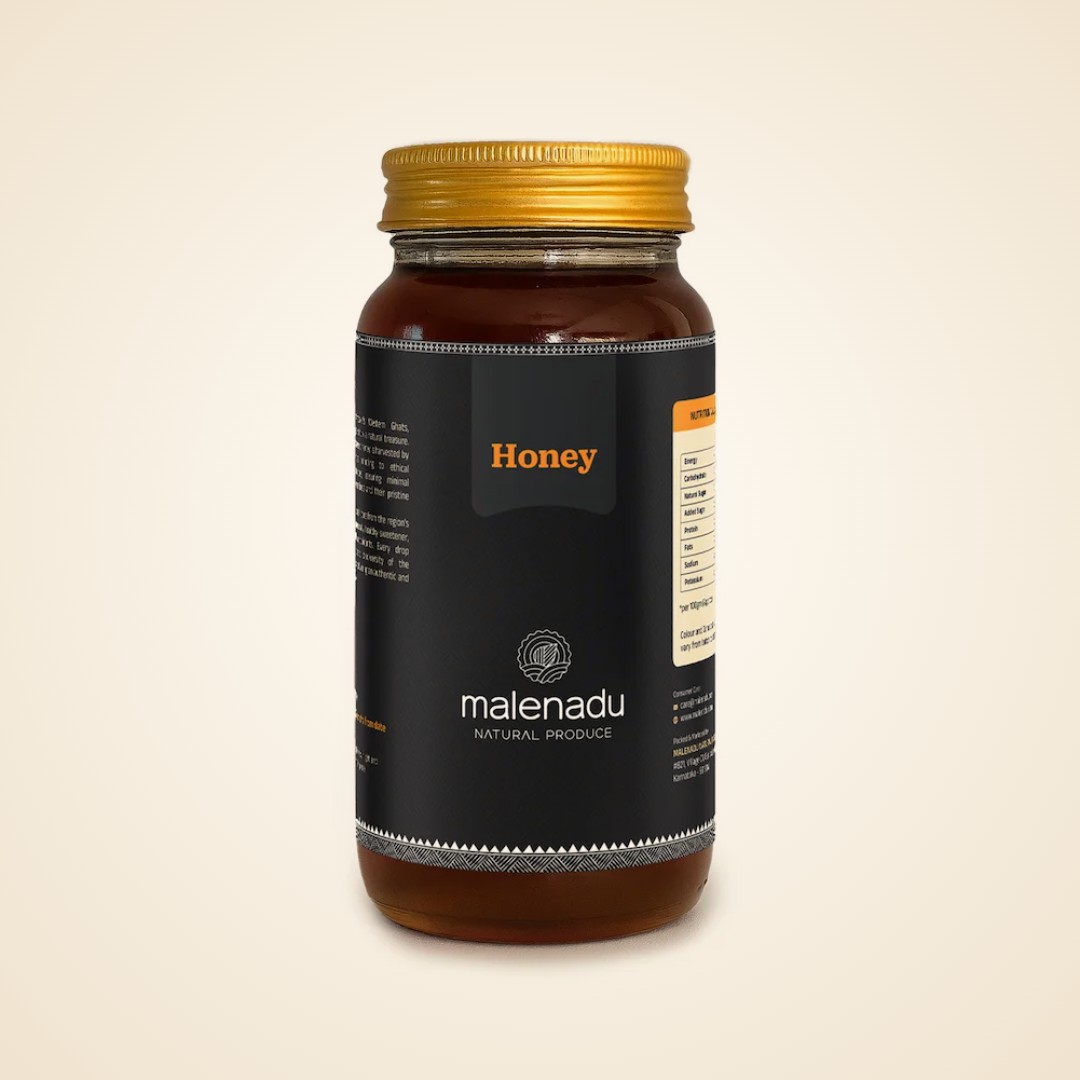
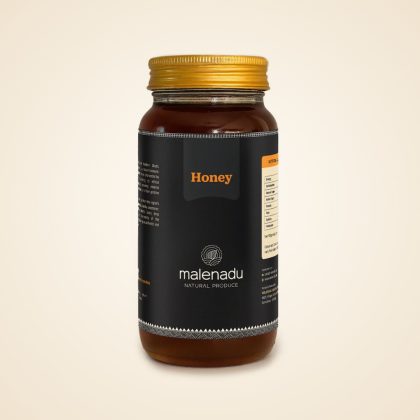
In Malenadu culture honey has long sat beside ghee and jaggery on the Malenadu shelf. In Malenadu homes a spoon of it in warm water is given to adults for a dry throat in the cold months. A jar of honey still belongs on that shelf.
From the malenadu pantry
malenadu Honey, kept in the jar the way a hill family would keep it. Use it on dose, in tea or for the old habit of a spoon in warm water on cold mornings.
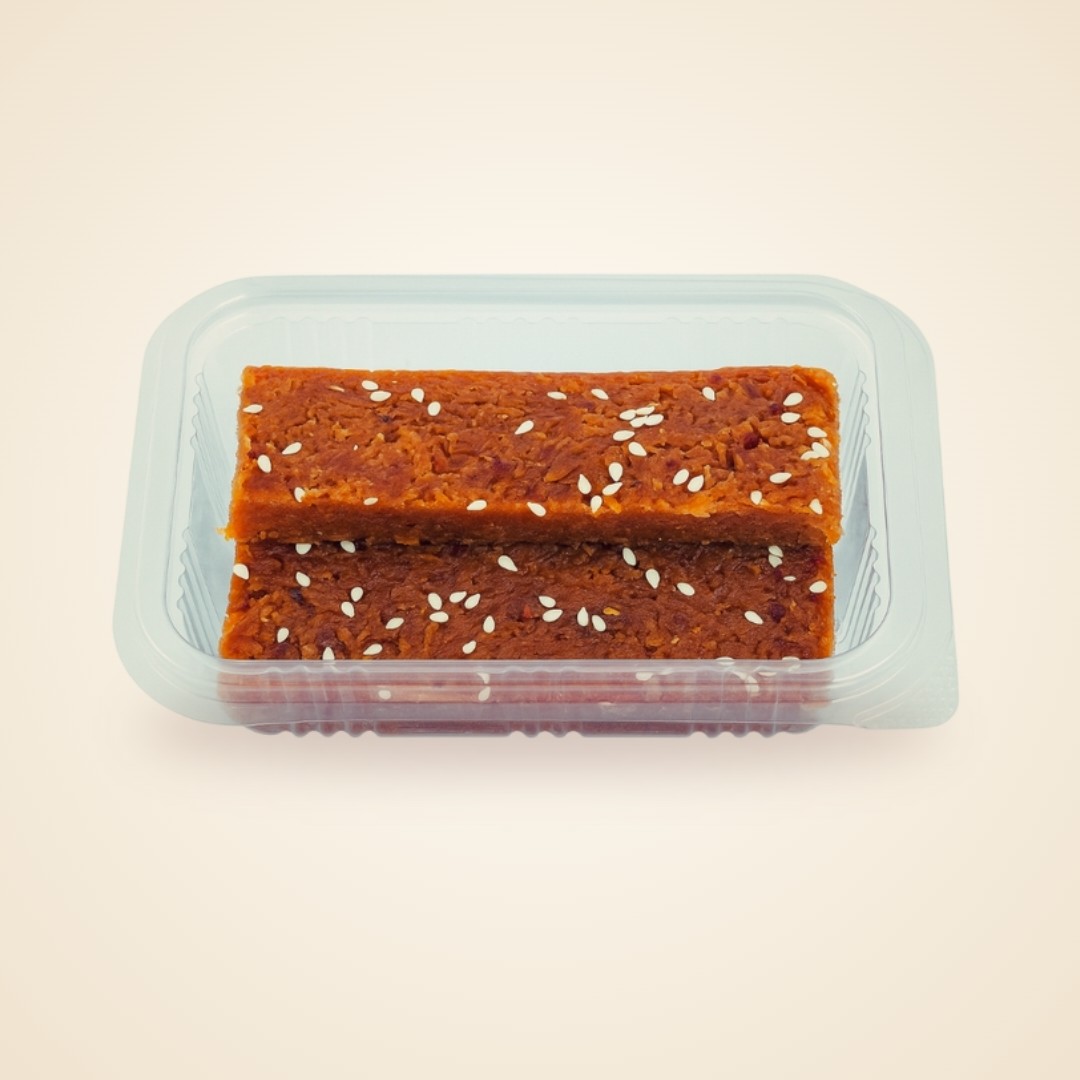
The sweet you will meet on almost every visit is coconut and jaggery cooked together. Our coconut jaggery burfi follows that home method. For recipes and ingredient names, see our guide to Malenadu food.
From the malenadu pantry
Grated coconut and jaggery cooked down slowly into soft squares, the way Malenadu kitchens make a quick sweet for guests and festival plates. Good with filter coffee on a rainy evening.
Festivals, houses and language: three deeper guides
Festivals, homes and speech are the parts of Malenadu culture that need a page each, so we have written separate guides for them.
- Festivals of Malenadu through the year. From Sankranti to Huttari, with Bhoomi Hunnime, Deepavali, the Sirsi Marikamba jatre and the foods for each.
- The traditional Malenadu house. Thotti courtyards, the jagali katte, the smoky attic and why these homes breathe in the monsoon.
- Languages and dialects of Malenadu. Havyaka Kannada, Arebhashe, Kodava takk, Konkani and a table of everyday farm and food words.
For a visitor the festival year matters most. The Sirsi Marikamba jatre comes once every two years, Huttari brings Kodagu together in the cool months and Bhoomi Hunnime turns paddy fields into picnic grounds in October.
Where to go next
The best way to understand Malenadu culture is to see it: plan a trip with our Malenadu travel guide, time it with a jatre or a Yakshagana night and stay in a farm homestay. If you cannot travel yet, the taste of the hills is the next best thing: you will find it in our full range of farm products.
Bring Malenadu home
Grown and made by Malenadu farmer families, packed by malenadu, a farmer owned producer company in Honnavar.
Frequently asked questions about Malenadu culture
What is Malenadu culture known for?
Malenadu culture is known for Yakshagana, Hase Chittara wall painting, sacred groves, large courtyard farm homes and food built on rice, coconut, jaggery, kokum and home-grown spices.
Which communities live in Malenadu?
Malenadu culture is shared by Havyaka Brahmins, Vokkaligas, Kodavas, Deevaru (Idiga), Siddis, Kunbis, Gowlis, Halakki Vokkaligas, Arebhashe Gowdas and forest communities such as Malekudiya and Jenu Kuruba, along with Lingayat, Jain, Muslim and Christian families.
Is Yakshagana from Malenadu or the coast?
Both. It is central to Malenadu culture, but the southern Tenkutittu style is strongest in Dakshina Kannada and Kasaragod, while the northern Badagutittu style runs from Udupi into Uttara Kannada, where Keremane and Idagunji are famous centres.
What is Hase Chittara?
Hase Chittara is a geometric folk painting made by Deevaru women in Sagara taluk of Shivamogga district, using colours from rice flour, red earth, charcoal and turmeric on walls, floors and baskets.
What are devara kaadu and kans?
Both are sacred forests kept for a local deity. Devara kaadu is the Kodagu name, while kans are larger deity-linked village forests in Uttara Kannada and Shivamogga.
Which famous writers come from Malenadu?
Kuvempu, Poornachandra Tejaswi, U.R. Ananthamurthy and Na D’Souza all grew up in Malenadu and wrote about it. K.V. Subbanna made Heggodu near Sagara a village known for theatre.
What is the best time to experience Malenadu culture?
November to March is best for Yakshagana, temple car festivals, jatres and Huttari. October brings Bhoomi Hunnime and Deepavali, which are lovely to see in a village.
Explore more of Malenadu
Malenadu CultureFestivals of MalenaduA year of harvests, jatres and sweets in the rain hills
Malenadu CultureThe Malenadu HouseCourtyards, verandas and attics built for the rain
Malenadu CultureLanguages of MalenaduKannada, its hill dialects and the tongues around them
Malenadu CultureMalenadu Village LifeFarmhouses, areca gardens, paddy and the long rains
Malenadu CultureMalenadu Quotes and CaptionsShort lines for rain, mist, coffee and home
ಕನ್ನಡದಲ್ಲಿಮಲೆನಾಡು: ಕನ್ನಡದಲ್ಲಿ ಮಾಹಿತಿಬೆಟ್ಟ, ಕಾಡು, ಮಳೆ ಮತ್ತು ತೋಟಗಳ ನಾಡಿನ ಪರಿಚಯ
Malenadu CultureMalenadu HistoryKings, planters and farmers of the Western Ghats
Malenadu CultureMalenadu WritersThe Kannada authors who put the hills into books
Malenadu CultureDevara KaduThe sacred groves Malenadu villages never cut
Malenadu FarmingMalenadu CropsWhat grows in Karnataka’s rain hills and why it grows
Malenadu FoodMalenadu FoodRice, kokum, pepper and joni bella from the hills
Malenadu TravelMalenadu Travel GuideRoutes, stays and seasons for the rain hills of Karnataka
Start hereMalenadu in KarnatakaWhere Malenadu is, what the name means