
Malenadu Food
Malenadu akki rotti (ಅಕ್ಕಿ ರೊಟ್ಟಿ) is a soft flatbread of rice flour, onion, coconut and green chilli, mixed with hot water and patted thin by hand on a banana leaf. This page explains the hot water dough, gives a home recipe, shows the leaf and plastic sheet methods, four variations, the best chutneys and the mistakes to avoid.
On this page
What is Malenadu akki rotti?
Malenadu akki rotti is a flatbread made from rice flour instead of wheat. “Akki” means rice and “rotti” means a flatbread, so the name simply says rice rotti. The dough is soft and sticky, so it is not rolled with a pin. It is patted out with wet fingers on a greased banana leaf, a plastic sheet or straight on the tava.
In most hill homes Malenadu akki rotti is a breakfast dish, eaten hot from the tava one at a time with ghee melting on top and a chutney on the side. Many families also make it for an early dinner, because it needs no grinding and no fermenting.
A good Malenadu akki rotti is thin, soft in the middle and lightly crisp at the edges. You should see brown spots on both sides, bits of onion and coconut through the dough and green flecks of curry leaf and coriander.
Is akki rotti the same as rice rotti?
Yes. Rice rotti is the English name for akki rotti. Outside Karnataka people also call it akki roti or rice roti. The rice rotti made with cooked dough and rolled thin has its own name in the hills, ubbu rotti, which we cover in the variations below.
Malenadu style akki rotti: what makes it different?
Malenadu style akki rotti is usually simpler than the city versions, with fewer vegetables and more coconut. In the hills the dough is mostly rice flour, onion, green chilli, cumin, curry leaves and fresh coconut. Carrot, dill and other vegetables are added only on some days.
Karnataka Tourism describes akki rotti as a traditional Karnataka breakfast made from fine rice flour, onion, coconut and curry leaves, patted on a banana leaf and served with butter, chutney or pickle. The Malenadu style akki rotti follows the same idea, with three habits of the region:
- Hot water in the dough. Many hill homes mix the flour with hot water, not cold. The dough turns smoother and the rotti stays soft.
- Fresh coconut. Grated coconut from the thota (home plantation) goes into almost every batch. It keeps the rotti moist.
- Coconut oil and ghee. Coconut oil goes on the leaf and the tava. Ghee goes on the hot rotti.
Coconut is everywhere in this food for a reason. Karnataka was the largest coconut producing state in India in 2022-23, according to Coconut Development Board statistics. If you want to know which districts make up the hills, see our page on Malenadu districts and taluks.
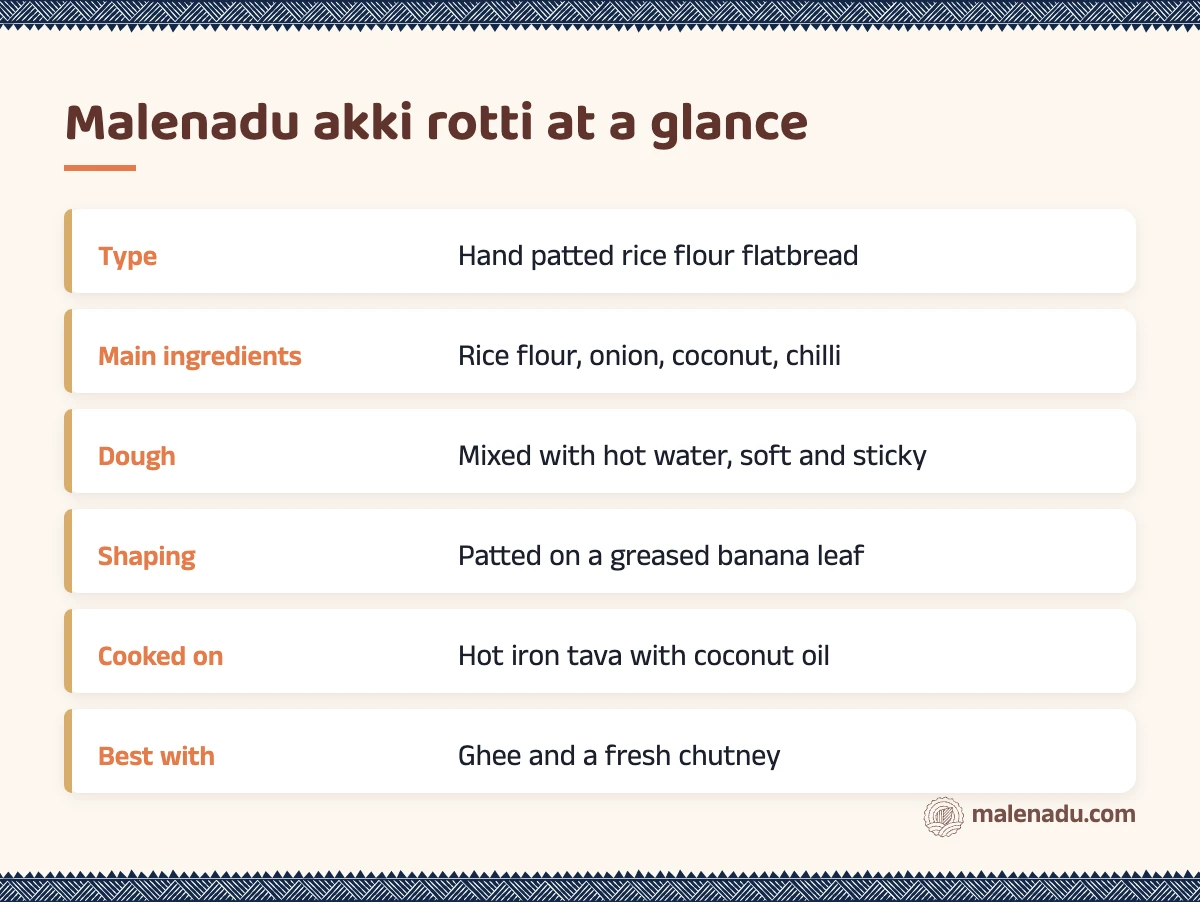
Why hot water makes a softer rice flour dough
Hot water makes rice flour dough soft because it partly cooks the starch, so the flour holds together without gluten. Rice has no gluten, so a cold water dough cracks at the edges and turns hard as it cools.
When you pour hot water over rice flour, it swells and turns slightly sticky. That gives a smooth dough that pats out thin, which is the secret of a soft Malenadu akki rotti. Ubbu means to swell in Kannada, which is why rotti made from scalded dough is often called ubbu rotti.
There are two ways hill homes use this idea:
- Hot water mixed in. Water just off the boil is poured over the flour and vegetables, mixed with a spoon, then kneaded when cool enough to touch. This is the dough for patted Malenadu akki rotti.
- Flour cooked in water. The flour is stirred into boiling water on the stove, covered, rested and kneaded. This dough is firm enough to roll and makes ubbu rotti.
Knead the dough while it is still warm. Once it cools, it stiffens and cracks.
Akki rotti recipe: how to make Malenadu akki rotti at home
This akki rotti recipe makes 5 Malenadu akki rotti of about 7 inches, enough breakfast for three people. You need a heavy iron tava, a piece of banana leaf or thick plastic sheet and a bowl of water for your fingers. The whole job takes about 40 minutes.
Recipe card
Malenadu Akki Rotti
Soft rice flour rotti with onion, coconut and green chilli, mixed with hot water and patted thin on a banana leaf the Malenadu way.
Ingredients
- 2 cups fine rice flour (akki hittu), about 280 g
- 1 medium onion, finely chopped (about 1/2 cup)
- 1/2 cup freshly grated coconut
- 2 green chillies, finely chopped (or 1 bird eye chilli, crushed)
- 1 teaspoon cumin seeds
- 10 to 12 curry leaves, finely chopped
- 2 tablespoons chopped coriander leaves
- 1 teaspoon salt (adjust to taste)
- 1 1/4 to 1 1/2 cups hot water, just off the boil
- 4 teaspoons coconut oil, for the leaf and tava
- 1 banana leaf piece, about 10 inches square (or a thick plastic sheet)
- Desi cow ghee, to serve
Method
- In a wide bowl mix the rice flour, onion, coconut, green chilli, cumin, curry leaves, coriander and salt. Rub the onion and coconut into the flour with your fingers for a minute.
- Pour in 1 1/4 cups of hot water a little at a time and mix with a spoon. Cover the bowl and leave it for 5 minutes.
- When the dough is cool enough to touch, knead it for 2 minutes into a soft, slightly sticky dough. If it cracks, add hot water a tablespoon at a time. It should be softer than chapati dough.
- Divide the dough into 5 equal balls. Heat the tava on a medium flame.
- Wipe the banana leaf with a few drops of coconut oil. Place one ball in the centre, dip your fingers in water and pat it out from the middle into a thin round of about 7 inches. Poke 4 or 5 small holes in it with a finger.
- Lift the leaf and turn it over onto the hot tava so the rotti is face down. Press lightly for 20 to 30 seconds, then peel the leaf off slowly from one edge.
- Drizzle a few drops of coconut oil into the holes and around the edge. Cook for about 2 minutes until the base has brown spots, then flip and cook the other side for 1 to 2 minutes.
- Serve hot with a spoon of ghee and chutney. Wipe the leaf, oil it again and repeat with the rest of the dough.
Local tip
Keep the dough bowl covered with a damp cloth while you cook. Rice flour dough dries fast and the last two rotti always crack if the bowl is left open.
Ghee is what turns this simple rotti into breakfast. Put it on while the rotti is still steaming so it soaks in.
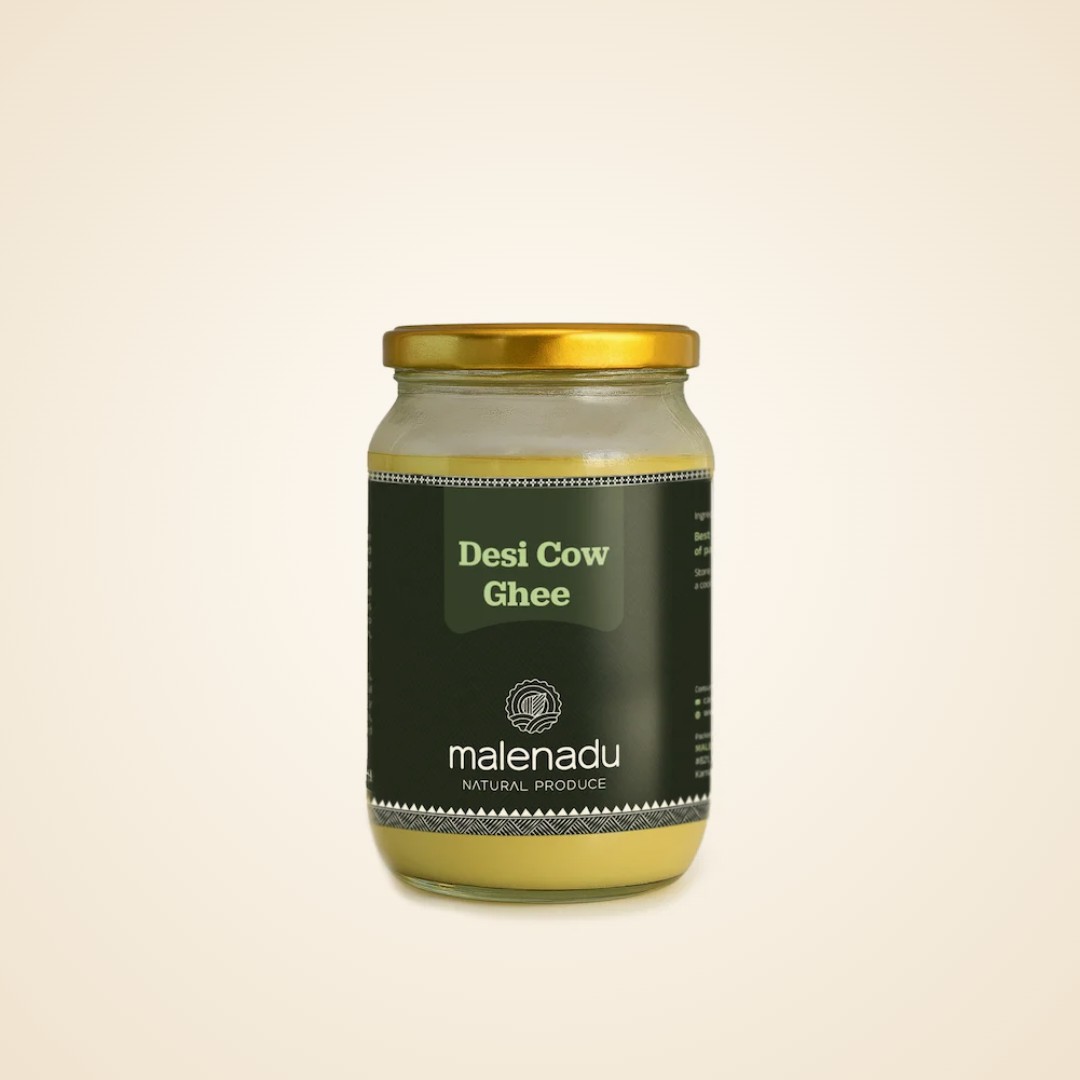
From the malenadu pantry
malenadu Desi Cow Ghee is hand churned by farmer families from the milk of desi breeds such as Malenadu Gidda. A spoon on hot Malenadu akki rotti is how most hill children first learn to like it.
How to make akki rotti with leaves or a plastic sheet
Akki rotti with leaves is the traditional way: you pat the dough on a greased banana leaf, then flip it onto the tava. The leaf holds the soft dough together and gives Malenadu akki rotti a faint, pleasant smell. Here are the three methods hill homes use.
Banana leaf (the classic way)
Cut a piece of banana leaf about 10 inches square. Wave it over a flame for a few seconds until it turns bright green and soft. Grease it with coconut oil, pat the dough, then turn the leaf over onto the hot tava and peel it away. One leaf lasts the whole batch if you wipe and oil it between rotti.
Plastic sheet or butter paper
In towns, a thick plastic sheet or a piece of butter paper does the same job. Grease it, pat the rotti, then turn it onto your palm, peel off the sheet and slide the rotti onto the tava. Do not put plastic on the hot tava.
Straight on the tava
Many grandmothers pat Malenadu akki rotti directly on a cool, greased tava with wet fingers, then put the tava on the flame. They use two tavas: one being patted while the other cooks. This gives the thinnest rotti but needs practice.
From the malenadu pantry
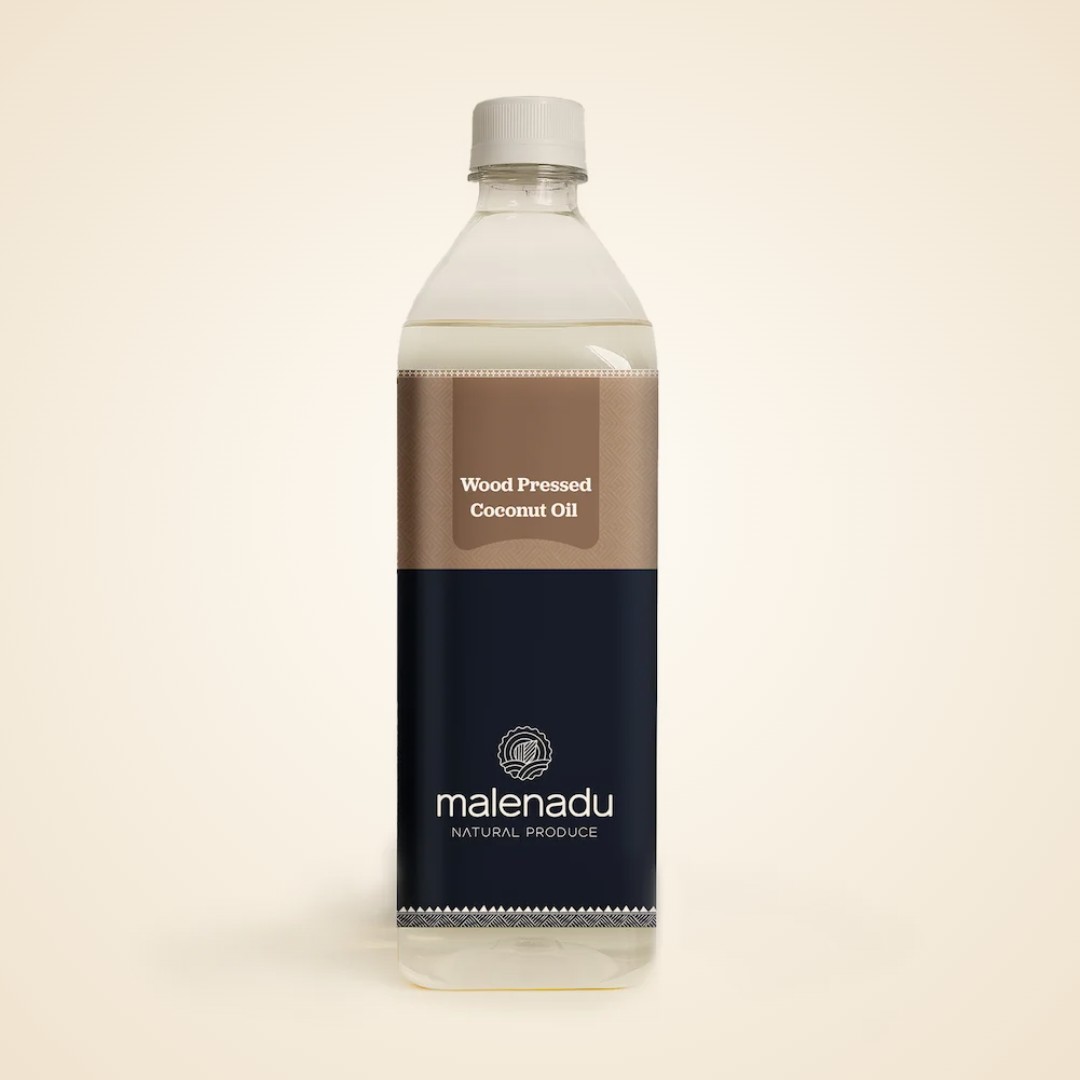
malenadu Wood Pressed Coconut Oil is made from sun dried copra in a wooden ghani. A few drops on the leaf and around the rotti give the edges their crisp bite and that warm coconut smell.
Malenadu akki rotti variations to try
Malenadu akki rotti changes with what grows in the backyard that week. The four variations below are the most common in hill homes and all of them use the same hot water dough. Kannada names for the vegetables and leaves are on our spice and ingredient names in Kannada page.
Cucumber rotti (southekayi rotti)
Grate 1 cup of peeled cucumber (southekayi) into the flour and mix before adding any water, because cucumber is very juicy. Add hot water only if needed. This Malenadu akki rotti is soft, mild and slightly sweet.
Dill rotti (sabsige soppu rotti)
Add 1/2 cup of finely chopped dill leaves (sabsige soppu) with the onion. Dill has a strong smell, so do not add more than this for 2 cups of flour. It is the version most people outside the hills know.
Onion rotti (eerulli rotti)
Double the onion and add an extra green chilli. Onion rotti is crisper at the edges and the easiest Malenadu akki rotti to start with.
Coconut rotti (kayi rotti)
Use 1 cup of grated coconut and leave out the onion. This version is rich and soft and keeps well for lunch boxes. Some homes add a pinch of crushed black pepper instead of chilli for children.
Ubbu rotti, the rolled rice rotti
For ubbu rotti, bring 1 1/4 cups water with salt and a few drops of oil to a boil. Add 1 cup rice flour, stir, switch off the heat and cover for 10 minutes. Knead well while warm, roll thin with a little rice flour and cook on a dry hot tava. It is plain, with no onion or chilli. Eat it with a curry such as Malenadu koli saaru. In Kodagu the same kind of rotti is called akki otti.
What to serve with Malenadu akki rotti
Malenadu akki rotti is best with ghee and a fresh chutney, eaten hot from the tava. Because Malenadu akki rotti is mild, it needs something wet, sharp or sweet beside it.
- Ghee or white butter. The first thing on any hot rotti.
- A fresh chutney. See the akki rotti chutney list below.
- Gojju. A sweet, sour and spicy relish. The colocasia leaf kesuvina gojju of the hills is a classic.
- Pickle. A slice of mango or lime pickle on the side.
- A curry. Plain or onion rotti goes well with a chicken or vegetable curry for dinner.
- Joni bella and ghee. A sweet breakfast for children: liquid jaggery with ghee to dip the rotti in.
Which akki rotti chutney goes best?
The most common akki rotti chutney in the hills is a coarse coconut chutney with green chilli and a little tamarind, seasoned in coconut oil. Next comes huchellu chutney, made with roasted niger seed, which is nutty and slightly bitter. Ginger chutney (shunti chutney) and a quick tomato chutney are the other usual choices.
Joni bella is a favourite with children over one year. Mix a spoon of it with a spoon of ghee and tear the Malenadu akki rotti into it. Do not give jaggery, sugar or honey to babies under one year.
From the malenadu pantry
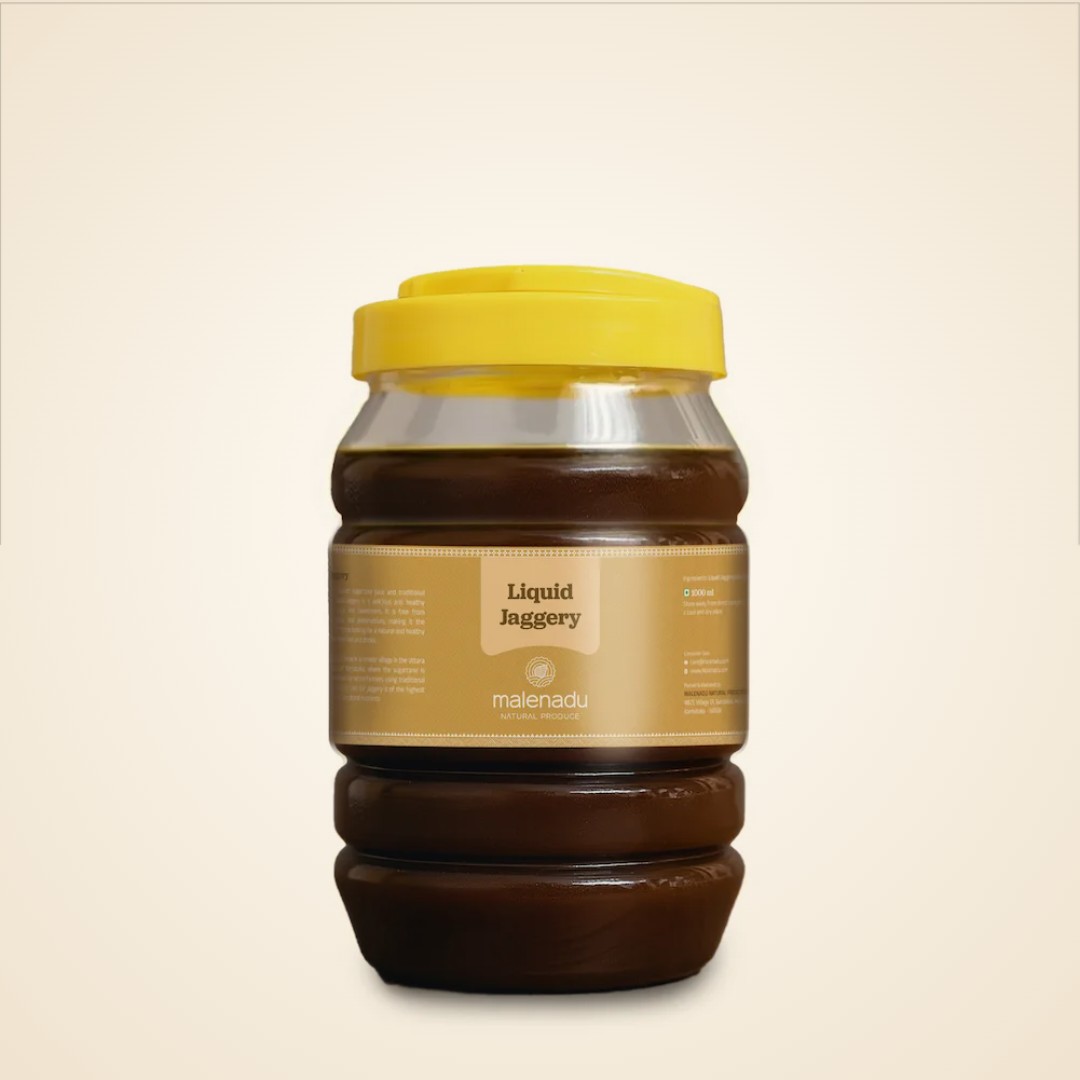
malenadu Liquid Jaggery is joni bella, runny jaggery boiled down from sugarcane juice. Stirred with a spoon of ghee, it is the sweet dip for akki rotti that many hill children grew up on.
If you like a little more heat on the side, crush one bird eye chilli into your chutney. It is small but very hot.
Common Malenadu akki rotti mistakes and how to fix them
Most Malenadu akki rotti problems come from cold water, a dry dough or a tava at the wrong heat. This table shows what went wrong and what to do next time.
| Problem | Likely cause | Fix |
|---|---|---|
| Rotti cracks while patting | dough too dry or cold | add hot water, knead while warm |
| Sticks to the leaf | leaf not greased or dough too wet | oil the leaf each time, add a spoon of flour |
| Hard and chewy | cooked too long on low heat | use a medium hot tava, 2 minutes a side |
| Raw in the middle | patted too thick | pat thinner, poke holes for steam |
| Burnt spots, raw dough | tava too hot | lower the flame, sprinkle water to test |
| Turns hard after cooling | cold water dough | use hot water and serve fresh |
Wet your fingers often while patting, because dry fingers drag the dough. Sprinkle a few drops of water on the tava before each Malenadu akki rotti: if they dance and vanish in a second or two, the heat is right.
Local tip
If your rotti keep tearing as you peel the leaf, leave them on the tava for 10 more seconds. The underside needs to set before the leaf lets go.
Which rice flour is best for akki rotti?
Fine, dry rice flour sold for akki rotti or idiyappam works best. Coarse flour gives a gritty rotti that breaks easily. Many older homes made their own flour by soaking rice, drying it in the shade and grinding it fine. If you buy flour, sieve it before use and store it in a dry, airtight jar.
Raw rice flour gives the classic Malenadu akki rotti. Flour made from boiled rice gives a slightly firmer rotti, which some people prefer for ubbu rotti.
How to store and reheat Malenadu akki rotti
Malenadu akki rotti is best eaten within minutes of cooking, but it can be kept for a few hours and warmed.
- For a lunch box, stack hot rotti in a cloth inside a closed steel box. They stay soft for 3 to 4 hours.
- To reheat, warm each Malenadu akki rotti on a hot tava for 30 seconds a side with a few drops of ghee.
- Leftover dough keeps covered in the fridge for a day. Knead in a little hot water before patting.
Where to go next after Malenadu akki rotti
Once you have mastered Malenadu akki rotti, try the steamed kara kadubu and the tapioca and rice maragenasu dose, two other rice breakfasts of the hills. Our Malenadu food guide brings all the recipes together. For ghee and coconut oil for your next batch, see the oil and ghee section of our shop.
Bring Malenadu home
Grown and made by Malenadu farmer families, packed by malenadu, a farmer owned producer company in Honnavar.
-
40% OFF
Desi Cow Ghee
Original price was: ₹1,500.₹899Current price is: ₹899. -
24% OFF
Wood Pressed Coconut Oil
Original price was: ₹899.₹679Current price is: ₹679. -
14% OFF
Liquid Jaggery
Original price was: ₹349.₹299Current price is: ₹299. -
Bird Eye Chilli
₹200 -
8% OFF
Black Pepper
Price range: ₹165 through ₹299 -
29% OFF
Honey
Price range: ₹249 through ₹449
Frequently asked questions about Malenadu akki rotti
What is akki rotti made of?
Akki rotti is made of rice flour mixed with onion, grated coconut, green chilli, cumin, curry leaves, coriander and salt. Malenadu homes mix it with hot water to make a soft dough that is patted by hand.
Why does my akki rotti break?
The dough is usually too dry or was made with cold water. Use hot water, knead while the dough is warm and keep the bowl covered so it does not dry out.
Can I make akki rotti without a banana leaf?
Yes. Pat it on a greased plastic sheet or butter paper and flip it onto your palm. You can also pat it straight onto a cool greased tava with wet fingers.
Is akki rotti gluten free?
Rice flour has no gluten, so akki rotti made only with rice flour and vegetables is naturally gluten free. Check that your flour is not mixed with wheat.
Which chutney goes with akki rotti?
Coconut chutney is the most common, followed by huchellu (niger seed) chutney, ginger chutney and tomato chutney. Many homes also serve gojju or pickle and a spoon of ghee on top.
What is the difference between akki rotti and ubbu rotti?
Akki rotti is made from a soft dough with onion and coconut and patted by hand. Ubbu rotti is made by cooking plain rice flour in boiling water, kneading it and rolling it thin like a chapati.
Can children eat akki rotti with jaggery?
Children over one year can have akki rotti with a little joni bella and ghee. Do not give jaggery, sugar or honey to babies under one year.
Explore more of Malenadu
Malenadu FoodMalenadu FoodRice, kokum, pepper and joni bella from the hills
Malenadu FoodHalasina KadubuSweet jackfruit dumplings steamed in leaves
Malenadu FoodSpices Names in KannadaEnglish, Kannada and Hindi names for a Malenadu kitchen
Malenadu FoodKara KadubuSpicy steamed rice dumplings from Malenadu kitchens
Malenadu FoodKokum SaaruThe sour, peppery everyday rasam of Malenadu homes
Malenadu FoodMenthya TambuliA cool fenugreek and curd side for the first rice course
Malenadu FoodMalenadu FruitsJackfruit, kokum, wild mango and the fruits of the forest
Malenadu FoodKesuvina GojjuThe sweet and sour colocasia leaf relish of the monsoon
Start hereMalenadu in KarnatakaWhere Malenadu is, what the name means