
Malenadu Travel
Malenadu snakes share every garden, paddy field and forest path in these wet hills. Most of them are harmless. This guide shows you how to recognise the seven venomous snakes and the common harmless ones, how farmers stay safe in the monsoon, what official first aid says to do after a bite and why king cobras matter.
On this page
Which snakes of the Western Ghats live in Malenadu?
Malenadu snakes range from the king cobra, the longest venomous snake in the world, to blind burrowing snakes no longer than a pencil. The hills hold rainforest, open paddy valleys, rocky grassland and old gardens close together. Each of these habitats has its own Malenadu snakes, which is why the region is one of the best places to study the snakes of the Western Ghats.
Most Malenadu snakes are harmless to people. Only a handful carry venom that can seriously hurt a person. Even those Malenadu snakes bite mainly when stepped on, cornered or handled. Knowing which Malenadu snakes are dangerous takes away much of the fear.
Several snakes of the Western Ghats live nowhere else, especially the shieldtails, small burrowing snakes that come up in the monsoon. If you are new to the region, our guide to Malenadu in Karnataka explains where these hills are.
Venomous snakes in Karnataka’s Malenadu: how to recognise them
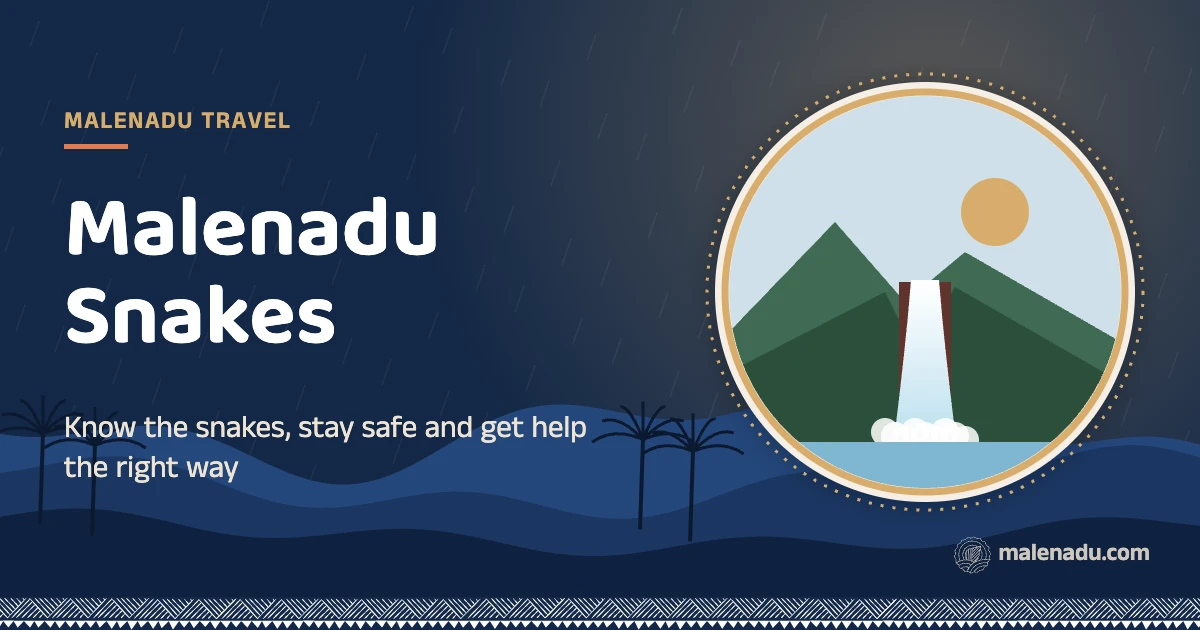
The venomous snakes in Karnataka’s Malenadu are the spectacled cobra, common krait, Russell’s viper, saw-scaled viper, hump-nosed pit viper, Malabar pit viper and king cobra. The first four are India’s “big four”, which cause about 90% of the country’s bites, according to the government’s National Action Plan for Prevention and Control of Snakebite Envenoming.
| Snake | Where you meet it | How to recognise it |
|---|---|---|
| Spectacled cobra | Fields, cowsheds, rat holes, gardens | Raises a hood with a spectacle mark |
| Common krait | Houses, paddy bunds, at night | Glossy black or blue-black with thin white bands |
| Russell’s viper | Open fields, grass, scrub | Thick body with chains of dark oval spots, loud hiss |
| Saw-scaled viper | Dry, rocky ground | Small, rough scales, rasping sound when coiled |
| Hump-nosed pit viper | Leaf litter, plantations | Small, brown, upturned snout |
| Malabar pit viper | Forest streams, near villages | Green, brown or yellow, triangular head |
| King cobra | Evergreen forest, streams, gardens | Very long, olive with pale bands, narrow hood |
Spectacled cobra
The spectacled cobra, naagara haavu (ನಾಗರ ಹಾವು), is the snake most Malenadu families know by sight. It follows rats into cowsheds, grain stores and wood piles. When disturbed it raises its hood and hisses, which is a warning rather than an attack.
Common krait
The common krait is the most dangerous of the Malenadu snakes at night. It is shy by day but moves about after dark and sometimes enters houses. A krait bite on a person sleeping on the floor may be nearly painless, so symptoms such as drooping eyelids or difficulty swallowing can be the first sign. The harmless wolf snake looks quite similar, which causes many mix ups.
Russell’s viper and saw-scaled viper
Russell’s viper, kolaku mandala (ಕೊಳಕು ಮಂಡಲ), lives in open grassland, paddy edges and scrub, more on the drier eastern side of the hills than in deep forest. The saw-scaled viper, garagasa mandala, prefers dry rocky ground and is less common in the wet hills than on the plains. Both are vipers whose venom affects blood clotting, so any bite needs a hospital fast.
Hump-nosed pit viper
The hump-nosed pit viper is a small brown snake with an upturned snout that hides in leaf litter in forests and plantations. It is easy to step on while weeding or collecting leaves. The WHO treats it as a medically important snake. Indian antivenom is made against the big four. Laboratory studies show it binds this viper’s venom poorly. That makes fast hospital care even more important.
Malabar pit viper
The Malabar pit viper, hapatte haavu, is found only in the Western Ghats and comes in green, brown, yellow and mottled forms. It often sits still on rocks or low branches near streams and waterfalls, which is why visitors to Agumbe so often photograph it. Its bite causes pain and swelling and still needs medical care.
The king cobra: why Malenadu’s biggest snake matters
The king cobra, kaalinga sarpa (ಕಾಳಿಂಗ ಸರ್ಪ), lives in the wet forest and gardens around Agumbe and across the evergreen belt of Malenadu. It is the longest venomous snake in the world. In 2024 scientists described the king cobras of the Western Ghats as a separate species, Ophiophagus kaalinga, a name taken from the local word.
The king cobra eats mainly other snakes, including rat snakes, cobras and vipers. By doing this it keeps the numbers of other Malenadu snakes in check. The female is the only snake known to build a nest, piling up leaves into a mound for her eggs and guarding it.
Like most Malenadu snakes, the king cobra is shy and avoids people. Bites are rare and almost always happen when someone tries to catch or kill one. When one wanders into a house, cowshed or bathroom near Agumbe, villagers call trained rescuers, who move it back to the forest. Read our guides to Agumbe and Malenadu wildlife for more on this rainforest village.
Harmless snakes you will meet in Malenadu gardens
Most Malenadu snakes you see in gardens are harmless. Several are welcome guests. Learn these few and you will worry far less.
- Rat snake, kere haavu (ಕೇರೆ ಹಾವು): long, fast, yellowish brown, often mistaken for a cobra. It eats rats and frogs and is a farmer’s friend.
- Green vine snake: thin as a creeper, bright green, with a pointed snout. It hangs in shrubs and hedges and is mildly venomous but not dangerous to people.
- Common trinket snake: slender, brown with dark markings near the head. It climbs into roofs and cowsheds to hunt rats.
- Checkered keelback: the common water snake of tanks, paddy and streams. It bites if handled but has no venom of concern.
- Bronzeback tree snake: a slim, shiny brown climber that moves quickly through bushes.
- Wolf snake: small, dark with pale bands, often confused with the krait. It is harmless.
- Shieldtails: small burrowing snakes with a blunt, shield-like tail tip. They come up after heavy rain and are found only in these hills.
If you cannot identify one of these Malenadu snakes, treat it as venomous and leave it alone. Never try to pick up any snake to check.
When and where do people meet Malenadu snakes?
People meet Malenadu snakes most often in the monsoon and in the busy farm months, when snakes and people use the same fields and paths. Rain floods burrows and pushes Malenadu snakes into drier places such as verandahs, sheds and woodpiles.
Areca gardens are a common meeting place. The ground is shaded and damp. Farmers spread soppu (leaf mulch) between the palms, which hides frogs, rats and Malenadu snakes. Pepper and cardamom pickers working among the vines also need to watch where they put their hands.
From the malenadu pantry
Pepper is picked by hand from vines in shaded Malenadu gardens, where pickers wear boots and work carefully among leaf litter. Our black pepper comes from these gardens and is sun dried in the winter months.
Other common places are paddy bunds at transplanting time, haystacks, coconut husk heaps, firewood stacks and the dark corners of a cowshed. At night, roads and paths are warm and Malenadu snakes often cross them. Our guide to the Malenadu monsoon explains the season when these meetings rise.
How Malenadu farmers stay safe from snakes
Malenadu farmers stay safe from snakes with simple daily habits passed down from parents and grandparents. Most bites can be avoided with care in the places Malenadu snakes like to hide.
- Wear boots in gardens, paddy and long grass, especially in the monsoon.
- Carry a torch at night, even for a short walk to the cowshed or bathroom.
- Keep grass cut short around the house and clear rubbish heaps near doors.
- Never put a bare hand into holes, leaf heaps, firewood stacks or under stones. Use a stick first.
- Store grain safely so that rats do not move in, followed by the snakes that hunt them.
- Sleep on a cot with a mosquito net tucked in, rather than on the floor, in krait country.
- Shake out shoes and clothes left outside before putting them on.
- Tap the path with a stick when walking through grass, so snakes move away.
Local tip
Keep a strong torch and the phone number of the nearest hospital with antivenom by the door. In an emergency, nobody should have to search for either.
Snake bite first aid: what to do
Snake bite first aid in Malenadu should follow official medical guidance: stay calm, keep still and get to a hospital with antivenom as fast as possible. The government’s national snakebite protocol and the World Health Organization both say antivenom in a hospital is what saves lives. This is general information, not medical advice, so always follow the doctor.
- Reassure the person. Most bites are not fatal, especially with quick treatment. Panic speeds up the heart.
- Keep the person and the bitten limb still. Use a splint or sling as you would for a broken bone.
- Remove rings, bangles, watches, anklets and tight clothing near the bite before swelling starts.
- Get to a hospital with antivenom at once. Call 108 for an ambulance in Karnataka. If it is far away, use the fastest safe vehicle.
- Tell the doctor the time of the bite and any symptoms, such as swelling, bleeding, drooping eyelids or breathing trouble.
What not to do after a snake bite
Official guidance is clear that some old habits do more harm than good. Avoid every one of these:
- No tourniquet or tight rope around the limb.
- No cutting the wound and no sucking out venom.
- No herbal or folk remedies and no visits to untrained healers instead of a hospital.
- No ice, electric shock or applying anything on the bite.
- No alcohol or drinks for the patient on the way.
- Do not try to catch or kill the snake. A photo from a safe distance is enough if it is easy.
Even when a bite looks minor, go to hospital. Some venoms act slowly and the first hours matter most.
Call trained rescuers instead of killing snakes
When one of the Malenadu snakes enters a house or shed, call the Forest Department or a trained local snake rescuer rather than trying to kill it. Many bites happen to people trying to beat or catch a snake. Deccan Herald notes that even Russell’s vipers are usually passive and seldom bite unless provoked. Indian snakes are also protected by law under the Wildlife (Protection) Act.
While you wait, keep children and pets away and watch the snake from a safe distance so you can show the rescuer where it went. Do not throw water, kerosene or stones at it. Frightened Malenadu snakes are far more likely to bite.
Why do snakes matter to Malenadu farms?
Snakes matter to Malenadu farms because they eat the rats that would otherwise destroy paddy, stored grain and young areca. A single rat snake eats many rodents in a season. Without Malenadu snakes, farmers would lose more crops and use more poison.
Snakes are also part of the region’s faith. Many families keep a naga bana, a small grove or shrine for the serpent gods. Nagara Panchami is celebrated across the region with milk and flowers offered at anthills and snake stones. Read more in our guides to Malenadu festivals and devara kadu.
This old respect has helped many Malenadu snakes survive close to people. It is worth keeping alive alongside modern first aid.
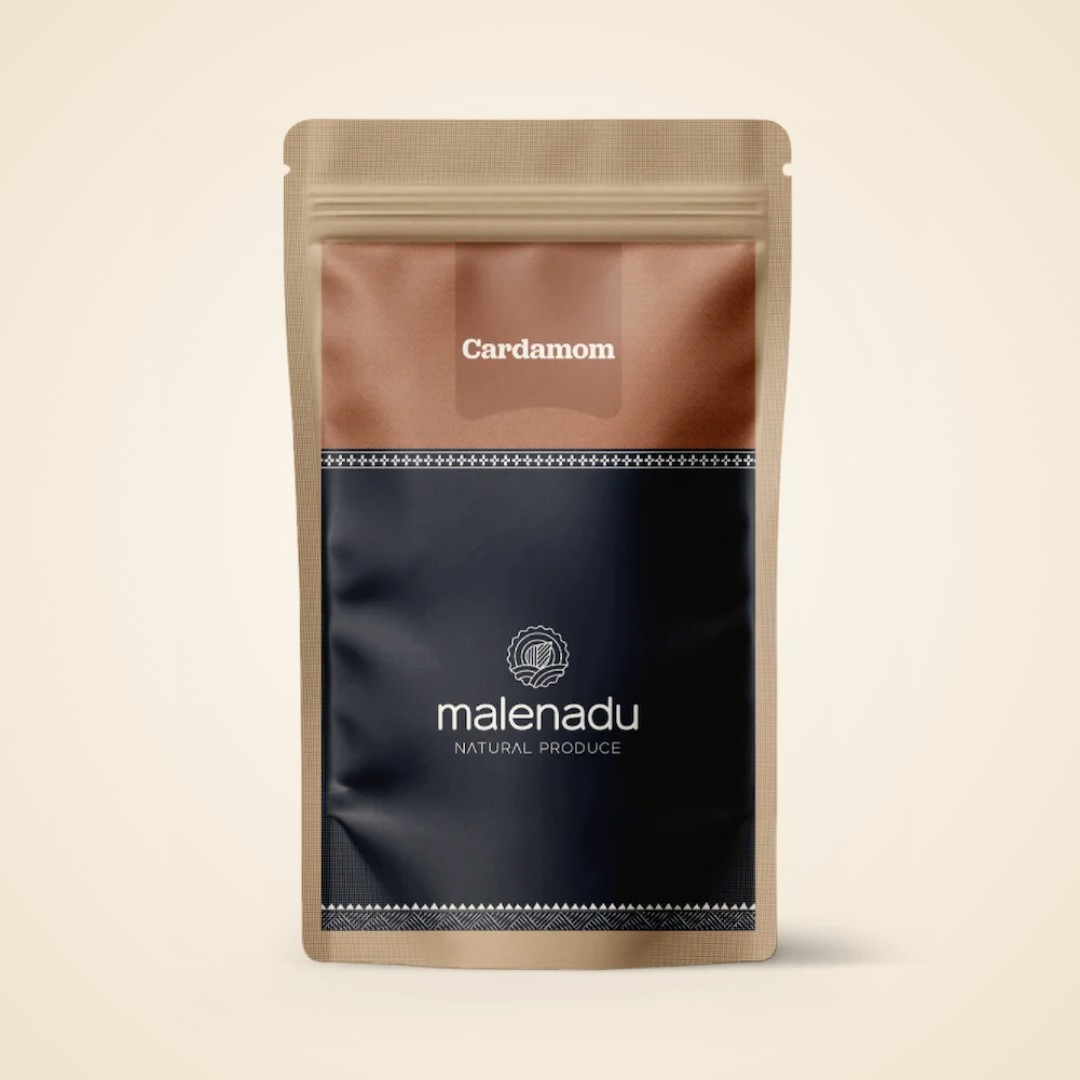
From the malenadu pantry
Cardamom grows under deep forest shade, the same cool, damp ground where frogs, rats and snakes live. Our green cardamom comes from these shaded Malenadu gardens.
Where to go next
Malenadu snakes are only one part of the region’s wild side. Our guides to Malenadu birds and areca nut farming in Malenadu show the gardens and forests these snakes share with farmers. For trip planning, start with our Malenadu travel guide.
Bring Malenadu home
Grown and made by Malenadu farmer families, packed by malenadu, a farmer owned producer company in Honnavar.
Frequently asked questions about Malenadu snakes
Which venomous snakes are found in Malenadu?
The main venomous Malenadu snakes are the spectacled cobra, common krait, Russell’s viper, saw-scaled viper, hump-nosed pit viper, Malabar pit viper and king cobra. Most other snakes in the region are harmless.
Is Agumbe famous for king cobras?
Yes. The wet forest around Agumbe is one of the best known homes of the king cobra. Villagers there call trained rescuers when one enters a house.
Is the Malabar pit viper dangerous?
Its bite is painful and causes swelling, so it needs hospital care. It is not aggressive and bites mainly when touched or stepped on.
What is the first aid for a snake bite?
Keep the person calm and still, splint the bitten limb, remove rings and tight items and reach a hospital with antivenom quickly. Do not use a tourniquet, cut, suck or apply herbs.
Is the rat snake venomous?
No. The rat snake, kere haavu, has no venom and helps farmers by eating rats. It is often mistaken for a cobra.
What should I do if a snake enters my house?
Keep everyone away, watch it from a distance and call the Forest Department or a trained snake rescuer. Do not try to kill or catch it.
When are snakes most active in Malenadu?
Malenadu snakes are seen most often in the monsoon and the paddy months. At night they cross warm paths. Carry a torch and wear boots after dark.
Explore more of Malenadu
Malenadu TravelMalenadu Travel GuideRoutes, stays and seasons for the rain hills of Karnataka
Malenadu TravelMalenadu Monsoon and RainfallWhy the hills get so much rain and how life bends to it
Malenadu TravelMalenadu Peaks and TreksPeaks, permits and seasons for walking the Western Ghats
Malenadu TravelMalenadu Waterfalls22 falls across the hills, with access and best season
Malenadu TravelMalenadu WildlifeTigers, macaques, king cobras and the forests farms need
Malenadu TravelMalenadu TemplesRiver shrines, hill goddesses and carved stone
Malenadu TravelBangalore to MalenaduDistances, routes and plans for the drive to the hills
Malenadu TravelMalenadu RiversTen rivers that rise in the hills and shape life below
Start hereMalenadu in KarnatakaWhere Malenadu is, what the name means