

Malenadu Travel
Malenadu waterfalls range from Jog, where the Sharavathi drops 253 m, to small forest falls that only locals know by name. This guide lists 22 of them district by district, with the nearest town, how you get there, the best season and what each one is like, plus safety rules and day plans.

On this page
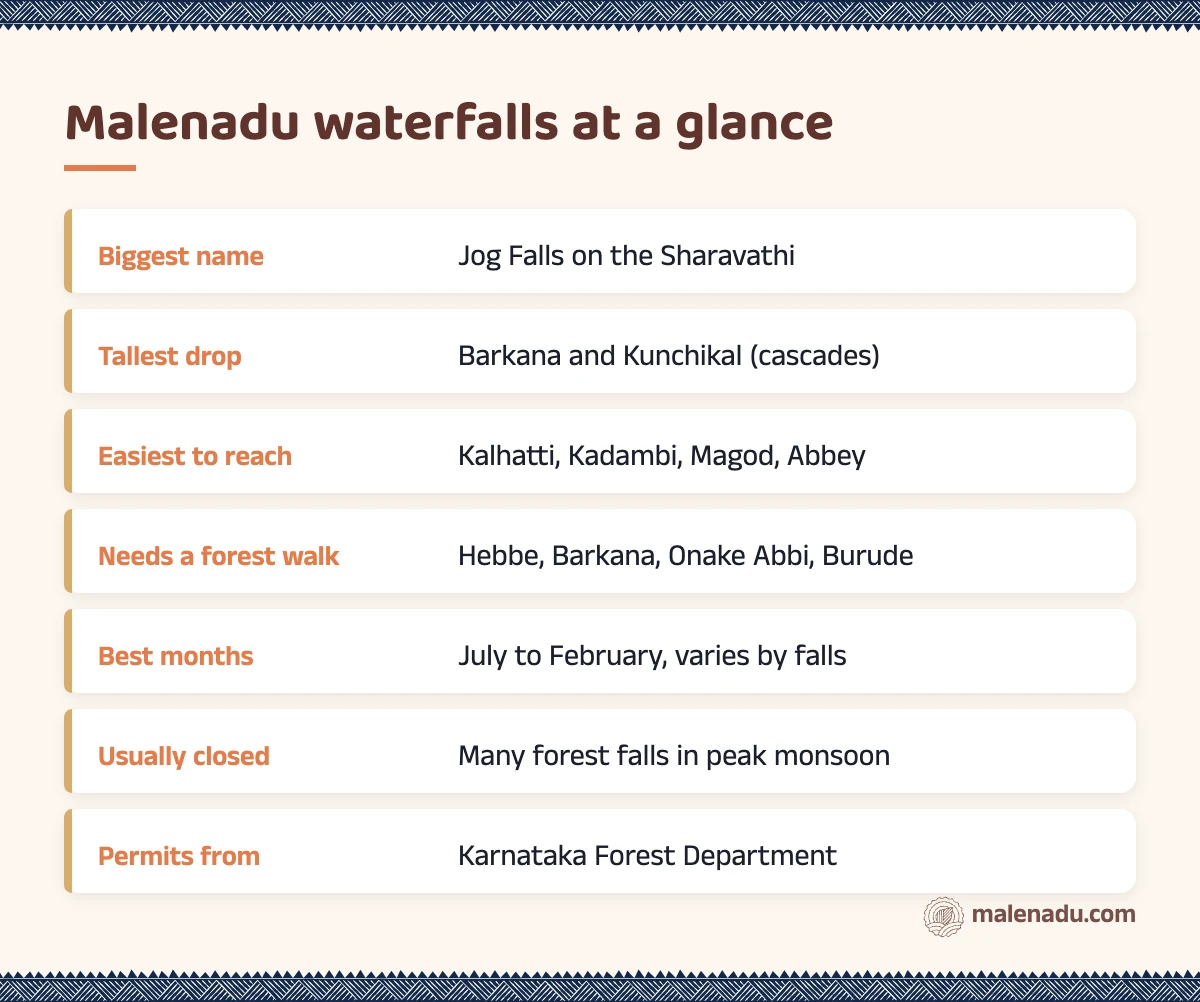
Malenadu waterfalls at a glance
This table covers the major Malenadu waterfalls in four districts, from north to south. Access notes are kept general unless a distance is confirmed by Karnataka Tourism, because roads and gates change often.
| Falls | District | Nearest town | Access | Best season | Character |
|---|---|---|---|---|---|
| Jog | Shivamogga (Uttara Kannada border) | Sagara | Road to viewpoints | July to November | Sharavathi drops 253 m in four streams |
| Unchalli (Lushington) | Uttara Kannada | Siddapur, Sirsi | Road, then 1 km on foot | After the monsoon | Aghanashini falls 116 m into a gorge |
| Magod | Uttara Kannada | Yellapur (17 km) | Road, railed walkway | July to December | Bedthi drops into a deep rocky ravine |
| Sathodi | Uttara Kannada | Yellapur | Road, short walk | Most of the year | Wide, low fall where forest streams meet |
| Shivaganga | Uttara Kannada | Sirsi | Road to a forest viewpoint | Monsoon to early winter | Tall fall seen across a deep valley |
| Burude | Uttara Kannada | Siddapur | Steep forest walk down | October to February | Falls in several steps with pools |
| Vibhuti | Uttara Kannada | Kumta | Road, short walk | After the monsoon | Small forest fall near the Yana rocks |
| Apsarakonda | Uttara Kannada | Honnavar | Road, short walk | Monsoon to winter | Small fall by a temple near the sea |
| Barkana | Shivamogga | Agumbe | Forest trail, permission needed | October to February | Tall drop into the Sita valley |
| Onake Abbi | Shivamogga | Agumbe | Guided forest trek | After the monsoon | Rainforest fall far from any road |
| Kunchikal | Shivamogga | Hosanagara | Not open to the public | Not applicable | Tall cascade on the Varahi |
| Kudlu Theertha | Udupi (ghat edge) | Hebri, Agumbe | Ticketed forest walk | December to January | Pool and fall in Someshwara forest |
| Sirimane | Chikkamagaluru | Sringeri, Kigga | Road, then steps | Monsoon to winter | Easy family fall with a viewing area |
| Hebbe | Chikkamagaluru | Kemmangundi | Jeep and a walk | October to February | Falls 168 m in two stages |
| Kalhatti | Chikkamagaluru | Kemmangundi | By the road | Monsoon to winter | Beside the Veerabhadreshwara temple |
| Manikyadhara | Chikkamagaluru | Baba Budangiri | Road, then steps | Monsoon to winter | Thin spray fall sacred to pilgrims |
| Jhari | Chikkamagaluru | Attigundi | Jeep track through estates | After the monsoon | Milky white fall in coffee country |
| Kadambi | Chikkamagaluru | Kudremukh | By the road | Monsoon to winter | Roadside fall on the Kudremukh road |
| Hanumana Gundi | Chikkamagaluru | Kudremukh | Road, then steps down | After the monsoon | Falls into a rocky pool in the forest |
| Abbey | Kodagu | Madikeri (6 km) | Short walk through estates | Monsoon to winter | Wide fall in coffee and pepper land |
| Iruppu | Kodagu | South Kodagu | 1 km forest trail | Monsoon to November | Falls near the Rameshwara temple |
| Mallalli | Kodagu | Somwarpet | Road, then many steps | After the monsoon | Kumaradhara drops below Pushpagiri |
Most of these Malenadu waterfalls are a day trip from one of the main bases in our Malenadu travel guide. For the towns and taluks around each, see the district map of Malenadu.
Why are there so many waterfalls in Malenadu?
There are so many waterfalls in Malenadu because heavy monsoon rain falls on hills that drop sharply to the coast. Rivers such as the Sharavathi, Aghanashini, Bedthi, Kali, Sita and Varahi rise in the hills and tumble west down the Western Ghats to the Arabian Sea.
East flowing rivers like the Tunga, Bhadra and the streams that feed the Kaveri make smaller falls on gentler slopes. That is why the tallest Malenadu waterfalls sit on the western edge of the hills, near Jog, Agumbe and Kudremukh. Most of them depend on the rains, so they are biggest from July to October and much thinner by April.
Jog Falls: the biggest name among Malenadu waterfalls
Jog Falls is the most famous of all Malenadu waterfalls, where the Sharavathi river drops about 253 m (830 ft) in four streams known as Raja, Rani, Roarer and Rocket. It sits on the border of Shivamogga and Uttara Kannada, a short drive from Sagara.
Jog falls looks very different through the year. The Linganamakki dam upstream holds back much of the river for power, so the falls are full only in a good monsoon and can be thin by summer. In heavy rain the gorge often fills with mist and you may see nothing at all for an hour.
There are viewpoints on both sides of the gorge. The district has carried out work on new tourist facilities. During that work the main entrance was closed for long spells while alternative viewpoints stayed open. Check the current status with your hotel before you drive in.
Local tip
At Jog, go in the afternoon after the rains ease. The mist often lifts after lunch. The light then falls on the gorge rather than into your camera.
Uttara Kannada falls: Unchalli, Magod and Sathodi
Uttara Kannada has the most waterfalls in Malenadu, spread around Sirsi, Siddapur and Yellapur. These falls sit among areca and pepper gardens, so the drives are as good as the falls.
Unchalli Falls
Karnataka Tourism describes Unchalli as a 116 m drop of the Aghanashini, first recorded by the British officer J D Lushington in 1845, which is why it is also called Lushington Falls. A road reaches within about a kilometre and you walk the rest to a viewing deck. It is one of the most photographed Malenadu waterfalls.
Magod Falls
At Magod the Bedthi river drops into a deep rocky ravine, about 17 km from Yellapur. A walkway with handrails leads from the parking to the viewpoint. Karnataka Tourism suggests July to December as the best time. Stop at Jenukallu Gudda nearby for the valley view.
Sathodi, Shivaganga, Burude and Vibhuti
Sathodi is a wide, low fall where small streams meet near the Kodasalli dam. It holds water for most of the year. Shivaganga is seen from a forest viewpoint above a deep valley. Burude, near Siddapur, needs a steep walk down to several steps of falling water. Vibhuti is a small forest fall on the Kumta side near Yana.
On the Honnavar side, close to where we are based, Apsarakonda is a small fall beside a temple that you can pair with the beach. On all these roads, pepper vines climb the areca palms in the gardens you pass.
From the malenadu pantry
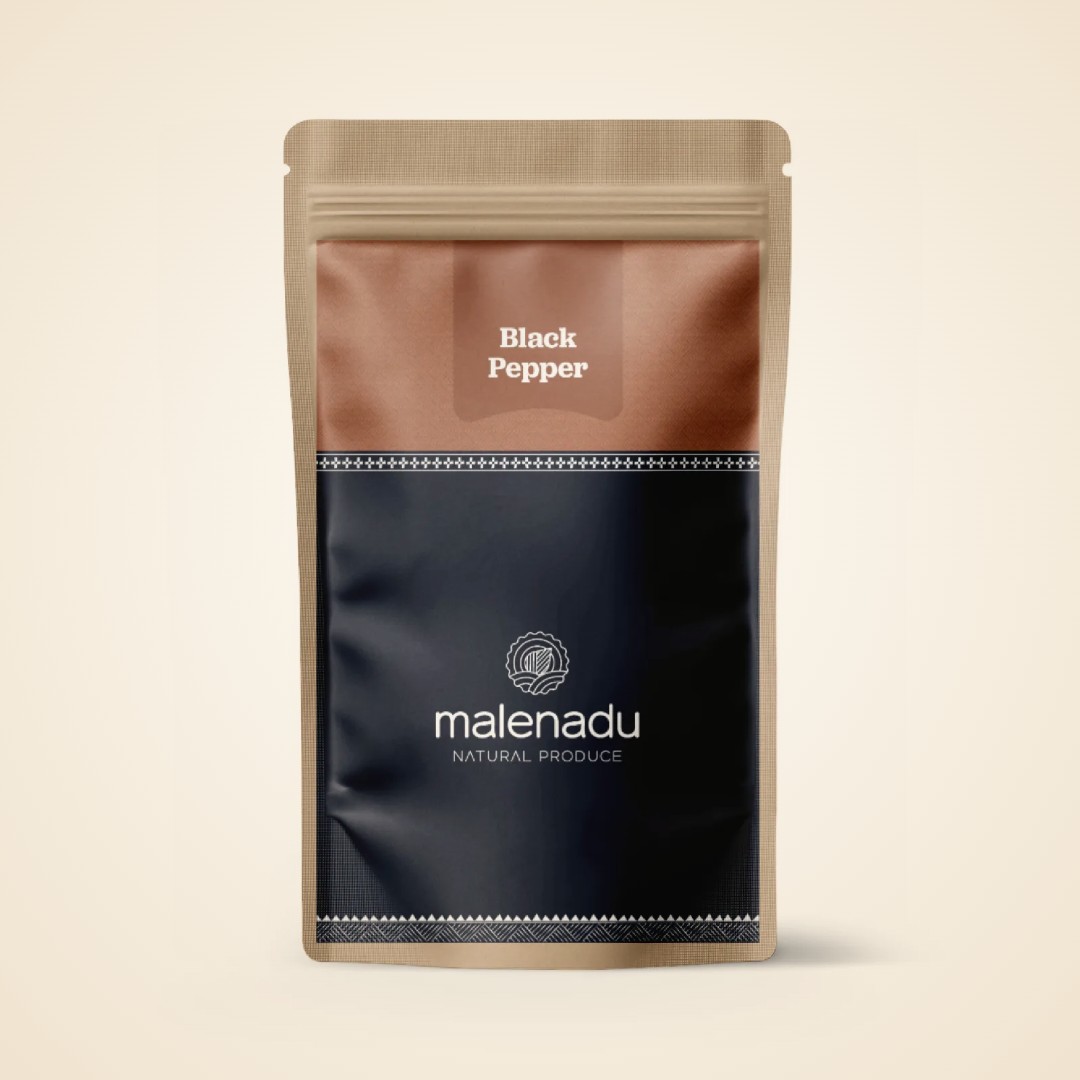
Our Black Pepper is grown in Malenadu, on vines that climb areca palms just like the ones beside the roads to Unchalli and Magod.
Shivamogga and Agumbe falls: Barkana, Onake Abbi and Kudlu Theertha
The Agumbe rainforest has some of the tallest Malenadu waterfalls, but most of them are in protected forest and need permission. Plan these as proper outings, not quick stops.
- Barkana: one of the tallest falls in India, dropping into the Sita valley about 10 km from Agumbe. Reaching it needs Forest Department approval and a guide.
- Onake Abbi: a tall fall deep in the rainforest, reached by a guided forest trek.
- Kudlu Theertha: inside Someshwara sanctuary on the Udupi side of the ghat. It is a ticketed walk of about 2 km, often closed from June to November.
- Kunchikal: a tall cascade on the Varahi below the Mani dam. It lies inside a hydro project area and is not open to visitors.
Chikkamagaluru falls: Hebbe, Kalhatti, Sirimane and the Kudremukh road
Chikkamagaluru has the widest mix of Malenadu waterfalls, from roadside falls you can see from the car to ones that need a jeep and a walk.
Around Kemmangundi and Baba Budangiri
Hebbe falls about 168 m in two stages, Dodda Hebbe and Chikka Hebbe, about 10 km from Kemmangundi. You can walk the forest trail or take a forest department jeep part of the way and walk the rest. Kalhatti is right beside the Veerabhadreshwara temple on the Kemmangundi road. Manikyadhara near Baba Budangiri is a thin fall reached by steps. Jhari is reached by a jeep track through coffee estates near Attigundi.
Around Sringeri and Kudremukh
Sirimane, near Kigga, is the easiest family outing among the Malenadu waterfalls of this district, with steps down to a viewing area. On the road towards Kudremukh, Kadambi is visible from the roadside, while Hanumana Gundi needs a long flight of steps down to a rocky pool. Carry water and a little coconut burfi for the climb back, since shops are rare.
From the malenadu pantry
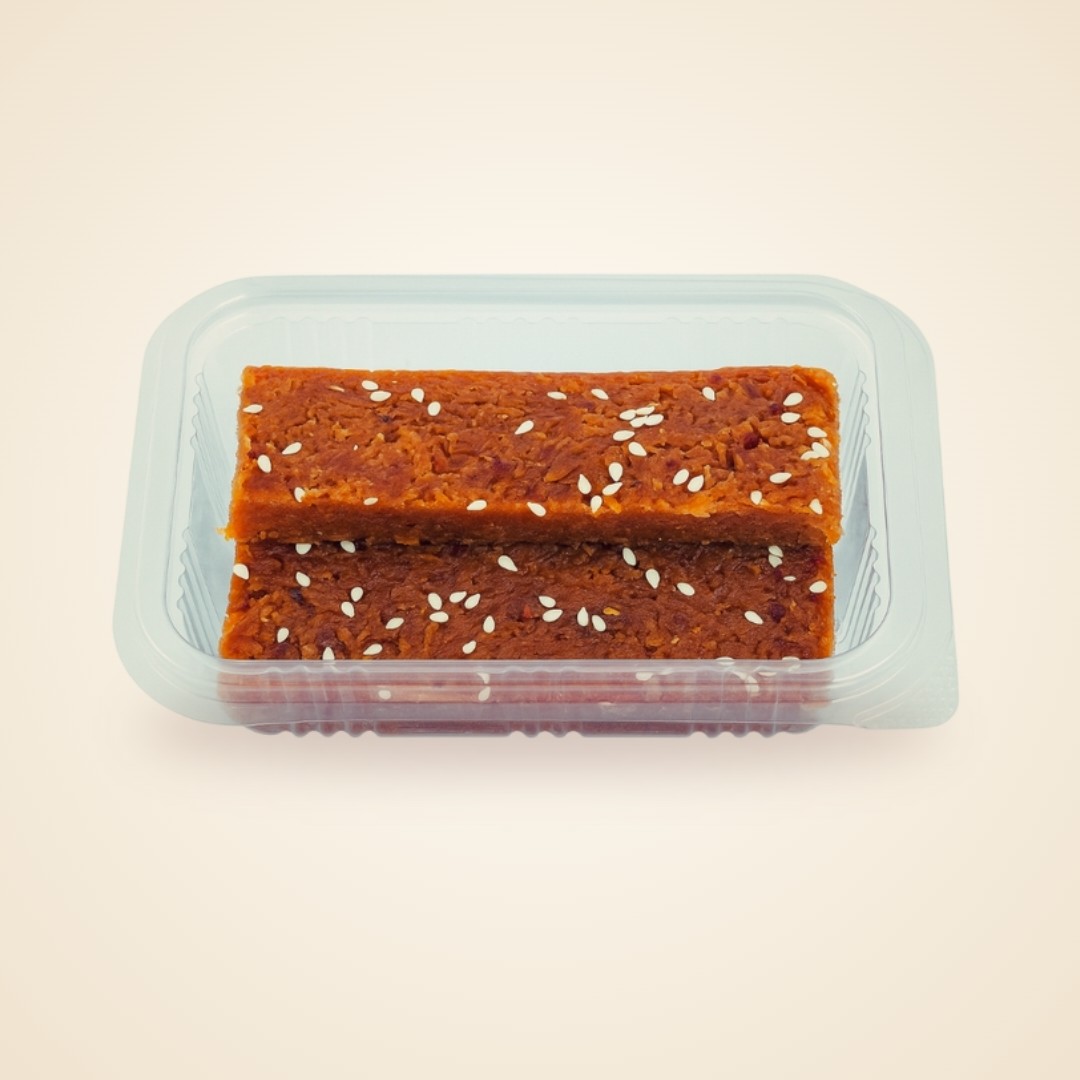
Most falls have no shops nearby. A box of our Coconut Jaggery Burfi in the car is an easy snack after the steps back up from Sirimane or Hanumana Gundi.
Kodagu falls: Abbey, Iruppu and Mallalli
Kodagu’s Malenadu waterfalls are smaller than Jog but easy to combine with estate stays. They sit among coffee, pepper and cardamom.
- Abbey: about 6 km from Madikeri, reached by a short walk through private estates. Karnataka Tourism lists entry from 9 am to 5 pm.
- Iruppu: in the Brahmagiri hills of south Kodagu, near the Rameshwara temple. A forest trail of about a kilometre leads to the falls.
- Mallalli: near Somwarpet, where the Kumaradhara drops below Pushpagiri. Expect a long flight of steps.
When is the best time to visit Malenadu waterfalls?
The best time to visit Malenadu waterfalls is from late September to December, when the falls are still full after the monsoon and the trails are reopening. July and August give the most water, but many forest falls are closed and the roadside ones may be hidden by mist.
| Months | What the falls are like | Good for |
|---|---|---|
| June to August | Biggest flow, mist, many closures | Jog, Magod, Kalhatti, roadside falls |
| September to December | Full falls, clearer skies, trails open | Almost every fall on this page |
| January to February | Less water, cool and clear | Hebbe, Kudlu Theertha, Sirimane |
| March to May | Thin or dry, forest fire season | Sathodi and a few spring fed falls |
So the best time to visit Malenadu waterfalls depends on the falls. For the rain itself, read our Malenadu monsoon guide.
Are Malenadu waterfalls safe? Closures and rules
Malenadu waterfalls are safe if you stay behind barriers and follow local advice, but every year people drown in pools that look calm. The current at the base of a fall is far stronger than it looks. Rocks covered in algae are as slippery as soap.
- Do not swim or wade unless locals confirm it is safe that day.
- Respect monsoon closures. District officials and the Forest Department close many falls and trails during heavy rain.
- Forest permissions: falls inside sanctuaries or national parks, such as Barkana and Kudlu Theertha, need tickets or prior approval.
- Timings: most forest gates close by late afternoon. Leave in time to walk out in daylight.
- Leeches: expect them on any forest walk from June to October.
- No plastic, no alcohol: many gates check bags. Carry a cloth bag and a steel bottle.
From the malenadu pantry
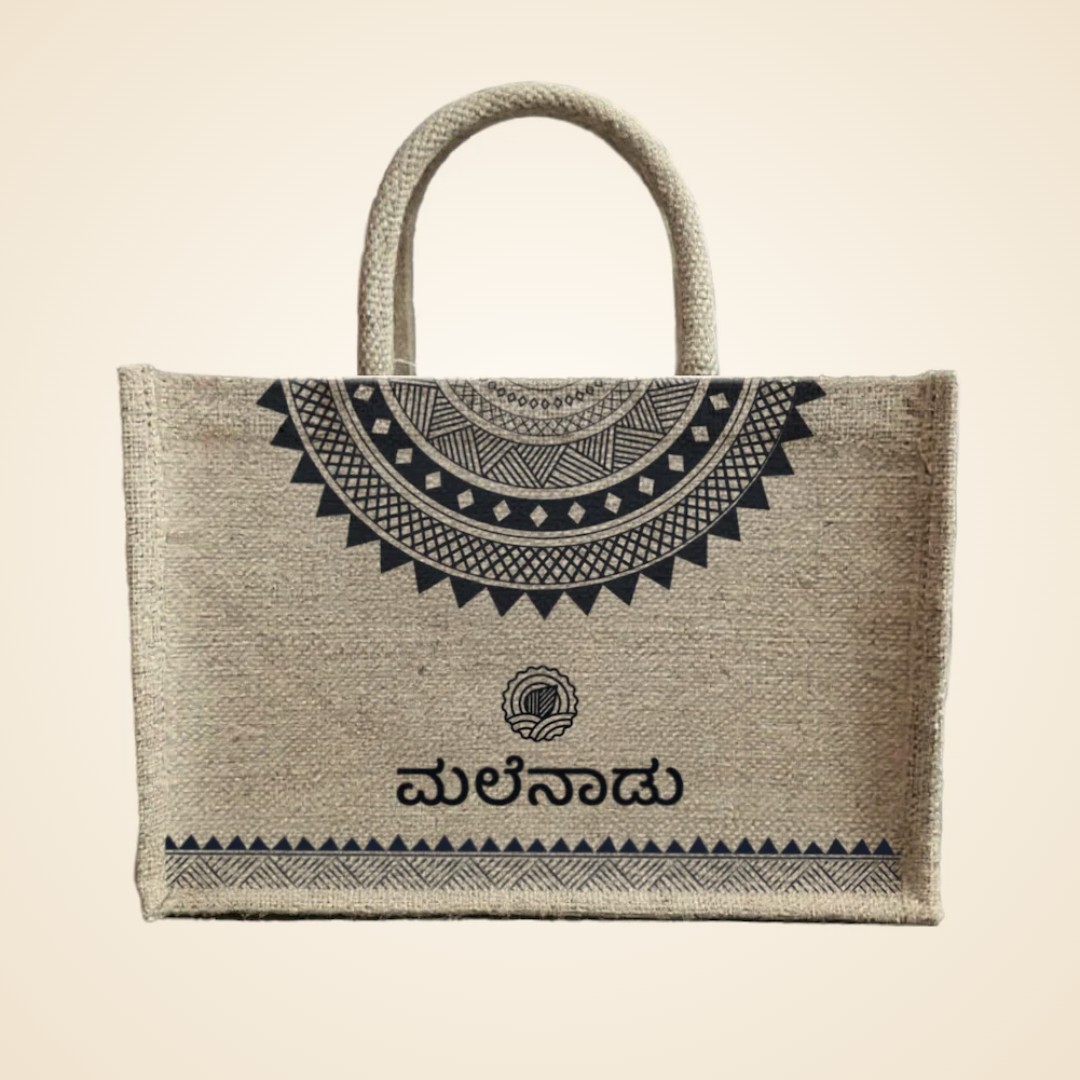
Our Small Jute Bag, printed in Kannada, is the right size for a water bottle, a towel and snacks. It also passes plastic checks at forest gates without fuss.
Malenadu waterfalls trek: which falls need a walk?
A Malenadu waterfalls trek can be anything from 200 steps to a full day in the rainforest. Use this rough guide to pick falls that suit your group.
- No walk: Kalhatti, Kadambi and the main Jog viewpoints.
- Short walk or steps: Magod, Unchalli, Abbey, Sirimane, Manikyadhara, Iruppu.
- Steep or long steps: Hanumana Gundi, Mallalli, Burude.
- Jeep and forest walk: Hebbe, Jhari, Kudlu Theertha.
- Full Malenadu waterfalls trek with permission: Barkana, Onake Abbi.
For any proper Malenadu waterfalls trek, wear shoes with good grip and go with a local guide. Carry salt or a leech repellent too. Our Malenadu trekking guide explains the Forest Department booking system.
Photography tips for waterfalls
Malenadu waterfalls are hard to photograph well because of mist, spray and deep shade. A few small habits make a big difference.
- Keep a dry cloth in your pocket for the lens. Spray from big falls like Jog reaches far.
- Go in the morning or late afternoon, when the light is softer.
- For silky water, rest the camera on a rock and use a slow shutter.
- Include a person or a tree for scale. Without it, a 100 m fall can look small.
- Never step past railings for a shot. Many accidents happen this way.
Sample day plans for Malenadu waterfalls
These sample days link nearby Malenadu waterfalls with a good lunch in between. Start early, because most forest gates close by late afternoon.
From Sirsi or Yellapur
Morning at Magod and Jenukallu Gudda, lunch in Yellapur, afternoon at Sathodi. On a second day, drive to Unchalli and walk down to Burude if your legs allow.
From Sagara or Agumbe
Jog in the afternoon from Sagara. From Agumbe, spend a day at Kudlu Theertha on the Someshwara side and end at the Agumbe sunset point.
From Chikkamagaluru or Sringeri
Kalhatti and Hebbe from Kemmangundi in one long day. From Sringeri, see Sirimane in the morning and drive the Kudremukh road past Kadambi to Hanumana Gundi.
From Madikeri
Abbey in the morning, then a long drive south to Iruppu. Keep Mallalli for a separate day on the Somwarpet side.
Plan the rest of your trip
Pair these Malenadu waterfalls with the peaks, forests and homestays in our Malenadu travel guide. For a full list of sights beyond the falls, see Malenadu in Karnataka. Before you head home, pick up some kokum rind or hill honey from the region. You can also browse all our farm products.
Bring Malenadu home
Grown and made by Malenadu farmer families, packed by malenadu, a farmer owned producer company in Honnavar.
-
51% OFF
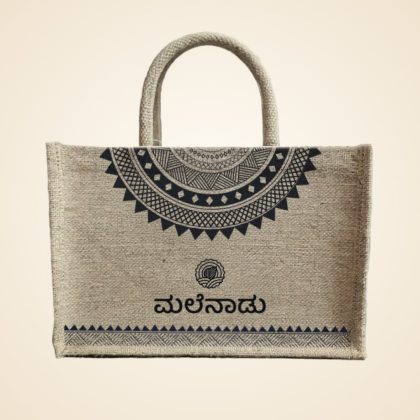
Small Jute Bag
Original price was: ₹200.₹99Current price is: ₹99. -
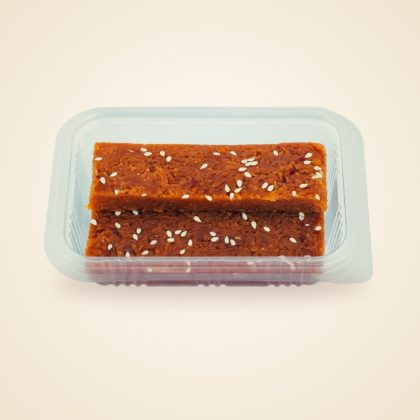
Coconut Jaggery Burfi
₹120 -
8% OFF

Black Pepper
Price range: ₹165 through ₹299 -
17% OFF

Kokum Rind
Original price was: ₹240.₹200Current price is: ₹200. -
29% OFF

Honey
Price range: ₹249 through ₹449 -
19% OFF
Cardamom
Price range: ₹130 through ₹330
Frequently asked questions about Malenadu waterfalls
Which is the biggest of the Malenadu waterfalls?
Jog Falls on the Sharavathi is the best known, with a drop of about 253 m. Barkana near Agumbe and Kunchikal near Hosanagara are also very tall, but they are harder or impossible to visit.
What is the best time to visit Malenadu waterfalls?
Late September to December is best for most falls, with full water and open trails. July and August have the most water but also mist, leeches and closures.
Can I swim at waterfalls in Malenadu?
It is safest not to. Currents and slippery rocks cause drownings every year. Many falls also ban entry into the water.
Is Jog Falls open in the monsoon?
The viewpoints are usually open, but entry rules have changed during recent development work. Heavy mist can also hide the falls, so check locally before you go.
Do I need permission to visit Barkana Falls?
Yes. Barkana is inside protected forest near Agumbe, so you need prior approval from the Forest Department and a guide.
Which Malenadu waterfalls are easy for families?
Kalhatti, Kadambi, Sirimane, Magod and Abbey need little or no walking. Jog’s main viewpoints are also easy when they are open.
How many days do I need to see Malenadu waterfalls?
Three days covers one region well, such as the Sirsi and Yellapur falls. A week lets you see the main falls in two or three districts.
Explore more of Malenadu
Malenadu TravelMalenadu Travel GuideRoutes, stays and seasons for the rain hills of Karnataka
Malenadu TravelMalenadu Monsoon and RainfallWhy the hills get so much rain and how life bends to it
Malenadu TravelMalenadu Peaks and TreksPeaks, permits and seasons for walking the Western Ghats
Malenadu TravelMalenadu WildlifeTigers, macaques, king cobras and the forests farms need
Malenadu CultureMalenadu CulturePeople, arts and old ways of Karnataka’s rain hills
Malenadu FarmingMalenadu CropsWhat grows in Karnataka’s rain hills and why it grows
Start hereMalenadu in KarnatakaWhere Malenadu is, what the name means