
Malenadu Travel
Malenadu trekking takes you over grassy ridges and through wet shola forest to the highest peaks in Karnataka, from Mullayanagiri and Kudremukh to Kodachadri and Kumara Parvatha. This guide covers the main peaks, how the Forest Department permit system works, when trails are open, how hard each trek is and what to pack.
On this page
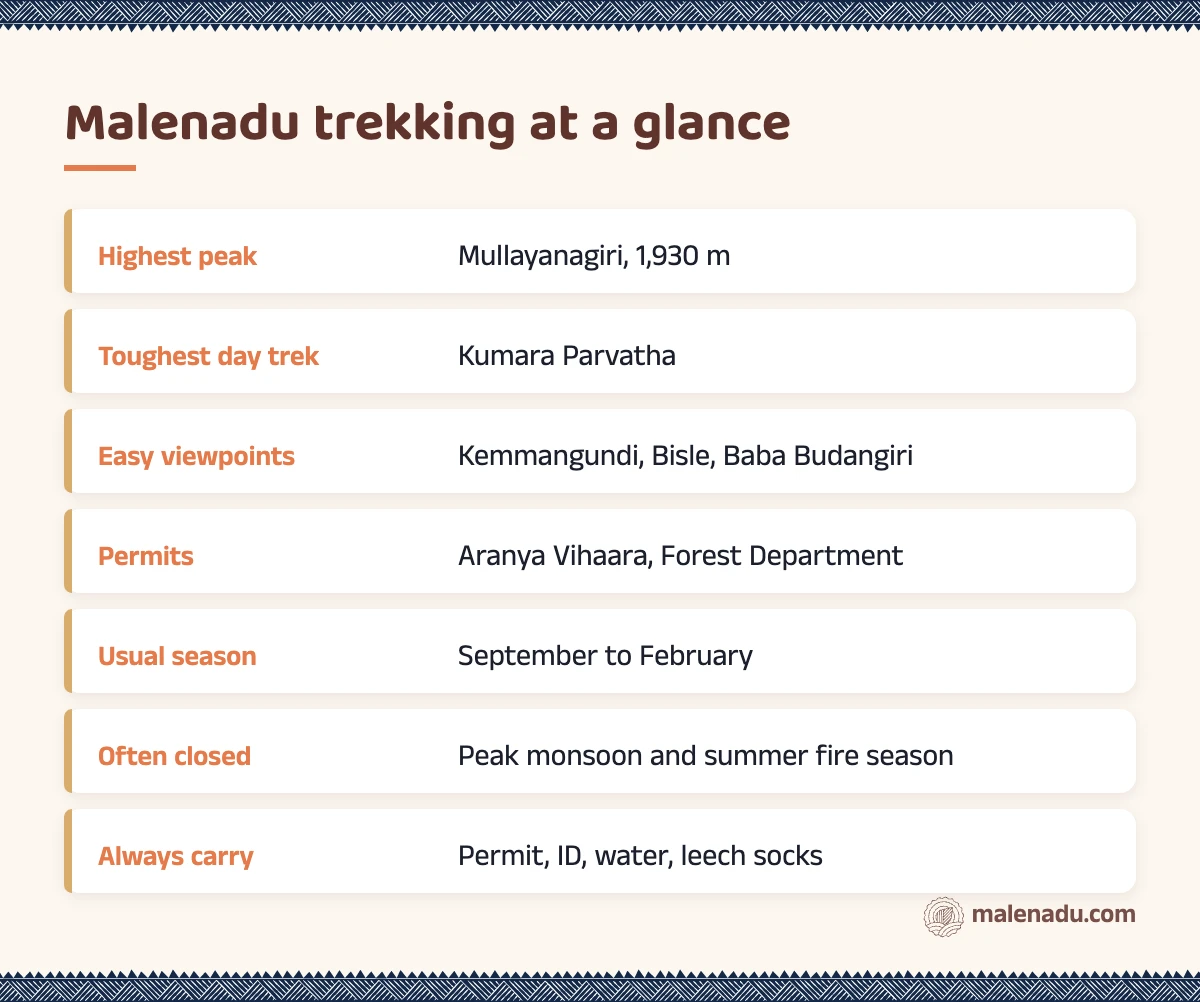
Malenadu trekking at a glance: the difficulty table
Malenadu trekking ranges from a short climb up steps to a long, steep day that tests fit hikers. This table sorts the main treks by difficulty so you can pick the right one for your group.
| Trek | District | Usual start | Difficulty | Booking |
|---|---|---|---|---|
| Bisle viewpoint | Hassan | Bisle | Easy (viewpoint) | Not needed |
| Kemmangundi and Z point | Chikkamagaluru | Kemmangundi | Easy | Check locally |
| Mullayanagiri | Chikkamagaluru | Sarpadhari | Easy to moderate | Check locally |
| Netravati peak | Chikkamagaluru | Samse | Easy to moderate | Aranya Vihaara |
| Kurinjal | Chikkamagaluru | Kudremukh National Park | Moderate | Aranya Vihaara |
| Ballalarayana Durga | Chikkamagaluru | Kottigehara side | Moderate | Aranya Vihaara |
| Brahmagiri | Kodagu | Irpu | Moderate | Aranya Vihaara |
| Narasimha Parvatha | Chikkamagaluru, Shivamogga | Kigga or Malandur | Moderate to hard | Aranya Vihaara |
| Kodachadri | Shivamogga | Hidlumane or Valur | Moderate to hard | Aranya Vihaara |
| Tadiandamol | Kodagu | Nalknad palace side | Moderate to hard | Aranya Vihaara |
| Kudremukh | Chikkamagaluru | Mullodi | Hard | Aranya Vihaara |
| Kumara Parvatha | Kodagu, Dakshina Kannada | Beedahalli or Kukke Subrahmanya | Very hard | Aranya Vihaara |
Difficulty here is for a reasonably fit person in the dry season. Rain makes every Malenadu trekking route harder, slower and more slippery.
What is the highest peak in Malenadu?
The highest peak in Malenadu is Mullayanagiri in Chikkamagaluru district, at 1,930 m, which also makes it the highest peak in Karnataka. Kudremukh comes next at about 1,894 m, according to Karnataka Tourism’s list of the state’s top mountains.
| Peak | Height | District |
|---|---|---|
| Mullayanagiri | 1,930 m | Chikkamagaluru |
| Kudremukh | about 1,894 m | Chikkamagaluru |
| Tadiandamol | 1,748 m | Kodagu |
| Kumara Parvatha | 1,712 m | Kodagu |
| Brahmagiri | 1,608 m | Kodagu |
| Kemmangundi (hill station) | 1,434 m | Chikkamagaluru |
| Kodachadri | 1,343 m | Shivamogga |
We have left out heights we could not confirm from a good source. Treat any exact figure you see for smaller peaks with some care, since numbers vary from site to site.
How does the Malenadu trekking permit system work?
Most Malenadu trekking routes inside forest land can now only be walked with an online permit from the Karnataka Forest Department. The booking site is called Aranya Vihaara. It lists trails by district.
Here is how the Malenadu trekking permit usually works:
- Create a login on Aranya Vihaara with your mobile number and email.
- Pick the district and the trail, then choose a date and time slot.
- Enter details for each trekker, including a government ID number.
- Pay online. Fees vary by trail and sometimes by age group.
- Carry the permit and the same ID to the forest check post.
Each trail has a daily cap. Popular ones like Kudremukh and Kumara Parvatha can sell out quickly. Many trails also require a local guide, entry within a fixed morning window and return before dark. Camping is generally not allowed.
Rules have changed often. In 2026 the state paused trekking in wildlife areas after a fatal leopard attack near M M Hills. Later that year Deccan Herald reported that trails were reopening in stages. Always check the portal for the current list before you travel.
Local tip
Book your Malenadu trekking permit first, then the homestay and bus. Permits sell out faster than rooms. A homestay host near the start can usually arrange the jeep and the guide.
The main Malenadu trekking peaks in Chikkamagaluru
Chikkamagaluru has more Malenadu trekking routes than any other district, from the Baba Budangiri range in the east to the Kudremukh grasslands in the west.
Mullayanagiri trek
The Mullayanagiri trek usually starts at Sarpadhari, below the summit on the road from Chikkamagaluru town. The trail climbs steeply on loose gravel to the small Mullappa Swamy temple at the top. A road also goes close to the summit, with steps for the last part, so the top can get crowded on weekends.
Baba Budangiri and Kemmangundi
Baba Budangiri is the range around Mullayanagiri, known for the Datta Peetha shrine and for the story of Baba Budan planting the first coffee seeds in India here. It is more a scenic drive with short walks than a trek. Kemmangundi, at 1,434 m, is an old hill station with gardens, the Z point walk and Hebbe Falls nearby.
Kudremukh trek
The Kudremukh trek is a long day hike from Mullodi through shola forest and wide open grassland to the “horse face” peak. It is about 9 km each way, with stream crossings and steep, exposed stretches. Most trekkers take an overnight bus to Kalasa and a homestay jeep to the Mullodi check post. Kudremukh National Park also has the Kurinjal, Gangadikal and Netravati peak trails, so you can plan two Malenadu trekking days from one base.
Netravati peak, Kurinjal and Ballalarayana Durga
The Netravati trek starts at Samse and is one of the shorter Malenadu trekking routes, with a steep last stretch. The Netravati river rises near the base of the peak. Kurinjal is a moderate climb with long views over Kudremukh. Ballalarayana Durga has the ruins of an old hill fort and a grassy ridge walk. The portal also lists a separate trek to Bandaje falls in the same area.
Narasimha Parvatha
Narasimha Parvatha is a forested peak between Sringeri and Agumbe, walked from Kigga or Malandur. The trail passes through thick rainforest. On clear days the views stretch over the forest canopy towards Agumbe.
Kodachadri trek in Shivamogga
The Kodachadri trek climbs to a 1,343 m peak in the protected Mookambika forest, close to Kollur. Kollur is about 21 km away by road. The Aranya Vihaara site lists two Kodachadri trek routes, from Hidlumane and from Valur. Karnataka Tourism names Nittur as the usual base village. Jeeps also use a rough track for part of the way.
At the top is the small Sarvajna Peetha, linked to Adi Shankaracharya. The views at sunrise and sunset make it one of the most loved Malenadu trekking routes. The trail turns slippery in the monsoon, so check the portal and the weather before you go.
Kumara Parvatha, Tadiandamol and the Kodagu peaks
Kodagu has two of the toughest Malenadu trekking routes. Both take a full day and good fitness.
Kumara Parvatha (Pushpagiri)
Kumara Parvatha, also called Pushpagiri, stands at 1,712 m in Pushpagiri Wildlife Sanctuary on the border of Kodagu and Dakshina Kannada. Trekkers start either from Beedahalli on the Somwarpet side or from Kukke Subrahmanya. The Kukke route is much longer. Overnight stays on the hill are no longer allowed, so it is a very long single day. The Beedahalli route reopened for the season in October 2026.
Tadiandamol and Brahmagiri
Tadiandamol is the highest peak in Kodagu at 1,748 m, usually climbed from the Nalknad palace side near Kakkabe. It is a good next step in Malenadu trekking after the easier peaks. Brahmagiri, on the Kerala border, is walked from Irpu, near the Iruppu falls on our Malenadu waterfalls page.
Bisle
Bisle, near Sakleshpura in Hassan district, is a viewpoint rather than a trek. It makes a good rest day between Malenadu trekking days. On a clear morning you look across thick forest to the peaks of the Pushpagiri range.
When is Malenadu trekking season?
The main Malenadu trekking season runs from September or October to February, after the heavy rain and before the summer fire season. Most forest trails close in peak monsoon for safety. Many also close in the hot months when grass fires are a risk.
| Months | Trails | Notes |
|---|---|---|
| June to August | Mostly closed | Heavy rain, landslides, swollen streams |
| September to February | Most open | Best views, cool mornings, book early |
| March to May | Many closed | Dry grass and fire risk, hot afternoons |
The monsoon is the most beautiful time to look at these hills, but not to walk them. Read our Malenadu monsoon guide to see how the rains shape the year.
How fit do you need to be for Malenadu trekking?
You need to be able to walk uphill for three to five hours with short breaks for most Malenadu trekking routes. Kudremukh and Kumara Parvatha ask for more: a long day of steep climbing followed by a knee testing descent.
If you are new to hills, start with Mullayanagiri or Netravati peak, then move to Kurinjal or Tadiandamol. Walk or climb stairs a few times a week for a month before a hard trek. The descent is where most people struggle, so practise going down as well as up.
Getting to the trailheads
Most Malenadu trekking trailheads are in small villages with no public transport to the gate. The usual plan is an overnight state-run bus to the nearest town, then a jeep or auto arranged by your homestay.
| Trek | Nearest town for buses |
|---|---|
| Mullayanagiri | Chikkamagaluru |
| Kudremukh, Kurinjal, Netravati | Kalasa |
| Narasimha Parvatha | Sringeri or Agumbe |
| Kodachadri | Kollur or Hosanagara |
| Kumara Parvatha | Somwarpet or Kukke Subrahmanya |
| Tadiandamol | Madikeri, then Kakkabe |
Kukke Subrahmanya also has a railway station, Subrahmanya Road, on the Bengaluru to Mangaluru line. On trails that need a guide, the check post or your homestay will arrange one. Pay the rate shown on the permit page or at the check post.
Staying safe on the trail
Safety on Malenadu trekking routes comes down to time, weather and staying together. Phone signal is weak or absent on most trails, so plan as if you cannot call for help.
- Start at the first permitted slot and turn back by early afternoon if you are slow.
- Tell your homestay which trail you are on and when you expect to return.
- Turn back if the cloud closes in on open grassland, where paths are easy to lose.
- Never cross a stream in spate. Wait or turn back.
- If you meet elephants or gaur, back away quietly and follow your guide.
Leeches and how to handle them
Leeches are part of Malenadu trekking from June to well after the rains, especially in shola forest and wet grass. They are a nuisance rather than a danger. Locals simply flick them off.
- Wear leech socks or tuck trousers into long socks.
- Carry a little salt or a leech repellent. Salt makes a leech drop off on its own.
- Do not pull a leech off hard. Let it fall, then clean the spot.
- The bite may bleed for a while. This is normal and stops on its own.
- Check your feet, ankles and the back of your knees after every stream crossing.
What to pack for Malenadu trekking
Pack light but do not skimp on water, grip and rain cover. Most Malenadu trekking routes have no shops or water points after the check post.
- Printed or downloaded permit and the ID used to book
- At least 2 litres of water per person in steel or reusable bottles
- Shoes with good grip, plus a spare pair of socks
- Rain jacket or poncho, even in October
- Leech socks, salt and a small first aid kit
- Cap, sunscreen and sunglasses for open grassland
- Simple food: chapati rolls, fruit, nuts and a coconut jaggery sweet
- A cloth or jute bag to carry your waste back down
From the malenadu pantry
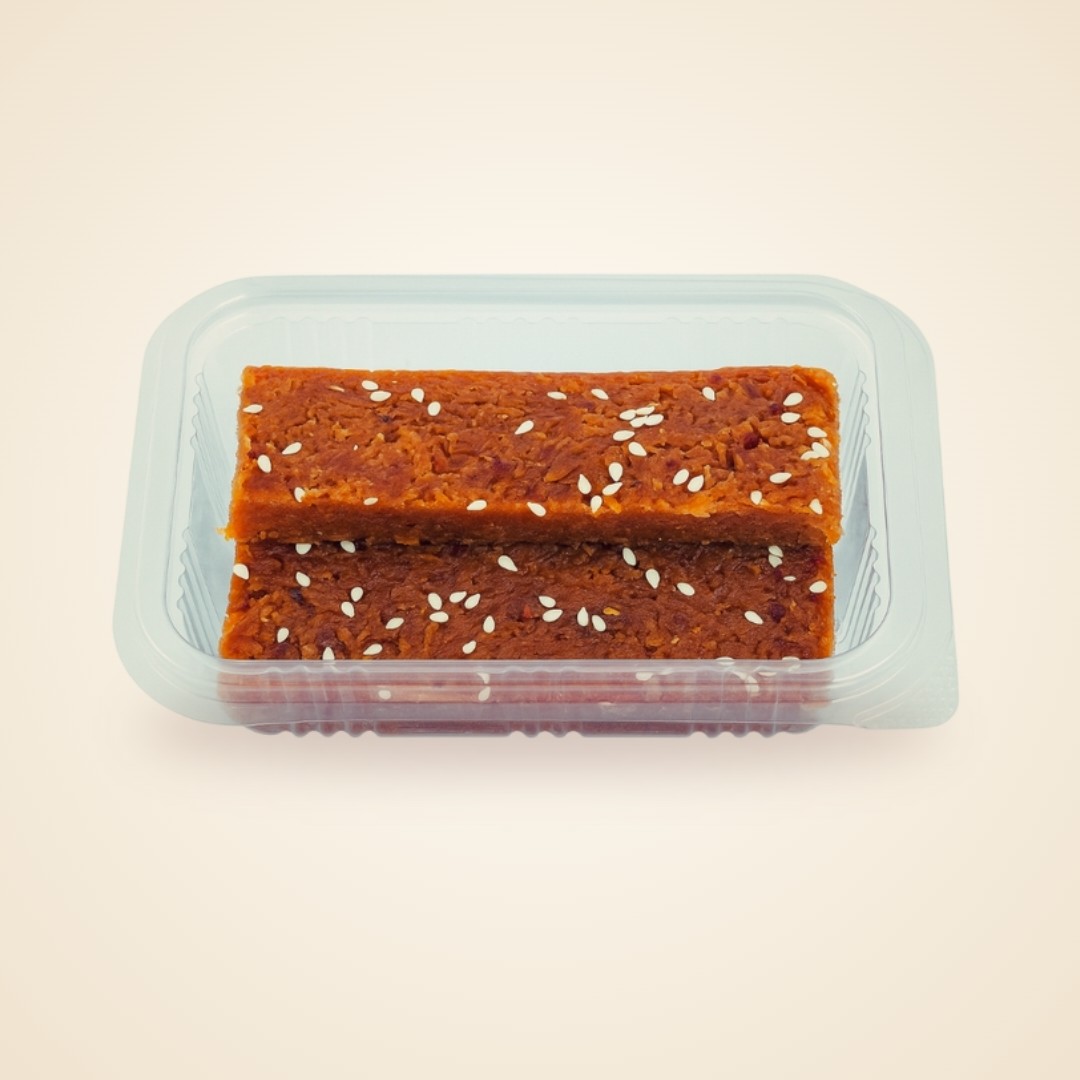
On long trails like Kudremukh there are no shops after the check post. A few pieces of our Coconut Jaggery Burfi are an easy, plastic free snack to carry in a steel box.
Trekking etiquette in the Western Ghats
Good Malenadu trekking etiquette is simple: leave nothing behind, take nothing away and make as little noise as you can. These forests are home to elephants, gaur and leopards, so read our page on Malenadu wildlife before a forest walk.
- No plastic. Forest gates check bags and some take a deposit for plastic items.
- No music, no shouting and no drones.
- Stay on the marked trail and with your guide.
- No fires and no camping unless the permit says so.
- Respect the temples at summits such as Mullayanagiri and Kodachadri.
- Start early and be off the hill before dark.
- Coffee estates on the way are private farms, so walk through only where the trail allows.
After the trek: food and the farms around you
Most trails start in farm country, so a homestay meal after the walk is part of the experience. Expect rice, a hot saaru with pepper, a tambuli (a cool curd dish) and pickle. Some homes finish with dosa and joni bella, the runny jaggery of the region.
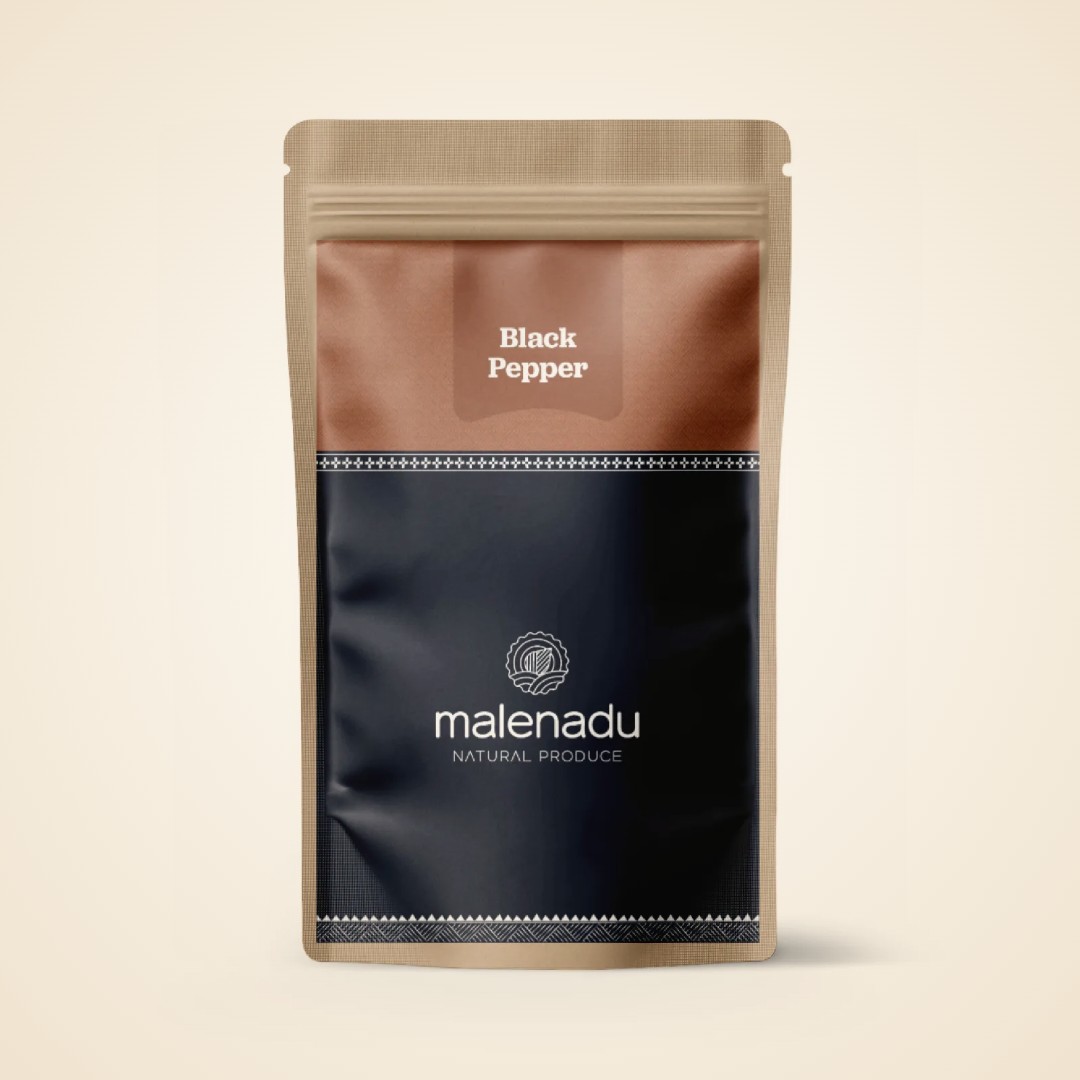
From the malenadu pantry
The pepper in that post trek saaru often grows on the estates you just walked through. Our Black Pepper comes from these same Malenadu hills.
In many Malenadu homes, warm water with honey and lemon is the drink after a cold, wet day outside.
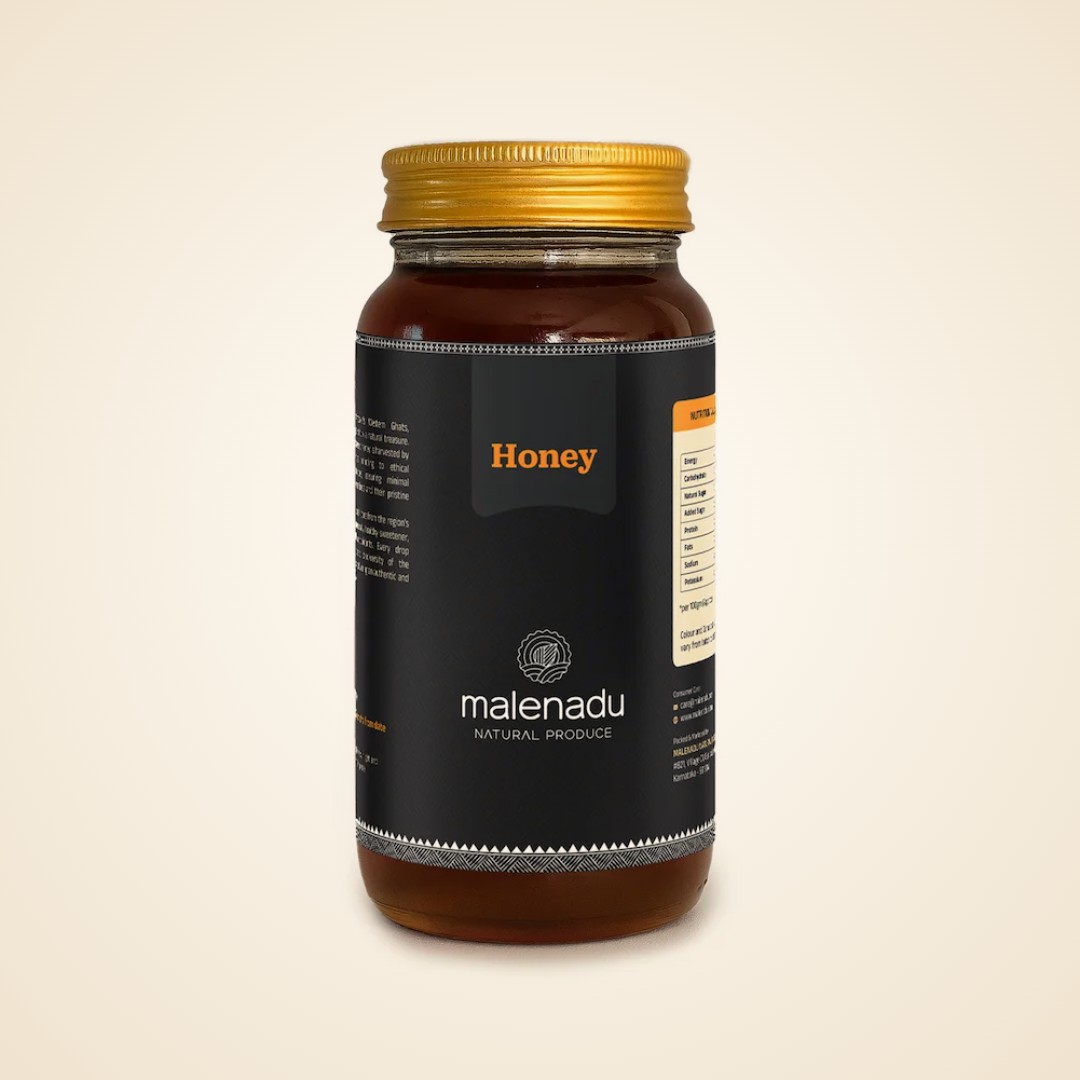
From the malenadu pantry
Keep a jar of malenadu Honey in the bag for the drive home. Stir a spoon into warm water with lemon when you get back from a cold, wet trail.
Plan your next walk in the hills
Use our Malenadu travel guide to choose a base near your trek. See Malenadu in Karnataka for the wider list of sights. For the towns around each trail, the Malenadu district map helps. When you are home, our farm products carry a taste of the hills.
Bring Malenadu home
Grown and made by Malenadu farmer families, packed by malenadu, a farmer owned producer company in Honnavar.
-
Coconut Jaggery Burfi
₹120 -
29% OFF
Honey
Price range: ₹249 through ₹449 -
8% OFF
Black Pepper
Price range: ₹165 through ₹299 -
19% OFF
Cardamom
Price range: ₹130 through ₹330 -
51% OFF
Small Jute Bag
Original price was: ₹200.₹99Current price is: ₹99. -
14% OFF
Liquid Jaggery
Original price was: ₹349.₹299Current price is: ₹299.
Frequently asked questions about Malenadu trekking
Which is the highest peak in Malenadu?
Mullayanagiri in Chikkamagaluru district is the highest at 1,930 m. It is also the highest peak in Karnataka.
Do I need a permit for Malenadu trekking?
For most forest trails, yes. Book online on the Karnataka Forest Department’s Aranya Vihaara site and carry the permit with the ID you used to book.
Which is the toughest trek in Malenadu?
Kumara Parvatha is widely seen as the toughest day trek, especially from Kukke Subrahmanya. Kudremukh is long and tiring too.
Is the Kudremukh trek open in the monsoon?
Most Malenadu trekking routes, Kudremukh included, are often closed or suspended during heavy rain. Check the Aranya Vihaara site for the current status before you plan.
Which Malenadu trek is good for beginners?
Mullayanagiri from Sarpadhari and Netravati peak from Samse are shorter options. Kemmangundi and Bisle give big views with very little walking.
Can I camp on Malenadu peaks?
Camping is generally not allowed on Forest Department trails. Most permits are for day treks that end before dark.
How do I deal with leeches on a trek?
Wear leech socks, carry salt and check your legs often. Let leeches drop off rather than pulling them. Then clean the bite.
Explore more of Malenadu
Malenadu TravelMalenadu Travel GuideRoutes, stays and seasons for the rain hills of Karnataka
Malenadu TravelMalenadu Monsoon and RainfallWhy the hills get so much rain and how life bends to it
Malenadu TravelMalenadu Waterfalls22 falls across the hills, with access and best season
Malenadu TravelMalenadu WildlifeTigers, macaques, king cobras and the forests farms need
Malenadu CultureMalenadu CulturePeople, arts and old ways of Karnataka’s rain hills
Malenadu FarmingMalenadu CropsWhat grows in Karnataka’s rain hills and why it grows
Start hereMalenadu in KarnatakaWhere Malenadu is, what the name means