
Malenadu Travel
Malenadu wildlife lives in one of the richest stretches of the Western Ghats, from tigers in Bhadra and lion-tailed macaques in Kudremukh to king cobras in the Agumbe rainforest. This guide lists 14 protected areas with their districts, the animals to look for, the best seasons and how to visit without harming the forest that Malenadu farms depend on.
On this page
What makes Malenadu wildlife so special?
Malenadu wildlife is special because these hills catch some of the heaviest rain in India. That rain feeds evergreen forest, grassy hilltops, swamps and fast rivers within a few kilometres of each other. The Western Ghats are a UNESCO World Heritage Site and one of the world’s biodiversity hotspots. Many frogs, fish, plants and insects found here live nowhere else on earth.
In a single day’s drive you can move from teak and bamboo forest where gaur graze to wet evergreen forest where lion-tailed macaques feed high in the canopy. A little higher are the grassy shola hills where the mist hardly lifts in July. Each habitat holds its own animals, which is why Malenadu wildlife feels so different from the dry forest of the plains to the east.
People have always lived right next to this forest. Sacred groves (devara kaadu), forest land kept for leaf mulch for areca gardens (soppina betta) and shaded spice gardens all give Malenadu wildlife room outside the parks. If you are new to the region, read our guide to Malenadu in Karnataka first.
Wildlife sanctuaries in Malenadu: which ones should you know?
The main wildlife sanctuaries in Malenadu are Bhadra Tiger Reserve, Kudremukh National Park, the Sharavathi Valley sanctuary and the Kali Tiger Reserve, with ten smaller or edge areas around them. Together they protect every big Malenadu wildlife habitat, from rainforest to grassland to reservoir. Match each district below with our list of Malenadu districts and taluks.
| Protected area | District | Known for |
|---|---|---|
| Bhadra Tiger Reserve | Chikkamagaluru, Shivamogga | Tigers, elephants, gaur, Bhadra backwaters |
| Kudremukh National Park | Chikkamagaluru, Udupi, Dakshina Kannada | Shola grassland, lion-tailed macaque, river sources |
| Sharavathi Valley Lion-Tailed Macaque Sanctuary | Shivamogga, Uttara Kannada | Lion-tailed macaque, Myristica swamps |
| Shettihalli Wildlife Sanctuary | Shivamogga | Mixed forest near Sakrebyle elephant camp |
| Someshwara Wildlife Sanctuary | Udupi | Evergreen forest below the Agumbe ghat |
| Mookambika Wildlife Sanctuary | Udupi | Kollur temple forest, butterflies, Kodachadri trek |
| Pushpagiri Wildlife Sanctuary | Kodagu | Kumara Parvatha peak, shola forest |
| Brahmagiri Wildlife Sanctuary | Kodagu | Iruppu falls, border forest with Wayanad |
| Talakaveri Wildlife Sanctuary | Kodagu | Source of the Kaveri, misty hilltops |
| Nagarahole National Park (edge) | Kodagu, Mysuru | Tigers, elephants, Kabini backwaters |
| Kali Tiger Reserve (Dandeli-Anshi) | Uttara Kannada | Hornbills, black leopards, Kali river |
| Bhimgad Wildlife Sanctuary | Belagavi | Barapede caves and their rare bat |
| Attiveri Bird Sanctuary | Uttara Kannada | Waterbirds on a small reservoir near Mundgod |
| Gudavi Bird Sanctuary | Shivamogga | Nesting waterbirds near Sorab |
Bhadra Tiger Reserve
Bhadra Tiger Reserve covers about 492 sq km of forest around the Bhadra dam backwaters in Chikkamagaluru and Shivamogga districts. It came under Project Tiger in 1998, according to the Wildlife Institute of India. The forest is mostly moist and dry deciduous, with teak, matthi and honne trees.
Bhadra shows what patient conservation can do for Malenadu wildlife. Under a rehabilitation project, 736 families from 16 villages moved out of the reserve to new land. At the reserve’s silver jubilee in 2024 the state forest minister said tiger numbers had grown from eight to about 40. Forest department safaris start from the Lakkavalli and Muthodi side, and there are forest-edge stays near the backwaters.
Kudremukh National Park
Kudremukh National Park covers about 600 sq km across Chikkamagaluru, Udupi and Dakshina Kannada districts and became a national park in 1987. Its rolling grass hills with dark shola forest in the folds are the classic picture of Malenadu wildlife country. The Tunga, the Bhadra and the Netravati all begin in these hills at Gangamoola.
The park holds one of the most important lion-tailed macaque populations, along with tigers, leopards, dholes, gaur, sloth bears, Malabar giant squirrels and about 200 kinds of birds. Treks to Kudremukh peak need forest department permission and a guide (see our Malenadu trekking guide).
Sharavathi Valley and the Myristica swamps
The Sharavathi Valley Lion-Tailed Macaque Sanctuary now covers about 930 sq km across Shivamogga and Uttara Kannada, after the old Aghanashini macaque reserve was added in 2019, as Deccan Herald reported. A 2022 count found about 730 macaques in 41 troops here, a number that has held steady for two decades.
The valley also hides Myristica swamps, freshwater swamp forests of wild nutmeg trees whose roots stand in water all year. They are among the rarest forest types in India. The best known, Kathalekan near Siddapur, is protected as a sacred grove. Studies have found dozens of frog and butterfly species in these swamps.
From the malenadu pantry
The wild nutmegs of the Myristica swamps are cousins of the nutmeg grown in Malenadu spice gardens. Our nutmeg is grown in Malenadu spice gardens, in the shade of tall trees and areca palms.
Kali Tiger Reserve at Dandeli
The Kali Tiger Reserve in Uttara Kannada began as the Dandeli game sanctuary in 1956 and took its present name in 2015, joining Dandeli with Anshi National Park. About 272 bird species have been recorded here. The reserve is also known for melanistic leopards, often called black panthers.
For birders, Dandeli is the high point of any Malenadu wildlife trip, with four hornbills to look for: the Malabar pied, Malabar grey, great and Indian grey hornbill, as Karnataka Tourism notes. A hornbill festival with birding walks is held in February. Ganeshgudi near Dandeli is a favourite of birders.
Smaller sanctuaries worth a visit
The smaller sanctuaries are quieter and better for walking than for safaris. Each shows a different face of Malenadu wildlife:
- Shettihalli sits close to Shivamogga town. The Sakrebyle elephant camp on the Tunga river is a few kilometres away.
- Someshwara covers the steep forest below the Agumbe ghat. Seethanadi Nature Camp at Hebri is nearby.
- Mookambika surrounds the Kollur temple. Anejhari Butterfly Camp near Kollur is a base for the trek to Kodachadri.
- Pushpagiri, Brahmagiri and Talakaveri protect the Kodagu hills, including Kumara Parvatha, Iruppu falls and the source of the Kaveri.
- Nagarahole sits on the southern edge of Malenadu, with boat safaris on the Kabini backwaters.
- Bhimgad in Khanapur taluk of Belagavi was declared in 2011. Its Barapede caves are the only known breeding site of Wroughton’s free-tailed bat.
- Attiveri near Mundgod and Gudavi near Sorab are small bird sanctuaries built around water, good for herons, egrets and cormorants.
Which animals can you see in Malenadu wildlife areas?
The animals most visitors hope to see in Malenadu wildlife areas are the tiger, gaur, lion-tailed macaque, Malabar giant squirrel, great hornbill and king cobra. The smaller life of frogs, snakes, butterflies and fungi is just as rich and easier to find on foot.
Tigers, leopards, elephants and gaur
Tigers are the headline of Malenadu wildlife in Bhadra, Kali, Nagarahole and Kudremukh, but sightings are never guaranteed in thick forest. Leopards are more widespread and often live close to villages. Gaur, the huge Indian bison, often cross coffee estate roads at dusk. Elephants move through Bhadra, Kodagu and the Hassan hills.
Lion-tailed macaque and Malabar giant squirrel
The lion-tailed macaque is a black monkey with a silver-grey mane and a tufted tail, found only in the Western Ghats. Only about 3,500 are thought to survive in the wild, so the Sharavathi and Kudremukh groups matter a great deal. The macaques eat wild nutmeg fruit and drop the seeds, which helps the swamp trees spread.
The Malabar giant squirrel is a large maroon and cream squirrel that leaps between treetops and calls loudly in the morning. It needs tall, unbroken canopy, so seeing one is a good sign for Malenadu wildlife as a whole.
Hornbills and other birds
Hornbills need big old trees with holes to nest in, so they show the health of the whole forest. You will hear the great hornbill’s whooshing wingbeat before you see it. Look also for the Malabar trogon and the Malabar whistling thrush.
Why is the king cobra Agumbe’s most famous animal?
The king cobra, Agumbe’s best-known resident, lives in the wet forest around the village. The Agumbe Rainforest Research Station has studied these snakes for many years. The king cobra is the longest venomous snake in the world and eats mainly other snakes. The female is the only snake known to build a nest of leaves for her eggs.
When a king cobra wanders into a house or cowshed, villagers call trained rescuers instead of killing it. Agumbe is also home to the Malabar pit viper, which comes in green, brown and yellow forms. Never touch or follow a snake for a photo.
Frogs, butterflies and the night forest
The monsoon turns every stream into a frog chorus. Dancing frogs wave their back legs at rivals near waterfalls while night frogs call from wet leaf litter. The Southern birdwing, India’s largest butterfly, floats over forest edges after the rains. A torch walk with a trained naturalist shows Malenadu wildlife at its most surprising.
How to visit Malenadu wildlife areas responsibly
The responsible way to see Malenadu wildlife is through the Karnataka Forest Department, with permits for every trek. Most protected areas allow entry only on official safaris, guided walks or permitted trails. Wandering off on your own is both illegal and unsafe.
- Safaris: Forest department safaris run at Bhadra, Dandeli and Nagarahole. Book only through official channels and avoid touts at the gate.
- Stays: forest-edge camps or homestays on farms.
- Treks: Kudremukh, Kodachadri, Kumara Parvatha and similar peaks need forest permits and usually a local guide. Trails can close in heavy rain or in the fire season.
- Behaviour: No music, no feeding animals, no plastic left behind and no smoking. Stay inside the vehicle on safaris.
- Driving: Drive slowly on ghat and forest roads, especially at night. Snakes, frogs and even macaques are killed by speeding vehicles.
Local tip
Carry binoculars and go out in the first two hours after sunrise, when birds and squirrels are most active. A local naturalist or homestay host will show you more Malenadu wildlife in one morning than a week of driving around.
When is the best time to see Malenadu wildlife?
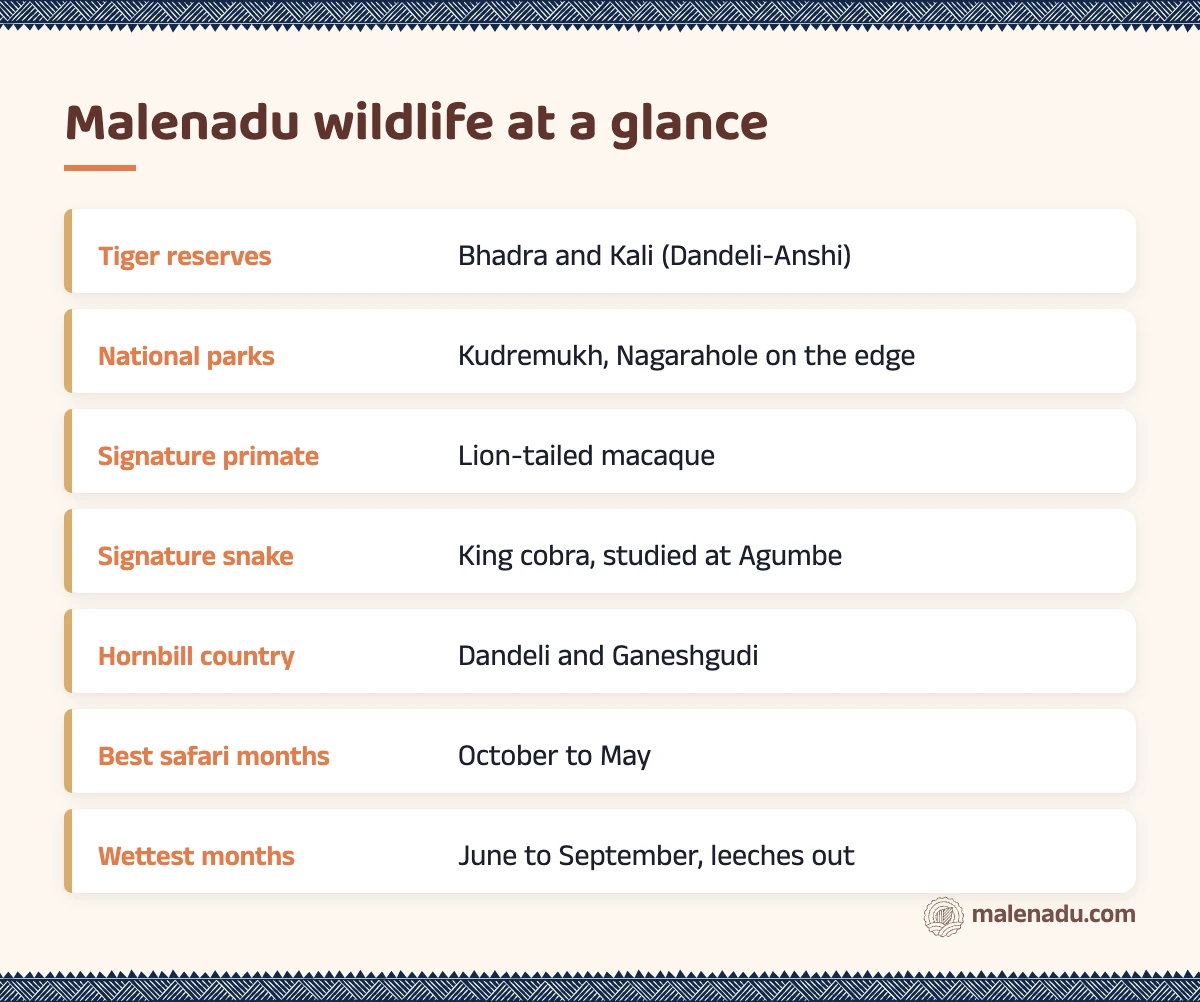
The best time to see Malenadu wildlife is October to May for safaris and big animals, while June to September is best for frogs, snakes and fungi. Each season shows a different side of the same forest.
| Season | Months | What you will see | Keep in mind |
|---|---|---|---|
| Southwest monsoon | June to September | Frogs, snakes, fungi, full streams | Leeches, closed trails, ghat landslides |
| After the rains | October to November | Green forest, butterflies, returning birds | Trails reopen slowly, some showers |
| Cool season | December to February | Birds, hornbill festival in February | Cold mornings in the hills |
| Dry season | March to May | Big animals near water, clear views | Hot lower forest, fire season |
If the rain is part of what draws you, read our guide to the Malenadu monsoon and rainfall before you plan. Waterfalls are at their fullest from July to September, so our Malenadu waterfalls guide pairs well with a monsoon Malenadu wildlife trip.
What should you know about leeches, ticks and safety?
Leeches are the one part of Malenadu wildlife every monsoon visitor will meet. They are harmless but annoying. They wait on wet leaves and slip through socks, so a bite often goes unnoticed until it bleeds.
- Wear leech socks or tuck your trousers into long socks.
- Carry a small pouch of salt or snuff powder to make them drop off.
- Check your feet, ankles and waist after every walk, then wash any bite.
Ticks matter more in the dry months. Kyasanur Forest Disease, known locally as monkey fever, is spread by ticks in some forest areas of Malenadu. Follow local health advisories, wear full sleeves and use repellent. At night carry a torch and watch where you step.
How does human-wildlife conflict affect Malenadu farms?
Human-wildlife conflict is a daily reality on many Malenadu farms, because the forest and the thota (garden) often share a fence. Elephants stray into villages in Kodagu, Hassan, Chikkamagaluru and Shivamogga. Gaur graze through coffee and paddy while wild boar and porcupines dig up tubers. Bonnet macaques strip coconuts and fruit trees.
Farmers pay a real price for living beside Malenadu wildlife. The state uses trenches, solar fences, rapid response teams and compensation for crop loss. The Bhadra relocation shows that well planned, voluntary moves can reduce conflict. Most families still respect the forest deeply and keep a small shrine to the forest spirit at the edge of the land.
Why do Malenadu forests matter to farmers?
Malenadu forests matter to farmers because they hold the water, shelter the bees and give the shade that local crops need. When the monsoon ends, forest soil and swamps release stored rain slowly, so streams and wells keep running into summer. Older farmers will tell you the forest brings the rain. At the very least, it holds that rain on the land.
Bees are the clearest link between Malenadu wildlife and the farm. Wild bees and bees kept in boxes on forest-edge farms pollinate coffee, pepper, cardamom and fruit trees. They need the forest for food in the months when crops are not flowering, which is one more reason to buy honey and spices from farmers who keep their trees.
From the malenadu pantry
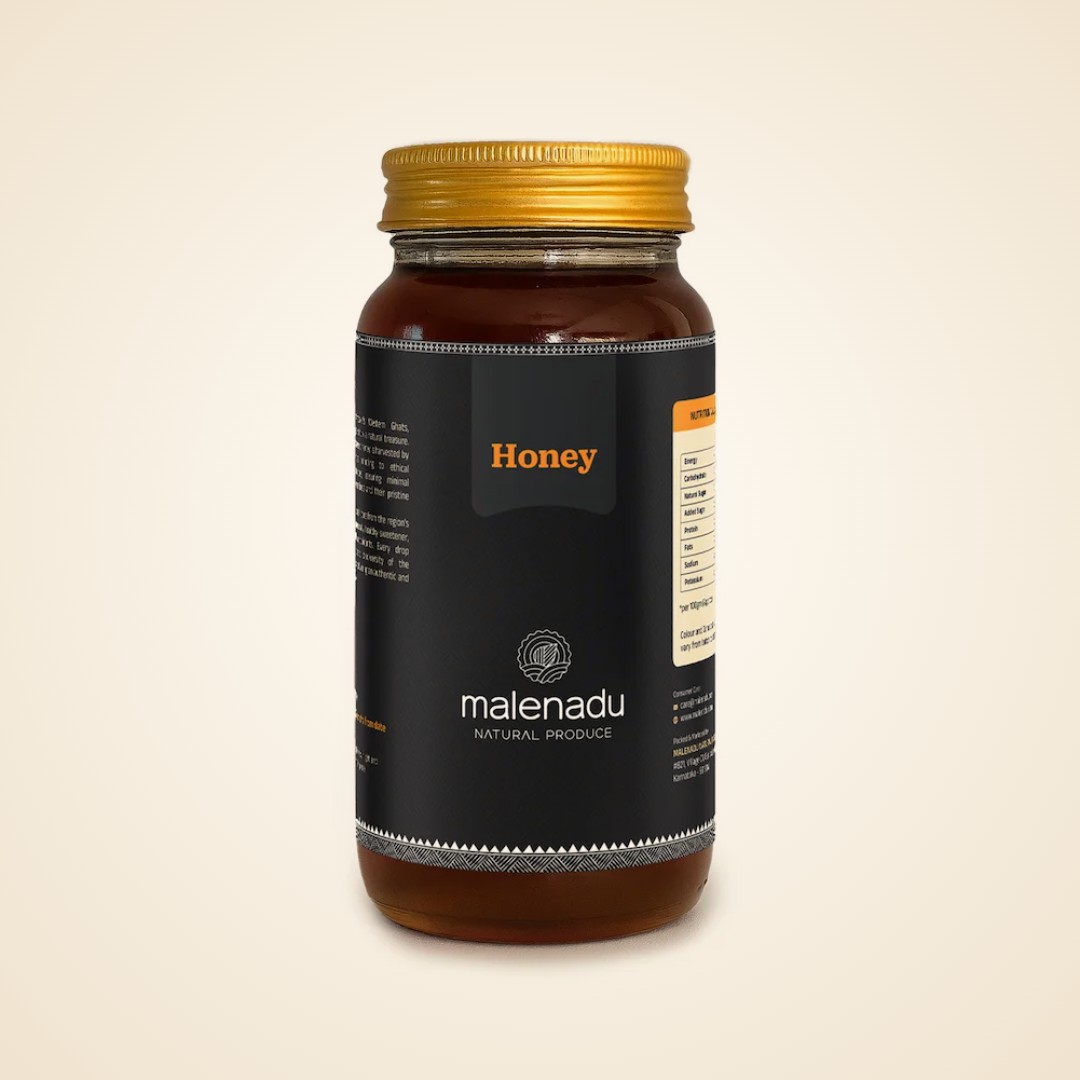
Buying honey and spices from Malenadu farmers supports families who keep wild trees standing instead of clearing every corner for one crop. Try a spoon of malenadu Honey in warm water after a day on the trail.
Spices are the other link. Pepper vines climb jungle trees and areca palms while cardamom grows under tall shade trees, so a spice garden keeps many trees on the land. Read more in our guides to pepper and cardamom farming and areca nut farming in Malenadu.
From the malenadu pantry
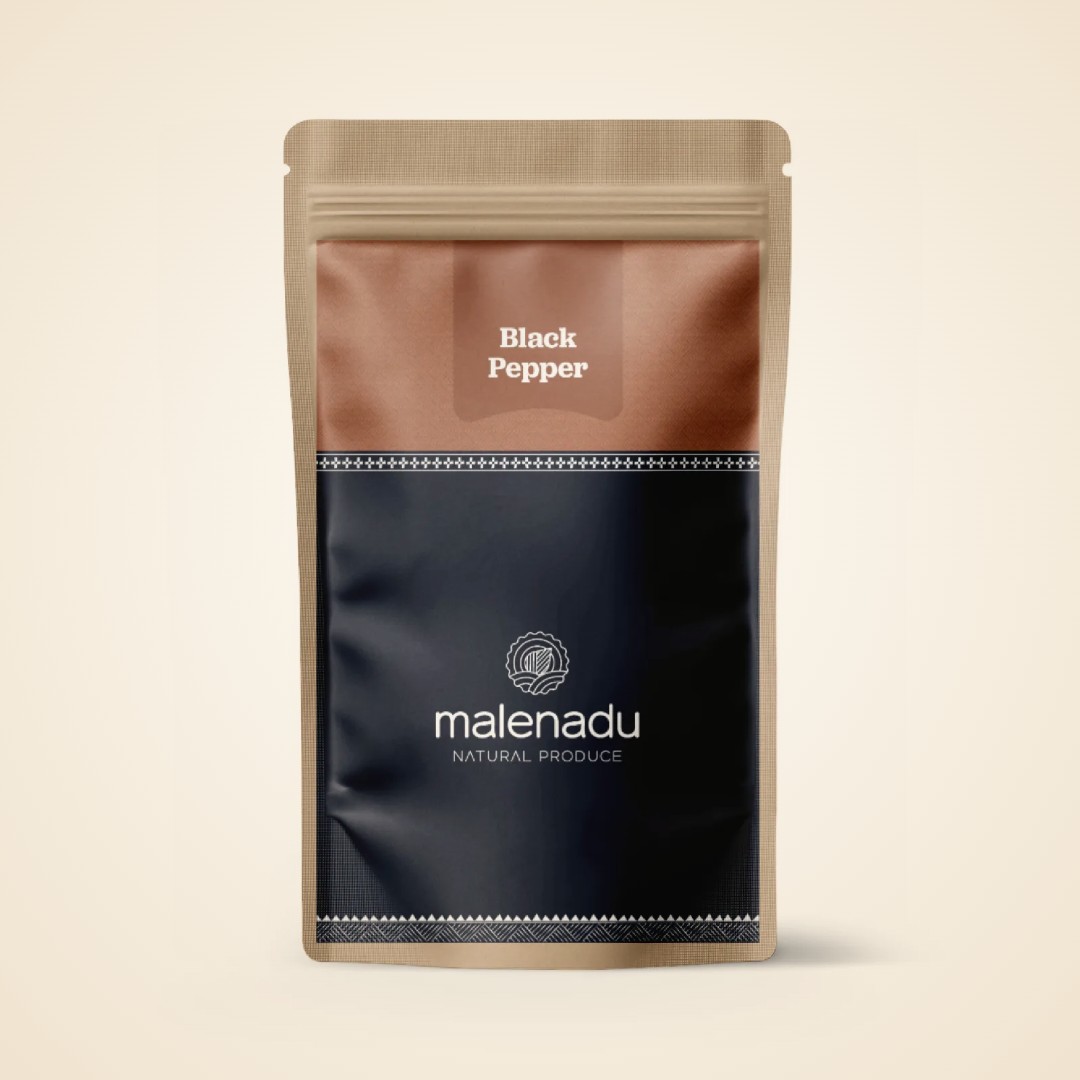
Our black pepper is picked from vines that climb shade trees and areca palms in Malenadu gardens. It is a crop that needs trees, which is good news for the birds and squirrels that live in them.
Where to go next in Malenadu
Malenadu wildlife is best enjoyed as part of a slow trip through the hills. Our Malenadu travel guide brings waterfalls, treks and the monsoon together. At home, spices from Malenadu farms and our other farm products are a simple way to keep supporting the farmers who share their land with the forest.
Bring Malenadu home
Grown and made by Malenadu farmer families, packed by malenadu, a farmer owned producer company in Honnavar.
-
29% OFF
Honey
Price range: ₹249 through ₹449 -
8% OFF
Black Pepper
Price range: ₹165 through ₹299 -
19% OFF
Cardamom
Price range: ₹130 through ₹330 -
8% OFF
Nutmeg
Original price was: ₹60.₹55Current price is: ₹55. -
6% OFF
Clove
Price range: ₹150 through ₹440 -
51% OFF
Small Jute Bag
Original price was: ₹200.₹99Current price is: ₹99.
Frequently asked questions about Malenadu wildlife
Which is the best place to see Malenadu wildlife?
For big animals, Bhadra Tiger Reserve and Nagarahole are the best bets. For lion-tailed macaques go to Kudremukh or the Sharavathi valley. For hornbills go to Dandeli and Ganeshgudi.
Can you see tigers in Malenadu?
Yes, tigers are part of Malenadu wildlife in Bhadra, Kali, Nagarahole and Kudremukh. Sightings depend on luck. The dry months from March to May usually give the best chances.
Where can I see the lion tailed macaque in Karnataka?
The Sharavathi Valley sanctuary and Kudremukh National Park hold the main groups.
Is Agumbe famous for king cobras?
Yes. The wet forest around Agumbe has many king cobras and the Agumbe Rainforest Research Station has studied them for years. Always watch snakes from a distance.
What is the best time to visit Malenadu wildlife sanctuaries?
October to May is best for safaris and big animals. June to September is best for frogs, snakes and fungi, but expect leeches, heavy rain and some closed trails.
Do I need a permit to trek in Kudremukh National Park?
Yes. Treks inside Kudremukh need forest department permission and usually a local guide. Trails may close in heavy rain or in the fire season.
How do I protect myself from leeches in Malenadu?
Wear leech socks, carry salt or snuff powder and check your feet after every walk. Leech bites are harmless.
Explore more of Malenadu
Malenadu TravelMalenadu Travel GuideRoutes, stays and seasons for the rain hills of Karnataka
Malenadu TravelMalenadu Monsoon and RainfallWhy the hills get so much rain and how life bends to it
Malenadu TravelMalenadu Peaks and TreksPeaks, permits and seasons for walking the Western Ghats
Malenadu TravelMalenadu Waterfalls22 falls across the hills, with access and best season
Malenadu CultureMalenadu CulturePeople, arts and old ways of Karnataka’s rain hills
Malenadu FarmingMalenadu CropsWhat grows in Karnataka’s rain hills and why it grows
Start hereMalenadu in KarnatakaWhere Malenadu is, what the name means