

Malenadu Travel
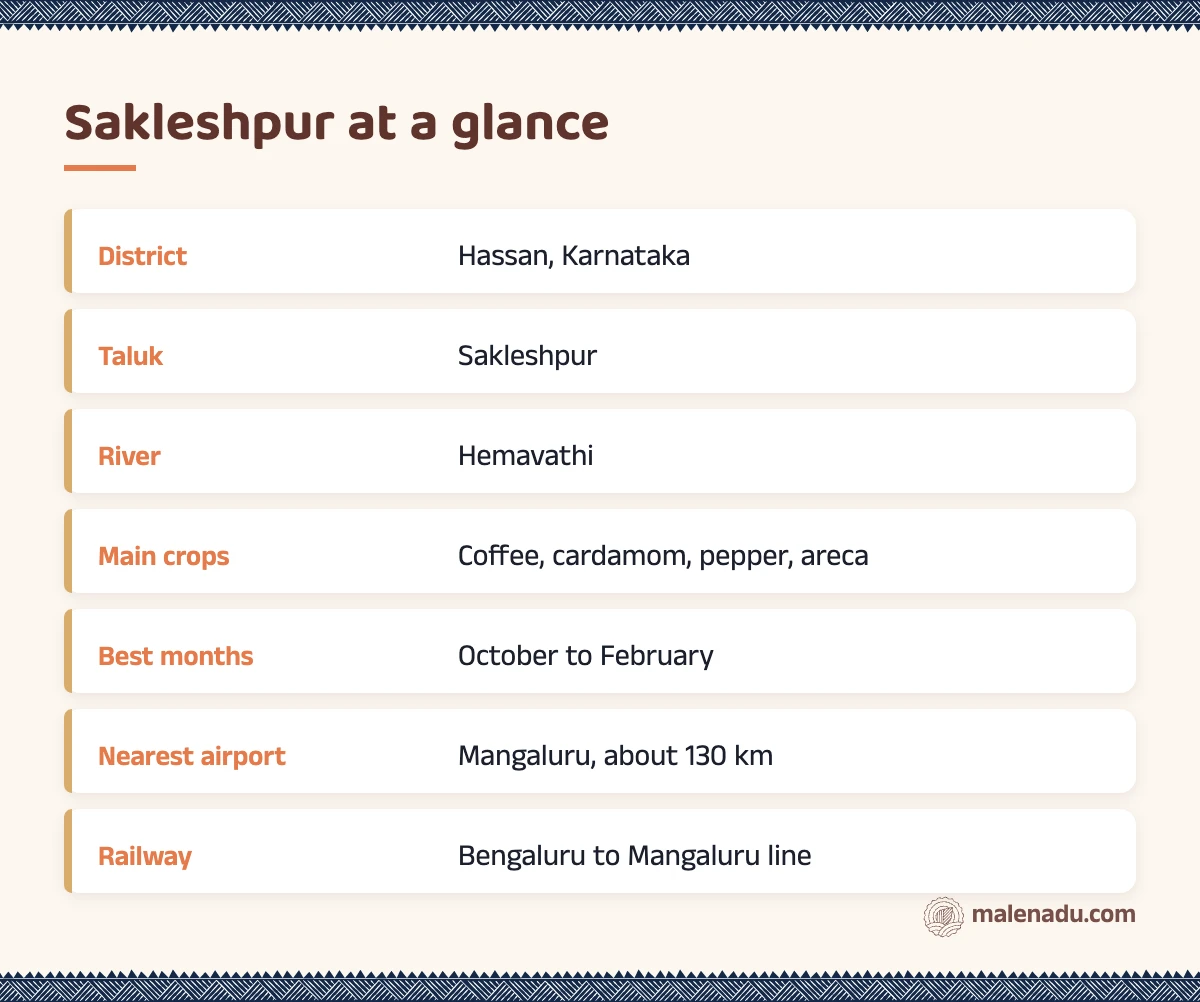
Sakleshpur is a small hill town in Hassan district where coffee, cardamom and pepper estates roll down to the Hemavathi river and the Western Ghats drop steeply to the coast. This guide covers what the town is known for, its history, the places to see in and around town with rough distances, food, crops, the best season and a simple 2 day plan.
On this page
What is Sakleshpur known for?
Sakleshpur is known for three things: plantations, mist and the ghats. Coffee, cardamom and pepper estates cover the slopes around town. Tipu Sultan’s star shaped Manjarabad fort stands just outside it. West of town, the road and the railway both plunge through thick forest towards Mangaluru.
The town sits in Sakleshpur taluk of Hassan district, on the southern edge of the hill belt. For how the taluks fit together, see our list of Malenadu districts and taluks. For the wider region, read Malenadu in Karnataka.
It is the nearest hill town to Bengaluru on the main highway, so it fills up on long weekends. On a weekday or in the rain it goes back to being a quiet planters’ town where most people still get up early to walk their estates. In British times it was called a poor man’s Ooty, for its cool weather and easy reach.
A short history of Sakleshpur
The town grew as a market town for the hills around it. Local tradition says it takes its name from the Sakleshwara temple of Shiva in town, near the Hemavathi.
Before the British, these hills changed hands many times. Local Palegar chiefs ruled from villages nearby. In 1659 Shivappa Nayaka of the Keladi Nayakas, whose old capitals are near Sagara, took the area. It later passed to Mysore and to Tipu Sultan, who built Manjarabad fort in 1792 to guard the pass to the coast.
Coffee planting on a commercial scale began here in the 19th century. The railway through the ghats came much later and opened up the town to day trippers from Mangaluru and Bengaluru.
Manjarabad fort
Karnataka Tourism describes Manjarabad fort as a star shaped fort built by Tipu Sultan in 1792, on a hill about 988 m above sea level. The name comes from manju, the Kannada word for mist, which still rolls over the walls most mornings. It is open from 8 am to 6 pm and there is no entry fee.
The fort has eight points, each with a lookout. Inside you find a plus shaped water tank, cellars that may have stored gunpowder and arched rooms for the guards. You climb about 250 steep steps from the highway to reach the top. The climb starts near Donigal, about 5 to 6 km from town on NH75.
For other hill forts of the region, see our guide to Malenadu forts.
Sakleshpur tourist places with rough distances
The main Sakleshpur tourist places are Manjarabad fort, the Sakleshwara temple, Bisle ghat, the Betta Byraveshwara temple and the estates around town. Most are within an hour’s drive. The table gives rough road distances from the town centre.
| Place | What it is | Rough distance from town |
|---|---|---|
| Sakleshwara temple | Old Shiva temple, the town’s namesake | In town |
| Hemavathi riverbank | River flowing past the town | In town |
| Manjarabad fort | Tipu Sultan’s star fort, 1792 | 5 to 6 km |
| Betta Byraveshwara temple | Hilltop Shiva temple in forest | about 35 km |
| Bisle ghat viewpoint | Forest view to Pushpagiri and Kumara Parvatha | about 35 to 45 km |
| Belur | Hoysala Chennakeshava temple | about 35 to 40 km |
| Hassan | District town, railway junction | about 40 km |
| Kukke Subramanya | Temple town below the ghats | about 20 km beyond Bisle |
| Mangaluru | Coast and airport | about 130 km |
Sakleshwara temple and the Hemavathi
The Sakleshwara temple is an old Shiva temple in the heart of town, close to the Hemavathi. It is a working town temple rather than a big monument, so go early, dress simply and sit for a while. The Hemavathi rises in the Western Ghats, flows past the town and on through Hassan district before it joins the Kaveri. Our guide to Malenadu rivers follows its course.
Bisle ghat viewpoint
Bisle ghat is a forest pass in Sakleshpur taluk, on the road from town towards Kukke Subramanya. The Hassan district administration describes it as reserved forest that runs into Kodagu and Dakshina Kannada, with views of hills such as Pushpagiri, Kumara Betta, Yennikallu and Patla. Elephants, gaur, sambar and wild boar live here.
On a clear morning the Bisle ghat viewpoint looks over folds of green to Kumara Parvatha. Clouds often hide everything by noon, so go early. Do not walk into the forest from the viewpoint. Our Malenadu wildlife guide explains why elephants make these roads risky after dark.
Betta Byraveshwara temple
The Betta Byraveshwara temple is a Shiva temple on a forested hilltop, about 35 km from town. Karnataka Tourism dates it to roughly 600 years ago and links it with stories of the Pandavas. The yearly abhisheka is held in January. The last stretch of road is narrow, so drive slowly and keep to daylight.
Shiradi ghat
Shiradi ghat is the stretch of NH75 that drops from these hills to the coast near Gundya. It is one of the busiest ghat roads in Karnataka and carries most of the traffic between Bengaluru and Mangaluru. In the monsoon it can close for landslides or repairs. Check road news before you drive it.
The railway through the ghats
The railway from Sakleshpur to Subrahmanya Road runs about 55 km through the Western Ghats, with more than 50 tunnels and many tall bridges. The best way to see it is from a train window. Day trains on the Bengaluru to Mangaluru line run this stretch and some have glass roofed Vistadome coaches.
Walking on railway tracks, through tunnels or over railway bridges is trespassing under the Railways Act and is illegal. Trains come round blind curves with no warning and there is nowhere to step aside on a bridge. Enjoy the line from your seat.
Treks and waterfalls near Sakleshpur
Jenukal Gudda, Agni Gudda and Ombattu Gudda are hills near town with grassy tops and wide views. Small falls such as Magajahalli and Manjehalli run best just after the monsoon. Many forest trails need Forest Department permission, so ask locally before you set out. Our guide to Malenadu trekking covers permits and the harder peaks such as Kumara Parvatha.
Things to do in Sakleshpur
Things to do in Sakleshpur are slow and outdoors: walk an estate, climb the fort at sunrise, drive the Bisle road and eat a long lunch. Here is a short list.
- Climb Manjarabad fort early, before the mist lifts.
- Walk a coffee and cardamom estate with a planter or local guide.
- Drive to the Bisle ghat viewpoint in the morning.
- Sit by the Hemavathi in town in the evening.
- Ride the train through the ghats towards Subrahmanya Road.
- Visit Belur on the way in or out.
- Watch birds in the estates at dawn. Shade trees are full of them.
Local tip
Mist is thickest at dawn and dusk. If you want to see the view from Manjarabad fort, go between 8 am and 10 am. If you want the fort lost in cloud, go at opening time in the monsoon.
Crops grown around Sakleshpur
Coffee, cardamom and pepper are the main crops around Sakleshpur, with areca, paddy and fruit trees in the valleys. Many estates grow all of these together. Coffee bushes grow under tall shade trees, pepper vines climb those trees and cardamom grows in the damp shade below.
Coffee estates
Both arabica and robusta are grown in these hills. Arabica likes the higher, cooler slopes and robusta does better lower down. Coffee picking runs through the cool months, which is why estates are busy and the drying yards are full when most tourists visit. Our page on Malenadu coffee explains the crop year.
Elakki estates
Cardamom has a long history here. The Spices Board’s Indian Cardamom Research Institute has run a regional research station at Donigal, about 6 km from town, since 1980. Cardamom grows in moist, shaded valleys. Capsules are picked by hand every few weeks and dried slowly to keep them green.
Our green cardamom comes from these same hills. The pods are picked by hand from shaded plants and dried the slow way, so they stay green and fragrant.

From the malenadu pantry
Green cardamom from the shaded valleys of Malenadu, picked by hand and dried slowly. Crush two pods into your filter coffee or payasa and you will smell the estates in your kitchen.
Pepper
Pepper vines climb silver oak and other shade trees across the estates. The spikes ripen in winter and are picked by hand from tall bamboo ladders, then dried in the sun on mats or drying yards. Our guide to pepper and cardamom farming covers the work through the year.
When you walk an estate, look up: the green strings hanging from the tree trunks are pepper. Our Malenadu black pepper is picked and sun dried the same way.

From the malenadu pantry
Bold black pepper from vines on shade trees in the Malenadu hills, sun dried after a hand harvest. It is the spice most visitors to these estates wish they had carried home.
Sakleshpur food to try: estate meals
Sakleshpur Malenadu food is filling estate food: rice, ragi, pork and chicken curries, rotti and plenty of coffee. Look for these in the town’s eateries and in homestay kitchens.
- Akki rotti: a rice flour flatbread, often with onion, chilli and coriander.
- Koli saaru: a chicken curry with coconut and pepper, eaten with rice or rotti.
- Pork curry: dark and peppery, a favourite in many estate homes.
- Kadubu: steamed rice dumplings eaten with curry or chutney.
- Bamboo shoot curry (kanile): a monsoon dish. Bamboo shoots must be soaked and boiled well before cooking, never eaten raw.
- Wild mushrooms: only eat kinds that a local person knows well. Otherwise buy market mushrooms.
- Filter coffee: strong, with milk and a little sugar or jaggery.
Our Malenadu food guide has more dishes from these hills.
When is the best time to visit Sakleshpur?
The best time to visit Sakleshpur is October to February, when the rain has stopped, the hills are still green and the mornings are cool and clear. Coffee picking is under way and the estates are busy.
| Season | Months | What to expect |
|---|---|---|
| Post monsoon | October to November | Full streams, green hills, clear mornings |
| Winter | December to February | Cool and dry, best views, coffee harvest |
| Summer | March to May | Warm days, cooler nights, coffee blossom after early rain |
| Monsoon | June to September | Heavy rain, mist, leeches, slow roads |
The monsoon here is beautiful but wet. Streams rise fast, roads can close and leeches are on every trail. Never stand on rocks at the edge of a fast stream. Plan rainy season trips with extra time for every drive.
How to get to Sakleshpur
Sakleshpur is on NH75 between Bengaluru and Mangaluru and also has a railway station on the same line. That makes it one of the easiest Malenadu towns to reach without a car.
- By road from Bengaluru: about 225 km on NH75 through Hassan. Our Bangalore to Malenadu guide covers routes and drive times.
- By train: Sakleshpur station is on the Bengaluru to Mangaluru line. Hassan is the bigger junction about 40 km away.
- By air: Mangaluru is the nearest airport, about 130 km away.
- By bus: state buses run here from Bengaluru, Hassan and Mangaluru.
A 2 day plan for Sakleshpur
This 2 day plan covers the main Sakleshpur tourist places without rushing. It assumes you arrive by car or with a hired taxi.
Day 1: fort, town and estate
- Morning: arrive and go straight to Manjarabad fort. Take water for the climb.
- Midday: lunch in town, then visit the Sakleshwara temple.
- Afternoon: walk a coffee, cardamom and pepper estate with your homestay host or a local guide.
- Evening: sit by the Hemavathi and get to bed early.
Day 2: Bisle and the forest road
- Early morning: drive to the Bisle ghat viewpoint before the clouds come in.
- Late morning: go on to Kukke Subramanya if you want a temple. Otherwise turn back.
- Afternoon: visit Belur on the way out and head home.
If you have a third day, add the Betta Byraveshwara temple or ride the train down the ghats. Our guide to Malenadu temples covers Belur and Kukke in detail.
Local tips for Sakleshpur
These local tips will make your trip easier and safer.
- Book ahead on long weekends. Rooms in and around town fill quickly.
- Do not drive after dark on forest roads. Elephants cross the Bisle road and the ghat roads.
- Do not walk in the forest at night. Forest entry needs permits and night walks are not allowed.
- Watch for snakes on estate paths. If someone is bitten, keep them still and get to a hospital with antivenom fast. No cutting, sucking or folk remedies.
- Carry cash. Some small places on the Bisle side have weak mobile signal.
- Respect private estates. Do not enter one without the owner’s permission.
- Buy spices from growers. Ask your host where they buy pepper and cardamom.
Local tip
Fill fuel in Sakleshpur or Hassan before the Bisle or Shiradi ghat drive. Pumps are few once you are in the forest and mobile signal comes and goes.
Plan the rest of your Malenadu trip
Sakleshpur pairs well with Chikkamagaluru, Belur and the temples below the ghats. Our Malenadu travel guide helps you add a second base. When you are home, you can order spices from these hills on our site.
Bring Malenadu home
Grown and made by Malenadu farmer families, packed by malenadu, a farmer owned producer company in Honnavar.
-
19% OFF

Cardamom
Price range: ₹130 through ₹330 -
8% OFF

Black Pepper
Price range: ₹165 through ₹299 -
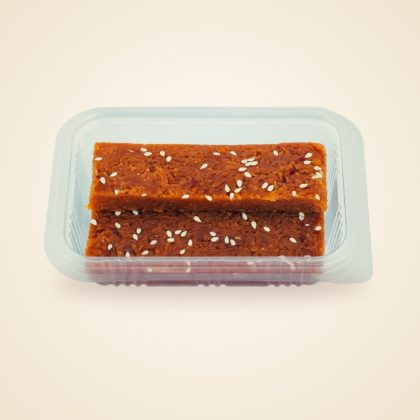
Coconut Jaggery Burfi
₹120 -
40% OFF

Desi Cow Ghee
Original price was: ₹1,500.₹899Current price is: ₹899. -
29% OFF

Honey
Price range: ₹249 through ₹449 -
51% OFF
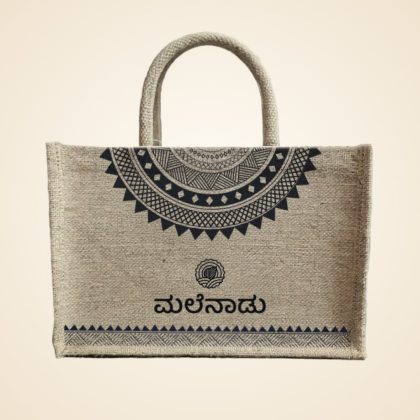
Small Jute Bag
Original price was: ₹200.₹99Current price is: ₹99.
Frequently asked questions about Sakleshpur
What is Sakleshpur famous for?
Sakleshpur is famous for its coffee, cardamom and pepper estates, the star shaped Manjarabad fort, the Bisle ghat forest and the railway line through the Western Ghats.
Which district is Sakleshpur in?
Sakleshpur is a taluk headquarters in Hassan district, Karnataka. Hassan town is about 40 km away.
How far is Manjarabad fort from Sakleshpur?
Manjarabad fort is about 5 to 6 km from the town on NH75, near Donigal. You climb about 250 steps to the top.
How far is Bisle ghat from Sakleshpur?
The Bisle ghat viewpoint is about 35 to 45 km from town, depending on the road you take. Go early in the morning for clear views.
Is Sakleshpur good in the monsoon?
Sakleshpur is very green and misty in the monsoon, but roads are slow and some ghat stretches close for repairs or slips. Drive only in daylight and check road news first.
Can I walk on the railway track at Sakleshpur?
No. Walking on railway tracks, tunnels or bridges is trespassing and is illegal. Take a day train to see the ghat section safely.
Is 2 days enough for Sakleshpur?
Two days are enough for Manjarabad fort, an estate walk, Bisle ghat and Belur. Add a day for Kukke Subramanya or the Betta Byraveshwara temple.
What is the best time to visit Sakleshpur?
October to February is best, with clear mornings, cool weather and the coffee harvest under way.
Explore more of Malenadu
Malenadu TravelMalenadu Travel GuideRoutes, stays and seasons for the rain hills of Karnataka
Malenadu TravelMalenadu Monsoon and RainfallWhy the hills get so much rain and how life bends to it
Malenadu TravelMalenadu Peaks and TreksPeaks, permits and seasons for walking the Western Ghats
Malenadu TravelMalenadu Waterfalls22 falls across the hills, with access and best season
Malenadu TravelMalenadu WildlifeTigers, macaques, king cobras and the forests farms need
Malenadu TravelMalenadu TemplesRiver shrines, hill goddesses and carved stone
Malenadu TravelBangalore to MalenaduDistances, routes and plans for the drive to the hills
Malenadu TravelMalenadu RiversTen rivers that rise in the hills and shape life below
Start hereMalenadu in KarnatakaWhere Malenadu is, what the name means