
Malenadu Food
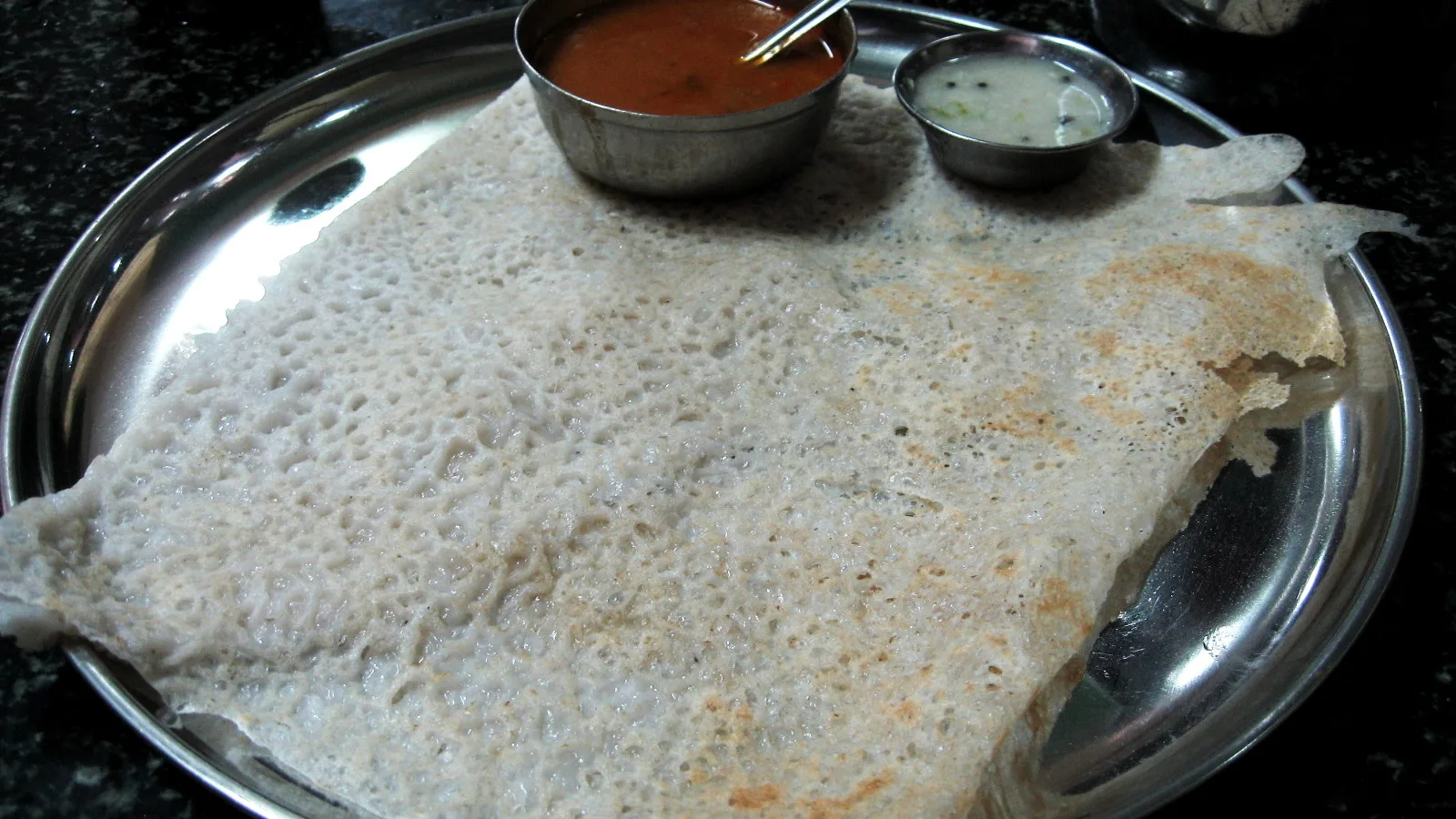
Neer dosa (ನೀರ್ ದೋಸೆ) is a soft, lacy white dosa made from soaked raw rice ground with water, poured on a hot tava, cooked on one side and folded. There is no urad dal and no fermenting. This page explains the rice to use, the batter thickness test, how to season the pan, a home recipe and what to serve with it.
On this page
What is neer dosa?
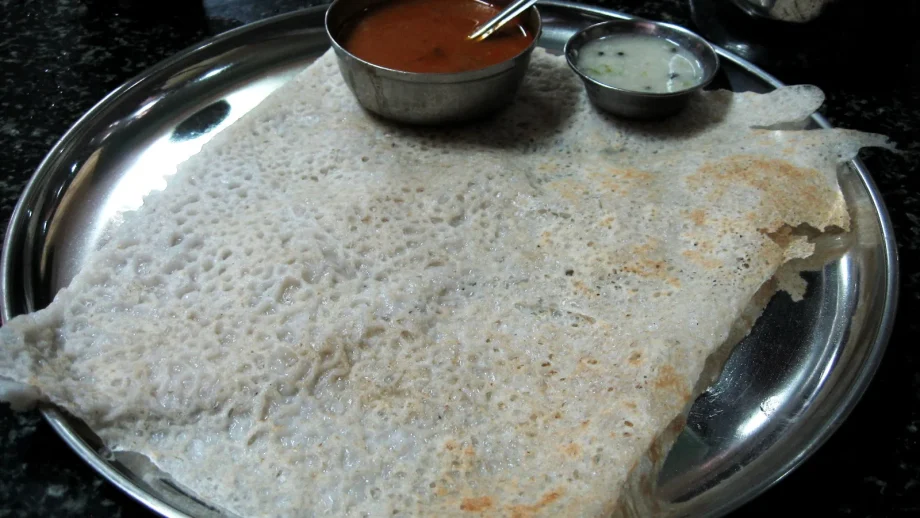
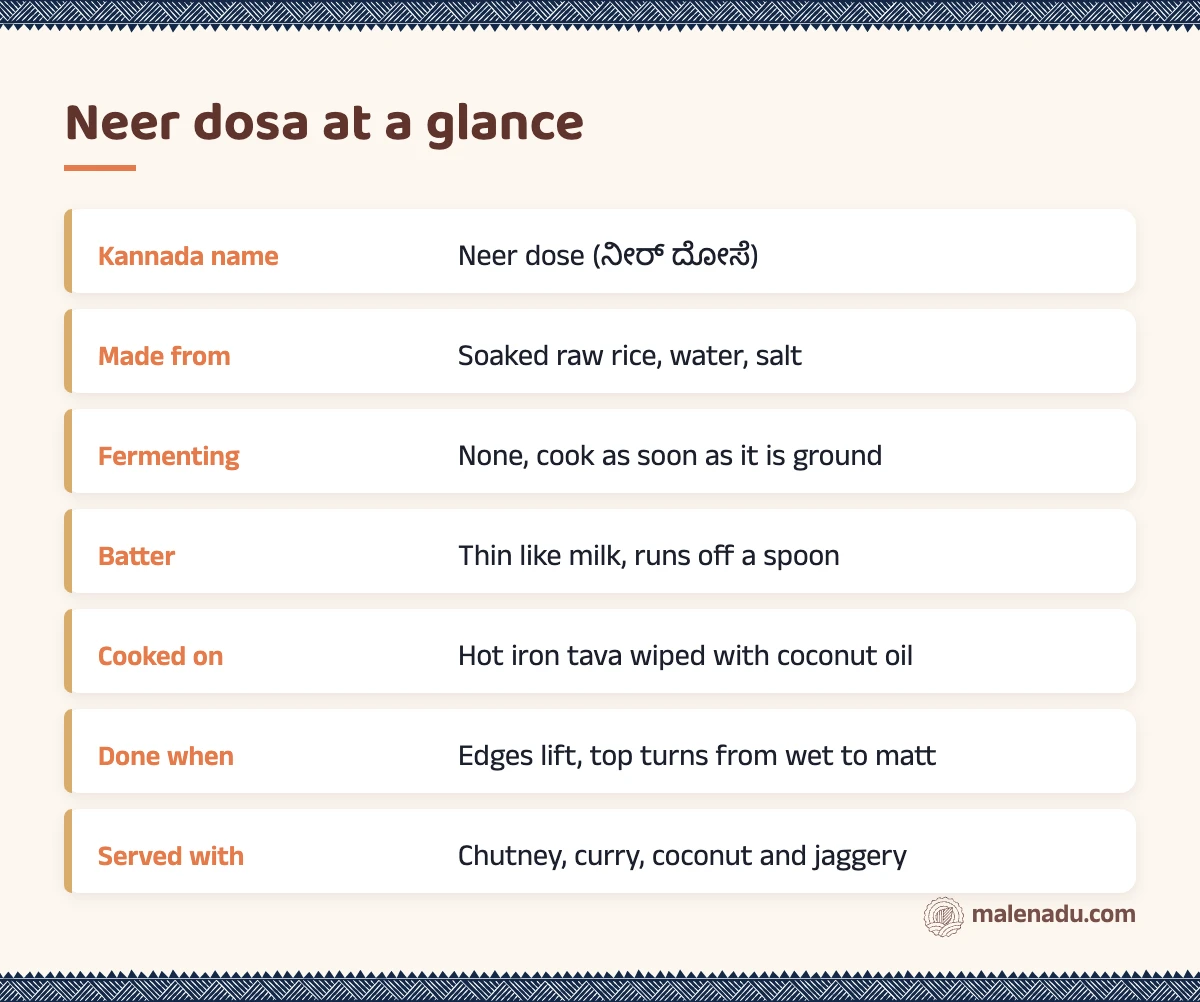
Neer dosa is a thin rice crepe made from a batter of soaked raw rice, water and salt. “Neer” means water in Kannada and Tulu. The name comes from the batter, which is nearly as thin as water. The dosa comes off the pan soft, white and full of tiny holes, like lace.
It is different from the usual dosa in three ways. It has no urad dal, the batter is not fermented and it is never browned or crisped. It is cooked on one side only, then folded into a triangle or a half moon while still on the pan.
It is a breakfast, a quick dinner and the dish you make when guests turn up and there is no fermented batter in the house.
Is it neer dose or neer dosa?
Both are right. Neer dose is the Kannada way of saying it, since “dose” is the Kannada word for dosa. The other spelling is the one used on menus and outside Karnataka. In Malenadu homes you will mostly hear neer dose.
Malenadu neer dosa: where it is made and how it is eaten
Malenadu neer dosa belongs to the wet belt of Karnataka, where rice and coconut grow side by side. Karnataka Tourism notes that it is common in Udupi, Dakshina Kannada and Uttara Kannada and is also made in Shivamogga and Hassan. That is the coast and the hills together, so it is a dish shared by both rather than the dish of one town. You can see which taluks make up the hills on our page of Malenadu districts and taluks.
On the coast it is best known with fish and chicken curries. A Deccan Herald feature on Tulu food describes neer dosa as a light, unfermented rice crepe served with chutney, sambar, sagu or a fish or chicken dish. Hill homes eat it the same ways, with a few habits of their own:
- Coconut oil on the pan. The tava is wiped with coconut oil, so the dosa smells of coconut.
- Coconut and jaggery. Grated coconut mixed with jaggery, called kai-hoovu on the coast, is the everyday sweet side.
- Sweet coconut milk. On special mornings it comes with kayi haalu, coconut milk sweetened with jaggery and cardamom.
- Chicken saaru on Sundays. In homes that eat meat, a thin, peppery chicken curry makes it the weekend breakfast.
Which rice is best for neer dosa?
Plain raw rice of a medium grain, such as sona masuri, is the best rice for neer dosa. It gives a soft, white dosa that folds without cracking. Parboiled rice (kusubalakki) and idli rice give a heavier batter that does not spread into lace.
- Raw, not boiled. Raw rice has the starch that sets thin and soft on the pan.
- Not too fresh. Many cooks say rice stored for some months grinds smoother than rice from the newest harvest.
- Broken rice is fine. It is cheaper and works just as well, since it is all ground.
- Soak long enough. Soak for 4 to 5 hours or overnight. Rice soaked for only an hour grinds gritty.
Some families grind in a few spoons of fresh coconut for a richer dosa that stays soft longer. Others keep it plain. Both ways are traditional.
How thin should neer dosa batter be?
Neer dosa batter should be as thin as milk, much thinner than any other dosa batter. When you dip a spoon in it, the back of the spoon should get only a light, see through coat that runs off in a second or two.
Getting the batter right is most of the work:
- Grind thick first. Grind the soaked rice with very little water, about 1/2 cup for each cup of rice, until the paste is completely smooth. Rub a drop between your fingers. If you feel any grains, grind again.
- Thin it after. Pour the paste into a bowl and add water a little at a time, stirring well. For each cup of rice you will need about 2 to 2 1/2 cups of water in total.
- Test on the pan. Make one dosa. If it sets thick with no holes, add water. If it breaks or will not lift, the batter is too thin, so stir in a spoon or two of rice flour.
Rice settles at the bottom of the bowl within minutes, so stir the neer dosa batter from the bottom before every pour.
Local tip
Grind thick and thin later. If you add all the water in the mixer, the blades just spin the rice around and it never gets smooth. A gritty batter is the most common reason the dosa tears.
How to season the tava for neer dosa
A well seasoned iron tava is the best pan for neer dosa, because the thin batter needs a smooth, oiled surface to let go cleanly. A nonstick pan also works and is easier for a beginner.
To season a new iron tava, wash it and dry it over the flame. Rub a thin layer of coconut oil over the whole surface, heat it until it smokes lightly and let it cool. Repeat three or four times. Many homes also rub the hot pan with a cut half onion dipped in oil, which helps the first dosa come away.
Before each dosa, wipe the hot tava with a few drops of oil on a folded cloth or the half onion. Use just enough to make the surface shine. Too much oil and the batter slides into a puddle without holes.
From the malenadu pantry
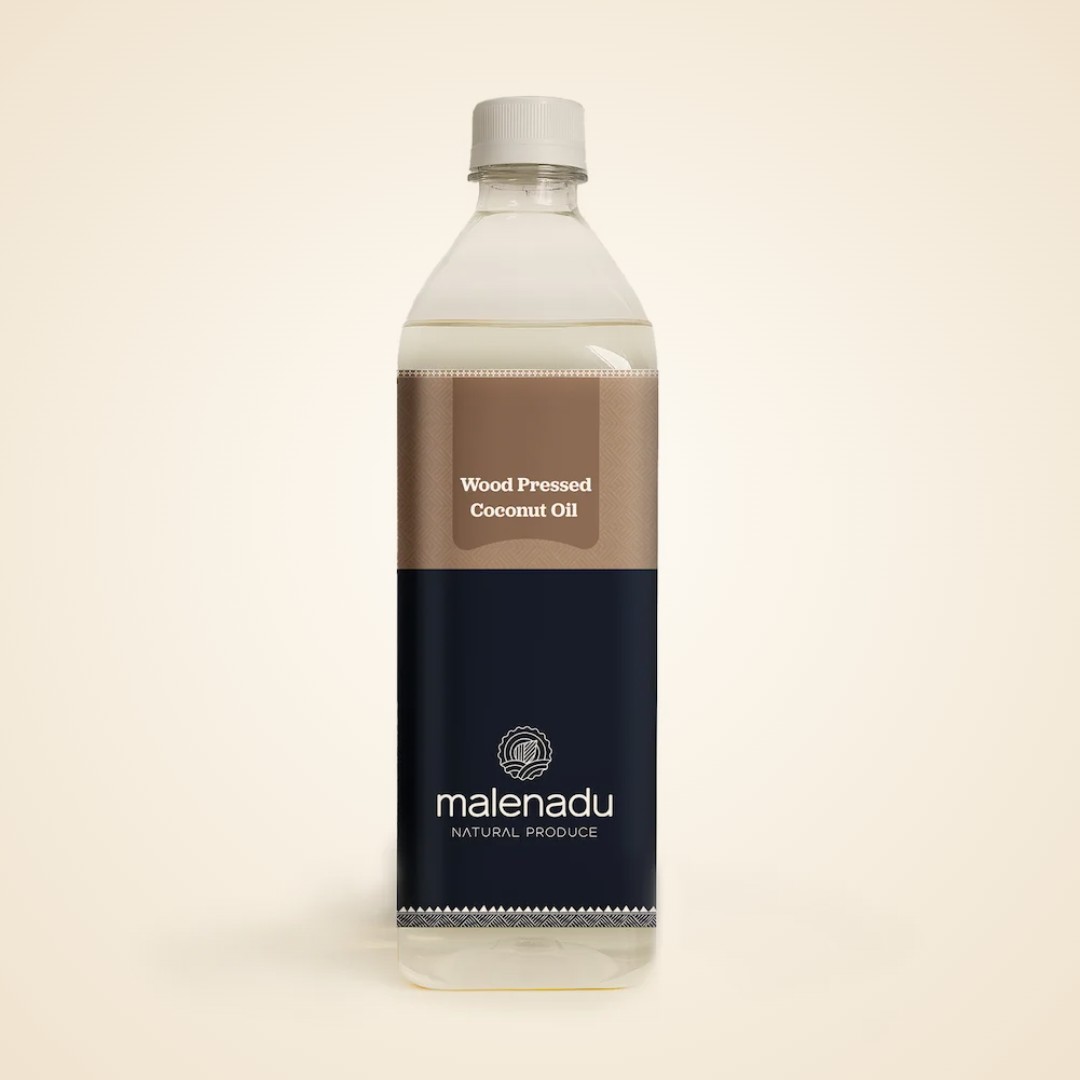
malenadu Wood Pressed Coconut Oil is pressed from sun dried copra in a wooden ghani. Wiped thinly on the hot tava before each dosa, it stops the batter sticking and gives the dosa the warm coconut smell of a hill kitchen.
Heat matters as much as oil. A sprinkle of water should sizzle and vanish in a second or two, which on most stoves means a medium high flame. A cool pan gives a gummy dosa, while a very hot pan sets the batter before the holes can form.
Neer dosa recipe: how to make it at home
This neer dosa recipe makes about 12 dosas from 2 cups of rice, enough breakfast for four. You need a mixer or wet grinder, an iron or nonstick tava with a lid and 4 to 5 hours of soaking time.
Recipe card
Neer Dosa
Soft, lacy rice dosa from soaked raw rice ground thin, cooked on one side on a hot tava and folded the Malenadu and coastal way.
Ingredients
- 2 cups raw rice (sona masuri or any medium grain raw rice), about 400 g
- 1/4 cup freshly grated coconut (optional)
- 1 teaspoon salt (adjust to taste)
- about 1 cup water, for grinding
- about 3 1/2 to 4 cups water, for thinning
- 2 to 3 teaspoons coconut oil, for the tava
- 1/2 onion or a folded cotton cloth, for wiping the tava
Method
- Wash the rice three or four times until the water runs almost clear. Soak it in plenty of water for 4 to 5 hours or overnight.
- Drain the rice. Grind it with the coconut and about 1 cup water into a very smooth, thick paste. Rub a drop between your fingers to check that no grains remain.
- Pour the paste into a large bowl. Rinse the mixer jar with 1 cup water and add it to the bowl. Add the salt and 2 1/2 to 3 more cups of water, a little at a time, until the batter is as thin as milk.
- Heat the tava on a medium high flame. Sprinkle a few drops of water: they should sizzle and vanish in a second or two. Wipe the tava with a few drops of coconut oil on the onion or cloth.
- Stir the batter from the bottom. Fill a small ladle and pour the batter quickly in a wide circle near the edge of the tava, then work inwards in rings. Do not spread it with the ladle. Pour a little batter into any large gaps.
- Cover with a lid and cook for 45 seconds to 1 minute.
- Lift the lid. The dosa is done when the top has turned from shiny and wet to matt and white and the edges lift away from the pan. It should not brown.
- Do not flip it. Fold it in half and then in half again on the tava to make a triangle. Lift it onto a plate.
- Wipe the tava with oil again and repeat. Lay the cooked dosas side by side instead of stacking them while hot.
A good neer dosa is soft, white and so thin you can almost see through it, with a lace of small holes all over. It should fold without cracking and taste clean and lightly salty.
What to eat with neer dosa
Neer dosa is mild, so it needs something with taste beside it: a chutney, a curry or something sweet. These are the six partners you will see most often in Malenadu and on the coast.
| Side | What it is | Best for |
|---|---|---|
| Coconut chutney | fresh coconut, green chilli and a little tamarind | everyday breakfast |
| Chicken curry | a thin, peppery koli saaru | Sunday breakfast, dinner |
| Fish curry | a sour coconut fish curry | coastal homes, lunch |
| Kai-hoovu | grated coconut mixed with jaggery | children, a quick sweet |
| Kayi haalu | coconut milk with jaggery and cardamom | festival mornings |
| Chutney powder | dry chutney powder with oil or ghee | travel, lunch boxes |
With chutney and chutney powder
A coarse coconut chutney with green chilli, a little tamarind and a coconut oil tempering is the usual everyday side. For days when there is no time to grind, a spoon of dry chutney pudi mixed with oil or ghee does the job.
From the malenadu pantry
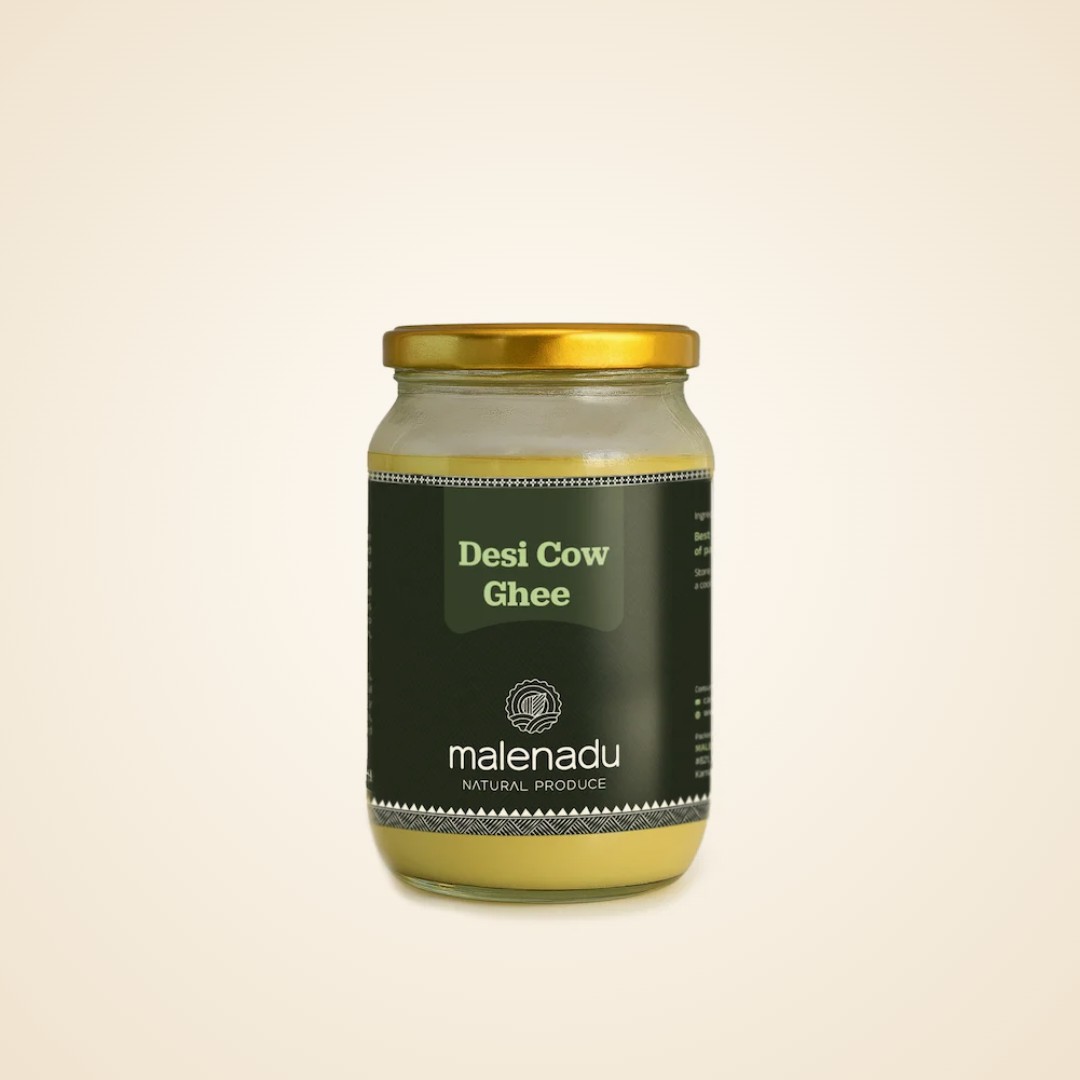
malenadu Desi Cow Ghee is hand churned by farmer families from the milk of desi breeds such as Malenadu Gidda. A spoon stirred into chutney powder makes a quick dip for warm dosa on busy mornings.
With chicken or fish curry
In homes that eat meat, neer dosa with chicken curry is the classic weekend meal. A thin, peppery curry soaks into the soft folds better than a thick gravy. Our Malenadu koli saaru recipe is made for exactly this. On the coast a sour coconut fish curry is just as common.
With coconut, jaggery and sweet coconut milk
The sweet way is the one children ask for. Mix grated coconut with jaggery for kai-hoovu or pour sweet coconut milk over the dosa. Kayi haalu is fresh coconut milk sweetened with jaggery and scented with a few pods of cardamom. The full method is on our ottu shavige page, where the same milk is served over rice noodles.
From the malenadu pantry
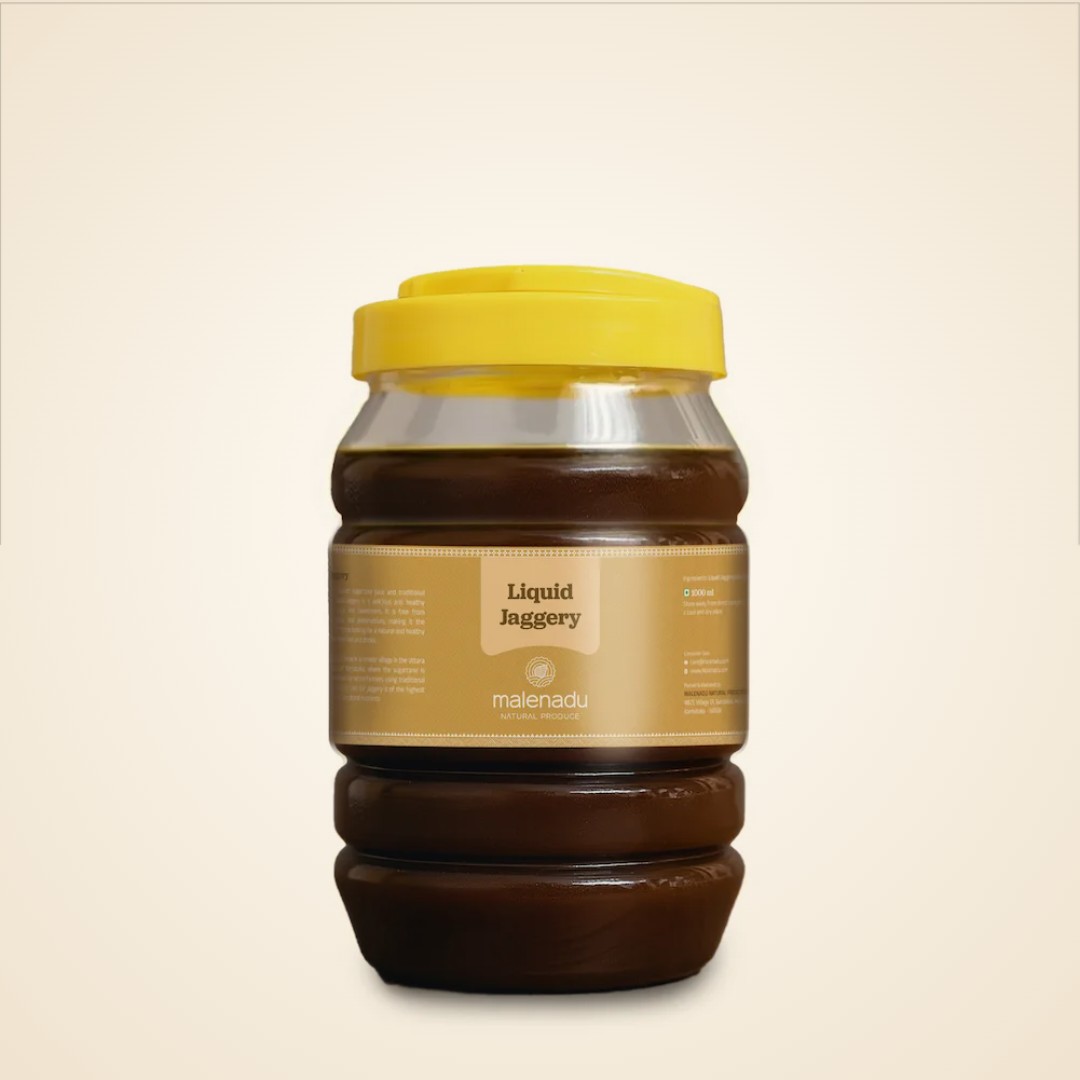
malenadu Liquid Jaggery is joni bella, the runny jaggery of Malenadu kitchens. It stirs straight into cool coconut milk or grated coconut, so the sweet side is ready in a minute with no melting.
Do not give jaggery, sugar or honey to babies under one year. Older children can have the coconut and jaggery side with their dosa.
Neer dosa variations from hill and coastal homes
The basic neer dosa stays the same in most homes, but two small changes are common.
Quick neer dose with rice flour
When there is no time to soak rice, mix 1 cup of fine rice flour with salt and about 2 1/2 cups of water into a smooth, thin batter. Rest it for 15 minutes. It is a little less soft than ground rice, but it is ready in minutes.
Rolled with coconut and jaggery
Spread a spoon of kai-hoovu over the hot dosa on the tava, roll it up and serve. Children love it as an after school snack.
Common neer dosa mistakes and how to fix them
Most problems come from a gritty batter, the wrong pan heat or a batter of the wrong thickness. This table shows what went wrong and what to do next time.
| Problem | Likely cause | Fix |
|---|---|---|
| Tears when you fold it | gritty batter or too thin | grind smoother, add 1 to 2 spoons rice flour |
| Thick, with no holes | batter too thick or pan too cool | add water, heat the pan more |
| Sticks to the pan | pan not oiled or not seasoned | wipe oil before each dosa, season the tava |
| Gummy or raw taste | pan too cool, lid lifted too soon | hotter pan, cover for a full minute |
| Brown and crisp | pan too hot or cooked too long | lower the flame, lift as soon as the top is matt |
| First thin, last thick | rice settled in the bowl | stir from the bottom before each pour |
Local tip
If your dosas keep sticking, sprinkle a little water on the hot tava and wipe it off with the oiled onion before pouring. The quick hiss cools the pan slightly and lets the batter spread into lace.
How to store neer dosa and its batter
Neer dosa is best eaten within an hour of cooking, while it is soft and warm.
- Cooked dosas. Once they have cooled for a minute, stack them in a closed steel box lined with a cloth. They stay soft for 4 to 5 hours.
- To reheat. Warm them on a hot tava for a few seconds a side or steam them for a minute. Do not fry them, because they turn leathery.
- Batter. The batter keeps in the fridge for a day and turns slightly sour after that. If it thickens, stir in a little water.
Where to go next after neer dosa
For more rice breakfasts from these hills, try soft akki rotti or the tapioca and rice maragenasu dose. Our Malenadu food guide brings all the recipes together. Coconut oil for the tava and ghee for the table are in the oil and ghee section of our shop.
Bring Malenadu home
Grown and made by Malenadu farmer families, packed by malenadu, a farmer owned producer company in Honnavar.
-
24% OFF
Wood Pressed Coconut Oil
Original price was: ₹899.₹679Current price is: ₹679. -
14% OFF
Liquid Jaggery
Original price was: ₹349.₹299Current price is: ₹299. -
40% OFF
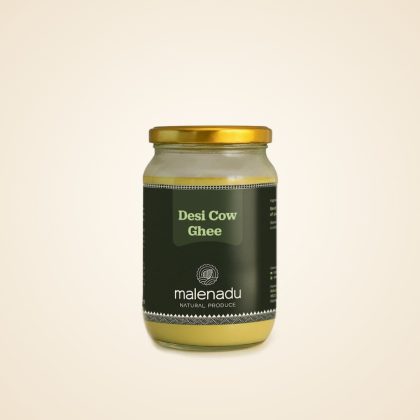
Desi Cow Ghee
Original price was: ₹1,500.₹899Current price is: ₹899. -
19% OFF
Cardamom
Price range: ₹130 through ₹330 -
8% OFF
Black Pepper
Price range: ₹165 through ₹299 -
Bird Eye Chilli
₹200
Frequently asked questions about neer dosa
What is neer dosa made of?
Neer dosa is made of soaked raw rice ground into a smooth paste and thinned with water, with a little salt. Some homes grind in a few spoons of fresh coconut.
Does neer dosa batter need to ferment?
No. The batter is not fermented and can be cooked as soon as it is ground. Batter kept overnight in the fridge turns slightly sour but can still be used.
Why is my neer dosa sticking to the pan?
The pan is usually not seasoned, not oiled before each dosa or not hot enough. A gritty batter also sticks and tears, so grind the rice very smooth.
Which rice is best for neer dosa?
Plain raw rice of a medium grain such as sona masuri works best. Parboiled rice and idli rice do not give a thin, lacy dosa.
Do you flip neer dosa?
No. It is cooked on one side only under a lid, then folded on the pan. It should stay white with no brown spots.
What do you eat neer dosa with?
Coconut chutney, chicken or fish curry, grated coconut with jaggery and sweet coconut milk are the most common sides. Dry chutney powder with oil or ghee is a quick option.
Can I make neer dosa with rice flour?
Yes. Mix fine rice flour with salt and water into a thin batter and rest it for 15 minutes. It is quicker but a little less soft than dosa made from ground soaked rice.
Explore more of Malenadu
Malenadu FoodMalenadu FoodRice, kokum, pepper and joni bella from the hills
Malenadu FoodHalasina KadubuSweet jackfruit dumplings steamed in leaves
Malenadu FoodSpices Names in KannadaEnglish, Kannada and Hindi names for a Malenadu kitchen
Malenadu FoodKara KadubuSpicy steamed rice dumplings from Malenadu kitchens
Malenadu FoodKokum SaaruThe sour, peppery everyday rasam of Malenadu homes
Malenadu FoodMenthya TambuliA cool fenugreek and curd side for the first rice course
Malenadu FoodMalenadu FruitsJackfruit, kokum, wild mango and the fruits of the forest
Malenadu FoodKesuvina GojjuThe sweet and sour colocasia leaf relish of the monsoon
Start hereMalenadu in KarnatakaWhere Malenadu is, what the name means