
Malenadu Food
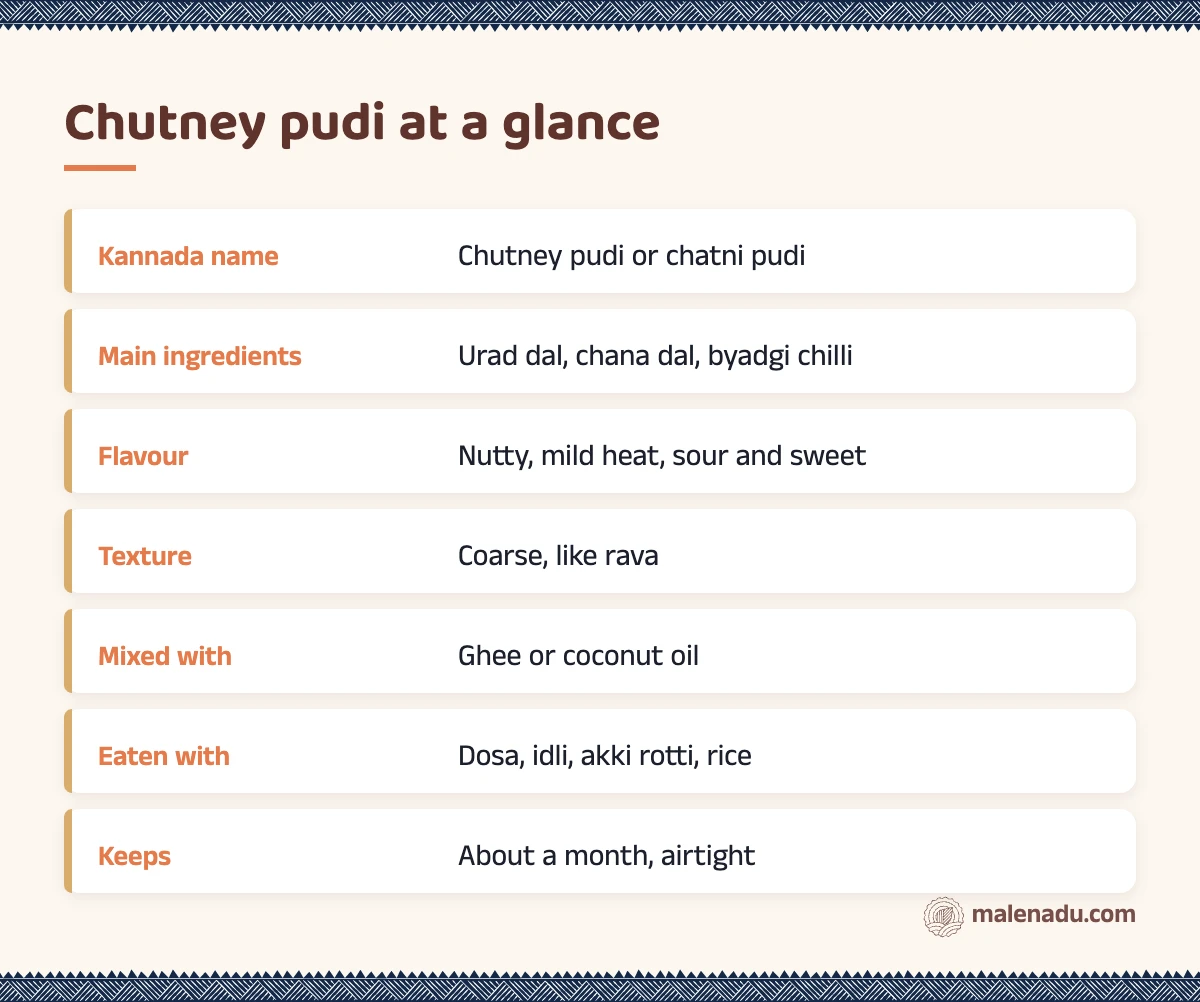
Chutney pudi (ಚಟ್ನಿ ಪುಡಿ) is a coarse, reddish brown dry chutney of roasted urad dal, chana dal, byadgi chillies, dry coconut, curry leaves, tamarind and a little jaggery. Mixed with ghee or coconut oil, it goes on dosa, idli, akki rotti and rice. This page gives a Karnataka style recipe, how to eat and store it and five variations.
On this page
What is chutney pudi?
Chutney pudi is a dry chutney powder that you keep in a jar and mix with ghee or oil just before eating. Pudi means powder in Kannada, so the name simply means chutney powder. Some people write it chatni pudi. Coarse like rava rather than fine like flour, it tastes nutty, a little hot, a little sour and faintly sweet.
Every ingredient is roasted on its own until it smells right, then everything is cooled and ground together. The dals give body and crunch, byadgi chillies give the colour, curry leaves and hing give the smell, tamarind gives the sour and a spoon of jaggery rounds it off. Dry coconut makes it rich.
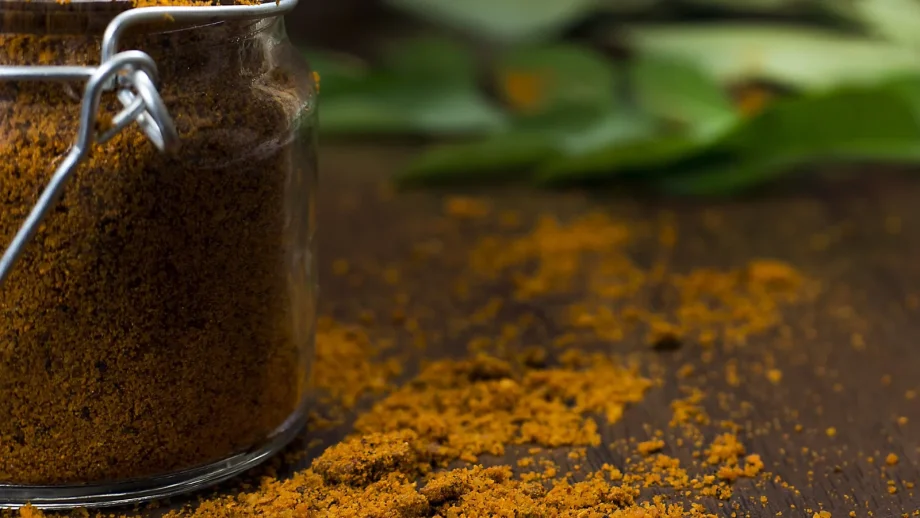
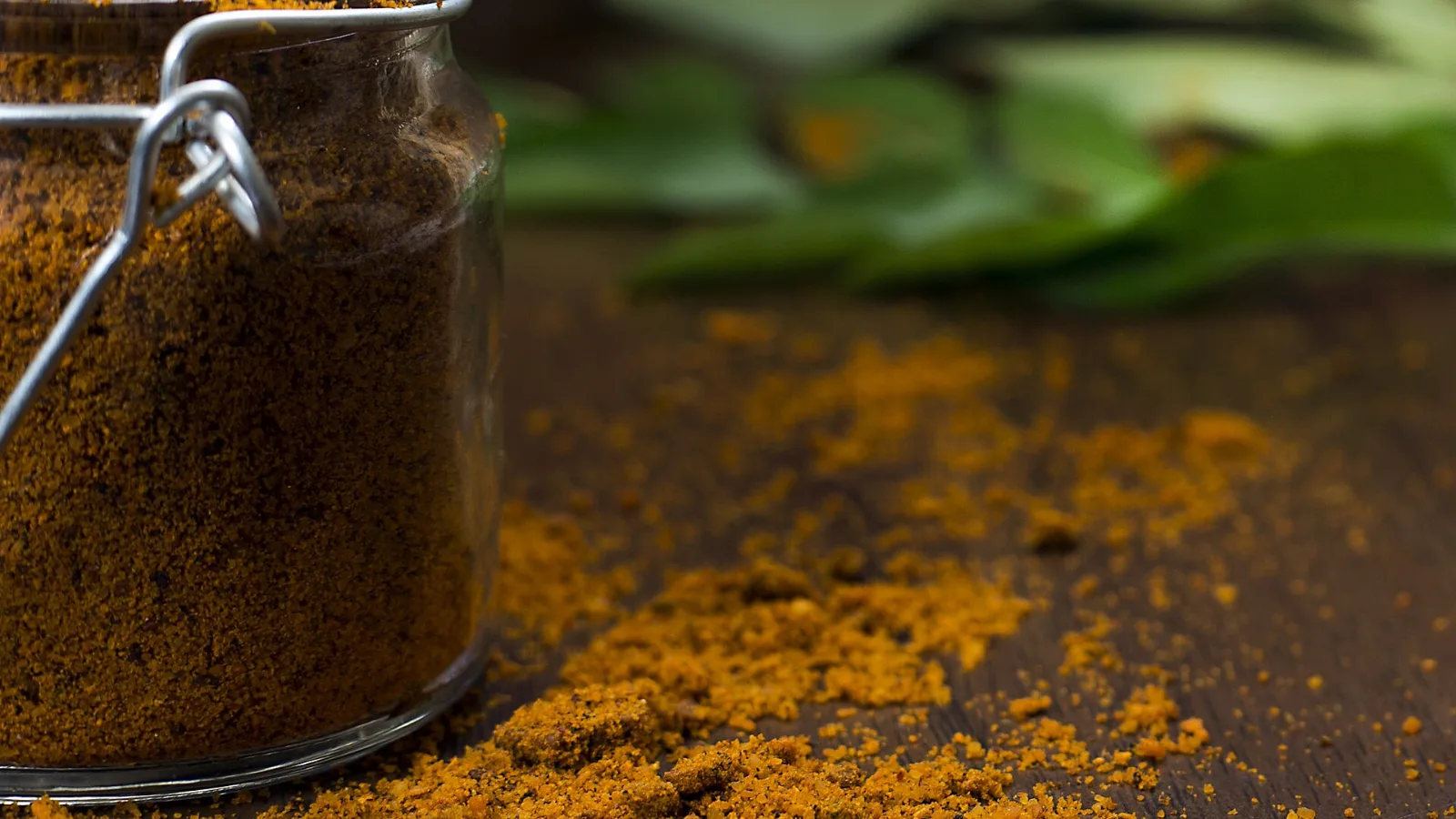
The photo at the top shows a jar of coarse, reddish brown chutney pudi with a few curry leaves. That is exactly what the recipe below gives you.
Chutney powder Karnataka style vs milagai podi
Many south Indian homes keep a dosa powder, but they are not all the same. Chutney powder Karnataka style is known for three things: dry coconut, curry leaves and the sweet and sour touch of jaggery and tamarind. Byadgi chillies make it red without making it fiery.
| Karnataka chutney pudi | Milagai podi (Tamil Nadu) | |
|---|---|---|
| Coconut | Usually dry coconut | Usually none |
| Sour and sweet | Tamarind and jaggery | Often none |
| Curry leaves | A big handful | A few or none |
| Colour | Reddish brown | Darker, often with sesame |
| Texture | Coarse | Coarse to fine |
There is no fixed rule. Every family changes the balance and many Tamil homes add tamarind or curry leaves too. But if your powder has coconut, curry leaves and jaggery, it is close to the chutney pudi of Karnataka homes.
Why Malenadu homes keep a jar of chutney pudi
Malenadu homes keep this powder because it means breakfast is never without a side, even on days when there is no time or chance to grind a fresh chutney. A wet chutney needs fresh coconut, a grinder and someone free to make it. A jar of pudi needs only a spoon of ghee.
That matters most in the monsoon. In the hills the rains are long and heavy, people head out early to the gardens and the days are wet and busy. A tin of dosa or rotti batter and a jar of pudi make a full breakfast with no grinding at all. Read more about how wet the hills get on our Malenadu monsoon page.
Many families make a big batch before the rains and a smaller one every few weeks after that. It also travels well, so a jar often goes with students and relatives leaving for Bengaluru. You can see where the Malenadu taluks are on our page of Malenadu districts and taluks.
What goes into chutney pudi?
Chutney pudi needs about nine ingredients and each one has a clear job. Here is what they do.
| Ingredient | What it does |
|---|---|
| Urad dal | nutty taste and a creamy body |
| Chana dal | crunch and a deeper roasted taste |
| Byadgi chillies | bright red colour with mild heat |
| Dry coconut (copra) | richness and a little natural oil |
| Curry leaves | the fresh, toasty smell |
| Tamarind | sourness |
| Jaggery | a soft sweetness to balance the sour |
| Hing (asafoetida) | depth and aroma |
| Salt | brings it all together |
Byadgi chillies are the secret to the colour. They are named after Byadgi town in Haveri district and are a Geographical Indication product of Karnataka. They are known for their deep red colour and mild heat, which is why a powder made with them looks fiery but eats gently.
Curry leaves are the other key. The ICAR Indian Institute of Spices Research notes that Karnataka is one of the main producers and that the leaves give their best flavour when fried in hot oil. Here they are roasted in a little oil until they crackle, then ground in.
Use grated block jaggery in the powder, not a liquid one, because any moisture makes the pudi lumpy. If you like a sweeter taste on the plate, add a few drops of liquid jaggery to your ghee and pudi as you mix, rather than to the jar.
Chutney pudi recipe: how to make it at home
This chutney pudi recipe makes about 1 1/2 cups, enough for three to four weeks of breakfasts for a family of four. It takes about 40 minutes, most of it slow roasting on low heat. Use a heavy kadai so nothing scorches.
Recipe card
Chutney Pudi
A coarse, reddish brown Karnataka style dry chutney powder of roasted urad dal, chana dal, byadgi chilli, dry coconut, curry leaves, tamarind and jaggery.
Ingredients
- 1/2 cup urad dal
- 1/2 cup chana dal
- 12 to 15 byadgi chillies (about 15 g), stalks removed
- 1/2 cup grated dry coconut (copra)
- 1 cup loosely packed curry leaves, washed and dried completely
- a small lime-sized ball of tamarind (about 15 g), seeds and fibres removed
- 1 tablespoon grated jaggery
- 1/4 teaspoon hing (asafoetida)
- 1 1/2 teaspoons salt
- 2 teaspoons coconut oil
Method
- Heat a heavy kadai on low to medium heat. Dry roast the urad dal, stirring all the time, for 5 to 7 minutes until it is golden and smells nutty. Tip it onto a large plate.
- Dry roast the chana dal the same way for 6 to 8 minutes until golden with a few darker spots. It takes longer than urad dal. Add it to the plate.
- Add 1 teaspoon oil to the kadai and roast the chillies for 1 to 2 minutes until crisp and a shade darker. Do not let them blacken. Add them to the plate.
- Add the second teaspoon of oil and roast the curry leaves for 2 to 3 minutes until they crackle and crumble when pressed. Stir in the hing for a few seconds and add to the plate.
- Turn off the heat. In the warm pan, roast the dry coconut for 1 to 2 minutes until light golden. Tear the tamarind into small bits and leave it in the warm pan for a minute to dry out.
- Spread everything on the plate and cool completely, about 30 minutes. Warm ingredients turn the powder pasty.
- Grind the chillies, tamarind, salt and jaggery first to a fine powder. Add the dals and pulse in short bursts to a coarse, rava-like texture. Add the coconut and curry leaves last and pulse only two or three times.
- Tip into a bowl, mix with a dry hand and taste. Adjust salt or jaggery if needed. Spread it out for another hour to cool, then fill a dry glass jar.
A good batch is reddish brown with flecks of green curry leaf and small bits of dal you can feel between your fingers. It should smell of roasted dal and curry leaves, not of burnt chilli. If it clumps, the coconut was ground too long or something was still warm.
Local tip
Roast the dals on low heat and taste one grain before taking them off. It should crunch through without a raw centre. Raw dal makes the powder taste flat and gives it a short shelf life.
How to eat dosa chutney pudi
The classic way to eat dosa chutney pudi is to put a spoon on your plate, make a small well in the middle, pour in ghee or coconut oil and mix it into a thick paste. Then tear off a piece of dosa and scoop it up.
- Dosa: the most common pairing. Some people also sprinkle it inside a dosa on the pan.
- Idli: roll a hot idli in the ghee and pudi mix.
- Akki rotti: a spoon of pudi and ghee beside a hot akki rotti is a full breakfast.
- Neer dosa: thin, soft neer dosa and chutney pudi with coconut oil is a coastal favourite.
- Kotte kadubu: idli steamed in jackfruit leaf cups, as in our kotte kadubu recipe, is very good with it.
- Rice: mix a spoon into hot rice with ghee.
- Curd rice: sprinkle a little on top for crunch.
Ghee is the classic partner. It softens the powder and carries the smell of the curry leaves into every bite.
From the malenadu pantry
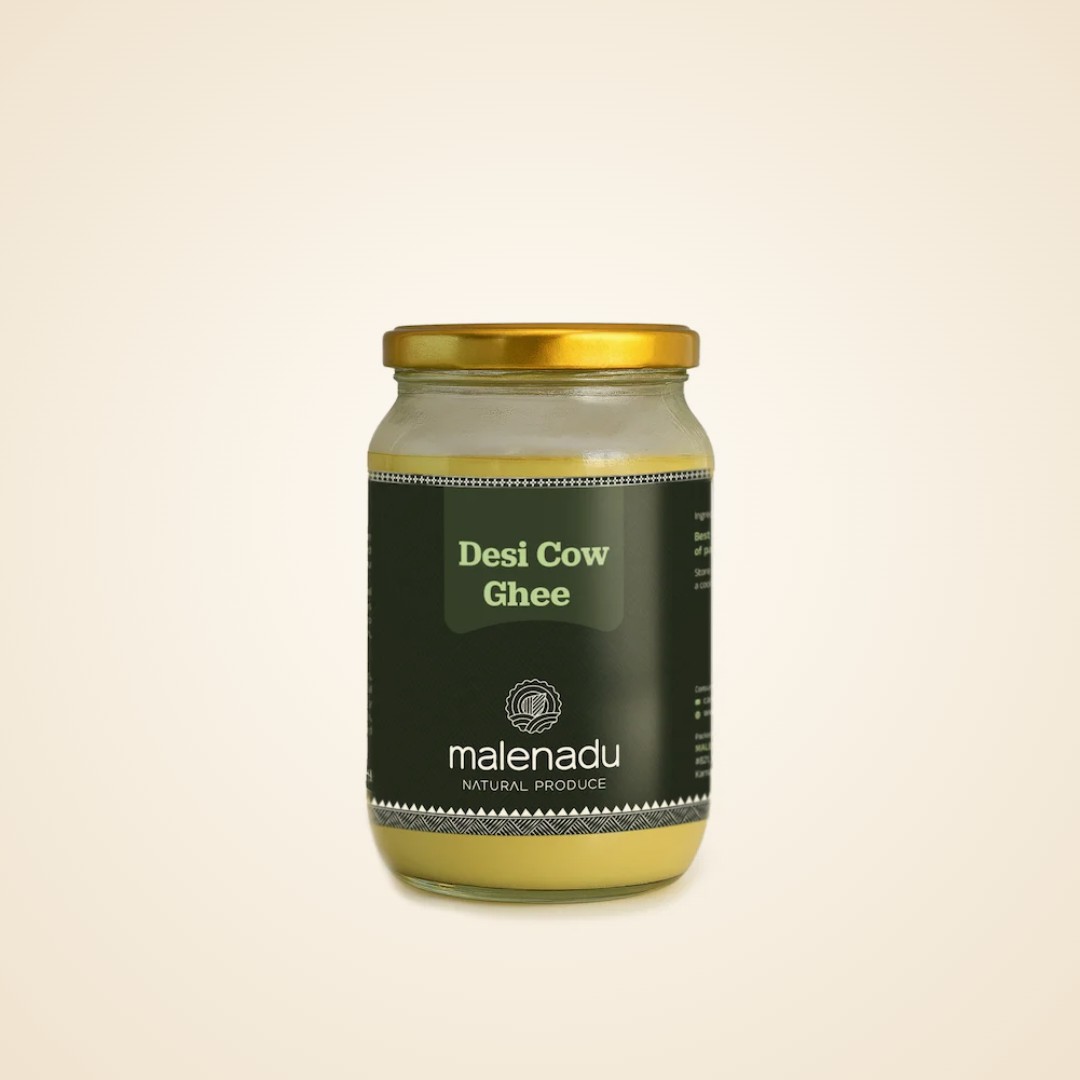
Our desi cow ghee is hand churned by farmer families from the milk of desi breeds such as Malenadu Gidda. A teaspoon mixed into chutney pudi on a hot dosa is the simplest Malenadu breakfast.
On the coast and in many hill homes, raw coconut oil is used instead of ghee, especially with neer dosa and akki rotti. Use only a little, about a teaspoon for a spoon of pudi. It makes the mix glossy and nutty.
From the malenadu pantry
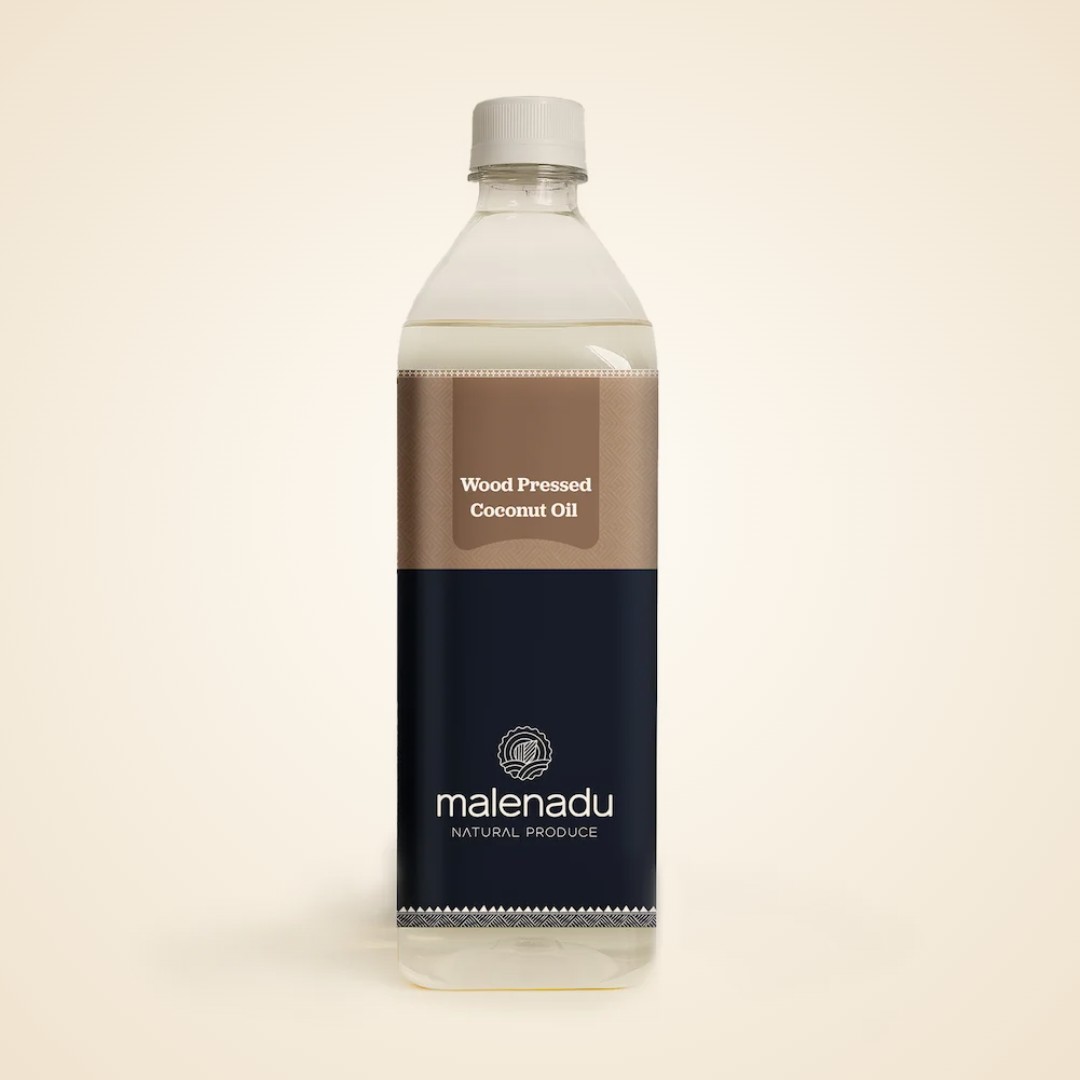
Our wood pressed coconut oil is made from sun dried copra in a wooden ghani. Its clean coconut smell suits the pudi with neer dosa or akki rotti. It is also the oil to roast the chillies and curry leaves in.
Chutney pudi variations to try
Every house has its own version. These five variations are the most common and all follow the same roast, cool and grind method.
Garlic chutney pudi
Peel 8 to 10 garlic cloves, slice them thin and roast them in a teaspoon of oil until golden and crisp. Cool and grind them in with the chillies. Use this version within a few weeks.
Long keeping version without coconut
Leave out the dry coconut completely. Coconut has oil that slowly goes stale, so without it the powder keeps for a few months in an airtight jar. Increase the urad dal a little to keep the body. This is the version to make in a big batch before the rains.
A hotter batch with gandhari menasu
Byadgi chillies give colour, not much heat. For a hot batch, replace three or four byadgi chillies with two dried bird eye chillies (gandhari menasu), roasted the same way.
From the malenadu pantry
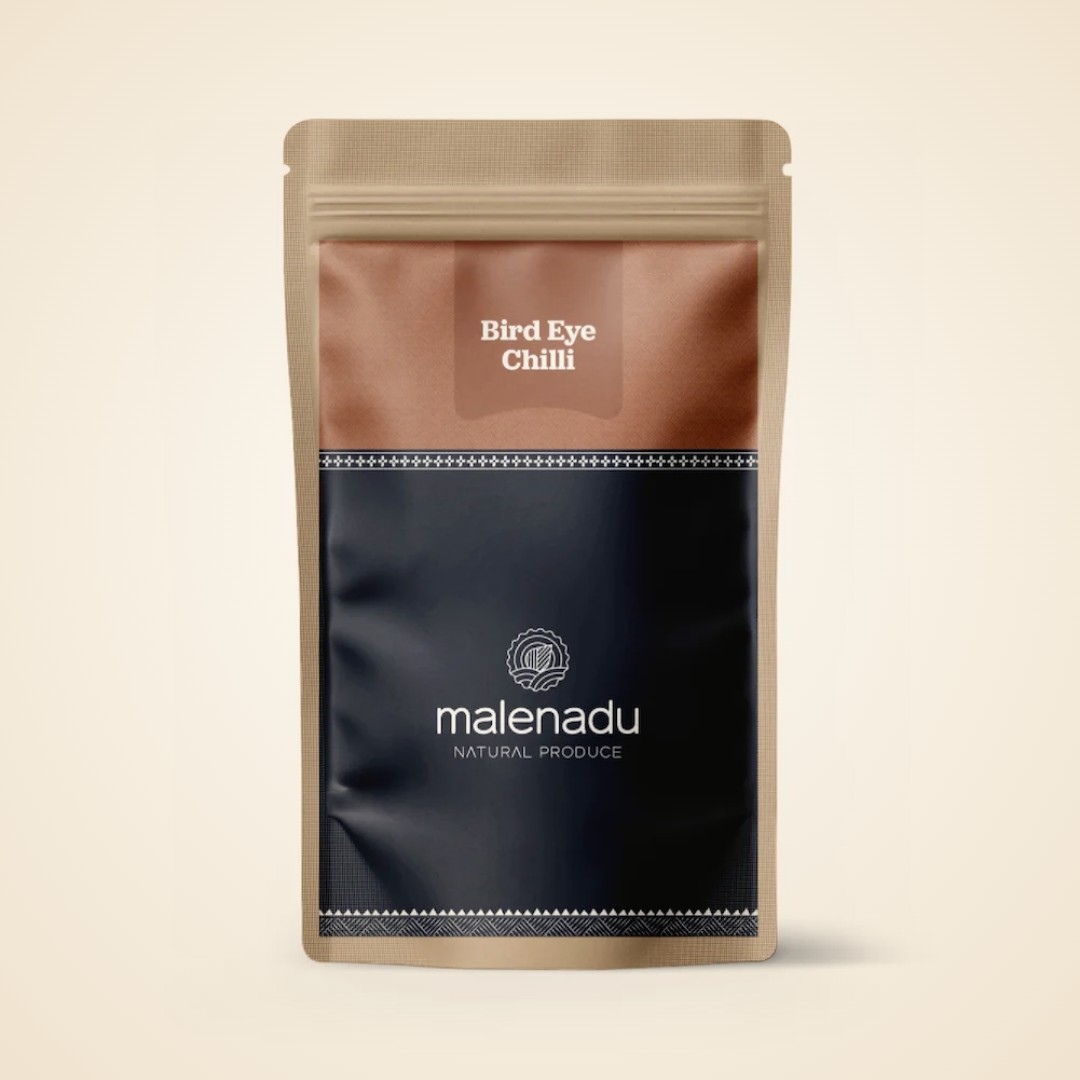
malenadu Bird Eye Chilli is the small, fiery gandhari menasu of Malenadu backyards. Two dried chillies in a batch give a sharp heat while the byadgi keeps the red colour.
Kadale bele pudi (chana dal only)
Use only chana dal (kadale bele) and skip the urad dal for a crunchier, more roasted powder. Some families add a handful of roasted peanuts too.
With pepper or vate huli
Add 1/2 teaspoon of black pepper, roasted with the chillies, for a warm Malenadu touch. For a different sour, some hill cooks use a little monkey jack powder (vate huli) in place of part of the tamarind. Start with half a teaspoon and taste.
How to store chutney pudi and how long it keeps
Store chutney pudi in a clean, completely dry glass or steel jar with a tight lid, away from the stove. With coconut it keeps about a month at room temperature. Without coconut it keeps a few months.
- Cool it fully before bottling. Warm powder sweats inside the jar and goes lumpy.
- Use a dry spoon every time. One wet spoon is enough to spoil a jar in the monsoon.
- Keep two jars. A small one for daily use and a big one that stays shut.
- Smell it. If it smells stale or rancid, it is the coconut. Make a fresh batch.
- Fridge for longer. In very damp weather a sealed jar in the fridge keeps it fresh for longer.
Common chutney pudi mistakes and fixes
Most problems with chutney pudi come from the heat of the kadai or grinding too long. This table shows what went wrong and how to fix it.
| Problem | Likely cause | Fix |
|---|---|---|
| Bitter, dark powder | dals or chillies burnt | roast on low heat, stir all the time |
| Raw, flat taste | dals under roasted | roast until golden and nutty |
| Pasty or oily | ground warm or too long | cool fully, pulse in short bursts |
| Pale colour | too few byadgi chillies | add more byadgi, not more heat |
| Too hot | hot chillies used | use byadgi for colour, mild heat |
| Lumps in the jar | moisture or liquid sweetener | dry jar, dry spoon, block jaggery |
Where to go next
With a jar ready, all you need is something hot to eat it with. Start with our Malenadu food guide for the full hill breakfast and lunch. Our list of spice and ingredient names in Kannada helps with words like kadale bele and karibevu. The ghee and oil to mix it with are in our oil and ghee section.
Bring Malenadu home
Grown and made by Malenadu farmer families, packed by malenadu, a farmer owned producer company in Honnavar.
-
40% OFF
Desi Cow Ghee
Original price was: ₹1,500.₹899Current price is: ₹899. -
24% OFF
Wood Pressed Coconut Oil
Original price was: ₹899.₹679Current price is: ₹679. -
14% OFF
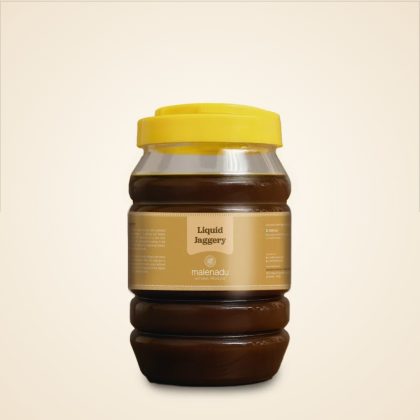
Liquid Jaggery
Original price was: ₹349.₹299Current price is: ₹299. -
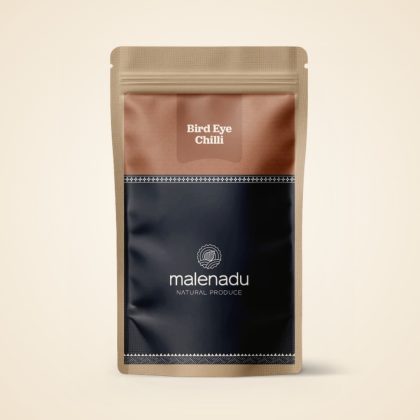
Bird Eye Chilli
₹200 -
8% OFF
Black Pepper
Price range: ₹165 through ₹299 -
6% OFF
Monkey Jack Powder
Original price was: ₹399.₹375Current price is: ₹375.
Frequently asked questions about chutney pudi
What is chutney pudi made of?
Chutney pudi is made of roasted urad dal, chana dal, dry red chillies, dry coconut, curry leaves, tamarind, jaggery, hing and salt, ground coarse.
How do you eat chutney pudi?
Put a spoon on your plate, mix it with ghee or coconut oil into a thick paste and eat it with dosa, idli, akki rotti or hot rice.
How long does chutney pudi last?
With coconut it keeps about a month in an airtight jar. Without coconut it lasts a few months. Always use a dry spoon.
Which chilli is used in chutney pudi?
Byadgi chillies are used in Karnataka for their deep red colour and mild heat. Add a few hotter chillies if you want more heat.
Can I make chutney pudi without coconut?
Yes. Leave out the dry coconut and add a little more urad dal. This version keeps longer.
Why is jaggery added to chutney pudi?
A little jaggery balances the sour tamarind and the chilli. It is one of the things that marks the Karnataka style.
What is the difference between chutney pudi and gunpowder?
Gunpowder or milagai podi usually has no coconut or jaggery. Karnataka chutney pudi has dry coconut, curry leaves, tamarind and jaggery.
Why did my chutney pudi turn lumpy?
Something was still warm when you ground or bottled it. Moisture in the jar does the same. Cool everything fully and keep the jar dry.
Explore more of Malenadu
Malenadu FoodMalenadu FoodRice, kokum, pepper and joni bella from the hills
Malenadu FoodHalasina KadubuSweet jackfruit dumplings steamed in leaves
Malenadu FoodSpices Names in KannadaEnglish, Kannada and Hindi names for a Malenadu kitchen
Malenadu FoodKara KadubuSpicy steamed rice dumplings from Malenadu kitchens
Malenadu FoodKokum SaaruThe sour, peppery everyday rasam of Malenadu homes
Malenadu FoodMenthya TambuliA cool fenugreek and curd side for the first rice course
Malenadu FoodMalenadu FruitsJackfruit, kokum, wild mango and the fruits of the forest
Malenadu FoodKesuvina GojjuThe sweet and sour colocasia leaf relish of the monsoon
Start hereMalenadu in KarnatakaWhere Malenadu is, what the name means