
Malenadu Culture
A Malenadu house is a farm home built to live with heavy monsoon rain: a steep tiled roof, an open courtyard in the middle, a raised veranda in front, a smoky attic for drying crops and a cattle shed close by. This guide explains each part, the Kannada names families use for them and how to stay in one today.
On this page
What is a Malenadu house (Malenadu mane)?
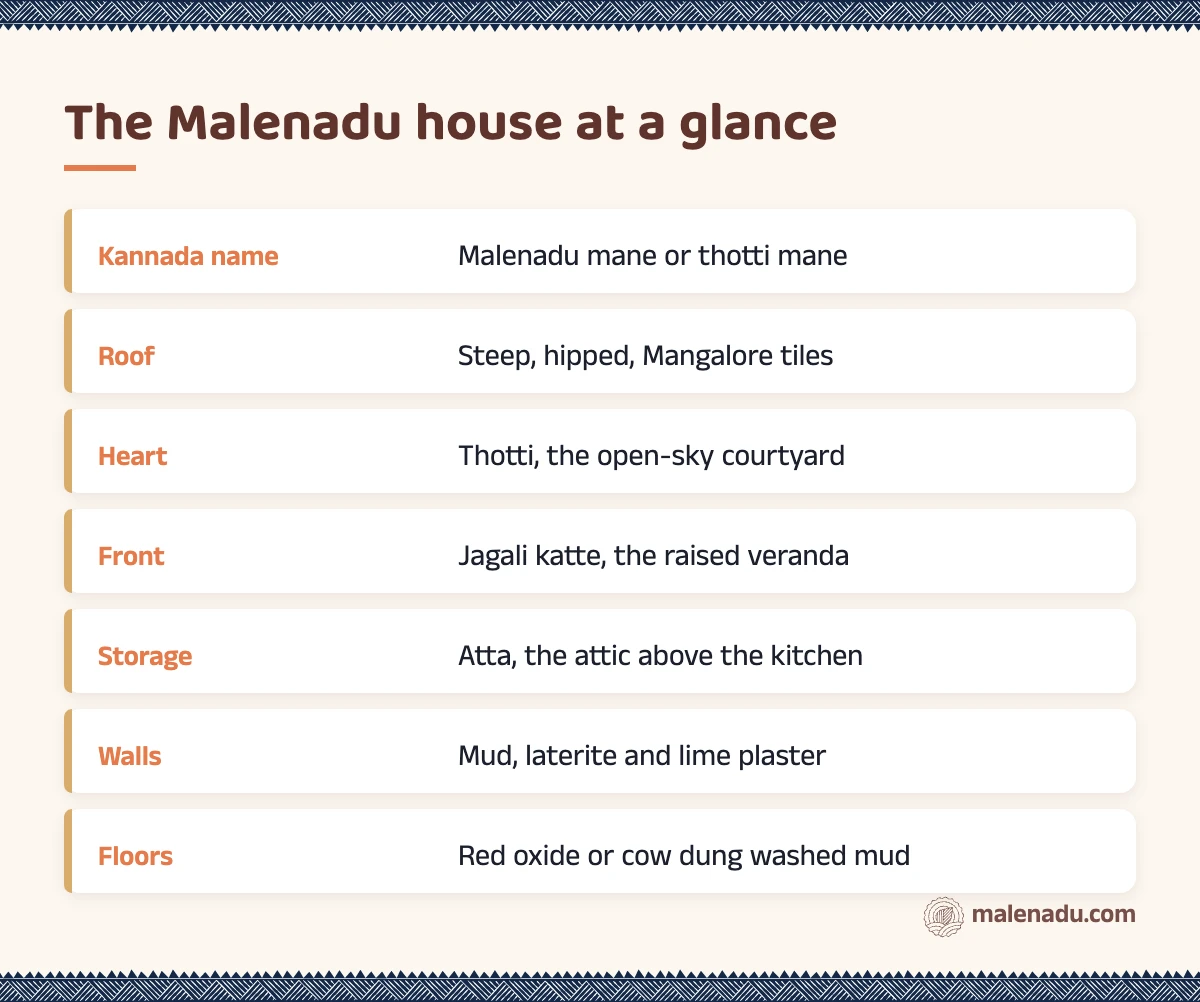
A Malenadu house is the traditional farm home of the Western Ghats hill country of Karnataka, usually a large, low building with a sloping tiled roof, thick walls, wooden pillars and a courtyard at its heart. In Kannada people simply call it a Malenadu mane (ಮಲೆನಾಡು ಮನೆ, mane means house). The bigger ones built around an open court are called thotti mane (ತೊಟ್ಟಿ ಮನೆ, courtyard house).
Most Malenadu houses stand alone on the family’s own land, next to the thota (areca and spice garden) and the paddy fields. That is why the house had to do everything: shelter a joint family, store a year’s harvest, dry crops through the rains and keep cattle safe at night. If you want to know where these hills are, start with our guide to Malenadu in Karnataka and our list of Malenadu districts and taluks.
These are the nine parts of a Malenadu house this guide covers:
- The steep tiled roof (henchu, ಹೆಂಚು, means tile)
- The thotti (ತೊಟ್ಟಿ), the open courtyard
- The jagali katte (ಜಗಲಿ ಕಟ್ಟೆ), the raised veranda
- The hebbagilu (ಹೆಬ್ಬಾಗಿಲು), the main door, with its pillars and beams
- The atta (ಅಟ್ಟ), the attic or loft
- The kitchen and its ole (ಒಲೆ, wood-fired stove)
- The bachalu (ಬಚ್ಚಲು), the bath area with its hande (ಹಂಡೆ, big hot water pot)
- The kottige (ಕೊಟ್ಟಿಗೆ), the cattle shed
- The walls and floors of mud, laterite and red oxide
Why does a Malenadu house have a steep tiled roof?
A Malenadu house has a steep roof because the hills get some of the heaviest rain in India. Water must run off fast before it can seep in. Most old roofs slope on four sides, with eaves that hang far beyond the walls to keep rain off the mud and stone below. Our guide to the Malenadu rains explains just how much water these roofs face each year.
Before tiles, many homes were roofed with thatch of grass or paddy straw, which had to be redone often. The change came from the coast. The Basel Mission set up its first tile workshop at Jeppu in Mangaluru in the 1860s using river clay. The Mangalore tile spread up the ghats over the following decades. By 1907 the mission’s tile works employed about 3,600 people.
Mangalore tiles sit on a frame of wooden rafters and thin battens. There is no sealed ceiling under most of the roof, so warm air and smoke leave through the small gaps between tiles. Every few years, usually just before the monsoon, the tiles are turned and cleaned and the broken ones replaced.
Local tip
If you rent or buy an old Malenadu house, check the roof timber before the tiles. Termites in a rafter cause more trouble than a few cracked tiles. The work is also far easier in March than in July.
What is a thotti mane?
A thotti mane is a Malenadu house built around a thotti, an open-to-sky courtyard in the middle of the home. The roofs on all four sides slope inward toward it, so in the rain water pours off the eaves into the thotti and drains away through a channel, sometimes into a well or the garden.
The thotti is the lung of the home. It brings daylight into rooms that would otherwise be dark under the deep roof. It also lets hot air and kitchen smoke escape. In a joint family, each brother’s family had rooms opening onto the veranda around it.
Life in a thotti mane gathers around the court. Children play there in the dry months, grain and areca are spread to dry and rangoli is drawn on festival mornings. During the monsoon, the sound of rain falling into the thotti is the sound most people from these hills remember from childhood.
The jagali katte: where the house meets the world
The jagali katte is the raised, covered veranda that runs along the front of a Malenadu house. It is where guests are received and news is shared. Jagali means veranda and katte means a raised platform, so the name describes a wide ledge you can sit on, usually a step or two above the yard.
Most visitors never go further than the jagali katte. A neighbour, a trader asking about areca or a passing cousin sits here, has a coffee and leaves. Elders spend the afternoon here with betel and areca. In harvest season the jagali fills with areca being peeled.
The jagali katte is also built for the climate. The roof overhangs it deeply, so it stays dry in all but the worst storms and cool on hot afternoons. A house with a good jagali is never short of company.
Hebbagilu, pillars and beams: the wood of the house
The hebbagilu is the main door of the house, a heavy wooden door in a carved frame, often with a raised threshold that you step over rather than on. In old houses the frame may carry carved flowers, a small figure of Lakshmi or Ganesha above the lintel or brass fittings.
Inside, the house rests on wooden pillars (kamba, ಕಂಬ) and heavy beams. Timber was cut from the family’s own land or nearby forest in the old days. Hardwoods such as teak and jackfruit were valued because they last and resist insects. Some pillars stand on stone bases to keep the wood off the damp floor.
Wood keeps the house flexible. It can be repaired one piece at a time.
What is stored in the atta of a Malenadu house?
The atta (attic or loft) of a Malenadu house is the family’s storeroom and drying room, a wooden platform under the roof reached by a ladder. In most homes the kitchen sits right below part of it, so warm smoke from the ole rises through the floor slats and keeps everything above it dry.
Here is what you would traditionally find in an atta:
- Areca nuts. Dried nuts waiting for a good price or for the next trip to the market.
- Paddy and seeds. Next year’s seed rice, kept dry and away from pests.
- Kokum rind. Split, salted and sun dried murugalu stored for the year’s saaru and drinks.
- Pepper. Dried black pepper kept in sacks or tins after the winter harvest.
- Pickles. Mango pickle in tall ceramic jars called bharani (ಭರಣಿ), sealed tight.
- Firewood and leaves. Dry wood for the monsoon and dried leaves for cattle bedding.
Kokum is the best example of what the atta is for. In the monsoon nothing dries outside, so the rind dried in summer must stay crisp for months. Our kokum rind is sun dried the same way and keeps well in an airtight jar.

From the malenadu pantry
Sun dried kokum rind (murugalu) from Malenadu, the same thing a Malenadu family keeps in the atta for saaru and summer drinks. Store it in a dry jar away from steam and it lasts through the year.
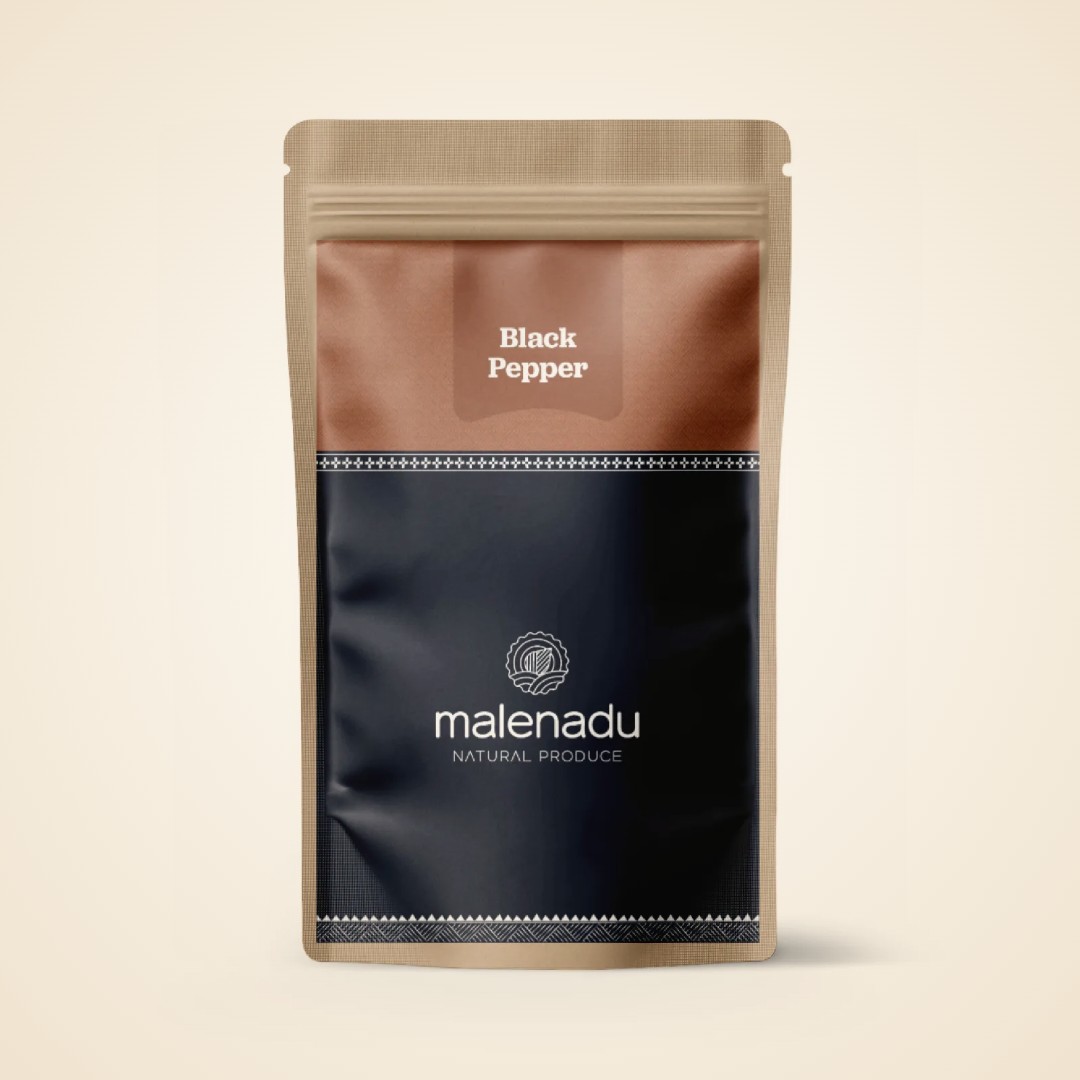
Pepper is the other big atta crop. Families pick it around the turn of the year, dry it on mats in the sun and store it high and dry, often for years. Our Malenadu black pepper comes from these hills.
From the malenadu pantry
Black pepper from the Malenadu hills, dried in the sun the way it has always been before it goes up into the atta. Keep a small jar in the kitchen and the rest in a cool, dry place.
The kitchen and its smoke
The kitchen of an old hill home is built around the ole, a wood-fired stove of mud or brick. Its smoke does useful work for the whole house. The smoke rises into the atta and out through the tiles, drying crops, darkening the rafters and keeping the wood above it dry through the wet season.
Strings of chillies and bundles of herbs may hang above the stove. Next to the kitchen, many homes keep a separate room for storing rice, oil, pickles and the honey jar, cool and away from the fire’s heat.
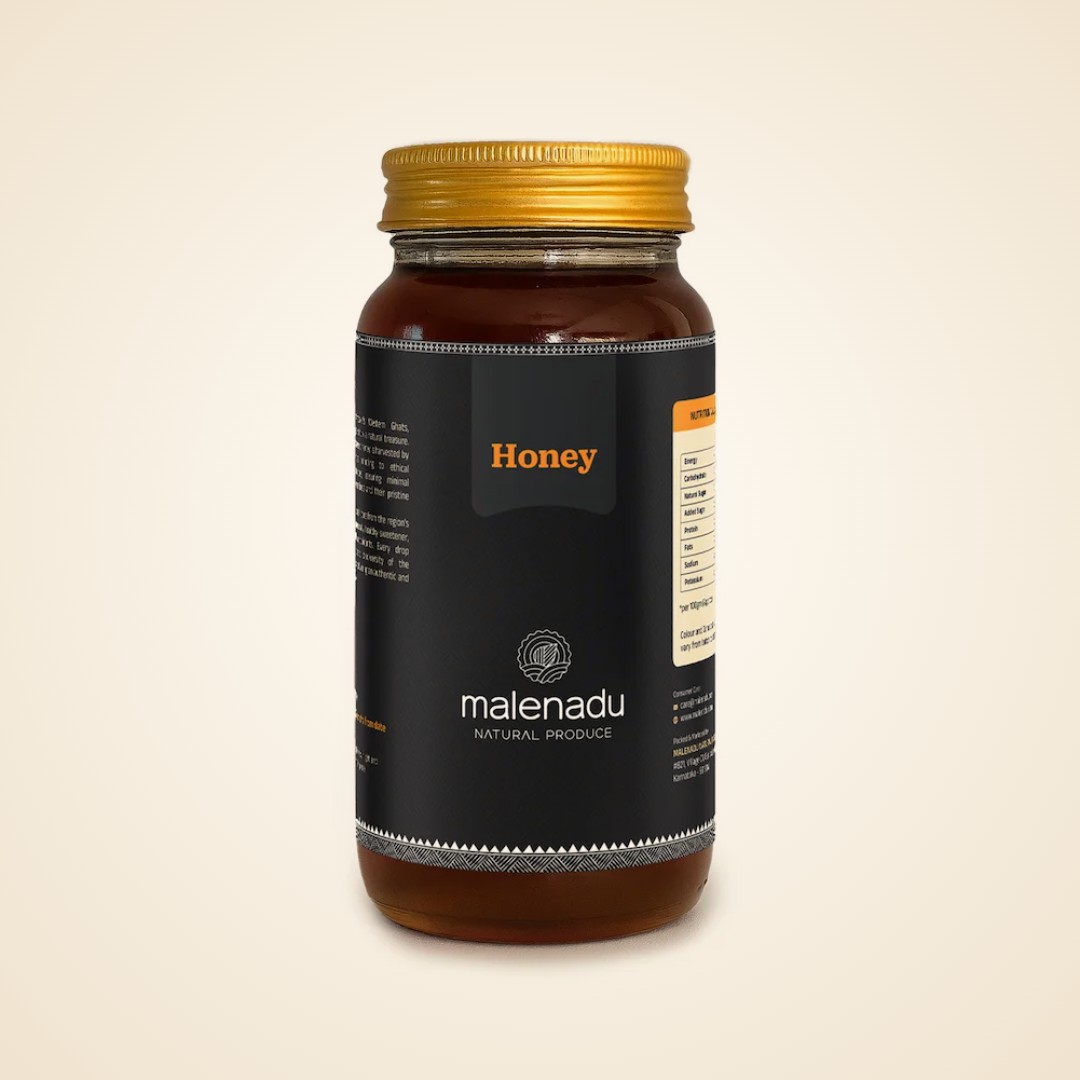
Honey is stored in a cool corner, not above the stove, because heat changes its taste and texture. In Malenadu homes a spoon of honey in warm water is given to adults for a sore throat during the rains. Keep a jar of honey the same way.
From the malenadu pantry
malenadu Honey comes in a jar meant for the kitchen shelf, not the attic. Keep it in a cool corner with the lid closed, the way it is kept in a hill home.
Many families now cook on gas but keep the old ole for big festival meals.
Bachalu and hande: the Malenadu bath
The bachalu is the bath area of the home, usually at the back, with a large copper or brass pot called the hande set into a firewood stove. The fire is lit early in the morning so hot water is ready for the whole family.
Bathing with hot water poured from a mug is a daily comfort in the cold, damp months. On festival mornings, especially Deepavali, the elders apply oil before a hot bath. Many homes use wood pressed coconut oil for this oil bath.
The fire under the hande is fed with dried areca husk, coconut fronds and sticks from the garden. Nothing from the thota goes to waste here.
Kottige: the cattle shed next door
The kottige is the cattle shed of the home, built close to or even attached to the main house so the animals are safe at night. In many old homes you can hear the cows from the kitchen.
The kottige is the start of the farm’s fertility. Cow dung and urine mix with dried leaves spread as bedding. That mix becomes the manure for the areca and pepper garden. Many families keep the small, hardy Malenadu Gidda cattle, which suit the hills and the rain. To see how that manure feeds the garden, read our guide to areca nut farming.
Mud, laterite and red oxide: walls and floors
The walls of a Malenadu house are traditionally thick, built of packed mud, sun dried mud bricks or laterite stone finished with lime plaster. Laterite, the red stone found across the coast and lower hills (often called kempu kallu, red stone), is cut into blocks straight from the ground and hardens in the air.
Floors in old Malenadu houses were packed mud, washed regularly with cow dung and water to keep them smooth, cool and free of dust. From the twentieth century, many families laid smooth red oxide floors, the polished red or black cement surfaces that stay cool underfoot and shine with age.
Thick walls hold an even temperature: the inside stays cooler than outside on a hot afternoon and warmer than outside on a monsoon night.
How does a Malenadu house breathe in the monsoon?
A Malenadu house stays healthy in the monsoon because air moves through it all the time. The tile roof lets warm, damp air escape, the thotti pulls air through the rooms and the deep eaves keep rain off the walls so they can stay dry.
A few habits help too:
- Smoke. The kitchen fire keeps the atta and rafters dry. Families say it also keeps insects and fungus away from stored crops.
- Raised floors. Most houses stand on a plinth, so floodwater and damp stay outside.
- Open plans. Rooms open onto the thotti or veranda, not onto closed corridors.
- Natural materials. Mud, lime and wood take in moisture and give it back slowly.
Replace this with a flat concrete roof and sealed rooms and the first complaint is usually damp walls. That is why architects are looking again at the old Malenadu house.
Is the Malenadu house the classic traditional house Karnataka is known for?
The Malenadu house is one of three classic types of traditional house Karnataka is known for, each shaped by its climate. The thotti mane of the hills shares its courtyard idea with the guthu mane of the Tulu coast, while the dry north builds flat-roofed houses of stone and mud.
| Region | House type | What stands out |
|---|---|---|
| Malenadu hills | Thotti mane, Malenadu mane | Steep tiled roof, courtyard, attic, timber |
| Tulu coast | Guthu mane | Large courtyard manor, carved wood, family shrine |
| Kodagu | Ainmane | Clan house of the Kodavas, used for festivals |
| North Karnataka | Stone and mud houses | Flat roofs, thick walls, small windows for heat |
The Kodava ainmane is the clan house where the whole family gathers for festivals like Huttari. You can read more about the people behind each house type in our guide to Malenadu culture.
Modern Malenadu houses and homestays
Today most new homes in the hills are concrete, but many families are restoring old Malenadu houses or building new ones in the old style. A common modern take keeps the tiled roof, the courtyard and the jagali but adds a concrete floor slab, modern bathrooms and better wiring.
Homestays have given many old houses a second life. A family with a big thotti mane and grown children living in Bengaluru can open three or four rooms to guests, cook home meals and keep the house in use. In Karnataka, homestays are meant to be registered with the tourism department, which revised its homestay registration guidelines in 2025.
How to visit a traditional Malenadu house
The easiest way to see a Malenadu house from the inside is to stay at a registered farm homestay in Sirsi, Sagara, Thirthahalli, Chikkamagaluru or Kodagu. Ask the host before booking whether the house is old, how many rooms it has and whether meals are cooked at home.
A few simple manners help:
- Leave your footwear outside, before the jagali katte.
- Do not enter the prayer room (devara mane) or the kitchen unless invited.
- Do not touch the hande fire or the ole without asking.
- Come in October to February for dry days. Come in the monsoon if you want to hear rain falling into the thotti.
If you want to carry home a little of the farm, a small jute bag of pepper and kokum from the hills is a good start.
Where to go next
Now that you know the Malenadu house, see what happens inside it through the year in our guide to Malenadu festivals. You can also plan your stay with the Malenadu travel guide.
Bring Malenadu home
Grown and made by Malenadu farmer families, packed by malenadu, a farmer owned producer company in Honnavar.
-
17% OFF

Kokum Rind
Original price was: ₹240.₹200Current price is: ₹200. -
8% OFF

Black Pepper
Price range: ₹165 through ₹299 -
29% OFF

Honey
Price range: ₹249 through ₹449 -
51% OFF
Small Jute Bag
Original price was: ₹200.₹99Current price is: ₹99. -
24% OFF

Wood Pressed Coconut Oil
Original price was: ₹899.₹679Current price is: ₹679. -
40% OFF

Desi Cow Ghee
Original price was: ₹1,500.₹899Current price is: ₹899.
Frequently asked questions about the Malenadu house
What is a Malenadu house called in Kannada?
People call it a Malenadu mane, which simply means Malenadu house. A larger house built around an open courtyard is called a thotti mane.
What is a thotti in a house?
A thotti is the open-to-sky courtyard in the middle of a traditional house. The roofs slope into it, so rainwater falls into the thotti and drains away while light and air reach the inner rooms.
What is a jagali katte?
A jagali katte is the raised, covered veranda at the front of a Malenadu house. Guests are received there, elders sit there in the afternoon and areca is often peeled there at harvest time.
Why do Malenadu houses have sloping roofs?
The hills get very heavy monsoon rain, so steep roofs with long eaves shed water quickly and keep it off the mud and stone walls below.
When did Mangalore tiles come to Malenadu?
The Basel Mission began making tiles in Mangaluru in the 1860s. The tiles spread up the ghats over the following decades, slowly replacing thatch roofs.
What is stored in the attic of a Malenadu house?
The atta traditionally holds dried areca, seed paddy, kokum rind, pepper, pickles in ceramic jars, firewood and dried leaves, all kept dry by smoke rising from the kitchen below.
Can tourists stay in a traditional Malenadu house?
Yes. Many old houses in Sirsi, Sagara, Thirthahalli, Chikkamagaluru and Kodagu now run as farm homestays. Ask the host whether the house is old and whether meals are home cooked before you book.
Explore more of Malenadu
Malenadu CultureMalenadu CulturePeople, arts and old ways of Karnataka’s rain hills
Malenadu CultureFestivals of MalenaduA year of harvests, jatres and sweets in the rain hills
Malenadu CultureLanguages of MalenaduKannada, its hill dialects and the tongues around them
Malenadu FarmingMalenadu CropsWhat grows in Karnataka’s rain hills and why it grows
Malenadu FoodMalenadu FoodRice, kokum, pepper and joni bella from the hills
Start hereMalenadu in KarnatakaWhere Malenadu is, what the name means