
Malenadu Culture
A Malenadu village is not a tight cluster of houses around a square. It is a string of farmhouses, each standing in its own areca garden, linked by mud paths, water channels and paddy fields. This guide walks through Malenadu village life across the year: the home, the work, the rain, the food, the festivals and how to visit well.
On this page
What is a Malenadu village like?
A Malenadu village is a spread of separate farmhouses scattered along a valley, each one sitting in the middle of the family’s own land. You may walk ten minutes from one house to the next, with the temple and the school somewhere in between.
This is very different from the dry plains of Karnataka, where houses huddle together and the fields lie outside. In the hills the land decides the shape: the house sits on the slope, with the garden below and the forest above.
Our guide to Malenadu in Karnataka explains where this hill belt lies. The list of Malenadu districts and taluks shows how the villages are grouped.
Where is a typical village in Malenadu?
A typical village in Malenadu sits in a valley between forested hills in districts such as Uttara Kannada, Shivamogga, Chikkamagaluru, Hassan or Kodagu. The village name usually covers several hamlets called keri (ಕೇರಿ, a lane or cluster of homes) or simply named after a family or a stream.
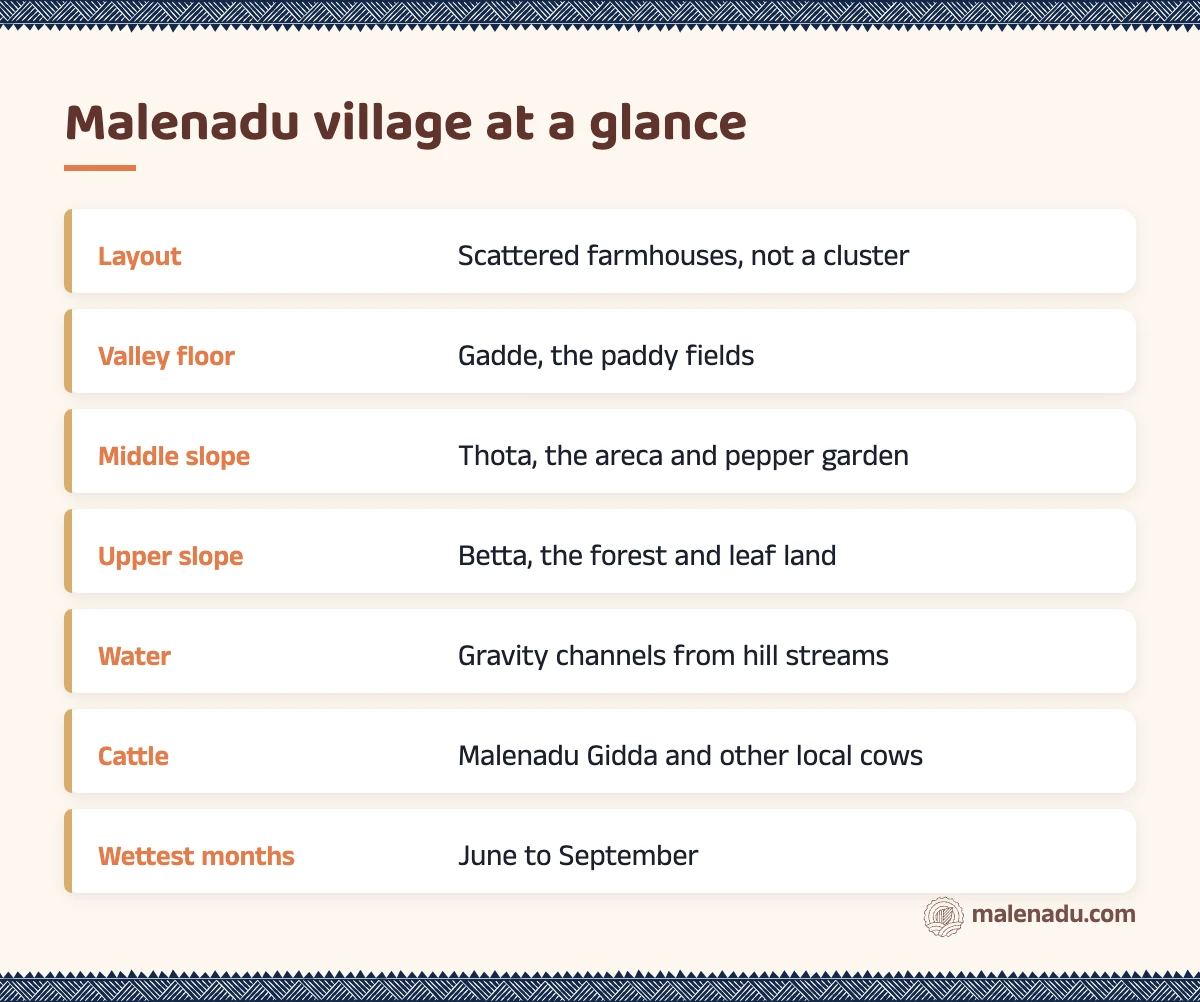
Every Malenadu village has the same three layers from bottom to top:
- Gadde (ಗದ್ದೆ): the flat paddy fields on the valley floor.
- Thota (ತೋಟ): the garden of areca palms with pepper, banana and cardamom, just above the fields.
- Betta (ಬೆಟ್ಟ): the forest or hill land above, where leaves, firewood and wild fruit come from.
The house sits where the thota meets the betta, dry above the floodwater and close to both.
The Malenadu village home and the thota around it
The Malenadu village home is a farmhouse built for one extended family and its cattle, harvest and guests. It has a steep tiled roof, a raised veranda in front called the jagali, an attic for drying crops and a cattle shed close by. Our guide to the traditional Malenadu house explains each part in detail.
What makes the Malenadu village home special is how close it stands to the work. The areca garden starts a few steps from the back door and you can hear the cows from the kitchen at night.
Around the house you will usually find:
- a well or a spring-fed pipe for water
- a small vegetable patch with beans, gourds and chillies
- jackfruit, mango and kokum trees
- a stack of firewood and dried areca husk under a lean-to roof
- a cleared yard (angala, ಅಂಗಳ) for drying areca, paddy and pepper
Why is the areca garden at the heart of Malenadu village life?
The areca garden, or adike thota, is at the heart of Malenadu village life because areca is the main cash crop that pays for school fees, weddings and repairs. Most families in a Malenadu village measure their wealth in palms, not in acres.
An areca garden is a dense, shaded grove of tall, thin palms. Pepper vines climb the trunks, bananas fill the gaps and cardamom or coffee grows in the deep shade in some areas. Our guide to areca nut farming explains how the gardens are laid out and worked.
The year in the garden runs like this:
| Season | Work in the garden |
|---|---|
| March to May | Watering, manuring, clearing channels |
| June to September | Spraying against fruit rot, keeping drains open |
| October to December | Green leaf mulch, early harvest in some areas |
| December to February | Main areca harvest, drying, pepper picking |
In the hot months a garden needs regular water. For conditions like those of Dakshina Kannada, the Central Plantation Crops Research Institute advises about 175 litres per palm at each watering, every four days from March to May, in its areca cultivation guide. The same guide says ripe nuts need about 40 to 45 days of sun drying.
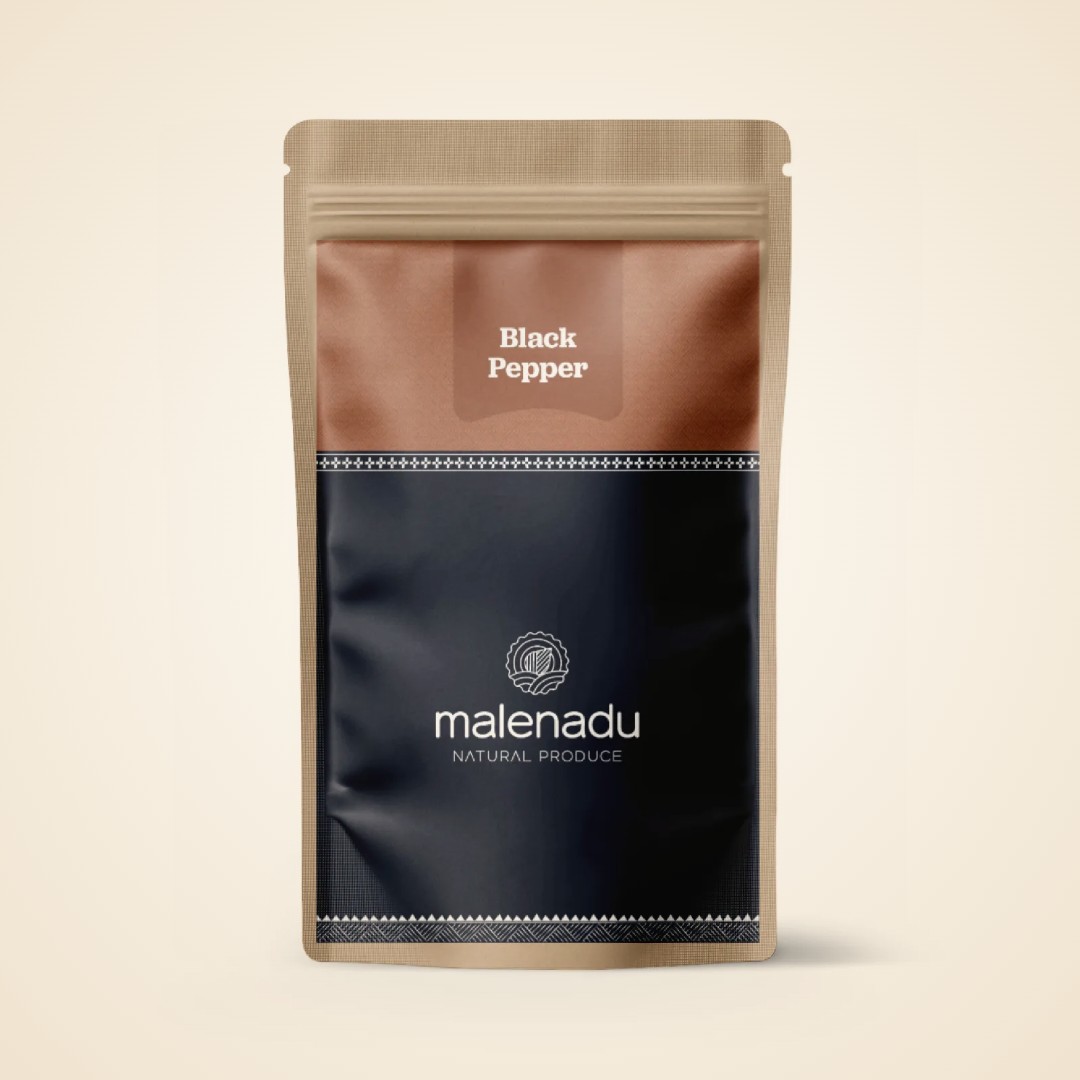
Pepper is the second crop that keeps a Malenadu village going. It is picked from the palms around the turn of the year, dried on mats in the yard and stored in the attic. Read more in our guide to pepper and cardamom farming. The black pepper on our shelf is dried in the sun on yards just like these.
From the malenadu pantry
This is pepper from the areca gardens of Malenadu, picked by hand from the vines and dried in the sun in the farm yard. It is the same pepper a hill family keeps in its kitchen all year.
Soppina betta: the forest that feeds the garden
In parts of Uttara Kannada and Shivamogga, families also use soppina betta (ಸೊಪ್ಪಿನ ಬೆಟ್ಟ), forest land set aside for collecting green leaves. Every year leaves are cut, carried down and spread as mulch and bedding. Mixed with cow dung in the shed, they become the manure that feeds the areca. This link between forest, cattle and garden is the old logic of a Malenadu village.
Paddy, cattle and water channels
Paddy, cattle and water channels are the other three things every Malenadu village depends on. Paddy gives rice for the year, cattle give milk and manure and the channels carry water from the streams to the fields and gardens.
Paddy in the valley
Paddy is planted in the gadde on the valley floor when the monsoon sets in. The fields are ploughed, flooded and planted in June and July, then harvested around October and November once the rain eases. In the old days the whole village helped with transplanting.
Many families grow less paddy now than their parents did. Some valley fields have become areca gardens and others lie fallow. Still, green paddy in August is the picture most people carry of a Malenadu village.
Cattle in the kottige
Most households in a Malenadu village keep a few cows in the kottige (ಕೊಟ್ಟಿಗೆ, cattle shed). The small, hardy local breed is the Malenadu Gidda, a dwarf cow that grazes on forest slopes and handles the rain. The cows go out to graze in the morning and come home on their own at dusk.
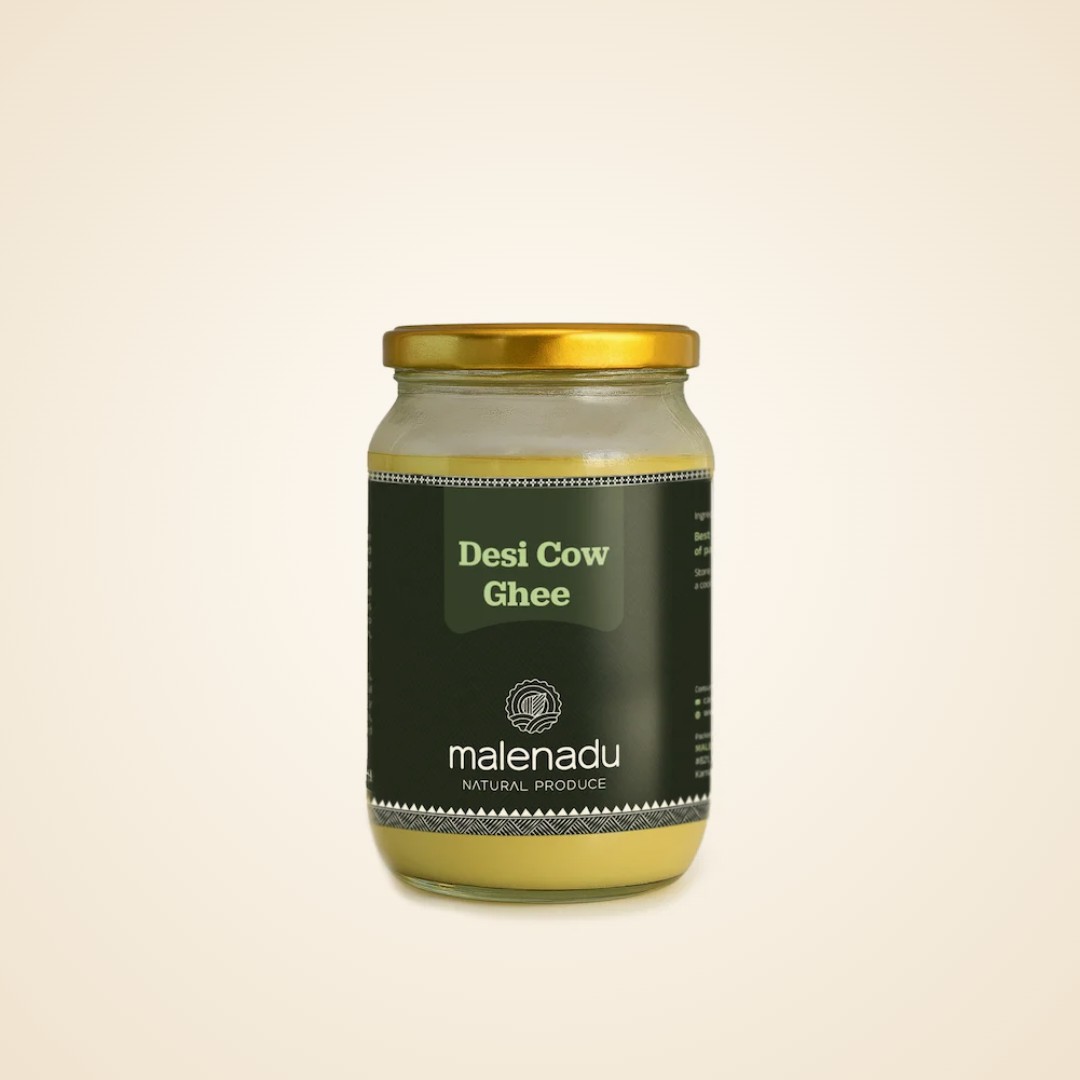
Milk is used at home first: for coffee, curds, buttermilk and butter. When there is extra butter it is melted down into ghee. Our desi cow ghee is hand churned by farmer families from the milk of desi breeds like these.
From the malenadu pantry
This ghee is hand churned by farmer families from the milk of desi breeds, including Malenadu Gidda. It is the kind of ghee spooned over hot rice in a hill kitchen.
Kaluve: the water channels
Water moves through a Malenadu village by gravity. Small channels (kaluve, ಕಾಲುವೆ) are cut from a stream higher up the valley and led along the slope, past the house, into the garden and down to the paddy. In summer families take turns opening and closing them. In the monsoon the same channels are cleared so the water drains away fast.
Malenadu daily life: a day from dawn to dark
Malenadu daily life starts before sunrise and follows the light, the cows and the weather. A day in a Malenadu village looks something like this in the dry months:
- Before dawn. The fire under the big copper water pot (hande) is lit with areca husk. Someone milks the cows.
- Early morning. Filter coffee, then breakfast: akki rotti (rice flatbread), dose or kadubu (steamed rice cakes).
- Morning. Work in the garden: watering, clearing, picking or drying. The cows go out to graze.
- Midday. A full lunch of rice, saaru (thin rasam), huli (vegetable curry), a tambuli (cool yogurt dish) and pickle.
- Afternoon. A rest on the jagali, betel and areca for the elders, then more work as the heat drops.
- Dusk. The cows walk home. A lamp is lit in the prayer room. Children study.
- Night. An early dinner, the TV news, phone calls to family in the city and bed by ten.
At harvest time everyone is up earlier and the yard is full of areca until dark. In the monsoon, work slows and the day moves indoors.
Local tip
If you stay with a farm family, ask to join the morning rounds of the garden. You will learn more in that hour than in a whole day of sightseeing.
What is monsoon life like in a Malenadu village?
Monsoon life in a Malenadu village means months of steady rain, wet clothes, power cuts and a slower, more indoor life. From June to September it can rain for days without stopping. Our guide to the Malenadu monsoon and rainfall explains how much water these hills get.
Life in Malenadu villages changes in many small ways during the rains:
- Clothes never dry. They are hung near the kitchen fire or above the hande in the bath room.
- Leeches (jigane, ಜಿಗಣೆ) come out on every path. People carry salt or tobacco to make them drop off.
- Power and phone lines go down when trees fall in the wind. Families keep lanterns and charged phones ready.
- Streams rise fast. Low bridges and causeways flood and children may stay home from school.
- Areca needs care. Families spray against kole roga (fruit rot), which spreads in long wet spells.
Older people still wear the kambli koppe, a woollen blanket folded into a hooded cape, to work in the rain.
The monsoon is also what people miss most when they move away: rain on the tiles, hot coffee on the jagali and the smell of wet earth.
What do people eat in a Malenadu village?
People in a Malenadu village eat rice with saaru, huli, tambuli and pickles every day, plus whatever the garden and forest give in each season. The food is simple, sour, peppery and cooked with coconut. Our Malenadu food guide covers the dishes in depth.
Food follows the calendar closely:
| Season | What is on the plate |
|---|---|
| Summer | Mango and jackfruit dishes, appe midi (tender mango) pickle, kokum juice |
| Monsoon | Jackfruit kadubu, bamboo shoots (kalale), wild mushrooms, sun dried stores |
| After the rains | Fresh rice, greens, tambuli made with herbs from the garden |
| Winter | Fresh pepper, sugarcane jaggery, sesame sweets for Sankranti |
Summer is when the year’s stores are made. Kokum is split and dried in the sun as murugalu, papads and sandige (sun dried fritters) are spread on mats and mangoes go into big ceramic jars as pickle. All of it is kept for the rains, when nothing dries outside.
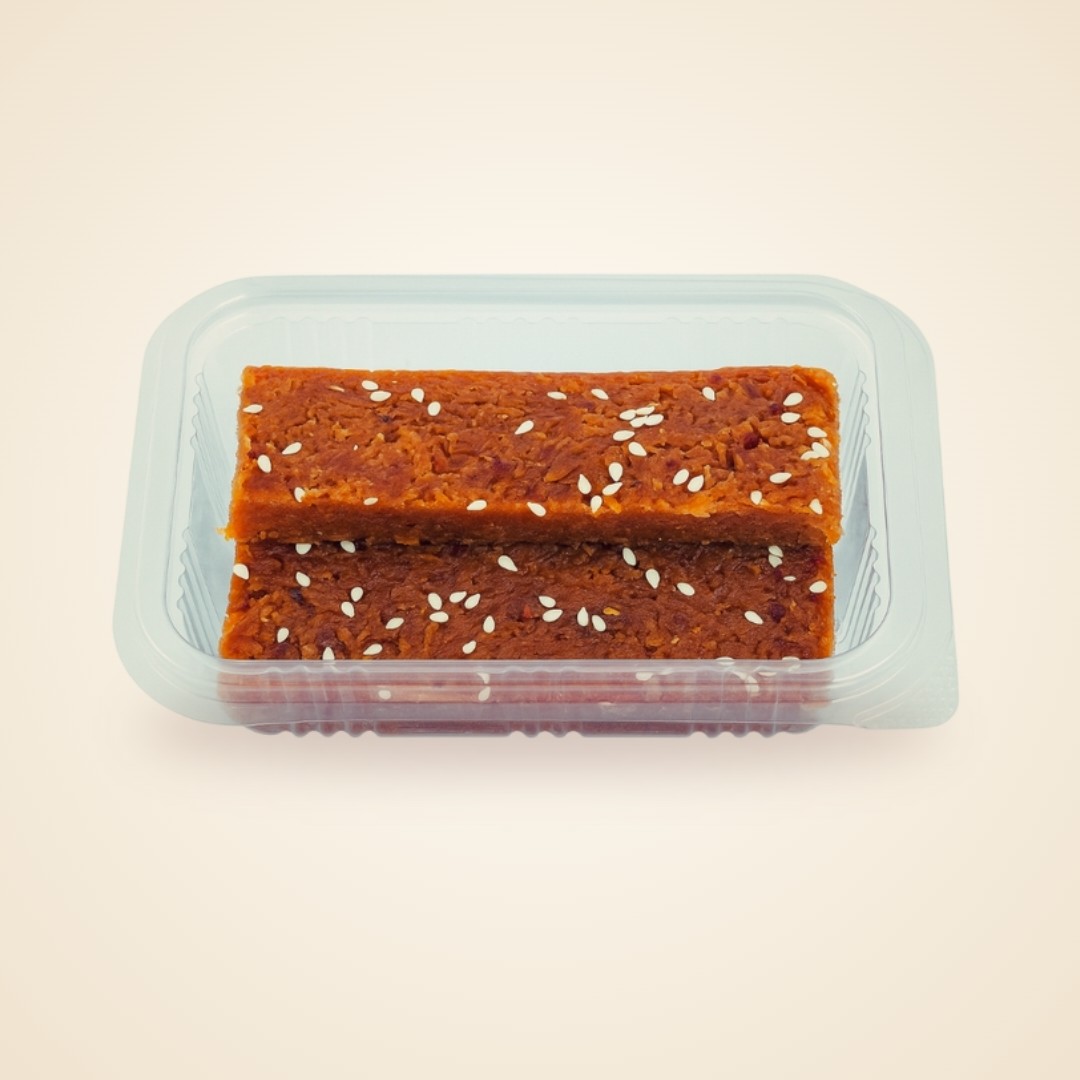
Sweets are made at home for festivals and visitors. A plate of coconut and jaggery sweets is the usual welcome in a Malenadu village home. Our coconut jaggery burfi is made the same traditional way.
From the malenadu pantry
Coconut and jaggery are what every hill kitchen has in plenty, so this sweet is what you are most likely to be offered when you visit. It travels well and keeps for a few days in a dry box.
Festivals in a Malenadu village
Festivals in a Malenadu village follow the farm year, with prayers for rain, thanks for the harvest and a big temple fair in the dry months. Each one brings scattered families together.
The most loved ones are:
- Nagara Panchami in the monsoon, when snake stones are offered milk and flowers.
- Gowri and Ganesha in late summer rain, with clay idols and kadubu.
- Bhoomi Hunnime in autumn, when families offer food to the earth in the paddy and areca as the crop ripens.
- Deepavali, with oil baths, lamps in the garden and puja for the cattle.
- Jatre (temple fair) season from February to April, when the whole region comes out.
Our full guide to Malenadu festivals walks through each one month by month, with the food cooked for it.
How are Malenadu villages changing?
Malenadu villages are changing because many young people have moved to cities for study and work, while roads, phones and tourism have reached even remote valleys. The scattered farmhouse pattern makes this change very visible: one empty house can leave a whole stretch of valley quiet.
Young people in the city
In many Malenadu village homes today, the parents live alone and the children work in Bengaluru, Pune, the Gulf or abroad. They come home for Deepavali, the jatre or the areca harvest. The big joint family houses that once held three generations now often hold two people.
Fewer hands on the farm
With fewer family members at home, work that was once shared is now done by hired workers, often from outside the region. Tillers, pumps and sprayers fill some of the gap.
Wild animals and new pressures
Elephants, gaur (Indian bison), wild boar and monkeys raid crops in many villages near the forest. Price swings in areca also make planning hard.
Homestays and returning families
Homestays have become a strong trend. A family with a large old house and spare rooms hosts guests, serves home food and shows them the garden. In Karnataka, homestays are meant to be registered with the Department of Tourism, which issued revised homestay registration guidelines in 2025.
Some young people have also come back to run the farm or to work online from the family home. This mix of old and new is the real Malenadu village life of today.
How to visit a Malenadu village respectfully
To visit a Malenadu village respectfully, remember that every garden, path and stream belongs to a family and that people are working, not performing. The best way in is through a registered farm stay, where a host can show you around.
A few simple manners go a long way:
- Ask before entering a garden. Thota paths look public but are private land.
- Do not pick anything. Pepper, areca, fruit and even flowers are someone’s income.
- Ask before taking photos of people, especially elders and women at work.
- Leave footwear outside the house and the temple.
- Keep noise down. No loud music at night in a quiet valley.
- Carry your plastic home. Waste dumped near streams ends up in the paddy.
- Do not fly drones over homes and gardens without permission.
- Buy local when you can: honey, jaggery, pickles and spices from the hills.
Come between October and February for dry paths and harvest work. Come in the monsoon if you want to feel the rain, but pack for leeches and power cuts. For a taste of the hills to take home, a small jute bag of spices is light to carry.
Local tip
Bring a small gift when you visit a family, such as sweets or fruit from your town. In a Malenadu village home, you will almost always be offered coffee and something to eat, so do not refuse it outright.
Where to go next
To understand the farm year behind Malenadu village life, read our guide to Malenadu crops. To taste it, try the dishes in the food guide linked above or browse the spices and sweets from these hills.
Bring Malenadu home
Grown and made by Malenadu farmer families, packed by malenadu, a farmer owned producer company in Honnavar.
-
8% OFF
Black Pepper
Price range: ₹165 through ₹299 -
40% OFF
Desi Cow Ghee
Original price was: ₹1,500.₹899Current price is: ₹899. -
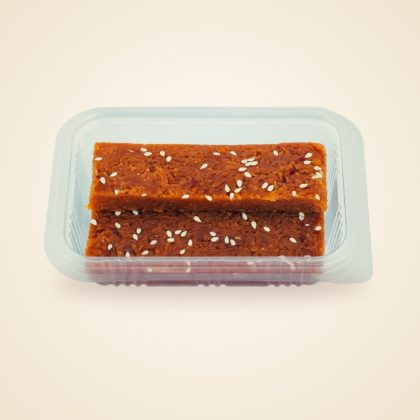
Coconut Jaggery Burfi
₹120 -
17% OFF

Kokum Rind
Original price was: ₹240.₹200Current price is: ₹200. -
14% OFF

Liquid Jaggery
Original price was: ₹349.₹299Current price is: ₹299. -
51% OFF
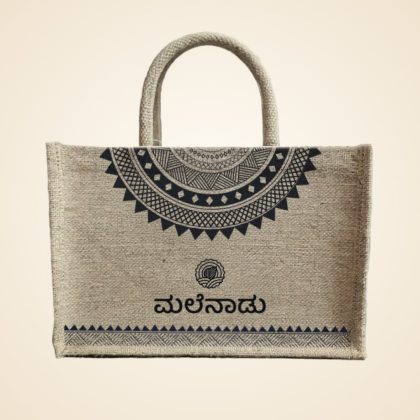
Small Jute Bag
Original price was: ₹200.₹99Current price is: ₹99.
Frequently asked questions about Malenadu village life
What is a Malenadu village like?
A Malenadu village is a spread of separate farmhouses, each in its own areca garden, linked by paths and water channels along a valley. Paddy fields lie on the valley floor and forest covers the hills above.
Why are houses in a Malenadu village so far apart?
Each family lives on its own land so that the house, the areca garden, the cattle shed and the water channel are all close together. The valley shape and the streams decide where houses are built.
What do people do for a living in a Malenadu village?
Most families grow areca as the main cash crop, with pepper, banana, cardamom, coffee or paddy alongside. Many also keep a few cows and earn from homestays or jobs in nearby towns.
What is the best time to visit a Malenadu village?
October to February brings dry paths, harvest work and pleasant weather. June to September is the monsoon, which is beautiful but very wet, with leeches and power cuts.
Can tourists stay in a Malenadu village?
Yes. Many farm families run registered homestays in old houses, where you eat home food and walk through the garden. Choose one registered with the Karnataka tourism department.
Are young people leaving Malenadu villages?
Many young people have moved to cities for study and jobs, so parents often live alone in large houses. Some are returning to farm or work online from home.
Explore more of Malenadu
Malenadu CultureMalenadu CulturePeople, arts and old ways of Karnataka’s rain hills
Malenadu CultureFestivals of MalenaduA year of harvests, jatres and sweets in the rain hills
Malenadu CultureThe Malenadu HouseCourtyards, verandas and attics built for the rain
Malenadu CultureLanguages of MalenaduKannada, its hill dialects and the tongues around them
Malenadu CultureMalenadu Quotes and CaptionsShort lines for rain, mist, coffee and home
Malenadu Cultureಮಲೆನಾಡು: ಕನ್ನಡದಲ್ಲಿ ಮಾಹಿತಿಬೆಟ್ಟ, ಕಾಡು, ಮಳೆ ಮತ್ತು ತೋಟಗಳ ನಾಡಿನ ಪರಿಚಯ
Malenadu FarmingMalenadu CropsWhat grows in Karnataka’s rain hills and why it grows
Malenadu FoodMalenadu FoodRice, kokum, pepper and joni bella from the hills
Start hereMalenadu in KarnatakaWhere Malenadu is, what the name means