
Malenadu Food
Halasina happala (ಹಲಸಿನ ಹಪ್ಪಳ) is a papad made from cooked raw jackfruit, ground with salt and chilli, pressed thin and dried in the summer sun. Malenadu families make it in batches when the jackfruit trees are heavy, then store it for the monsoon. This page gives a home recipe and explains drying, storing, frying and roasting.
On this page
What is halasina happala?
Halasina happala is a thin, crisp papad made from the bulbs of a full grown but unripe jackfruit. Halasu (ಹಲಸು) is jackfruit in Kannada and happala is papad, so the name simply means jackfruit papad. The cooked bulbs are ground into a smooth dough with salt, chilli and cumin or sesame, pressed into thin rounds and dried in the sun until they snap.
Once dried, halasina happala keeps for months. It is fried in hot oil or roasted over the embers of the hearth. Either way it puffs up into a light, crunchy disc with a gentle jackfruit taste. In Malenadu it is eaten with rice and saaru, as a tea time snack or simply on its own on a rainy evening.
Most families eat jackfruit in many ways through the summer. The ripe fruit goes into sweet dishes such as halasina kadubu, the raw fruit becomes palya and the extra raw fruit becomes happala. Our page on Malenadu fruits covers the jackfruit itself and the other fruits of the hills.
Jackfruit happala, papad, chips or sandige?
These words get mixed up, so here is how Malenadu homes use them.
| Name | What it is |
|---|---|
| Halasina happala | cooked raw jackfruit dough, pressed thin and sun dried |
| Jackfruit chips | slices of raw jackfruit bulbs fried crisp straight away |
| Hannina happala | papad made from ripe or half ripe jackfruit, slightly sweet |
| Sandige | small sun dried fritters, often of rice or sago, fried like papad |
| Akki happala | rice papad, made the same way with rice dough |
So jackfruit happala and jackfruit papad are the same thing. A raw jackfruit papad is savoury and pale, while a ripe fruit papad is darker and sweeter.
When is halasina happala made in Malenadu?
Halasina happala is made in the hot, dry months before the monsoon, when the jackfruit trees around the house are full. The sun is strong and steady then, which is what the papads need to dry quickly and evenly.
A Deccan Herald report on jackfruit papad from the Sirsi area describes how villages around Sirsi in Uttara Kannada have long made it at home during the summer jackfruit season. The same is true across the Malenadu taluks of Shivamogga, Chikkamagaluru and the ghats. You can see where these sit on our page of Malenadu districts and taluks.
The timing also follows the weather. Once the rains begin, nothing dries outside, so every family tries to finish its happala before the first heavy showers. Read about how sharply the seasons change in the hills on our Malenadu monsoon page.
A family and neighbourhood work day
Making halasina happala is rarely a one person job. One jackfruit gives a lot of bulbs and the dough must be pressed while it is still soft, so relatives and neighbours often gather for a day. Some clean the fruit, some grind, some press and the children carry the papads out to the sun.
Many families take turns, working at one house one week and another the next. It is hard work, but it is also a day of talk, tea and snacks. By evening the yard or the roof is covered in rows of pale happala.
Which jackfruit is used for jackfruit papad?
Jackfruit papad is made from a fruit that is fully grown but still raw, with firm, pale bulbs that are not yet sweet. A fruit picked too young gives a thin, watery dough. A fruit that has started to ripen makes the papad sweet, dark and soft.
The owner of the tree usually knows when a fruit is ready, from its size and the look of its skin. If you buy one, ask the seller for a mature raw fruit for happala, not a tender one for palya. Any jackfruit can be used. Many families use trees whose ripe fruit is not so prized for eating.
Raw jackfruit has a sticky white latex. Rub coconut oil on your hands, the knife and the cutting board before you start. Spread newspaper on the floor too. The latex cleans off easily with oil but not with water.
What goes into halasina happala?
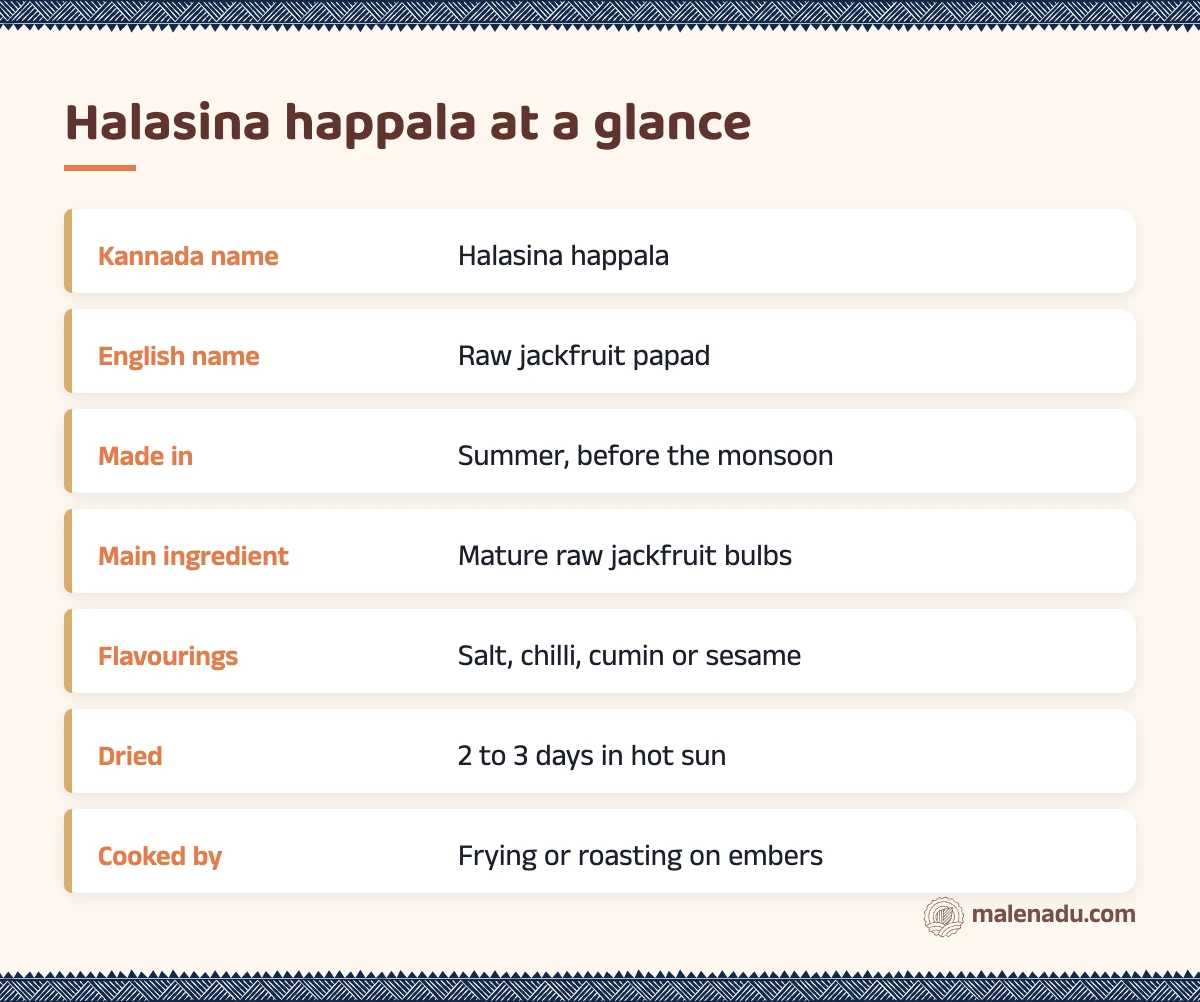
Halasina happala needs very few ingredients, because the jackfruit itself makes the dough. Here is what each one does.
| Ingredient | What it does |
|---|---|
| Raw jackfruit bulbs | the body of the papad, cooked soft and ground |
| Salt | taste and better keeping |
| Red chilli or green chilli | heat; some homes use bird eye chilli |
| Cumin seeds | flavour, the most common choice |
| White sesame seeds | crunch and a nutty taste, in some homes |
| Hing (asafoetida) | a pinch for aroma |
| Coconut oil | greasing hands and sheets, then frying |
Some families also add a little crushed pepper. Keep the spices simple, because the plain jackfruit taste is what makes halasina happala special.
Halasina happala recipe: how to make jackfruit papad at home
This halasina happala recipe shows how to make jackfruit papad at home with about 1 kg of cleaned raw jackfruit bulbs, enough for roughly 40 medium papads. The cooking and pressing take an afternoon and the drying takes two or three sunny days. Start early in the day so the first papads go out in strong sun.
Recipe card
Halasina Happala
Malenadu raw jackfruit papad, made from cooked jackfruit bulbs ground with salt, chilli and cumin, pressed thin and sun dried.
Ingredients
- 1 kg raw jackfruit bulbs, seeds and seed skins removed (from a mature, unripe fruit)
- 1/2 cup water, for cooking
- 2 teaspoons salt (adjust to taste)
- 1 1/2 teaspoons red chilli powder or 5 to 6 green chillies (or 2 bird eye chillies)
- 1 teaspoon cumin seeds
- 1 tablespoon white sesame seeds (optional)
- a pinch of hing (asafoetida)
- 2 tablespoons coconut oil, for greasing hands and sheets
- 2 thick plastic sheets or 2 large banana leaves, wiped clean
- coconut oil for frying, when serving
Method
- Oil your hands and knife. Cut the jackfruit, pull out the bulbs, remove the seeds and the thin skin around each seed. Tear the bulbs into two or three pieces.
- Pressure cook the bulbs with 1/2 cup water for 2 to 3 whistles (or steam them for about 20 minutes) until they are very soft. Drain off any water and cool.
- Grind the cooked bulbs with the salt, chilli, cumin and hing into a smooth, thick dough. Do not add water. In Malenadu homes this is done on a grinding stone, but a mixer works in small batches.
- Mix in the sesame seeds and taste a pinch of the dough. It should be a little saltier than you would like, because the taste softens as it dries.
- Grease your palms with coconut oil and roll the dough into lemon-sized balls.
- Lightly oil the two sheets. Put a ball between them and press it with a flat-bottomed heavy plate or a papad press into a thin round of about 12 to 15 cm. Roll it a little thinner with a rolling pin if needed.
- Peel off the top sheet and turn the papad onto a clean mat or cloth in full sun. Dry for 2 to 3 days, turning them over each day and bringing them indoors in the evening, until they are brittle and snap cleanly.
- Cool the dried happala completely and store them flat in an airtight tin. Fry or roast them as needed.
Local tip
Cover the drying papads with a thin old net or cloth held down at the corners. It keeps birds, crows and ants off without blocking the sun.
A good batch of halasina happala looks pale cream to light yellow with small flecks of chilli and cumin. Each papad should be thin enough to almost see light through. If they crack while pressing, the dough is too dry; if they stick to the sheet, it needs a little more oil.
How do you dry and store halasina happala?
Dry halasina happala in strong, steady sun for two to three days until they snap cleanly, then store them in an airtight tin away from any damp. Drying properly is the most important step, because a papad that is still soft inside will turn mouldy in the monsoon.
- Turn them daily. The side touching the mat dries slowest. Flip each papad once a day.
- Bring them in at night. Dew makes them soft again, so stack them indoors each evening and spread them out next morning.
- Watch the sky. If clouds come in, pick them up. A papad that gets rained on usually has to be thrown away.
- Test before storing. Bend one. It should snap, not bend. If it bends, give the batch another day.
Store halasina happala in dry steel or glass tins with tight lids. Many Malenadu homes keep the tins in the attic or near the kitchen, where the warmth of the hearth keeps them crisp. Before the rains, some families put them out in the sun for one more day so they go into the monsoon bone dry.
How do you cook halasina happala?
There are two ways to cook halasina happala: fry it in hot oil or roast it over a flame or embers. Both take less than a minute.
Frying
Heat coconut oil in a kadai until a small piece of happala dropped in rises at once. Slide in one papad at a time. It will puff and spread in a few seconds. Press it gently with a slotted spoon, turn once and lift it out before it browns. Drain on paper and eat warm.
From the malenadu pantry
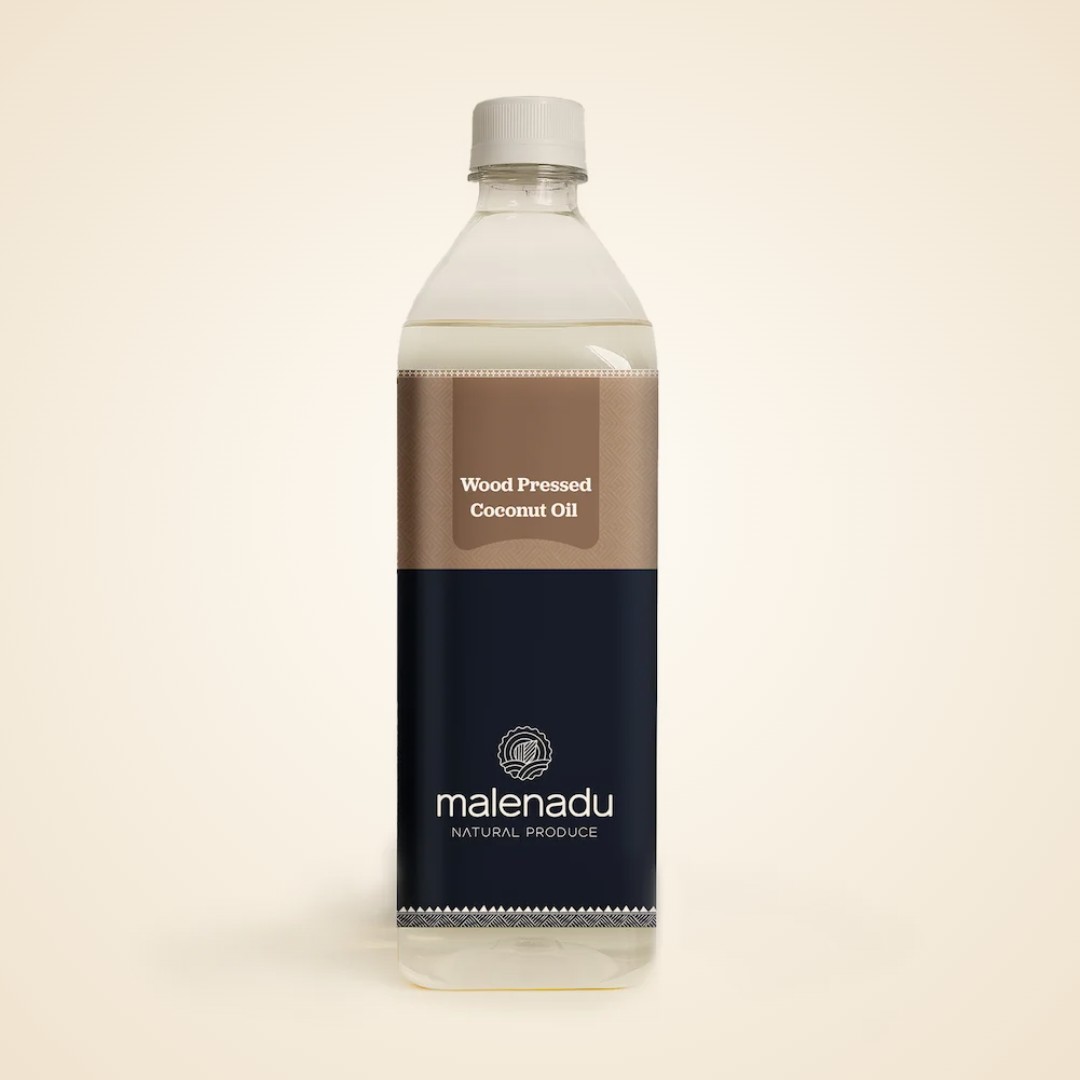
malenadu Wood Pressed Coconut Oil is made from sun dried copra in a wooden ghani. Frying halasina happala in it gives the crisp coconut aroma that Malenadu homes expect.
Roasting on embers or a flame
In old Malenadu kitchens, happala were roasted over the glowing embers of the wood stove after cooking. Hold the papad with tongs a few inches above the embers or a low gas flame and keep turning it. It bubbles and turns pale gold. A roasted halasina happala is drier and smokier than a fried one and uses no oil.
Do not try to roast a thick or damp papad. It will burn outside and stay chewy inside.
Malenadu happala and how they vary
Malenadu happala change from house to house, mainly in the spices. These are the versions you are most likely to meet.
- Cumin and chilli: the most common halasina happala, with a mild heat.
- Sesame: white sesame mixed into the dough for crunch.
- Pepper: a teaspoon of crushed pepper in place of some chilli, for a warmer taste.
- Green chilli: fresh green chillies ground in, giving a paler papad with a fresh heat.
- Bird eye chilli: one or two tiny gandhari menasu make the papad noticeably hot.
- Ripe fruit papad: in Kodagu and some other homes, half ripe bulbs are used for a darker, slightly sweet papad.
For a hot batch, grind one or two bird eye chillies into the dough in place of half the chilli powder. Taste the raw dough carefully, because the heat grows as the papad fries.
From the malenadu pantry
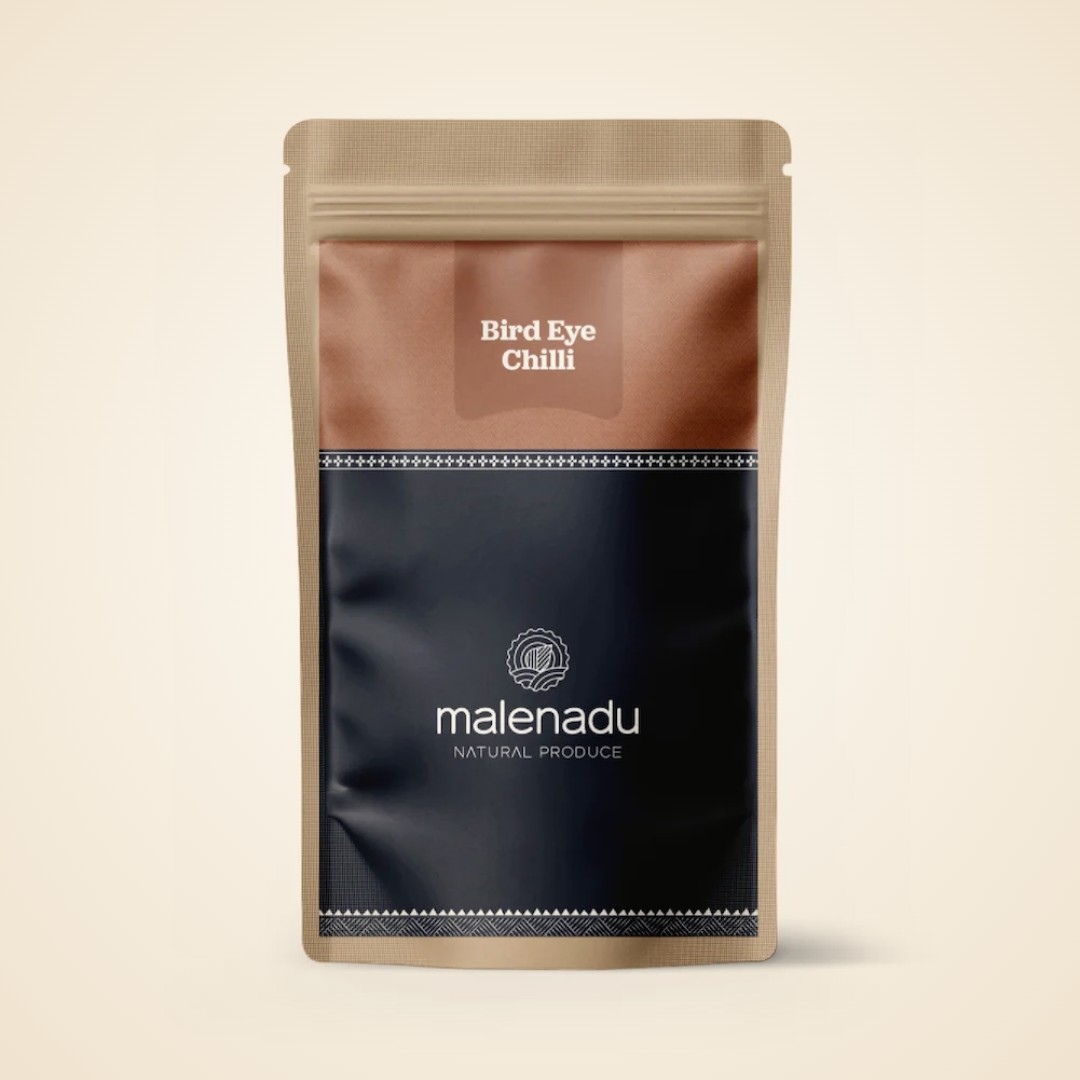
malenadu Bird Eye Chilli is the small, fiery gandhari menasu of Malenadu backyards. Two dried chillies ground into the dough give a batch of halasina happala a sharp, clean heat.
Rice papad (akki happala) is made the same way with cooked rice flour dough. Many homes make both in the same summer.
What to eat with halasina happala
Halasina happala is eaten with rice and a thin saaru, as a snack with tea or crushed over curd rice. On a rainy day it is the crunch that makes a simple meal feel complete.
- Kokum saaru and rice: a hot, sour kokum saaru with rice and a fried happala is a classic Malenadu lunch.
- Tambuli: a cool menthya tambuli and rice with a happala on the side.
- Monsoon curries: a roasted happala goes well with a peppery anabe saaru in the mushroom season.
- Curd rice: crush a happala over curd rice at the end of the meal.
- Tea time: a stack of fried happala with hot tea when it is pouring outside.
For the kokum saaru, keep a jar of kokum rind in the kitchen. Six to eight soaked pieces make a pot for four.
From the malenadu pantry
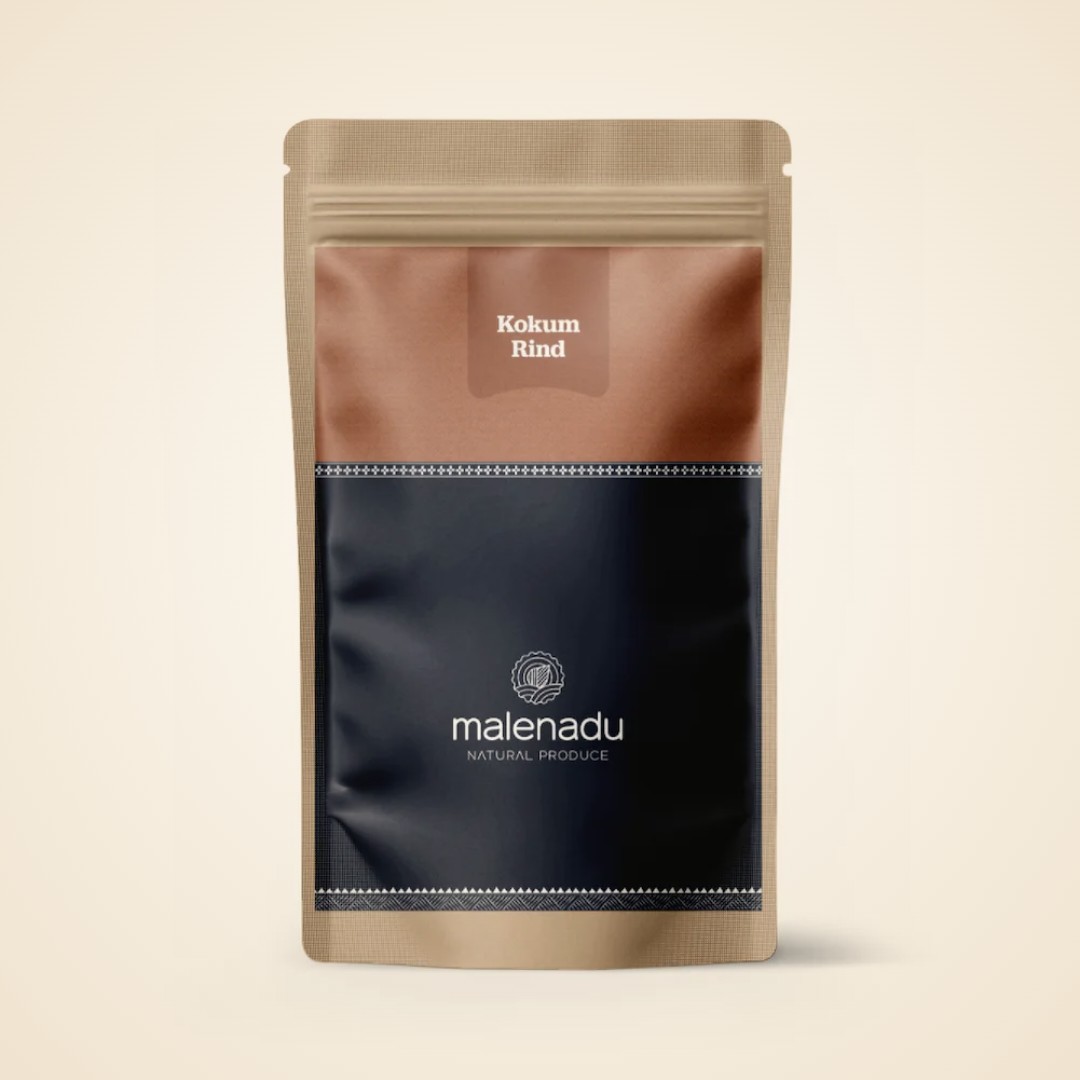
malenadu Kokum Rind is sun dried murugalu from the Western Ghats. A pot of kokum saaru with rice and halasina happala is one of the simplest Malenadu lunches.
When guests come in the monsoon, Malenadu families often fry a plate of happala with tea. It is a way of sharing the summer’s work.
Common halasina happala mistakes and how to fix them
Most problems with halasina happala come from the wrong fruit, a wet dough or rushed drying. This table shows what went wrong and how to fix it.
| Problem | Likely cause | Fix |
|---|---|---|
| Sweet, dark papad | fruit had started to ripen | use a firm, raw fruit |
| Papad cracks while pressing | dough too dry or cold | press while warm, oil the sheets |
| Papad sticks to the sheet | too little oil | grease both sheets lightly |
| Does not puff when fried | papad too thick or oil not hot | press thinner, heat the oil more |
| Mould in the tin | not fully dried | dry until it snaps, store airtight |
| Bitter or hard bits | seed skins left in | remove every seed skin before cooking |
Grind the dough while it is still a little warm. Cold jackfruit dough is stiff and hard to press thin. If you make a big batch, keep the waiting dough covered with a damp cloth.
Where to go next after halasina happala
Once you have a tin of halasina happala, you have the start of many Malenadu monsoon meals. For the sweet side of the jackfruit, try halasina kadubu. See what else is in season on our Malenadu crop calendar. Our Malenadu food guide brings all the hill recipes together.
If you are in Bengaluru in early summer, Karnataka Tourism lists a mango and jackfruit mela at Lalbagh, where papads are among the fruit products on sale. It is a good place to see how many kinds of jackfruit the state grows.
Bring Malenadu home
Grown and made by Malenadu farmer families, packed by malenadu, a farmer owned producer company in Honnavar.
-
24% OFF
Wood Pressed Coconut Oil
Original price was: ₹899.₹679Current price is: ₹679. -
Bird Eye Chilli
₹200 -
17% OFF
Kokum Rind
Original price was: ₹240.₹200Current price is: ₹200. -
8% OFF
Black Pepper
Price range: ₹165 through ₹299 -
40% OFF
Desi Cow Ghee
Original price was: ₹1,500.₹899Current price is: ₹899. -
13% OFF
Turmeric Powder
Price range: ₹70 through ₹120
Frequently asked questions about halasina happala
What is halasina happala in English?
Halasina happala means jackfruit papad. Halasu is jackfruit in Kannada and happala is papad.
Is jackfruit papad made from raw or ripe jackfruit?
Halasina happala is made from a mature raw jackfruit. A sweeter papad made from half ripe fruit is also made in some homes, but it is a different kind.
How long does halasina happala take to dry?
About two to three days in strong summer sun. They are ready when they snap cleanly instead of bending.
How long does jackfruit papad keep?
Fully dried papads kept in an airtight tin in a dry place keep through the monsoon and often for many months. Throw away any that show mould or smell musty.
Can I make jackfruit papad without sun drying?
Sun drying gives the best result. Some people dry them on the lowest setting of an oven or a dehydrator, but they must still be fully dry and brittle before storing.
How do you cook halasina happala?
Fry it in hot coconut oil for a few seconds until it puffs. You can also roast it over a low flame or embers while turning it with tongs.
Why does my happala not puff up?
It is either too thick or the oil is not hot enough. Press the dough thinner and test the oil with a small piece first.
Explore more of Malenadu
Malenadu FoodMalenadu FoodRice, kokum, pepper and joni bella from the hills
Malenadu FoodHalasina KadubuSweet jackfruit dumplings steamed in leaves
Malenadu FoodSpices Names in KannadaEnglish, Kannada and Hindi names for a Malenadu kitchen
Malenadu FoodKara KadubuSpicy steamed rice dumplings from Malenadu kitchens
Malenadu FoodKokum SaaruThe sour, peppery everyday rasam of Malenadu homes
Malenadu FoodMenthya TambuliA cool fenugreek and curd side for the first rice course
Malenadu FoodMalenadu FruitsJackfruit, kokum, wild mango and the fruits of the forest
Malenadu FoodKesuvina GojjuThe sweet and sour colocasia leaf relish of the monsoon
Start hereMalenadu in KarnatakaWhere Malenadu is, what the name means