
Malenadu Food
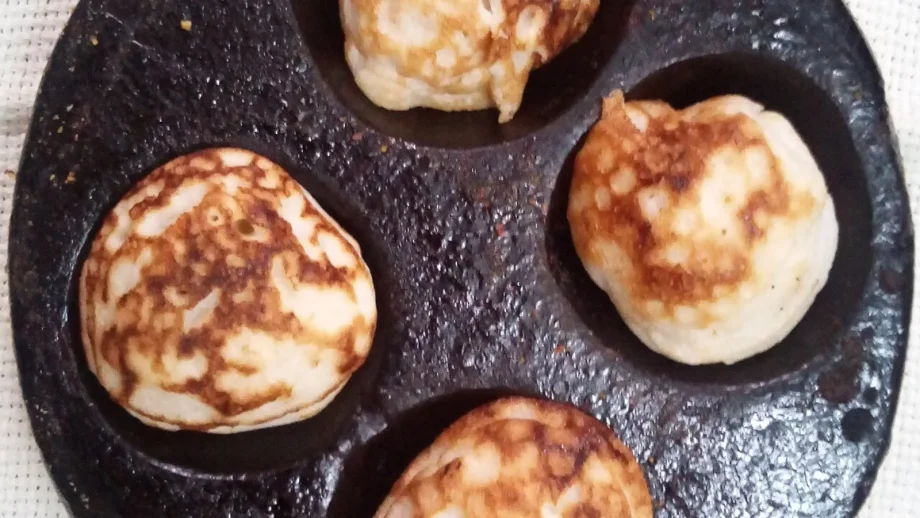
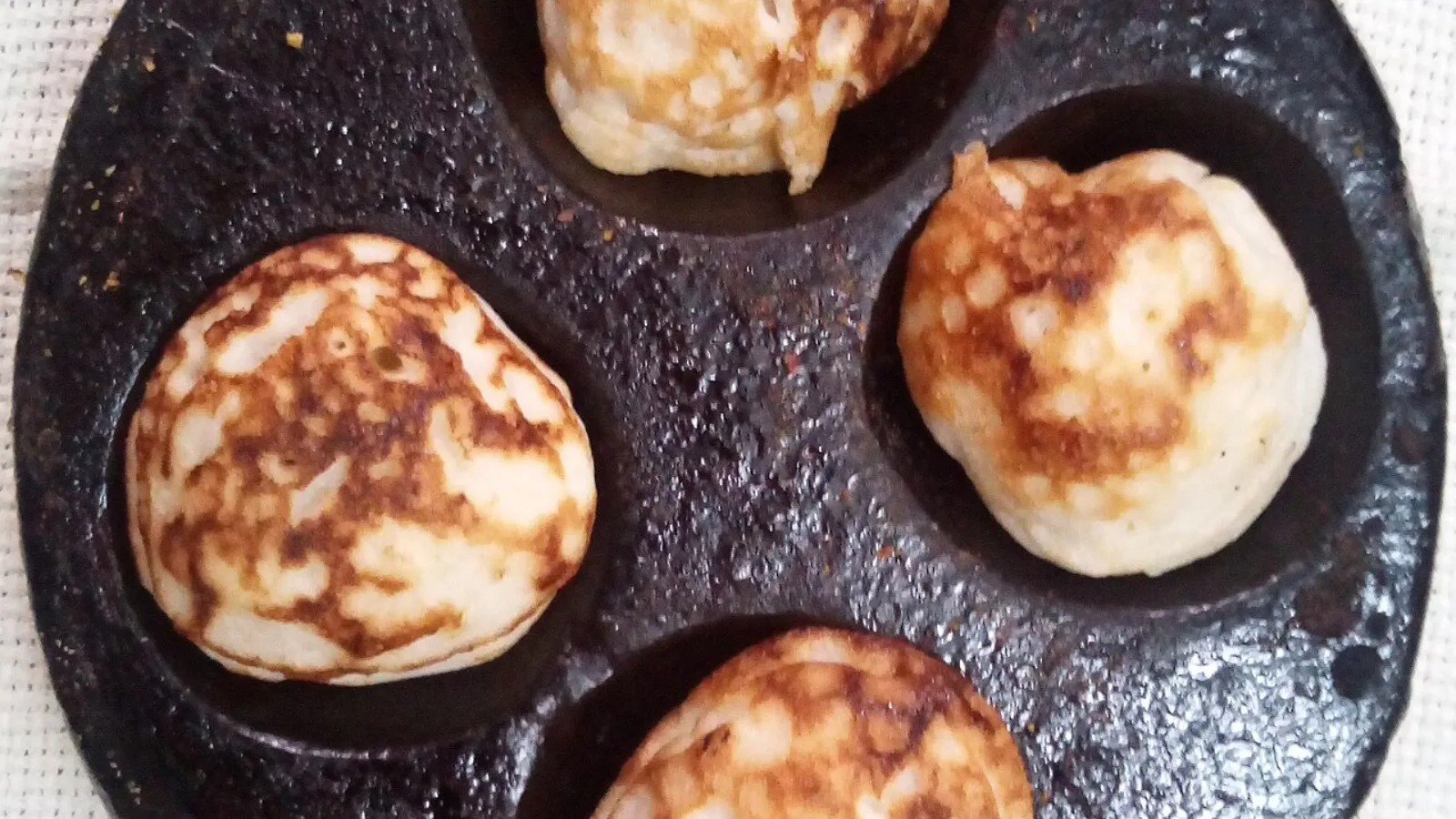
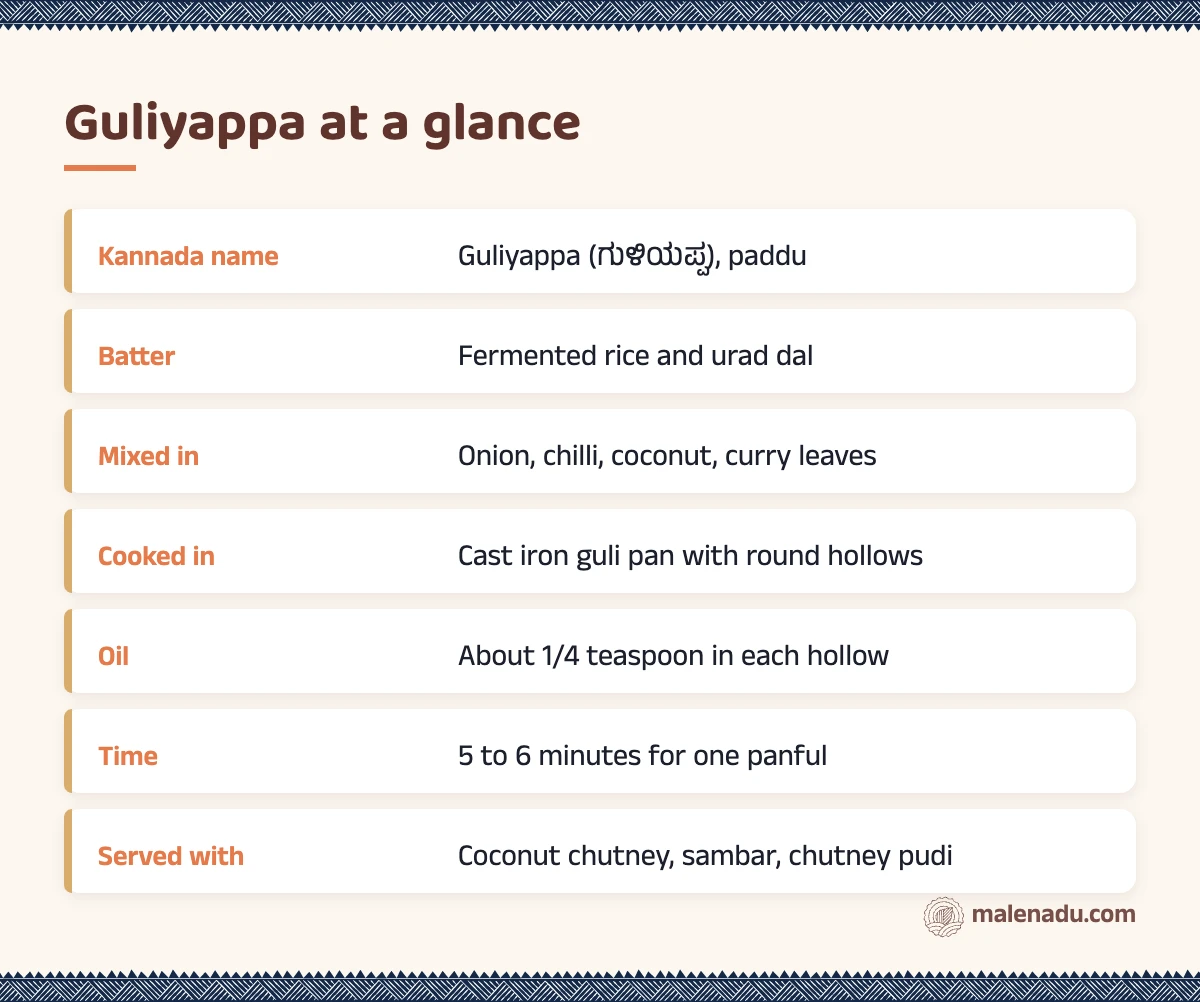
Guliyappa (ಗುಳಿಯಪ್ಪ) is a round, golden dumpling of fermented rice and urad dal batter mixed with onion, green chilli, coconut and curry leaves, cooked in the hollows of a cast iron guli pan with a little oil. This page gives a home recipe, explains how to season and oil the pan, how to turn them and a sweet version with banana and jaggery.
On this page
What is guliyappa?
Guliyappa is a small ball of fermented dosa batter cooked in a heavy pan with round hollows. It comes out crisp and golden on the outside and soft and spongy inside, with bits of onion, chilli and coconut all through it. The name tells you how it is made: “guli” (ಗುಳಿ) means a small pit or hollow in Kannada and “appa” is a cake of rice batter.
It is mostly a breakfast and tea time dish. Many homes make it from the dosa batter left over after two or three days, when the batter has turned a little too sour for thin dosa. That sour taste is exactly what makes guliyappa good.
Karnataka Tourism describes guliyappa as a Karnataka breakfast made from dosa batter, often with onion and vegetables, cooked in a pan with round pits and served hot with coconut chutney and sambar, four to six to a plate.
Paddu, guli appa or appe: one dish, many names
The same dish has a name in every corner of the south. These are the ones you will hear most.
| Name | Where you hear it |
|---|---|
| Guliyappa, guli appa | Kannada homes, hills and coast |
| Paddu | Kannada homes across Karnataka |
| Appe | Konkani homes and on shop labels for the pan |
| Paniyaram | Tamil Nadu |
| Ponganalu | Andhra Pradesh and Telangana |
A government tourism page on Karnataka’s local dishes also gives paniyaram and ponganalu as its names in the neighbouring states. In a Malenadu kitchen you will mostly hear guliyappa or paddu. The pan is usually just called the guli pan. In shops it is often sold as a paddu pan or an appe pan.
Where is guliyappa made?
Guliyappa is made across Karnataka, in the hills, on the coast and on the plains, so no one town can claim it. It belongs wherever rice and urad dal batter is ground at home, which is almost every Kannada kitchen.
In Malenadu and on the coast it has a few habits of its own:
- Coconut in the batter. A handful of fresh grated coconut goes in, because a coconut tree stands near almost every house.
- Coconut oil in the hollows. Cooks use coconut oil in the pan rather than a neutral oil.
- Sweet guliyappa. Ripe banana or ripe jackfruit with jaggery makes a sweet kind for festivals and rainy evenings.
- Old iron pans. Many hill homes still use a heavy cast iron guli pan that has been in the family for years.
Which batter is best for guliyappa?
The best batter for guliyappa is a thick, well fermented rice and urad dal batter, a little sour. Leftover dosa batter that is a day or two old is perfect. The sourness gives flavour and the bubbles from fermenting make the inside light.
The batter must be thicker than you use for dosa. It should fall from a spoon in a thick ribbon, like idli batter. If it is too thin, the balls spread flat in the hollows, stick to the pan and stay soggy.
Ways to thicken thin dosa batter:
- Rice flour. Stir in 2 to 3 tablespoons of fine rice flour for every 3 cups of batter.
- Fine rava. Stir in 2 to 3 tablespoons of fine sooji and rest it for 10 minutes. It also makes the outside crisper.
- Fresh batter. Mix in some fresh, thicker idli batter if you have it.
Do not add baking soda to fix a batter that has not fermented. It gives a soapy taste. Leave the batter in a warm place for a few more hours instead.
Making a batter just for guliyappa
If you have no leftover batter, soak 2 cups of raw rice (dosa rice), 1/2 cup urad dal, 1/4 cup poha (avalakki) and 1/2 teaspoon fenugreek seeds together for 4 to 5 hours. Grind them with as little water as you can into a thick, smooth batter. Add salt and ferment overnight in a warm place until it rises. The poha makes the inside softer.
How to season a new cast iron guli pan
A new cast iron guli pan must be washed, oiled and heated a few times before the first batch. Otherwise the batter sticks in every hollow. Seasoning bakes a thin layer of oil into the iron, which stops sticking and rust.
- Wash it well. Scrub the new pan with soap and water to remove any factory coating. Rinse and dry it on the flame until no water is left.
- Oil every hollow. Rub a thin layer of coconut oil into each hollow and over the flat top, sides and back with a cloth.
- Heat it slowly. Put the pan on a low flame for 10 to 15 minutes, until it smokes lightly. Switch off and let it cool.
- Repeat. Oil and heat it three or four more times. The hollows will turn darker each time.
- Cook with extra oil at first. For the first few batches use a little more oil in each hollow. The pan gets better each time you use it.
After cooking, let the pan cool, wash it with hot water and a brush, dry it on the flame and rub in a few drops of oil. Never leave it soaking in water or store food in it, because it will rust. If it does rust, scrub the rust off and season it again.
Local tip
Ask an older relative for their guli pan when they buy a new one. An iron pan that has been in use for twenty years needs almost no oil and nothing sticks to it.
Guliyappa recipe: how to make it at home
This guliyappa recipe makes about 28 to 30 guliyappa from 3 cups of batter, enough breakfast for four. You need a cast iron or nonstick guli pan with a lid, a thin skewer and a small spoon for the oil.
Recipe card
Guliyappa
Golden, round dumplings of fermented rice and urad dal batter with onion, green chilli, coconut and curry leaves, cooked in a cast iron guli pan.
Ingredients
- 3 cups thick fermented dosa batter (rice and urad dal)
- 1 medium onion, finely chopped (about 1/2 cup)
- 2 green chillies, finely chopped
- 1 teaspoon grated ginger
- 1/4 cup freshly grated coconut
- 10 to 12 curry leaves, chopped
- 2 tablespoons chopped coriander leaves
- salt, only if the batter needs it
- 2 to 3 tablespoons rice flour (only if the batter is thin)
- 1 teaspoon coconut oil, 1/2 teaspoon mustard seeds and 1 teaspoon urad dal, for the tempering
- about 3 to 4 tablespoons coconut oil, for the pan
Method
- Heat 1 teaspoon coconut oil in a small pan. Add the mustard seeds and let them splutter, then add the urad dal and fry until golden. Pour this tempering into the batter.
- Add the onion, green chilli, ginger, coconut, curry leaves and coriander. Mix well and taste for salt. The batter should drop from a spoon in a thick ribbon. If it is thin, stir in the rice flour.
- Heat the guli pan on a medium flame for 3 to 4 minutes. Put about 1/4 teaspoon coconut oil in each hollow.
- When the oil just begins to shimmer, fill each hollow about three quarters full with batter. You should hear a gentle sizzle.
- Lower the heat to medium low. Cover and cook for 2 to 3 minutes, until the edges are golden and the top looks set with small holes.
- Push a skewer in at the edge of one ball and flip it over in its hollow, so the cooked side faces up. Do the same with the rest.
- Add a few drops of oil around each one. Cook uncovered for 2 minutes more, until the second side is golden and crisp.
- Push the skewer into the centre of one. If it comes out clean, lift them all out onto a plate.
- Add a little oil to each hollow and cook the next batch the same way. Serve hot with chutney and sambar.
Good guliyappa are round, golden brown and crisp outside, with a soft, airy inside and no raw batter taste. When you break one open you should see bits of onion and green chilli and small holes all through it.
The pan stays very hot for a long time after the flame is off. Hold it by the handle with a cloth and keep small children away from the stove. For little ones, break each one open and let it cool first, because the centre holds the heat.
How much oil to use and how to turn guliyappa
Use about 1/4 teaspoon of oil in each hollow before you pour the batter and a few drops more after you turn them. That is roughly 1 1/2 to 2 teaspoons of oil for a pan of seven or eight, much less than frying.
How much oil you need depends on your pan:
- A new iron pan needs up to 1/2 teaspoon in each hollow for the first few weeks.
- An old, well seasoned pan needs only a few drops.
- A nonstick pan needs just a brush of oil but does not give the same crisp crust.
Too little oil and the batter sticks and tears when you turn it. Too much and they turn greasy and heavy.
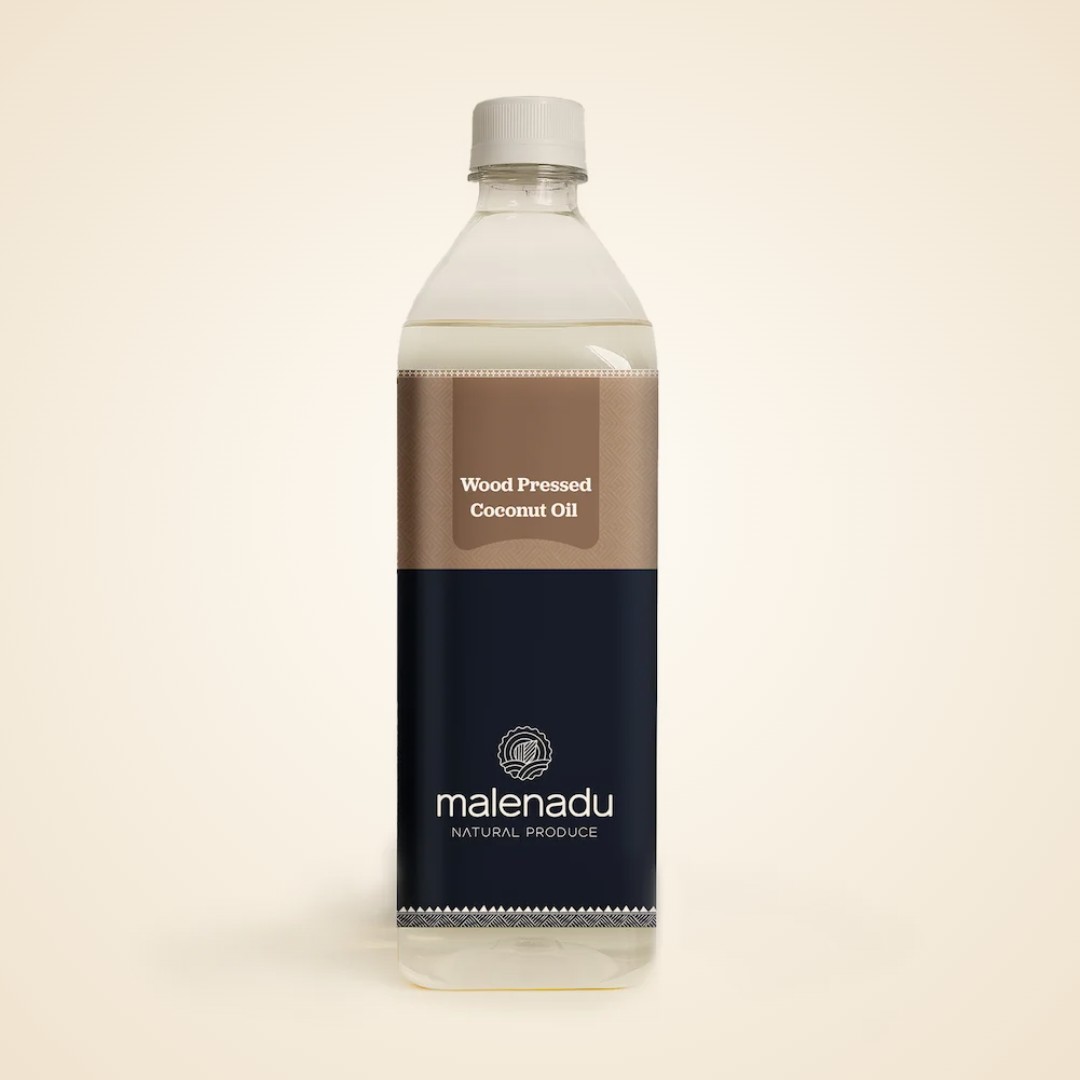
From the malenadu pantry
malenadu Wood Pressed Coconut Oil is pressed from sun dried copra in a wooden ghani. A quarter spoon in each hollow gives guliyappa a crisp golden shell and the coconut smell of a hill kitchen.
How to turn them without breaking
The trick is waiting long enough. If the bottom has not set, the batter clings to the pan and tears.
- Use a thin skewer. A thin steel skewer, a fork or the handle of a spoon all work. A thin bamboo stick is the old way.
- Go in at the edge. Slide the skewer down the side of the hollow, under the ball and lift it over in one move.
- Check the colour. The edge should be golden and the top no longer wet. If it does not move, wait 30 seconds and try again.
- Turn it twice for perfect rounds. Some cooks turn each one a quarter at a time so the batter on top flows down into the hollow and fills out the ball.
What to serve with guliyappa
Guliyappa is best hot from the pan with coconut chutney, sambar or a spoon of chutney powder. These are the usual partners in hill homes.
- Coconut chutney. The everyday choice, with green chilli, a little tamarind and a coconut oil tempering.
- Sambar. A vegetable sambar, the other side Karnataka Tourism names.
- Chutney powder. A spoon of chutney pudi mixed with oil or ghee. Roll the hot paddu in it.
- Hurigadale chutney. A roasted gram chutney that is thicker than coconut chutney and holds well.
- Something hot. Crush one bird eye chilli into the chutney for a sharp hill style heat.
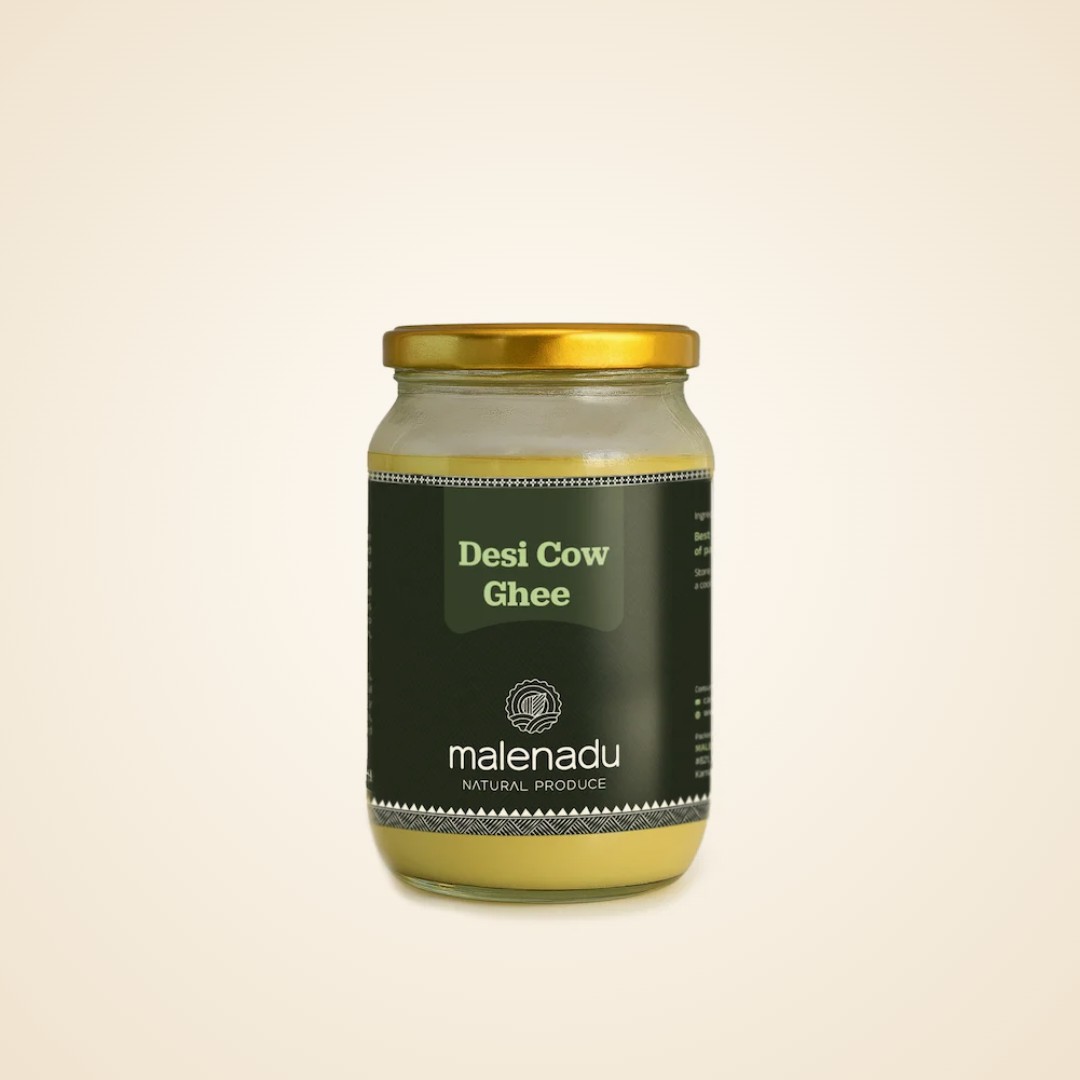
A spoon of ghee on a hot plate of paddu is how many grandmothers serve them to grandchildren.
From the malenadu pantry
malenadu Desi Cow Ghee is hand churned by farmer families from the milk of desi breeds such as Malenadu Gidda. Poured over the hot dumplings or used to cook the sweet kind, it gives a rich, nutty taste.
Sweet guliyappa with banana and jaggery
Sweet guliyappa is made with ripe banana, jaggery, coconut and cardamom ground into a rice batter and cooked in ghee or coconut oil. It is the version for festivals and rainy evenings.
To make about 20 to 24:
- Soak 1 cup raw rice for 3 to 4 hours and drain it.
- Grind it with 2 small ripe bananas (yelakki bale are best), 1/2 cup grated coconut, 1/3 cup liquid jaggery or 1/2 cup grated jaggery, 3 or 4 cardamom pods and a pinch of salt. Use very little water so the batter is thick.
- Rest the batter for 30 minutes. It needs no fermenting.
- Cook as for the savoury kind, with ghee or coconut oil in each hollow, but on a lower flame. Jaggery burns quickly, so give each side 3 to 4 minutes on low heat.
On the Tulu coast a sweet kind is also made with ripe jackfruit pulp in place of banana. Use 1 cup of chopped ripe jackfruit bulbs and adjust the jaggery to how sweet the fruit is.
From the malenadu pantry
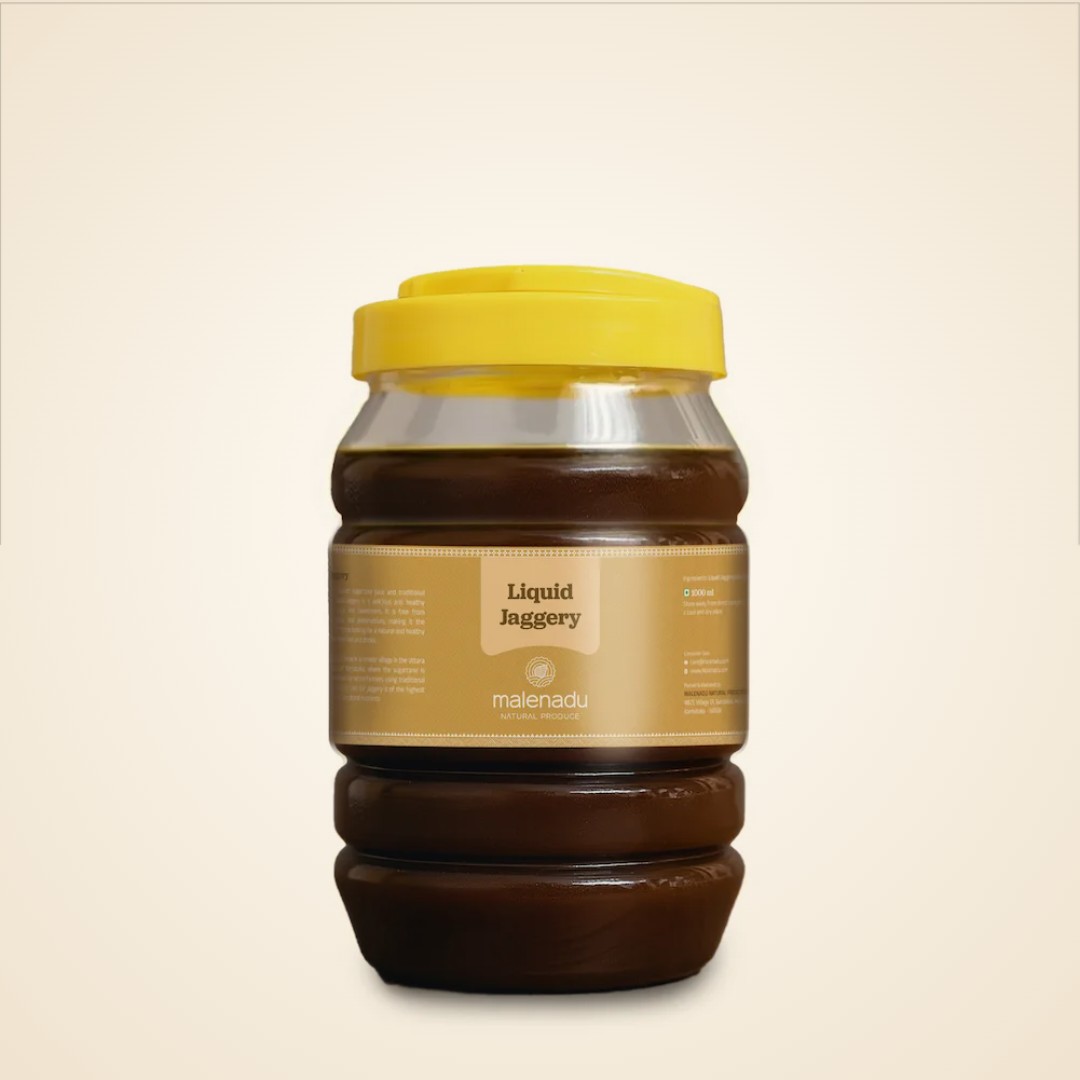
malenadu Liquid Jaggery is joni bella, the runny jaggery of Malenadu kitchens. It grinds straight into the rice and banana batter with no lumps, so the sweetness spreads evenly through every ball.
Do not give jaggery, sugar or honey to babies under one year. For more on jaggery, see our page on jaggery vs sugar vs honey.
Common guliyappa mistakes and how to fix them
Most problems come from thin batter, a pan at the wrong heat or turning too early. This table shows what went wrong and what to do next time.
| Problem | Likely cause | Fix |
|---|---|---|
| Sticks and tears | pan not seasoned, too little oil, turned early | season the pan, add oil, wait for a golden edge |
| Flat, not round | batter too thin | add rice flour or fine rava |
| Raw inside, dark outside | flame too high | cook on medium low with a lid |
| Pale and soft | flame too low or too little oil | raise the heat a little, add a few drops of oil |
| Hard and dense | batter not fermented | ferment longer in a warm place |
| Greasy | too much oil | use 1/4 teaspoon a hollow |
They are best eaten within half an hour, while the outside is crisp. Leftovers keep in a closed box in the fridge for a day. Warm them in the guli pan with a few drops of oil for 2 minutes, turning once. They crisp up again.
Where to go next after guliyappa
For more rice breakfasts from the same kitchens, try thin, lacy neer dosa, soft akki rotti or the leaf steamed kotte kadubu. Our Malenadu food guide brings all the recipes together. Coconut oil and ghee for your guli pan are in the oil and ghee section of our shop.
Bring Malenadu home
Grown and made by Malenadu farmer families, packed by malenadu, a farmer owned producer company in Honnavar.
-
24% OFF
Wood Pressed Coconut Oil
Original price was: ₹899.₹679Current price is: ₹679. -
40% OFF
Desi Cow Ghee
Original price was: ₹1,500.₹899Current price is: ₹899. -
14% OFF
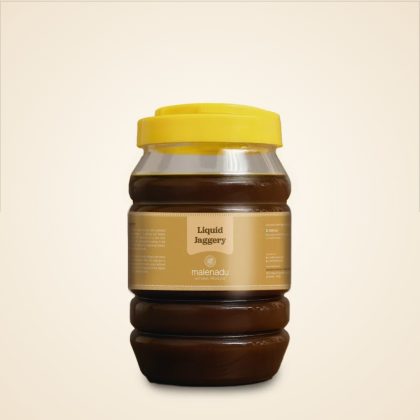
Liquid Jaggery
Original price was: ₹349.₹299Current price is: ₹299. -
19% OFF
Cardamom
Price range: ₹130 through ₹330 -
Bird Eye Chilli
₹200 -
8% OFF
Black Pepper
Price range: ₹165 through ₹299
Frequently asked questions about guliyappa
What is guliyappa made of?
Guliyappa is made of fermented rice and urad dal batter mixed with onion, green chilli, ginger, coconut and curry leaves. It is cooked in a guli pan with a little oil.
Is guliyappa the same as paddu?
Yes. Guliyappa and paddu are two Kannada names for the same dish. It is also called appe, paniyaram in Tamil Nadu and ponganalu in Andhra Pradesh.
Can I make paddu with leftover dosa batter?
Yes. Leftover dosa batter that is a day or two old is ideal. If it is thin, stir in a little rice flour or fine rava to thicken it.
Why is my guliyappa sticking to the pan?
The pan may not be seasoned, there may be too little oil or you may be turning them too early. Wait until the edges are golden before you turn them.
How do you season a cast iron guli pan?
Wash it, dry it on the flame, rub coconut oil into every hollow and heat it on low until it smokes lightly. Repeat three or four times before the first use.
How much oil does guliyappa need?
About 1/4 teaspoon in each hollow before pouring and a few drops after turning. A new iron pan needs a little more at first.
How do you make sweet guliyappa?
Grind soaked rice with ripe banana, jaggery, coconut and cardamom into a thick batter. Cook it in ghee or coconut oil on a low flame because jaggery burns quickly.
Explore more of Malenadu
Malenadu FoodMalenadu FoodRice, kokum, pepper and joni bella from the hills
Malenadu FoodHalasina KadubuSweet jackfruit dumplings steamed in leaves
Malenadu FoodSpices Names in KannadaEnglish, Kannada and Hindi names for a Malenadu kitchen
Malenadu FoodKara KadubuSpicy steamed rice dumplings from Malenadu kitchens
Malenadu FoodKokum SaaruThe sour, peppery everyday rasam of Malenadu homes
Malenadu FoodMenthya TambuliA cool fenugreek and curd side for the first rice course
Malenadu FoodMalenadu FruitsJackfruit, kokum, wild mango and the fruits of the forest
Malenadu FoodKesuvina GojjuThe sweet and sour colocasia leaf relish of the monsoon
Start hereMalenadu in KarnatakaWhere Malenadu is, what the name means