
Malenadu Food
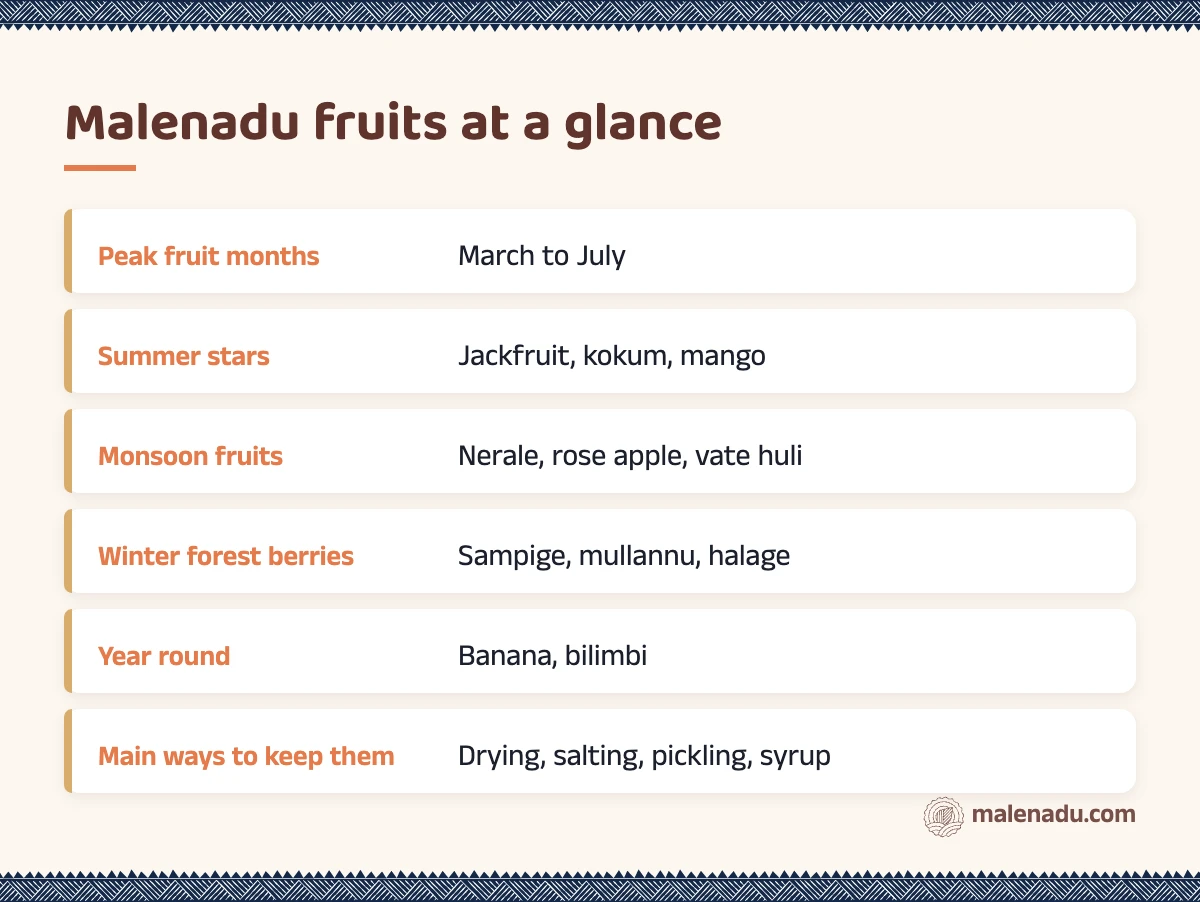
Malenadu fruits follow the seasons of the rain hills: jackfruit and kokum in the hot months, nerale and rose apple as the monsoon arrives, star fruit and bilimbi in the garden through the year and small wild berries in the forest in winter. This page covers 17 of them, when each ripens and how hill families eat or keep them.
On this page
What are Malenadu fruits?
Malenadu fruits are the fruits that grow in the gardens and forests of the Western Ghats hills of Karnataka, from Uttara Kannada and Shivamogga to Chikkamagaluru, Hassan and Kodagu. Some are planted in every thota (garden) next to areca and pepper, like jackfruit, banana and kokum. Others grow wild along streams and forest edges and are picked by whoever knows where to look.
The fruits of Malenadu have three things in common. Many of them are sour, which is why hill cooking leans on fruit rather than tamarind for souring. Most Malenadu fruits are seasonal and come in a rush, so families have old ways of drying, salting and pickling them. Very few of them reach city markets.
To see where these districts sit, use our map of Malenadu districts and taluks. This page sticks to the fruit.
Malenadu fruits season by season: a month by month table
Most Malenadu fruits ripen between March and July, in the hot weeks before the monsoon and its first rains. Winter belongs to small forest berries, while a few garden trees fruit almost all year. The table below is a rough guide, because altitude, rain and the tree itself can shift any of these by a few weeks.
| Month | What is in season |
|---|---|
| January | Sampige and mullannu berries, halage, bananas |
| February | Star fruit, sampige, halage, first bilimbi |
| March | Tender appe midi for pickle, first kokum, raw jackfruit, star fruit, uppage |
| April | Kokum, jackfruit, mango, nerale, kavale |
| May | Kokum and jackfruit at their peak, nerale, rose apple, hebbalasu, pineapple |
| June | Ripe jackfruit, rose apple, hebbalasu, vate huli, pineapple |
| July | Last jackfruit, vate huli, pineapple |
| August | Pineapple, star fruit, bilimbi |
| September | Star fruit, kavale, bilimbi |
| October | Kavale, bilimbi, bananas |
| November | Bilimbi, bananas |
| December | Sampige and mullannu berries, bilimbi, bananas |
This calendar of seasonal fruits in Karnataka’s hills runs alongside the farm year. For pepper, areca and paddy in the same months, see the Malenadu crop calendar.
Malenadu jackfruit: halasu from tender to ripe
Malenadu jackfruit, halasu (ಹಲಸು) in Kannada, is the biggest and most used of all Malenadu fruits. Almost every old house has a tree or two. The season runs roughly from March to July and nothing from the tree is wasted.
Families sort jackfruit into two broad kinds. One has firm, crisp bulbs that hold their shape. The other has soft, very sweet and slippery bulbs that melt when ripe.
- Tender fruit: cut green and cooked as palya (a dry stir fry with coconut).
- Raw mature fruit: sliced and fried as chips. It is also ground and rolled into happala (papad) that dries in the sun for the rains.
- Ripe fruit: eaten fresh or ground into sweet halasina kadubu steamed in leaves, payasa and sweet dose.
- Seeds: roasted in the hearth on rainy evenings or added to saaru.
- Leaves: pinned into cups called kotte for steaming kadubu.
Jackfruit chips in the hills are fried in coconut oil, which gives them their smell. The same oil is rubbed on hands and knives before cutting a jackfruit so the white sticky latex wipes off.
Hebbalasu: the wild jack
Hebbalasu (Artocarpus hirsutus) is a wild cousin of jackfruit with small spiky fruits that ripen around May and June. The sweet orange bulbs are eaten raw. It is one of the Malenadu fruits that has become hard to find as old trees are cut.
Kokum fruit (murugalu): the red fruit of summer
Kokum fruit is the round, deep purple red fruit of Garcinia indica, called murugalu (ಮುರುಗಲು) in Kannada. The ICAR Indian Institute of Spices Research notes that it is native to the Western Ghats and ripens between March and May. Its pulp is made into a cooling drink while its rind is dried for cooking.
A fresh kokum fruit is about the size of a small lime. Cut it open and you find a thick red rind around white, juicy pulp and a few seeds. Children in Malenadu eat the sour sweet pulp straight from the fruit and end up with stained fingers.
Here is how the fresh kokum fruit is used in hill homes:
- Fresh pulp: eaten as it is. It can also be squeezed into water with salt and jaggery for a summer drink.
- Syrup: the fresh rind is layered with sugar or jaggery in a jar. The sun draws out a dark red syrup that is diluted with water through the year.
- Dried rind: halves are spread on mats in the hot sun until leathery and dark. This is the murugalu that sours kokum saaru and fish curry all year.
- Seeds: the seeds give a solid fat that some families still render at home.
The drying happens in April and May, when the sun is strongest and the rains have not started. Of all Malenadu fruits, kokum is the one a family cannot afford to miss, because without those weeks there is no dried kokum until next summer.
From the malenadu pantry
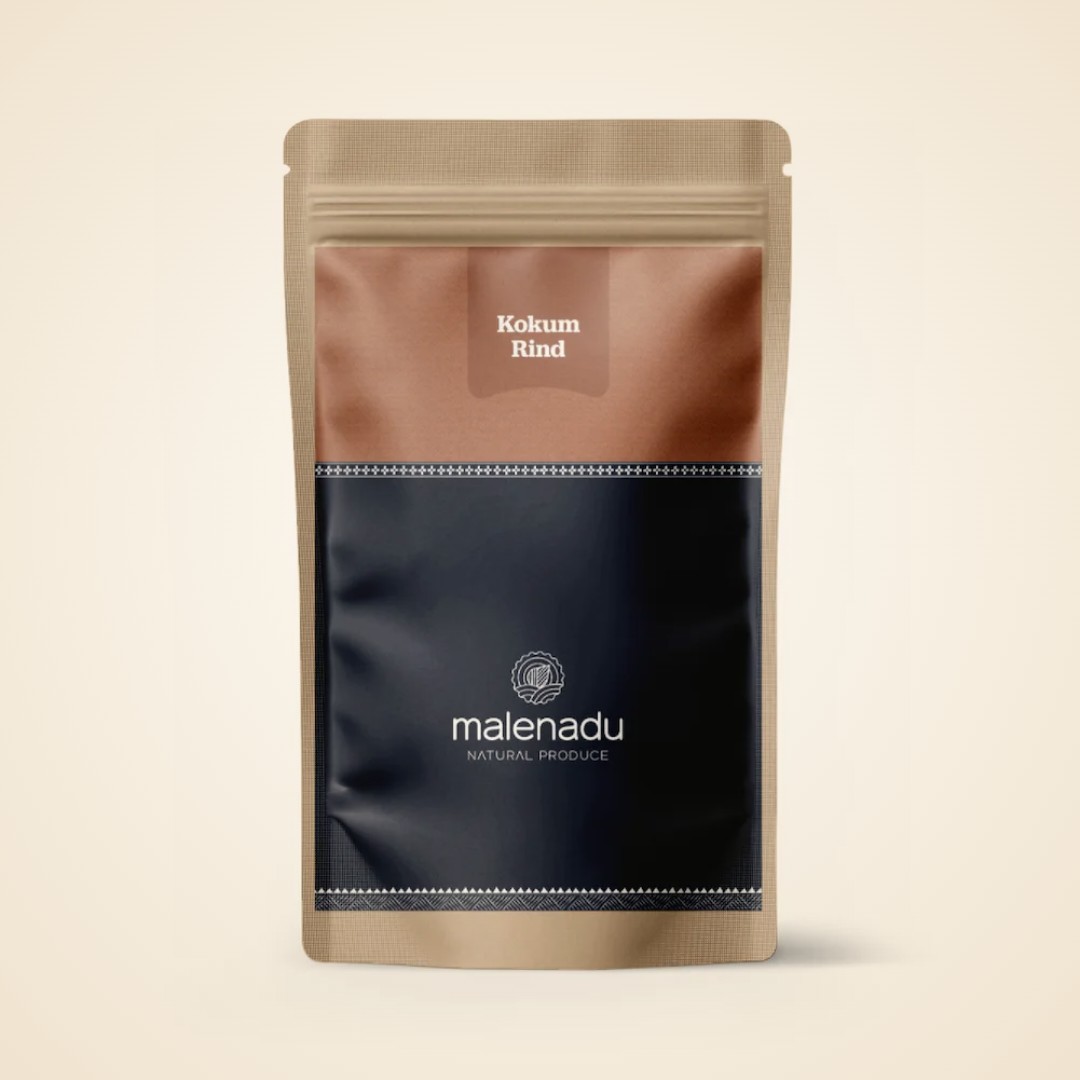
Our Kokum Rind is this same summer fruit, sun dried in Malenadu. Soak a few pieces and you have the red, fruity sour for saaru, gojju or a cool drink.
Appe midi mango and the wild mangoes of the hills
The appe midi mango is a small wild mango of Malenadu that is picked whole while it is still tender and pickled before the stone forms. “Midi” means a tender young mango in Kannada. The trees grow wild in the forests and along streams of Uttara Kannada and Shivamogga. They are picked around March.
Each tree has its own smell and families know their trees by it. Some appe midi trees smell of cumin while others smell of camphor. The appe midi pickle page explains how the pickle is made and kept for years.
Ripe wild mangoes come in April and May. They are small and fibrous with a sharp sweet taste. In the hills they are squeezed and sucked rather than cut. Ripe ones also go into a sweet and sour mango gojju or saaru, one of the best loved summer dishes made from Malenadu fruits.
Nerale (jamun) and rose apple: Malenadu fruits of the early monsoon
Jamun, called nerale (ನೇರಳೆ) in Kannada, is the small purple black fruit of Syzygium cumini that ripens in the hills around April and May. Trees grow tall near streams and temple tanks. The fruit falls when ripe, so mornings under a nerale tree mean a purple carpet and a purple tongue.
Most people eat nerale fresh with a pinch of salt, which takes off the dry, puckering edge. Children are sent up the tree. Ripe nerale does not keep, so whatever is not eaten in a day or two goes to the neighbours.
Pannerale: the rose apple
Pannerale (ಪನ್ನೇರಳೆ) is the rose apple, Syzygium jambos, a cousin of jamun. Its pale yellow fruits ripen around May and June. They are crisp and hollow, with a smell like rose water. It is a backyard tree rather than a forest one and is eaten fresh.
Vate huli: the monkey jack fruit
Vate huli is the monkey jack fruit, Artocarpus lacucha, a small relative of jackfruit with a knobbly round fruit that turns yellow when ripe. It grows along streams. The trees flower in the cool months and the fruit is gathered through summer into the early monsoon.
The ripe monkey jack fruit is sweet and sour and is eaten fresh. Its real job among Malenadu fruits, though, is souring. The fruit is cut into slices and dried in the sun until leathery. Those dried slices are what hill cooks mean by vate huli.
In Uttara Kannada and Shivamogga homes, dried vate huli sours gojju, saaru and chutneys with a deeper, rounder tang than kokum. Many cooks keep both: kokum for colour and vate huli for depth.
From the malenadu pantry
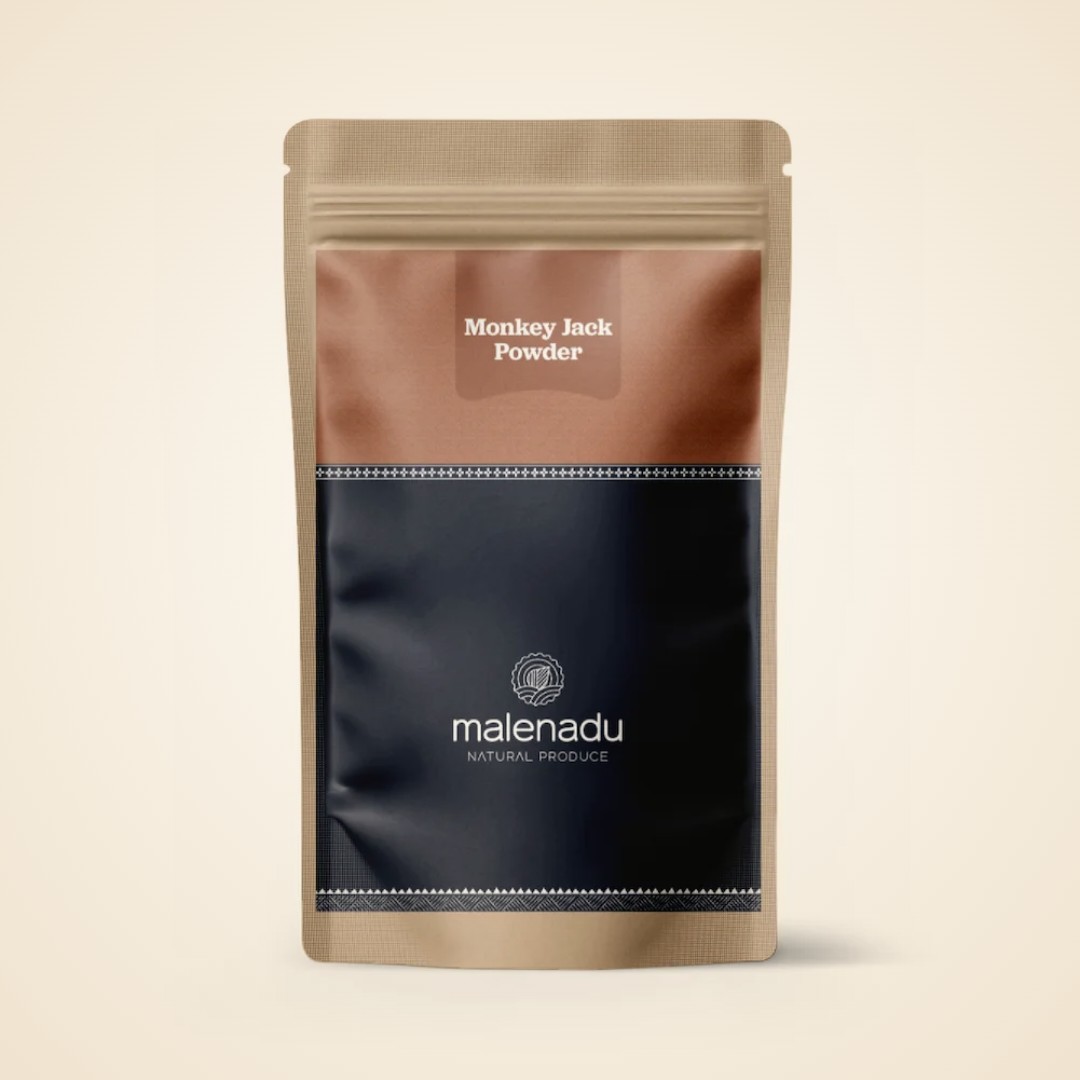
Our Monkey Jack Powder is dried vate huli, ground fine so it can go straight into the pot without soaking. A teaspoon gives saaru or gojju the old Malenadu sour.
Sour garden fruits of Malenadu: bilimbi and star fruit
Bilimbi and star fruit are two related sour Malenadu fruits that grow in many gardens. Neither is native to India, but both have been grown here for generations and have Kannada names of their own.
Bilimbi (bimbli)
Bilimbi, called bimbli in Kannada, has small green finger shaped fruits that grow straight out of the trunk. According to ICAR’s Indian Horticulture, the tree flowers in February and March and then fruits almost continuously until December. It is too sour to eat raw, so it goes into pickles, chutneys and fish curries in place of tamarind.
Star fruit (darehuli)
Star fruit, darehuli (ದಾರೆಹುಳಿ) in Kannada, is the ridged yellow fruit that makes a star when sliced. The same ICAR article says the fruits mature in August and September and again in February and March. Sweet types are eaten fresh. Sour types are sprinkled with salt and chilli powder or cooked into chutney.
Banana and pineapple: the everyday Malenadu fruits
Banana and pineapple are the most common cultivated Malenadu fruits. Bananas grow in almost every areca garden, while pineapple is a bigger crop in a few taluks.
Banana (bale)
Banana plants line the edges of areca gardens across Malenadu and fruit through the year, the only Malenadu fruits you can count on in every month. Small, sweet elakki bale is the favourite for eating. Larger cooking bananas are used raw for palya and chips. The stem and the flower also go into palya and the leaves become plates for every festival meal.
Pineapple (ananas)
Pineapple grows widely on the slopes of Shivamogga district, especially in Soraba and Sagara taluks. It is also grown in parts of Uttara Kannada. Under natural conditions pineapple in India is harvested from May to August, though staggered planting brings fruit to market for much of the year. In the hills it is eaten fresh with salt and chilli or cooked into a sweet and sour pineapple gojju.
Wild fruits of the Western Ghats: kavale, sampige and more
The wild fruits of the Western Ghats are the forest snacks every Malenadu child grew up picking: small berries, sour pods and sticky drupes that never reach a shop. A Deccan Herald report on forest fruits notes that more than 200 wild fruit species have some human use in Uttara Kannada alone.
These are some of the wild Malenadu fruits that local people still eat:
| Kannada name | Botanical name | Rough season | How it is eaten |
|---|---|---|---|
| Kavale (kouli) | Carissa carandas | April to May, September to October | Ripe berries raw, tender ones pickled |
| Sampige hannu | Flacourtia montana | December to February | Ripe red berries raw |
| Mullannu | Ziziphus species | December to March | Small wild ber, raw |
| Halage | Elaeagnus conferta | January to March | Raw, sour and juicy |
| Ranjalu | Mimusops elengi | March to May | Ripe orange fruit, raw |
| Hebbalasu | Artocarpus hirsutus | May to June | Sweet bulbs raw, seeds roasted |
| Uppage | Garcinia gummi-gutta | March to May | Rind dried for souring |
Local tip
Never eat a wild fruit that a local person has not shown you. Some forest fruits that look like berries are not edible and a few can make you sick. Walk with someone from the village and taste only what they eat.
Many of these trees are disappearing as forest edges are cleared. Their seasons are short and the fruit does not travel. The only way to taste most wild Malenadu fruits is to be in the hills at the right time.
How are Malenadu fruits preserved?
Malenadu fruits are preserved by drying in the summer sun, salting, pickling and cooking into syrup, because most of them ripen at once and the long monsoon follows. A house that does its summer work right eats from its jars until the next March.
| Method | Fruits | What it makes |
|---|---|---|
| Sun drying | Kokum, vate huli, uppage, jackfruit | Souring rind, dried slices, happala |
| Salting | Tender mango, bilimbi | Salt soaked fruit for pickle |
| Pickling | Appe midi, tender mango, kavale, bilimbi | Spicy pickles that keep for months |
| Syrup and paste | Kokum, ripe jackfruit | Kokum syrup, thick jackfruit paste |
| Frying | Raw jackfruit, raw banana | Chips fried in coconut oil |
Some families also cook ripe jackfruit pulp down with jaggery into a thick, dark sweet paste that keeps for months. Spoons of it go into payasa and kadubu in the rains. Many families sweeten kokum syrup and jackfruit paste with liquid jaggery instead of sugar.
From the malenadu pantry
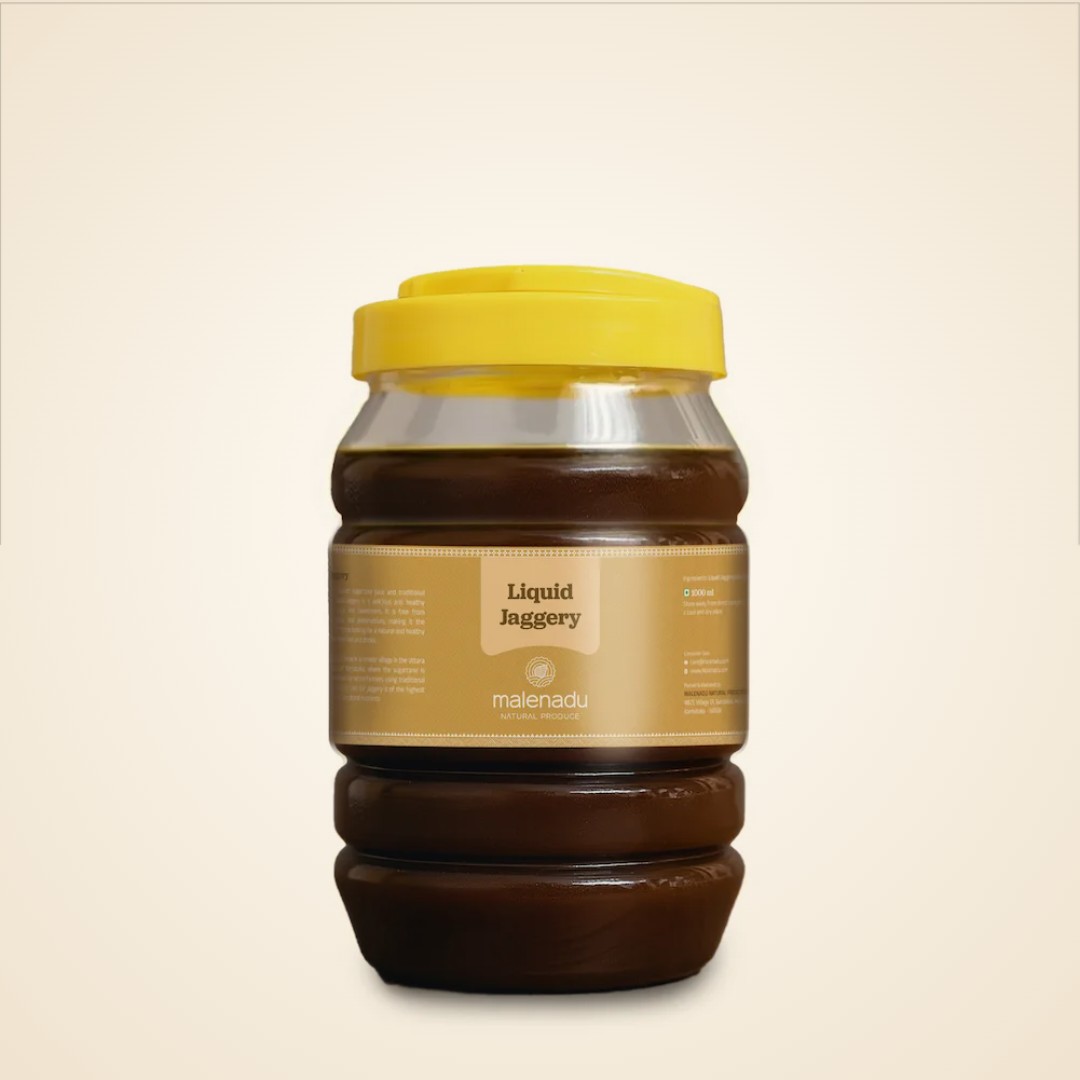
Our Liquid Jaggery, joni bella in Kannada, stirs into kokum drinks and jackfruit payasa without lumps. It has the soft caramel taste that hill cooks reach for with summer fruit.
For the Kannada words used on this page, such as murugalu, vate huli and halasu, see our list of spice and ingredient names in Kannada.
When should you visit Malenadu for its fruits?
Visit in April or May if you want to taste the most Malenadu fruits in one trip. Jackfruit, kokum, mango and nerale all overlap then. Roadside stalls sell them and the hills stay pleasant even when the valleys are hot.
Early June adds rose apple, hebbalasu and the last ripe jackfruit, though leeches and slippery paths come with the first rains. December and January bring the winter forest berries and the most comfortable weather. Our guide on getting from Bangalore to Malenadu has distances and routes to the main fruit growing towns.
Local tip
In summer, ask your homestay host for a jackfruit meal. Many families will cook palya, chips and kadubu from the same fruit. It is the easiest way to taste Malenadu fruits the way hill homes cook them.
Taste more of Malenadu food
The Malenadu fruits on this page show up all through the hill kitchen, from kokum saaru to jackfruit kadubu. Start with our Malenadu food guide for the full meal and its seasons. Our kokum rind and monkey jack powder bring the two great sour fruits of the hills to your kitchen all year.
Bring Malenadu home
Grown and made by Malenadu farmer families, packed by malenadu, a farmer owned producer company in Honnavar.
-
17% OFF
Kokum Rind
Original price was: ₹240.₹200Current price is: ₹200. -
6% OFF
Monkey Jack Powder
Original price was: ₹399.₹375Current price is: ₹375. -
14% OFF
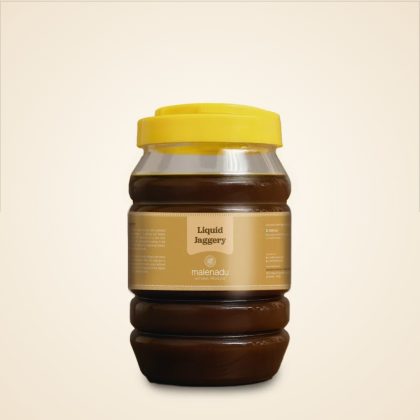
Liquid Jaggery
Original price was: ₹349.₹299Current price is: ₹299. -
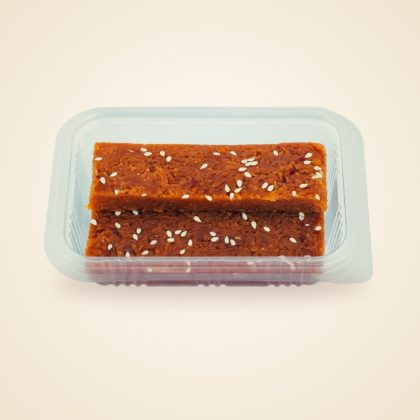
Coconut Jaggery Burfi
₹120 -
29% OFF
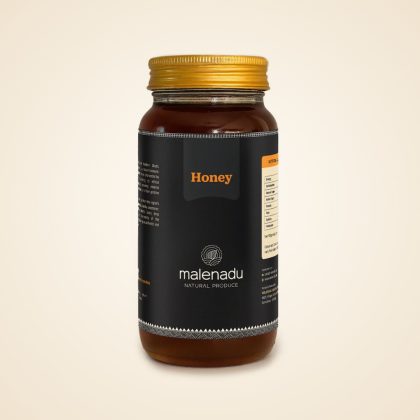
Honey
Price range: ₹249 through ₹449 -
24% OFF
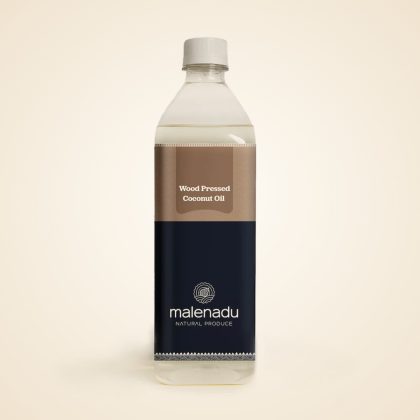
Wood Pressed Coconut Oil
Original price was: ₹899.₹679Current price is: ₹679.
Frequently asked questions about Malenadu fruits
What are the main fruits of Malenadu?
The main Malenadu fruits are jackfruit, kokum, wild mango, nerale (jamun), vate huli (monkey jack), banana and pineapple. Bilimbi, star fruit, rose apple and many small forest berries grow too.
When is the best season for Malenadu fruits?
March to July is the peak for Malenadu fruits, with jackfruit, kokum and mango in the hot months and nerale and rose apple as the monsoon starts. Small forest berries come in winter.
What is kokum called in Kannada?
Kokum is called murugalu in Kannada. The fresh fruit ripens between March and May and its rind is dried for cooking.
What is vate huli?
Vate huli is the monkey jack fruit, Artocarpus lacucha. In Malenadu it is sliced and sun dried and used to sour saaru, gojju and chutneys.
What is appe midi?
Appe midi is a small wild mango of Malenadu that is picked whole while tender and pickled. Each tree has its own smell, some like cumin and some like camphor.
Can you eat kokum fruit raw?
Yes. The white pulp inside a ripe kokum fruit is eaten fresh in Malenadu and tastes sour and slightly sweet. The rind is usually dried or made into syrup.
Which wild Malenadu fruits can you eat?
Common wild Malenadu fruits include kavale (Carissa), sampige (Flacourtia), mullannu (wild ber), halage, ranjalu and hebbalasu. Eat wild fruit only when a local person shows you which ones are safe.
Explore more of Malenadu
Malenadu FoodMalenadu FoodRice, kokum, pepper and joni bella from the hills
Malenadu FoodHalasina KadubuSweet jackfruit dumplings steamed in leaves
Malenadu FoodSpices Names in KannadaEnglish, Kannada and Hindi names for a Malenadu kitchen
Malenadu FoodKara KadubuSpicy steamed rice dumplings from Malenadu kitchens
Malenadu FoodKokum SaaruThe sour, peppery everyday rasam of Malenadu homes
Malenadu FoodMenthya TambuliA cool fenugreek and curd side for the first rice course
Malenadu FoodKesuvina GojjuThe sweet and sour colocasia leaf relish of the monsoon
Malenadu FoodAppe Midi PickleThe whole tender mango pickle of Malenadu homes
Start hereMalenadu in KarnatakaWhere Malenadu is, what the name means