
Malenadu Culture
Malenadu festivals follow the farm year: quiet worship in the monsoon, thanksgiving to the earth as the paddy ripens, lamps and oil baths at Deepavali, harvest songs in Kodagu and huge temple fairs in the dry months. This guide walks through 15 celebrations month by month, explains what makes each one special in the hills and lists the foods cooked for them.
On this page
What are the main Malenadu festivals?
The main Malenadu festivals are the big Hindu festivals shared across Karnataka, such as Sankranti, Yugadi, Ganesha Chaturthi and Deepavali, plus farming festivals found mainly in these hills, such as Bhoomi Hunnime and Huttari. On top of these come the temple jatres and car festivals that fill the dry months.
What makes Malenadu festivals different is the farm. Almost every celebration is tied to a stage of the paddy, areca or pepper crop. Many rituals happen in the field or the cattle shed rather than only in the prayer room. Here are the 15 celebrations this guide covers:
- Makara Sankranti
- Maha Shivaratri
- Yugadi
- Ramanavami
- The Sirsi Marikamba jatre and other temple fairs
- Nagara Panchami
- Gowri and Ganesha Chaturthi
- Kailpodh in Kodagu
- Navaratri at Sringeri, Kollur and Horanadu
- Bhoomi Hunnime
- Kaveri Sankramana at Talakaveri
- Deepavali and Bali Padyami
- Tulasi habba
- The Huttari festival in Kodagu
- The Yakshagana season
If you are new to the region, our hub on Malenadu culture introduces the communities who celebrate them.
Malenadu festivals month by month
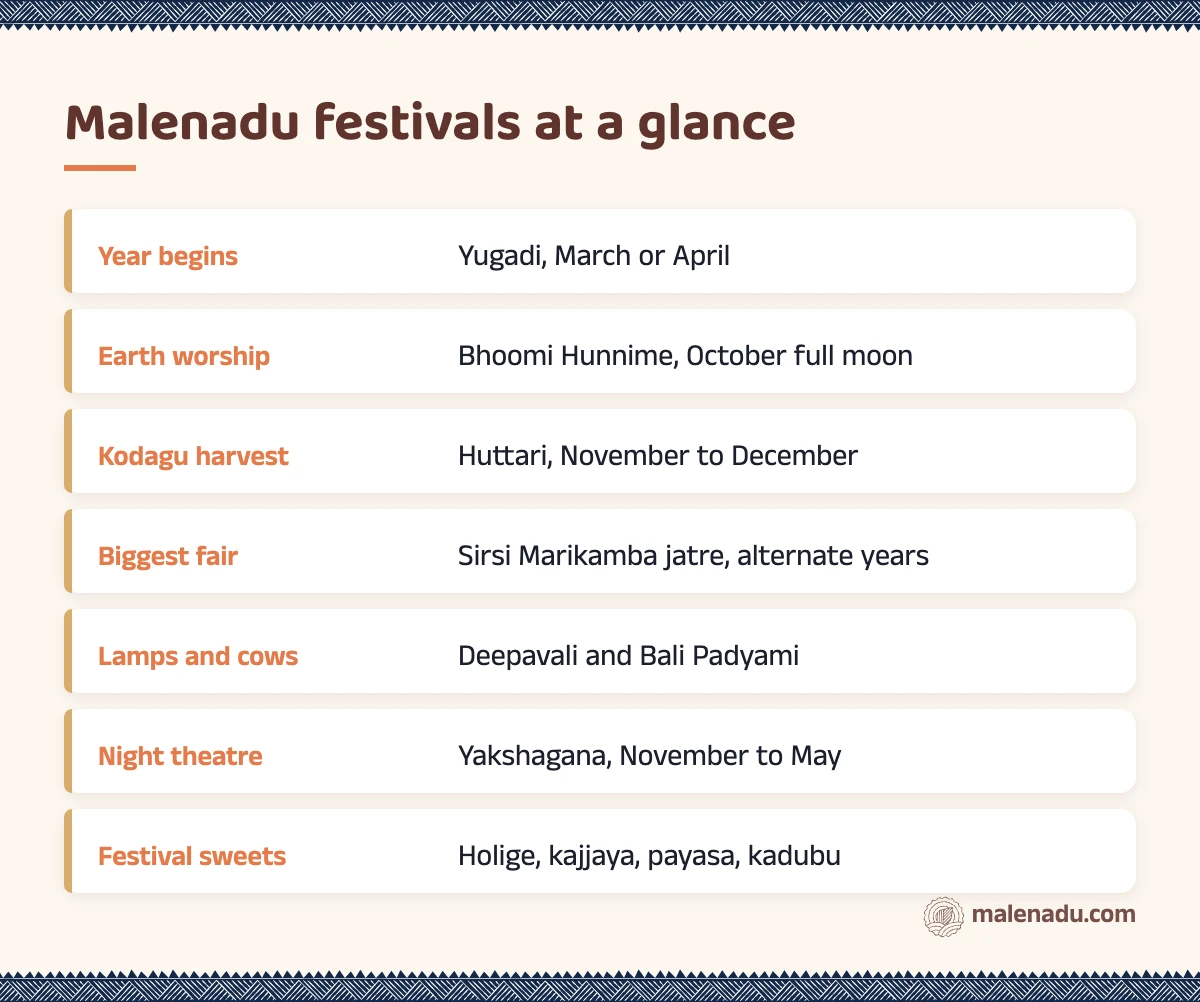
The table below places Malenadu festivals on the calendar. Most follow the Hindu lunar calendar, so the dates move by a few weeks each year. Check a local calendar before you travel.
| Month (approx.) | Festival | Where it is strongest | Food on the plate |
|---|---|---|---|
| January | Makara Sankranti | Everywhere | Ellu bella (sesame and jaggery), sugarcane |
| February to March | Maha Shivaratri | Shiva temples, Gokarna on the coast | Fasting, then a simple meal |
| March to April | Yugadi | Everywhere | Bevu bella (neem and jaggery), holige |
| March to April | Ramanavami | Rama temples, village bhajans | Panaka, kosambari, buttermilk |
| Dry season, alternate years | Sirsi Marikamba jatre | Sirsi, Uttara Kannada | Fair snacks, festival meals at home |
| July to August | Nagara Panchami | Snake shrines, every village | Steamed kadubu in turmeric leaves |
| August to September | Gowri and Ganesha | Everywhere | Kadubu, modaka, payasa |
| 3 September | Kailpodh | Kodagu | Festive Kodava meal |
| September to October | Navaratri | Sringeri, Kollur, Horanadu | Payasa, festival meals |
| October | Bhoomi Hunnime | Shivamogga, Uttara Kannada | Many dishes carried to the field |
| Mid October | Kaveri Sankramana | Talakaveri, Bhagamandala, Kodagu | Dosa and pumpkin curry |
| October to November | Deepavali | Everywhere | Kadubu, holige, kajjaya, payasa |
| November | Tulasi habba | Every home with a tulasi plant | Sweets and fruit offered |
| November to December | Huttari | Kodagu | Thambittu, new rice |
| November to May | Yakshagana season | Uttara Kannada and the coast | Snacks at all-night shows |
You can match this with our Malenadu crop calendar to see how closely Malenadu festivals follow planting and harvest.
Winter and spring: Sankranti to the jatres
The first Malenadu festivals of the calendar year come in the cool, dry months, when the harvest is in and people have time and money to celebrate.
Makara Sankranti in January marks the sun’s move north. Families exchange ellu bella, a mix of sesame, jaggery, coconut and groundnut. Cattle are washed and decorated in many villages.
Maha Shivaratri in February or March is a night of fasting and worship at Shiva temples. In Uttara Kannada, the Mahabaleshwara temple at Gokarna draws huge crowds.
Yugadi, the Kannada new year, comes in March or April. Everyone eats a little bevu bella (neem flowers and jaggery) for the bitter and sweet of the year ahead. Holige (sweet flatbread) is the festival treat.
Ramanavami follows soon after, with panaka (a cool jaggery drink with pepper and cardamom) and kosambari (soaked lentil salad) handed out at temples and street corners.
What happens at a Malenadu jatre?
A Malenadu jatre is a temple fair, usually tied to a car festival (rathotsava) or the annual feast of a village goddess. Stalls sell bangles, toys, steel vessels, farm tools and snacks, families come from far villages and the deity is taken out in procession.
The best known is the Sirsi Marikamba jatre, held once every two years and drawing devotees from all over Karnataka. It is usually held in the dry season around March. Smaller jatres, the most social of all Malenadu festivals, run in almost every taluk between December and May, so any Malenadu trip in these months will likely cross one.
Local tip
If you visit a jatre, go early in the morning or late at night. The afternoon crowd is heaviest and the heat is at its worst. Carry cash in small notes for the stalls.
Monsoon festivals: Nagara Panchami and Ganesha
Monsoon Malenadu festivals are quieter and mostly held at home, because the rain keeps people indoors and the fields need all their time.
Nagara Panchami in July or August honours the snake gods. Families pour milk at a snake mound (huttu) or a stone naga shrine, often in a sacred grove. Many Malenadu homes steam sweet kadubu wrapped in fresh turmeric leaves.
Gowri and Ganesha Chaturthi in August or September is one of the biggest family festivals. Gowri is worshipped first by women, then Ganesha the next day. Kitchens make kadubu, modaka (sweet stuffed dumplings) and payasa with jaggery and cardamom. In the rain the Ganesha idols are often small and kept at home, with larger public idols in towns.
Kodagu festivals: Kailpodh, Kaveri Sankramana and Huttari
Kodagu festivals belong to the Kodava people and are among the most distinctive Malenadu festivals, tied closely to paddy, the river Kaveri and the clan house. Three stand out, all described well in this Deccan Herald guide to Kodava festivals.
Kailpodh is held on 3 September, after rice seedlings are planted. Traditional weapons, war knives and guns, are cleaned, decorated with flowers and worshipped, followed by games such as coconut shooting.
Kaveri Sankramana falls in mid October, on the first day of the month of Tula, when holy water rises at the source of the Kaveri at Talakaveri. Devotees bathe at Bhagamandala. Kodava homes worship a pot of water as the river goddess and eat a simple meal of dosa and pumpkin curry.
Huttari festival: the new rice of Kodagu
The Huttari festival (Puttari, “new rice”) is the grandest of Kodagu festivals, held on the full moon of the Kodava month of Birchyaar, usually in November or December. After dusk, families walk to the paddy field with a lamp, a man cuts the first sheaves while everyone calls out “Poli, poli, deva!” and the new rice is carried home to be tied around the house.
The festival dish is thambittu, made from fried rice flour, banana, sesame and coconut. Huttari is also a time for Kodava songs and dances on the village green. Of all Malenadu festivals, it is the one Kodavas working in cities most try to come home for.
What is Bhoomi Hunnime?
Bhoomi Hunnime is the farmers’ festival of Mother Earth (Bhoomi tayi), held on the full moon of the month of Ashwayuja, usually in October, across the hill taluks of Shivamogga and Uttara Kannada. At this time the paddy is forming grain. Farmers say the earth is pregnant, so the festival is treated like a seemantha, the baby shower given to an expectant mother. No day shows the farm heart of Malenadu festivals more clearly.
The night before, families cook many dishes, often with vegetables from their own land. In the morning the head of the house carries the food to the field in a bamboo or cane basket, worships the earth, places an offering (ede) in the paddy and shares food with the crows. Then the whole family sits in the field and eats together. Some areca farmers dress their trees in a sari and ornaments for the day.
Among the Deevaru (Idiga) community of the Sagara, Thirthahalli and Hosanagara side, the basket is the famous bhoomanni butti, painted with Hase Chittara designs. In the Havyaka calendar the day is also called Bhoomi Pooja. Farmers avoid digging or ploughing the land.
Bhoomi Hunnime is one of the Malenadu festivals most worth seeing as a visitor, but it is a family ritual in private fields. If a host family invites you, go. Otherwise enjoy it from the roadside.
How is Deepavali in Malenadu different?
Deepavali in Malenadu is a farm festival as much as a festival of lights, with the cows, the fields and the bath pot at its centre. It is the longest of the Malenadu festivals, running over three or four days in October or November.
- Filling water. On the eve of Naraka Chaturdashi the big hande (bath pot) is cleaned, decorated and filled with fresh water.
- Oil bath. Before dawn on Naraka Chaturdashi, elders apply oil and everyone has a hot bath, then wears new clothes.
- Lakshmi puja. On the new moon, homes and shops worship Lakshmi.
- Bali Padyami. The next morning cows are washed, decorated and fed a share of the festival meal (gou puje). In the evening families worship King Bali (Balindra) with lamps. Many carry lamps or torches to their fields.
The house-to-house singers of Deepavali in Malenadu are called antige pintige. Groups carry a lamp from the village temple and sing at each home for three nights. Households give rice, money and sweets in return.
Deepavali kitchens are full of kadubu: kayi kadubu stuffed with coconut and jaggery, kotte kadubu steamed in jackfruit leaf cups and sweet pumpkin kadubu. For the oil bath many homes use coconut oil, such as our wood pressed coconut oil.
Navaratri, Tulasi habba and the Yakshagana season
The late part of the year brings three very different Malenadu festivals: a great temple festival, a quiet home festival and a whole season of night theatre.
Navaratri in September or October is celebrated at the big temple towns of the hills. Sringeri dresses Goddess Sharada in a different form each day, Kollur Mookambika draws pilgrims from across South India and Horanadu Annapoorneshwari is crowded through the nine nights.
Tulasi habba comes a few days after Deepavali, on the twelfth day of the bright half of Kartika. The tulasi plant in the courtyard is decorated with lamps and amla branches and symbolically married, which marks the start of the wedding season.
The Yakshagana season begins after the rains, roughly from Deepavali until May. Touring troupes perform all night at temple fairs and village grounds. In the monsoon the seated form called talamaddale keeps the art alive indoors.
Foods and sweets of Malenadu festivals
Foods and sweets of Malenadu festivals are built on rice, coconut, jaggery, ghee and cardamom. Most families cook them only for the festival day. These are the ones you will meet most often:
| Sweet or dish | What it is | When it is made |
|---|---|---|
| Holige | Flatbread stuffed with jaggery and lentil or coconut | Yugadi, Deepavali, weddings |
| Kajjaya | Fried sweet of rice flour and jaggery | Deepavali, jatres |
| Payasa | Milk or coconut milk pudding with jaggery | Almost every festival |
| Kadubu | Steamed rice dumplings, sweet or savoury | Ganesha, Nagara Panchami, Deepavali |
| Ellu bella | Sesame, jaggery and coconut mix | Sankranti |
| Thambittu | Rice flour, banana, sesame and coconut | Huttari |
| Coconut jaggery burfi | Coconut cooked with jaggery into squares | Any festival plate |
At most Malenadu festivals holige is served warm with a spoon of ghee on top. Our desi cow ghee is hand churned by farmer families, the way festival ghee has always been made in the hills. Payasa is not payasa without a few crushed pods of green cardamom.
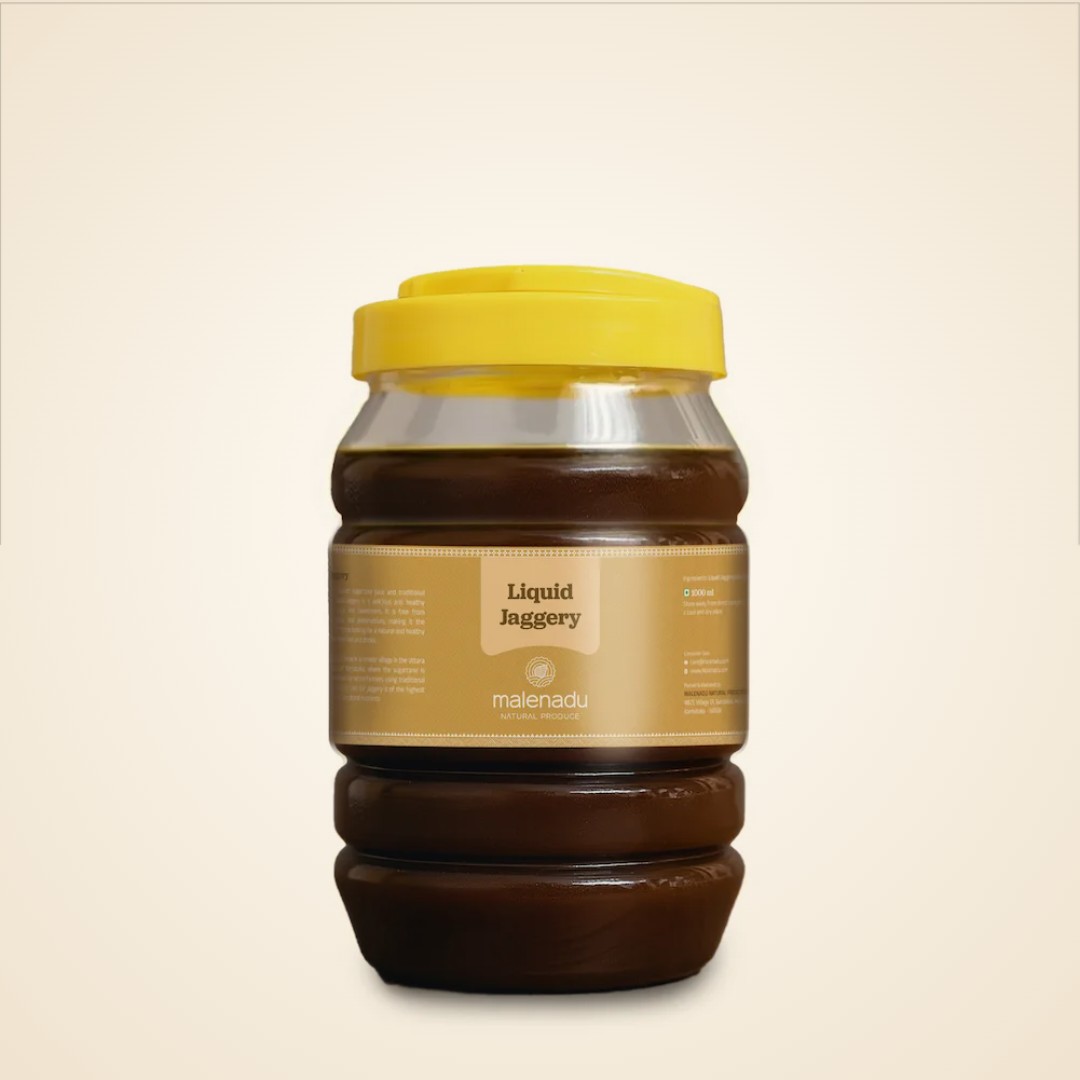
Jaggery runs through the kitchen at all Malenadu festivals. Joni bella (liquid jaggery) goes over dose and kadubu on festival mornings and into many payasa recipes. Our liquid jaggery is the same soft, pourable jaggery.
From the malenadu pantry
Joni bella as hill families know it, ready to pour over festival kadubu, stir into payasa or serve beside holige. It saves the work of melting block jaggery on a busy festival morning.
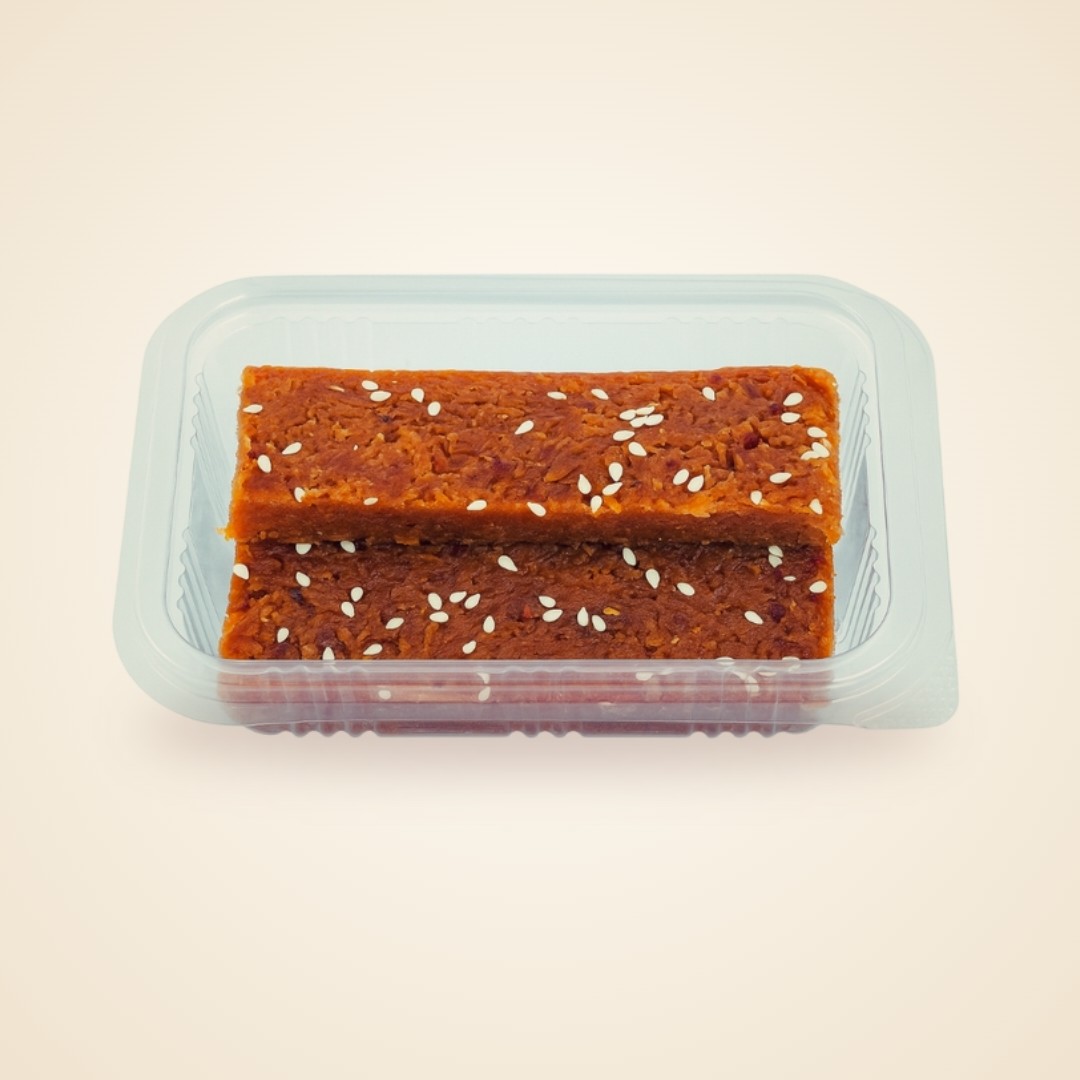
The sweet that turns up on almost every plate at Malenadu festivals is coconut cooked with jaggery. Our coconut jaggery burfi is made the home way, which makes it an easy addition to a Deepavali or Yugadi plate if you are short of time.
From the malenadu pantry
Soft squares of coconut and jaggery made the way a Malenadu kitchen makes them for guests on festival days. Put a few on the puja plate, then share the rest with visitors.
Gifting ideas for Malenadu festivals
The simplest gifts for Malenadu festivals are the things a hill family would give: sweets, jaggery, spices and a little ghee, carried in a cloth or jute bag rather than plastic. Visiting relatives at Deepavali or Yugadi with something from your own farm is an old habit.
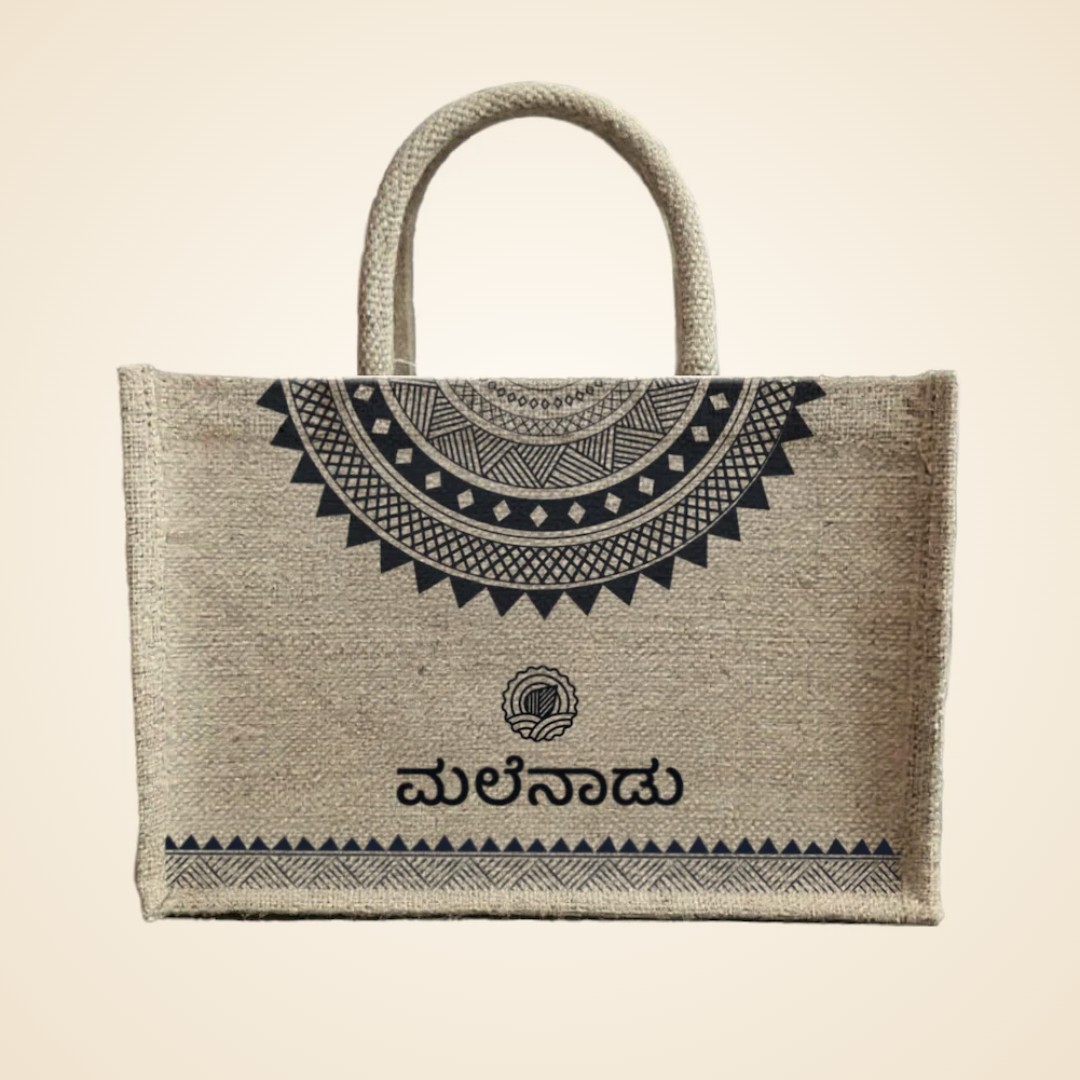
For more gifting ideas for Malenadu festivals, read our post on Deepavali gift ideas in a jute bag. A Kannada printed small jute bag with a box of burfi, a bottle of joni bella and a pack of pepper makes a gift that feels like the hills.
From the malenadu pantry
A plain jute bag printed in Kannada, just the right size for a few festival treats. Fill it with burfi, jaggery and spices for relatives. Later it becomes a market bag.
Plan your visit around a festival
The best way to see Malenadu festivals is to time a trip with one: Huttari in Kodagu, a Malenadu jatre in the dry months or a village Deepavali. Read about the traditional houses where these festivals happen, learn a few words from our guide to Malenadu languages and plan the trip with our travel guide.
Bring Malenadu home
Grown and made by Malenadu farmer families, packed by malenadu, a farmer owned producer company in Honnavar.
-
Coconut Jaggery Burfi
₹120 -
14% OFF
Liquid Jaggery
Original price was: ₹349.₹299Current price is: ₹299. -
40% OFF
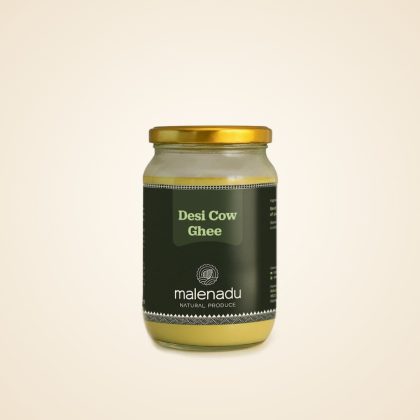
Desi Cow Ghee
Original price was: ₹1,500.₹899Current price is: ₹899. -
19% OFF
Cardamom
Price range: ₹130 through ₹330 -
51% OFF
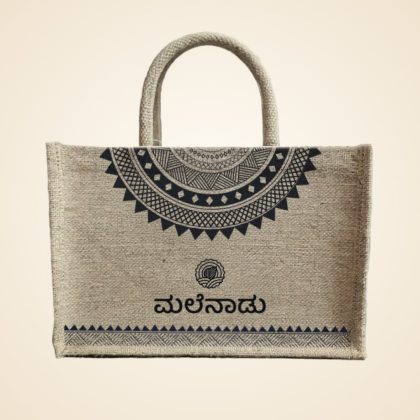
Small Jute Bag
Original price was: ₹200.₹99Current price is: ₹99. -
24% OFF
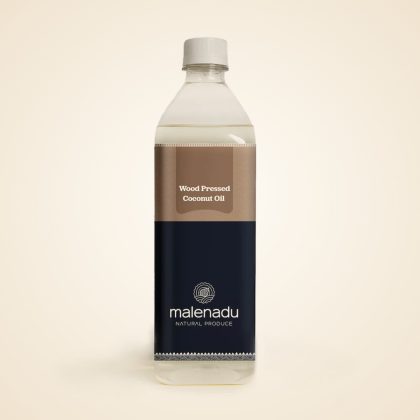
Wood Pressed Coconut Oil
Original price was: ₹899.₹679Current price is: ₹679.
Frequently asked questions about Malenadu festivals
What are the main Malenadu festivals?
The main Malenadu festivals are Sankranti, Shivaratri, Yugadi, Ganesha Chaturthi, Navaratri, Bhoomi Hunnime, Deepavali and Tulasi habba, along with Kailpodh, Kaveri Sankramana and Huttari in Kodagu and temple jatres in the dry months.
When is Bhoomi Hunnime celebrated?
Bhoomi Hunnime falls on the full moon of the month of Ashwayuja, usually in October. Farmers in Shivamogga and Uttara Kannada take food to their fields and worship the earth as an expectant mother.
What is a bhoomanni butti?
It is the bamboo or cane basket used to carry food to the field at Bhoomi Hunnime. Among the Deevaru community it is painted with Hase Chittara designs.
When is the Huttari festival?
Huttari is held on the full moon of the Kodava month of Birchyaar, usually in November or December. It celebrates the first cutting of the new paddy crop and is the best known of the Kodagu festivals.
How often is the Sirsi Marikamba jatre held?
The Sirsi Marikamba jatre is held once every two years. It draws devotees from all over Karnataka to Sirsi in Uttara Kannada.
What sweets are made for Deepavali in Malenadu?
As at most Malenadu festivals, kadubu of many kinds is the star, including coconut and jaggery kadubu and kotte kadubu steamed in jackfruit leaves. Holige, kajjaya and payasa are also common.
What is Kaveri Sankramana?
Kaveri Sankramana is the Kodagu festival of the river Kaveri, held in mid October when holy water rises at Talakaveri. Devotees bathe at Bhagamandala and families worship the river at home.
Explore more of Malenadu
Malenadu CultureMalenadu CulturePeople, arts and old ways of Karnataka’s rain hills
Malenadu CultureThe Malenadu HouseCourtyards, verandas and attics built for the rain
Malenadu CultureLanguages of MalenaduKannada, its hill dialects and the tongues around them
Malenadu FarmingMalenadu CropsWhat grows in Karnataka’s rain hills and why it grows
Malenadu FoodMalenadu FoodRice, kokum, pepper and joni bella from the hills
Start hereMalenadu in KarnatakaWhere Malenadu is, what the name means