
Malenadu Food
Pandi curry is the dark, peppery pork curry of the Kodava people of Kodagu (Coorg), cooked with a deeply roasted spice powder and soured with kachampuli, a thick black vinegar. This page explains what makes it different and what kachampuli is, then gives a home recipe, what to serve with it and the mistakes to avoid.
On this page
What is pandi curry?
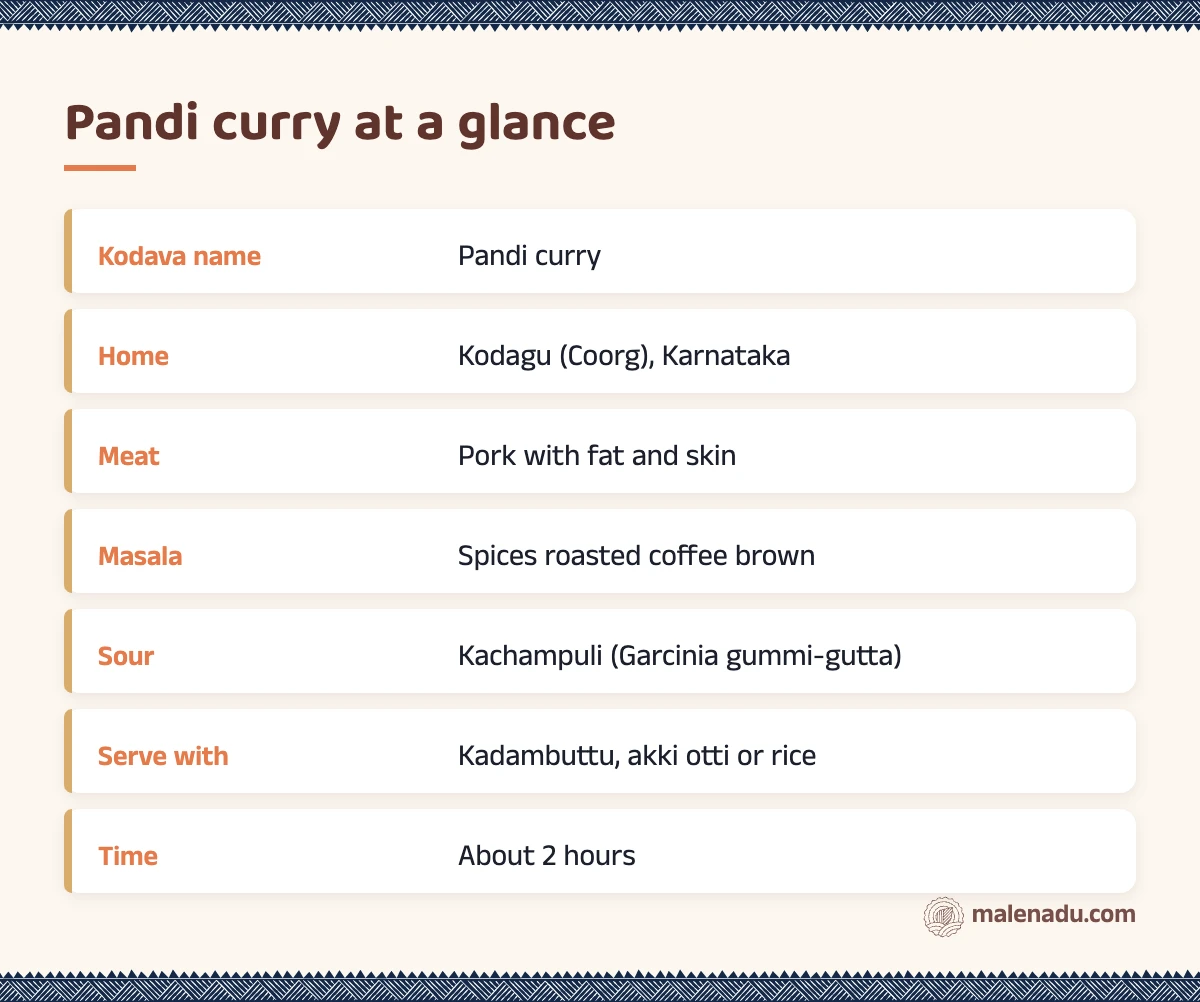
Pandi curry is a semi-dry pork curry from Kodagu, cooked in its own fat with a powder of roasted coriander, cumin, pepper, mustard and fenugreek and finished with kachampuli. “Pandi” means pig or pork in Kodava takk, the language of the Kodavas. The curry is almost black, glossy with fat and sharp with pepper and sourness.
Unlike most curries of Malenadu and the coast, it has no coconut. Its body comes from the pork fat, the onions and the ground spices that cling to every piece. There is only a little thick gravy, just enough to soak into rice bread.
For Kodava families it is festival and wedding food. It is also the dish visitors most want to eat in Kodagu. Kodagu is part of the Malenadu hills, as our page of Malenadu districts and taluks shows. Read more about the region on Malenadu in Karnataka.
Why is pandi curry so dark?
The colour comes from two things. The spices are roasted separately until they are a deep coffee brown before grinding. Then kachampuli, which is itself nearly black, is stirred in at the end and stains the gravy.
Is pandi curry the same as Coorg pork curry?
Yes. Coorg is the older English name for Kodagu, so Coorg pork curry and Kodava pandi curry are the same dish. Restaurant versions outside Kodagu are often redder and use more chilli, while home versions are darker and lean on pepper and kachampuli.
Where does Kodava pandi curry come from?
Kodava pandi curry comes from the Kodava homes of Kodagu district, at the southern end of the Karnataka Western Ghats. Kodavas have long kept pigs and once hunted wild boar, so pork became the centre of their feasts. Today wild animals are protected by law and the curry is made with farm pork.
Karnataka Tourism describes pandi curry as a Kodava signature dish of pork simmered with roasted black pepper, coriander and Kodava spices in a spicy, tangy gravy. It notes that the curry is often cooked for special occasions and served with rice or rice rotti.
When is pandi curry cooked?
This curry is on the table at almost every Kodava celebration. These are the occasions you are most likely to find it.
- Weddings: Kodava wedding feasts are known for pandi curry, cooked in large pots for hundreds of guests.
- Kailpodh: the September festival when Kodava families clean and worship their weapons, followed by a feast.
- Puthari (Huttari): the harvest festival around November to December, when the new paddy is brought home.
- Sundays and guests: in many homes it is simply the special meal of the week.
Kodava festivals follow the farming year, from sowing to harvest. Read about other festivals of the hills on our page on Malenadu festivals.
What is kachampuli and why does pandi curry need it?
Kachampuli is a thick black souring liquid made from the ripe fruit of Garcinia gummi-gutta, a tree of the Western Ghats. ICAR researchers describe this tree as popularly known as Malabar tamarind or kodampuli, with a sour fruit whose rind is used in cooking.
To make kachampuli, the ripe yellow fruits are piled in a basket over a vessel and left for several days while the juice drips out. The juice is then boiled down slowly until it turns thick and black. Kept in a bottle, it lasts for years. In Kodagu it is usually made at home or bought from local shops and weekly markets.
Kachampuli gives the curry three things: a sharp sourness, part of its dark colour and a deep, slightly smoky taste. Food writers also note that Kodava cooks valued it for keeping the pork fat firm. It is added at the very end, a teaspoon at a time.
Is kachampuli the same as kokum?
No. Kachampuli and kokum come from two different Garcinia trees and are used in different ways. Kokum (Garcinia indica) is a dried red rind that you soak in water. Kachampuli (Garcinia gummi-gutta) is a cooked-down liquid that you stir straight into the pot.
| Kachampuli | Kokum | Tamarind | |
|---|---|---|---|
| Plant | Garcinia gummi-gutta | Garcinia indica | Tamarindus indica |
| Form | thick black liquid | dried red rind | brown pulp |
| How it is used | stirred in at the end | soaked, water added | soaked, pulp squeezed |
| Colour it gives | dark brown to black | pink to red | brown |
| Main home | Kodagu | Uttara Kannada and the Konkan | across India |
The sourness of kokum is clean and fruity, while kachampuli is deeper and darker. Using kokum gives a tasty pork curry, but it does not taste like pandi curry.
What if you cannot find kachampuli?
Kachampuli is not easy to find outside Kodagu, so many cooks make do with something else. The most common swap is a thick tamarind extract with a few drops of vinegar, added at the end in the same way. The curry will be browner and the sourness sharper. If you visit Kodagu, buy a bottle of kachampuli: it keeps for years and a little goes a long way.
The roasted spice powder for pandi curry
The spice powder for pandi curry is made by dry roasting each whole spice separately until it is deep brown, then grinding it fine. Roasting them one by one lets each spice reach its own colour without the small seeds burning.
| Spice | What it does |
|---|---|
| Coriander seeds | the base and most of the body |
| Cumin seeds | warmth and earthiness |
| Black pepper | the main heat of the curry |
| Mustard seeds | a slight bitterness that cuts the fat |
| Fenugreek seeds | depth, used very sparingly |
| Cloves and cinnamon | a little sweetness, in many homes |
Kodagu is one of India’s main coffee districts. On many estates pepper vines climb the shade trees. That is why pepper, not chilli, gives this curry its heat. Read how pepper is grown on our page on pepper and cardamom farming and how the estates work on our page on Malenadu coffee.
Roast the pepper lightly compared with the coriander, because it can turn acrid. Fresh whole black pepper, roasted and ground the same day, gives the sharpest flavour.
From the malenadu pantry
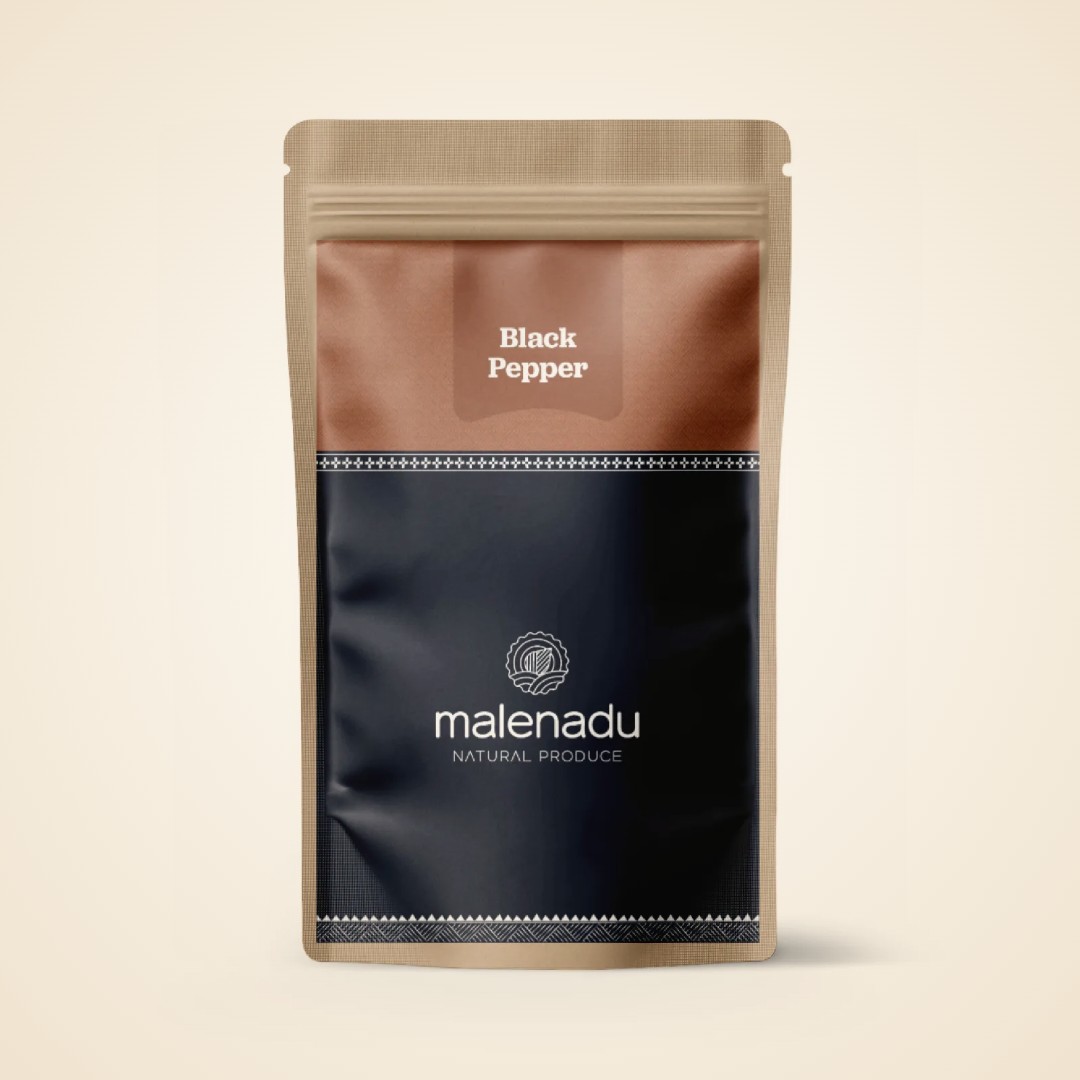
malenadu Black Pepper comes from the same Western Ghats hills as Kodagu’s pepper. One and a half teaspoons, lightly roasted and ground with the other spices, gives pandi curry its clean, rising heat.
Pandi curry recipe: how to make it at home
This pandi curry recipe serves five to six people and takes about two hours, most of it slow cooking. The pork is first cooked until tender in its own juices, then fried with the roasted spice powder until it turns dark. Read it through once before you start.
Recipe card
Pandi Curry
Dark Kodava pork curry cooked in its own fat with a coffee brown roasted spice powder and finished with kachampuli.
Ingredients
- 1 kg pork with fat and skin (shoulder or belly), cut into 1 1/2 inch pieces
- 1/2 teaspoon turmeric powder
- 1 to 1 1/2 teaspoons red chilli powder
- 1 1/2 teaspoons salt (adjust to taste)
- 2 tablespoons coriander seeds
- 1 tablespoon cumin seeds
- 1 1/2 teaspoons black pepper
- 1 teaspoon mustard seeds
- 1/4 teaspoon fenugreek seeds (menthya)
- 4 cloves
- 1 inch piece of cinnamon
- 2 medium onions, finely sliced
- 10 to 12 cloves of garlic, crushed
- 2 inch piece of ginger, crushed
- 4 green chillies, slit (or 2 bird eye chillies, crushed)
- 15 to 20 curry leaves
- 1 cup water
- 1 to 1 1/2 teaspoons kachampuli (adjust to taste)
Method
- Wash the pork and drain it well. Mix it with the turmeric, chilli powder and 1 teaspoon of the salt. Leave it for 1 hour (or overnight in the fridge).
- In a dry pan on medium heat, roast the coriander seeds until they turn a deep brown and smell toasty. Tip them onto a plate. Roast the cumin the same way, then the pepper with the cloves and cinnamon for a shorter time.
- Roast the mustard seeds until they pop and turn grey, then the fenugreek for just 30 seconds until reddish. Cool all the spices and grind them to a fine powder.
- Put the pork in a heavy pot with the onions, garlic, ginger, green chillies and curry leaves. Do not add oil. Cook covered on medium heat for 10 minutes, stirring now and then, until the fat starts to melt.
- Add the water, cover and simmer on low heat for 45 to 60 minutes until the pork is tender. You can pressure cook it for 3 to 4 whistles instead.
- Uncover and stir in the roasted spice powder and the rest of the salt. Cook on medium heat for 10 to 15 minutes, stirring often, until the liquid reduces, the fat separates and the masala turns dark and coats the meat.
- Add the kachampuli a little at a time and stir well. Cook for 3 to 4 minutes more.
- Taste and adjust the salt and sourness. The curry should be dark and glossy, with a little thick gravy clinging to the pork.
- Rest the curry for at least 30 minutes before serving. Like most pork curries, it tastes even better the next day.
Local tip
Roast the coriander until it is as brown as coffee beans, but take the fenugreek off the heat while it is still reddish. Burnt fenugreek makes the whole pot bitter.
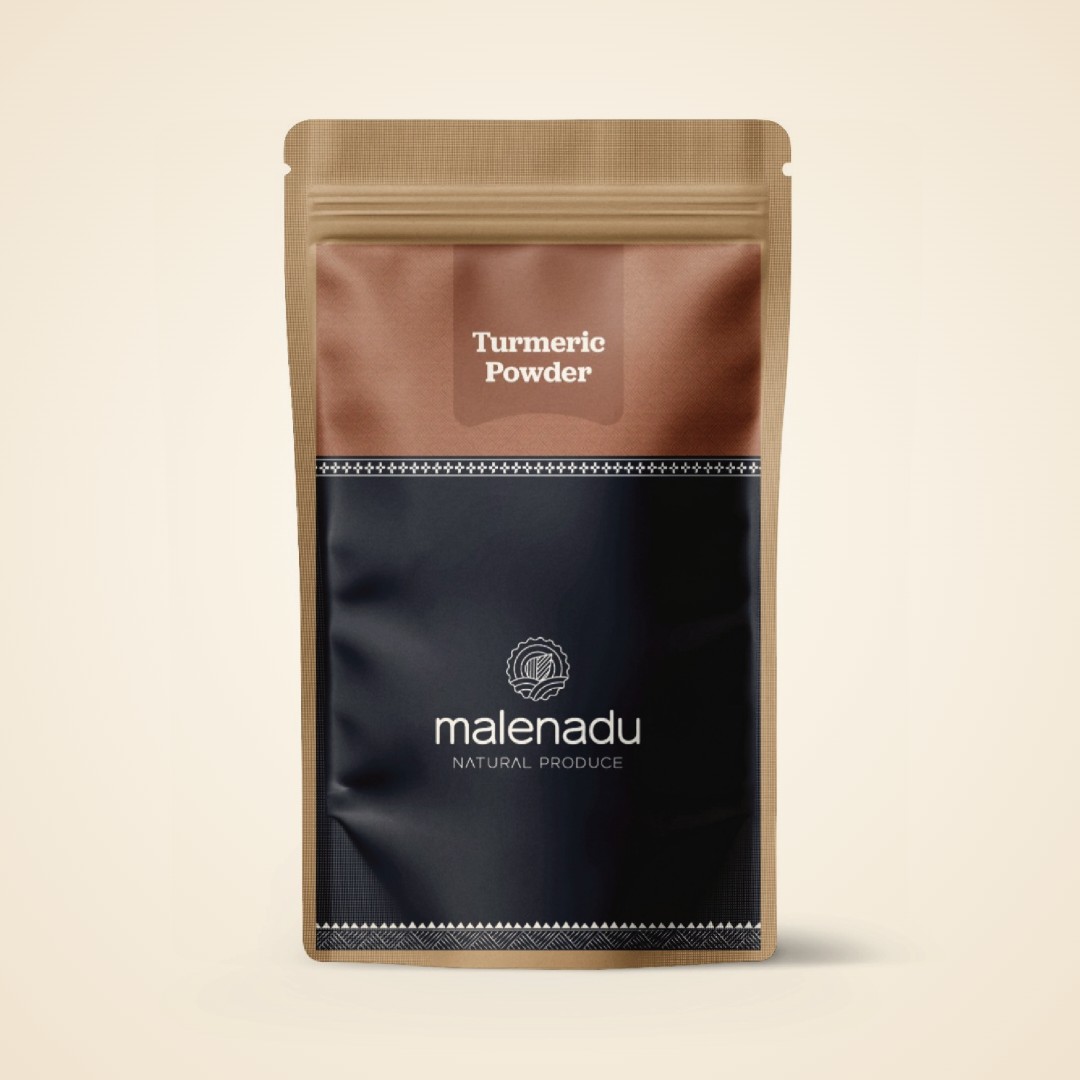
Turmeric goes into the marinade to colour and season the meat from the start. A good turmeric powder gives a deep golden base under the dark spices.
From the malenadu pantry
malenadu Turmeric Powder is ground from turmeric grown in the hills. Half a teaspoon rubbed into the pork with salt and chilli seasons pandi curry from the inside before the dark masala goes in.
Choosing the right pork for pandi curry
The best pork for pandi curry is shoulder or belly with a good layer of fat and the skin on. The fat melts into the pot and becomes the cooking medium, so very lean pork gives a dry, hard curry.
- Ask for curry cut with fat. Pieces of about 1 1/2 inches cook evenly and hold their shape.
- Keep the skin. It turns soft and sticky during slow cooking, which many Kodava families love.
- Buy fresh. Cook pork the day you buy it. If you must wait, keep it in the fridge for one day at most.
- Cook it through. Pork must be cooked until fully tender, with no pink left at the centre.
If the pork releases a lot of fat, spoon some off before adding the spice powder. Many homes keep this fat to fry the next day’s akki otti.
Pork curry with akki otti, kadambuttu or rice
A pork curry with akki otti or kadambuttu is the classic Kodava meal, because both rice breads soak up the thick, dark gravy. These are the usual partners.
| Partner | What it is |
|---|---|
| Kadambuttu | steamed balls of coarse rice, soft and plain |
| Akki otti | thin Kodava rice bread made with cooked rice and rice flour |
| Nool puttu | steamed rice noodles, like string hoppers |
| Plain rice | everyday rice with a spoon of the gravy |
Akki otti is a cousin of the Malenadu akki rotti cooked across the hills. In both cases you tear the bread and wrap it around a piece of pork with some gravy. A cold glass of water or a little curd on the side helps with the pepper.
In Kodava feasts the pork often sits next to chicken curry, bamboo shoot curry in season and other side dishes. Bamboo shoot must always be soaked and boiled well before cooking and never eaten raw.
Pandi curry variations from Kodava homes
The recipe changes a little from house to house, mainly in how dark, dry or hot the curry is. These are the versions you may meet.
Pandi fry (dry)
Cook the curry until all the gravy is gone and the pork fries in its own fat. It becomes a dark, crisp-edged side dish that goes well with drinks or with rice and a thin saaru.
Extra hot with gandhari menasu
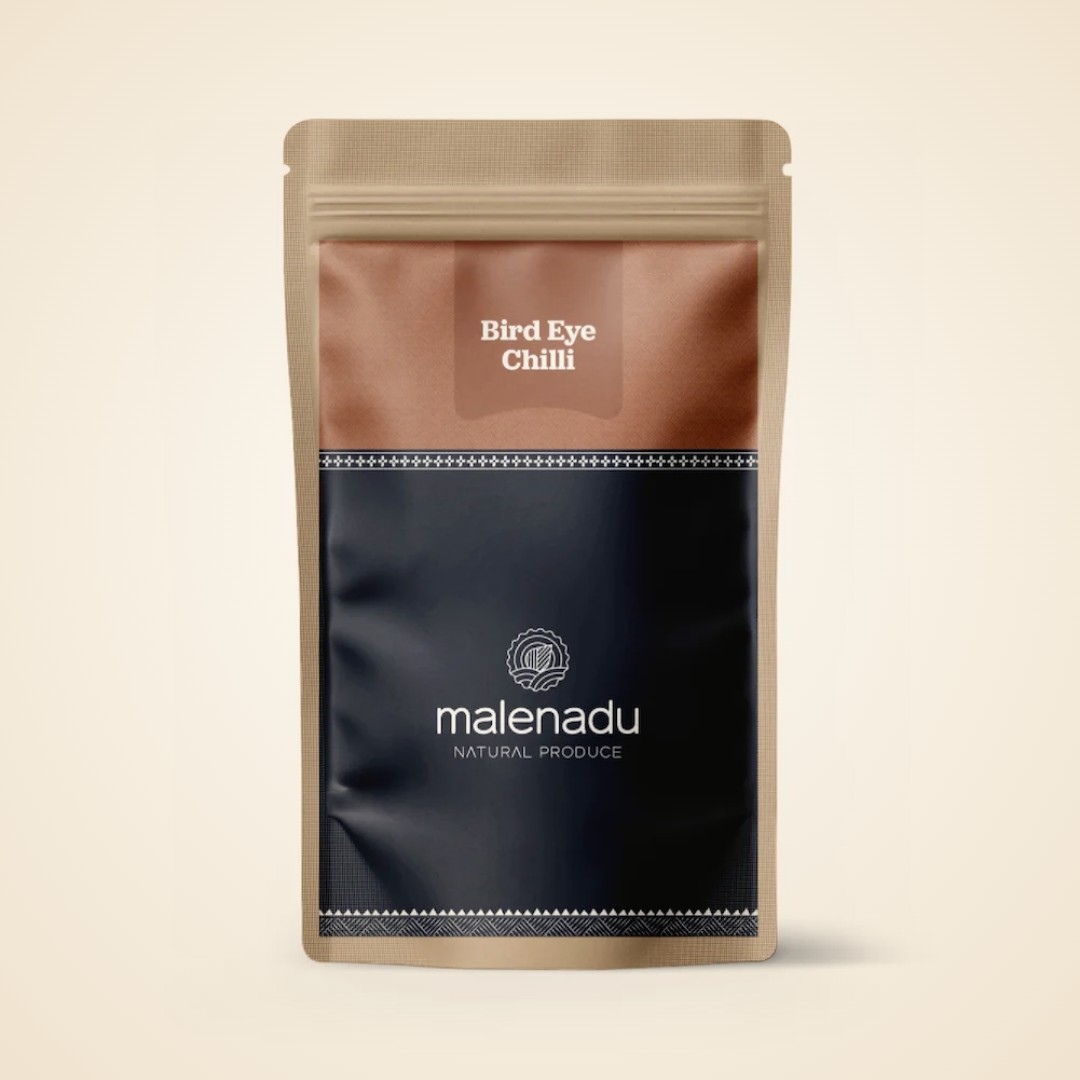
Many Kodava cooks add a few small, fierce chillies to the pot. Crush one or two bird eye chillies with the garlic in step 4 for a sharp heat on top of the pepper.
From the malenadu pantry
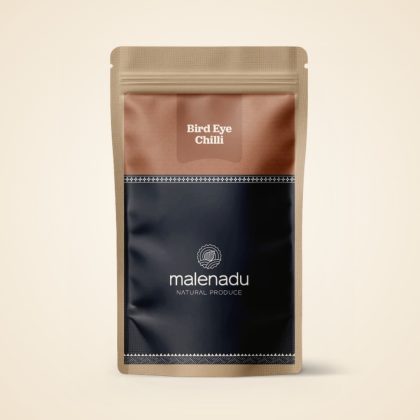
malenadu Bird Eye Chilli is the tiny, fiery chilli of Malenadu gardens. One or two, crushed with the garlic and ginger, give pandi curry a quick, sharp heat that sits on top of the pepper.
Slow cooked in a pot
Old homes cooked it slowly in a heavy pot over a wood fire for hours. A heavy pot on a low gas flame gives the same soft pork and deeper colour. A pressure cooker is faster, but the gravy is a little thinner.
Common pandi curry mistakes and how to fix them
Most problems with pandi curry come from the spices, the pork or adding kachampuli too early. This table shows what went wrong and how to fix it.
| Problem | Likely cause | Fix |
|---|---|---|
| Bitter curry | fenugreek or spices burnt | roast fenugreek briefly, coriander to brown not black |
| Pale, brown curry | spices roasted too lightly | roast each spice to deep coffee brown |
| Hard, dry pork | lean meat or too little cooking | use pork with fat, cook until tender |
| Raw spice taste | powder not fried long enough | fry with the pork until fat separates |
| Too sour | too much kachampuli at once | add a teaspoon, taste, then add more |
| Greasy gravy | very fatty pork | spoon off extra fat before adding spices |
Never boil the curry hard after adding kachampuli. A few minutes on low heat is enough to blend it in. If it tastes flat, a pinch more salt usually brings back the pepper and sourness.
Where to go next after pandi curry
If you enjoyed pandi curry, try the hill style chicken curry on our page on Malenadu koli saaru, which uses roasted coconut and pepper instead. Our Malenadu food guide brings all the hill recipes together. For whole pepper, turmeric and chillies for your spice powder, see the spices section of our shop.
Bring Malenadu home
Grown and made by Malenadu farmer families, packed by malenadu, a farmer owned producer company in Honnavar.
Frequently asked questions about pandi curry
What does pandi mean in pandi curry?
Pandi means pig or pork in Kodava takk, the language of the Kodavas. So pandi curry simply means pork curry.
What is kachampuli made of?
Kachampuli is made from the juice of the ripe fruit of Garcinia gummi-gutta, also called Malabar tamarind or kodampuli. The juice is boiled down until it is thick and black.
Is kachampuli the same as kokum?
No. Kokum is the dried rind of Garcinia indica, while kachampuli is a cooked liquid from a different Garcinia fruit. They taste different and are used differently.
What can I use instead of kachampuli?
A thick tamarind extract with a few drops of vinegar is the most common swap. The curry will taste good but not exactly like Kodagu pandi curry.
Why is pandi curry black?
The spices are roasted to a deep brown before grinding and the kachampuli is nearly black. Together they give the curry its dark colour.
What is pandi curry eaten with?
Kadambuttu (steamed rice balls) and akki otti (rice bread) are the classic partners. Plain rice and nool puttu are also common.
Does pandi curry have coconut?
No. Unlike most curries of the region, pandi curry gets its body from pork fat, onions and roasted spices, not coconut.
Explore more of Malenadu
Malenadu FoodMalenadu FoodRice, kokum, pepper and joni bella from the hills
Malenadu FoodHalasina KadubuSweet jackfruit dumplings steamed in leaves
Malenadu FoodSpices Names in KannadaEnglish, Kannada and Hindi names for a Malenadu kitchen
Malenadu FoodKara KadubuSpicy steamed rice dumplings from Malenadu kitchens
Malenadu FoodKokum SaaruThe sour, peppery everyday rasam of Malenadu homes
Malenadu FoodMenthya TambuliA cool fenugreek and curd side for the first rice course
Malenadu FoodMalenadu FruitsJackfruit, kokum, wild mango and the fruits of the forest
Malenadu FoodKesuvina GojjuThe sweet and sour colocasia leaf relish of the monsoon
Start hereMalenadu in KarnatakaWhere Malenadu is, what the name means