
Malenadu Food
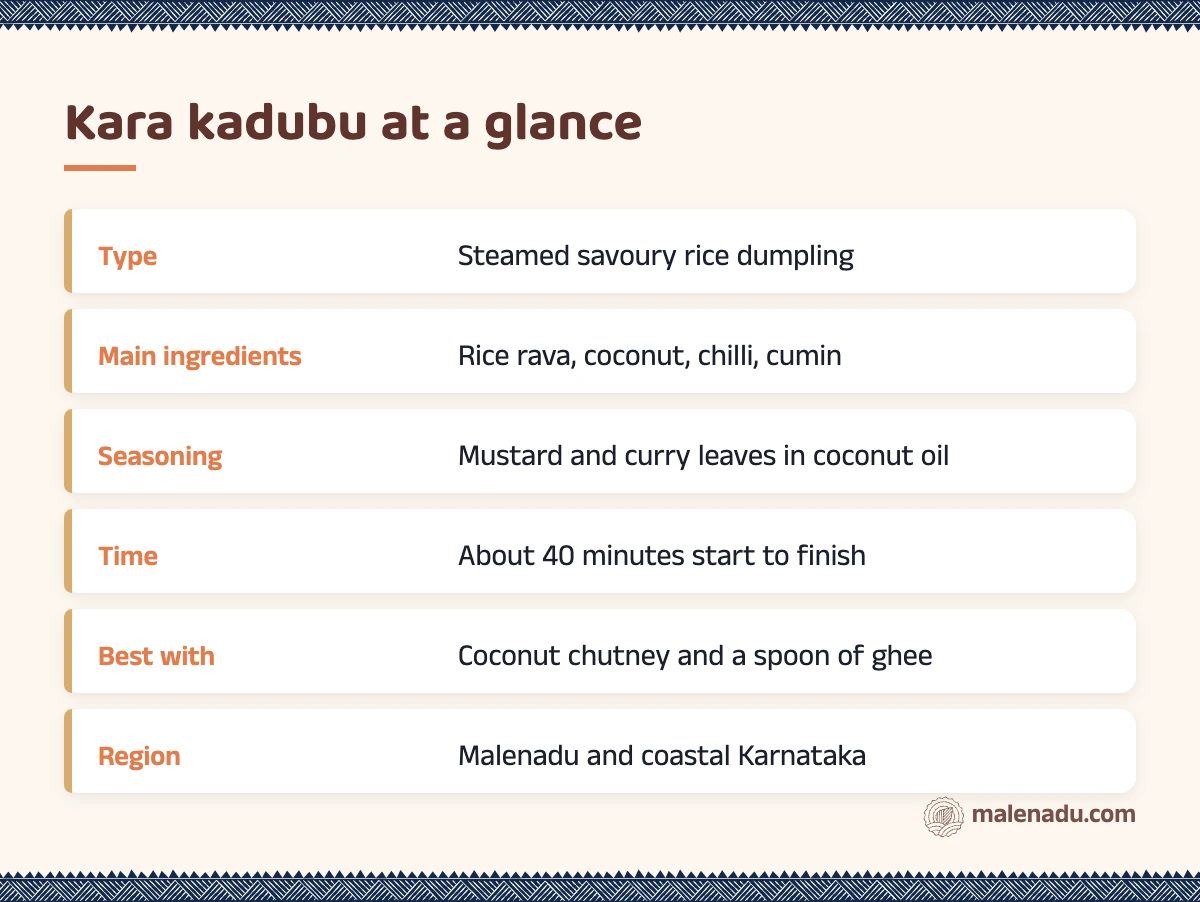
Kara kadubu (ಖಾರ ಕಡುಬು) is a spicy steamed dumpling made from rice rava, fresh coconut, green chilli and cumin, seasoned in coconut oil and shaped by hand. This page explains where it sits in the kadubu family, gives a home recipe that works the first time and shows how to steam it without a steamer, what to serve with it and how to fix common mistakes.
On this page
What is kara kadubu?
Kara kadubu is a savoury rice dumpling: rice rava is cooked into a thick dough with water, coconut, chilli and cumin, then shaped into balls and steamed. “Kara” (also written khara) means spicy in Kannada and “kadubu” (ಕಡುಬು) is the word for a steamed rice dumpling or rice cake. So the name simply says what it is: a spicy kadubu.
In Malenadu homes kara kadubu is everyday food, not restaurant food. It turns up at breakfast, in school tiffin boxes and on rainy evenings with coffee. It needs no fermenting, no grinding and no special tools.
The texture is soft and slightly springy, a little like an idli but denser and more filling. Each piece carries flecks of coconut, bits of curry leaf and the heat of fresh chilli. A spoon of ghee melting on top is how most of us remember eating it as children.
Is kara kadubu the same as akki kadubu?
Mostly, yes. “Akki” means rice, so akki kadubu is any kadubu made from rice. Kara kadubu is the spicy version of it. Some families keep the name kara kadubu for the one with chilli and seasoning, while others use the two names for the same dish.
Rice dumplings in Karnataka and how kadubu compares
These are the rice dumplings Karnataka homes steam for breakfast, festivals and tiffin. Their cousins are modaka in Maharashtra and kozhukattai in Tamil Nadu. What makes the Malenadu kadubu different is local produce: coconut from the thota (home plantation), fiery small chillies, coconut oil and backyard leaves for wrapping.
Malenadu kadubu: a whole family of steamed dumplings
Malenadu kadubu is not one dish but a family. Kara kadubu is just one member of it. The name covers sweet and savoury dumplings, open balls, stuffed shells and batters poured into leaf cups. Karnataka Tourism describes kadubu as an idli-like rice cake cooked in cups made of jackfruit leaves that is sold in eateries across the coast and Malenadu.
Here are the kinds you are most likely to meet in a Malenadu home:
| Kadubu | What it is | When it is made |
|---|---|---|
| Kara kadubu | spicy rice rava balls with coconut and chilli | breakfast, tiffin, rainy evenings |
| Sihi kadubu | rice flour shell stuffed with coconut and jaggery | Ganesha Chaturthi, festivals |
| Uddina kadubu | spicy urad dal filling inside a rice shell | festivals, as the savoury partner to sihi kadubu |
| Kotte kadubu | idli batter steamed in jackfruit leaf cups (kotte) | breakfast, weddings, temple towns |
| Moode | idli batter steamed in rolled screwpine or palm leaves | coastal homes, special mornings |
| Halasina kadubu | sweet jackfruit batter steamed in leaves | jackfruit season |
Sihi kadubu is the sweet one. Its filling (hoorana) is fresh coconut cooked with jaggery and cardamom, wrapped in a rice dough shell and steamed. Many homes now stir a little joni bella (liquid jaggery) into the coconut instead of grating a block, because it mixes in evenly and gives a deeper, almost caramel taste.
From the malenadu pantry
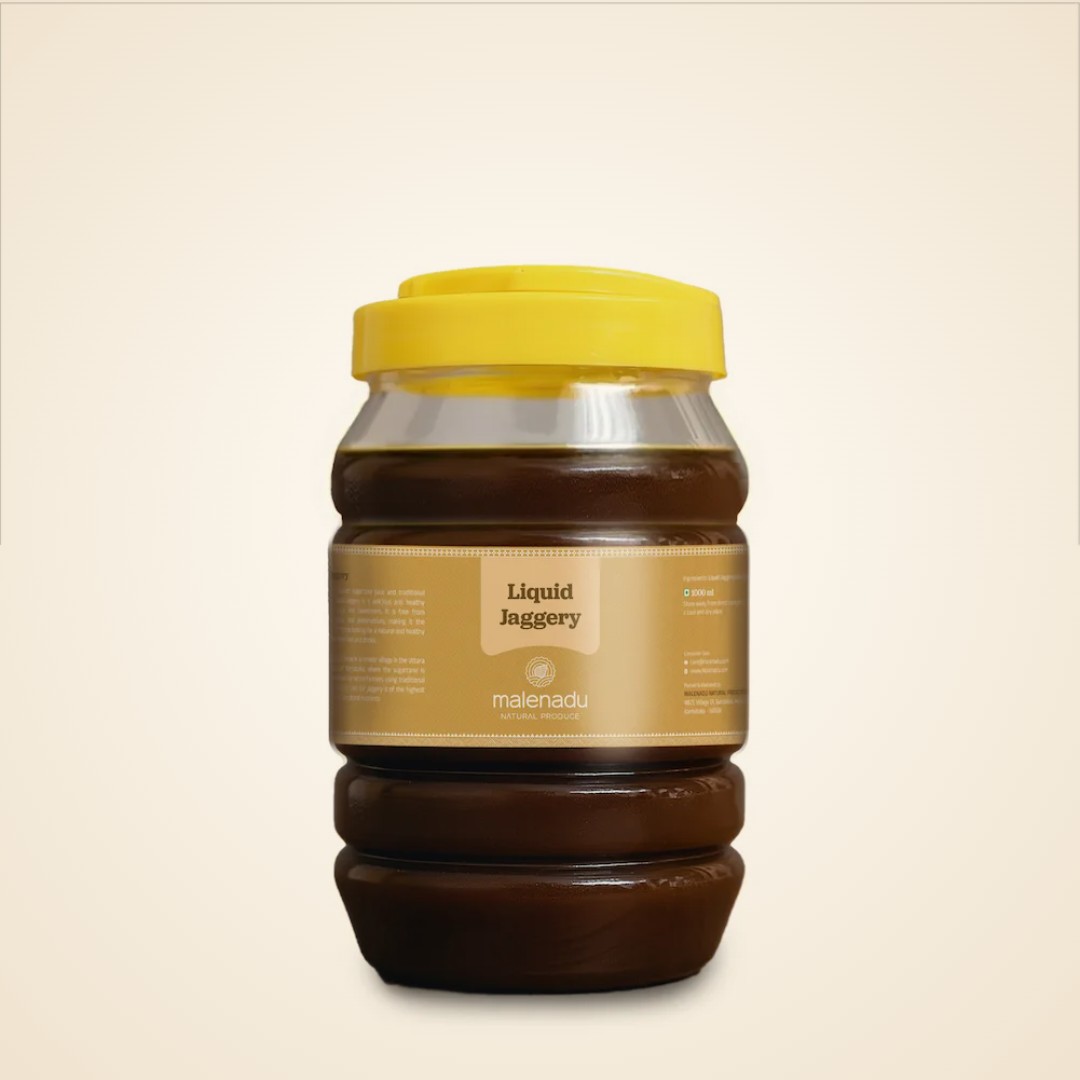
For sihi kadubu, malenadu Liquid Jaggery (joni bella) blends straight into fresh coconut for the filling, with no grating or melting. Cook it with the coconut until it stops looking wet so the filling does not leak.
Halasina kadubu has a page of its own. If you have ripe jackfruit at home, read our halasina kadubu guide for the sweet leaf-wrapped version that Malenadu families make every summer.
When do Malenadu homes make kara kadubu?
Kara kadubu is made for breakfast first and for festivals second. It is quick, filling and uses things every Malenadu kitchen already has, so it is a normal weekday breakfast in many homes from Shivamogga to Uttara Kannada. If you want to know which districts make up the region, see our page on Malenadu districts and taluks.
These are the times you are most likely to find a plate of it:
- Weekday breakfast. Dough in ten minutes, steaming in fifteen. The family eats while it is hot.
- Ganesha Chaturthi. Kadubu is the food most Karnataka families link with Ganesha. Sihi kadubu goes to the offering and kara kadubu or uddina kadubu is made alongside, so the festival plate is not only sweet.
- Monsoon mornings. When rain has not stopped for days and nobody wants to step out, a hot steamed kara kadubu with chutney is a comfort food.
- Tiffin boxes and travel. It does not go soggy like dosa and does not need a gravy, so it packs well for school and bus journeys.
Read more about the region and its way of life on our Malenadu in Karnataka page.
Ingredients for kara kadubu and why each one matters
Kara kadubu needs only a handful of ingredients, so the quality of each one shows. Here is what to use and what to watch for.
Rice rava (akki tari). Use fine to medium rice rava, the kind sold for idli. Coarse rava takes longer to cook and gives a gritty bite. If you only have rice flour, see the akki kadubu note under the recipe.
Fresh coconut. Grated fresh coconut gives moisture, sweetness and texture. Desiccated coconut is a poor substitute because it is dry and does not soften. Coconut is everywhere in this cooking for a reason: Karnataka was the largest coconut producer among Indian states in 2022-23, according to Coconut Development Board statistics.
Chilli. Green chilli is the usual choice. In many Malenadu homes the small, fiery gandhari menasu (bird eye chilli) is crushed in instead. Two or three do the work of a handful of green chillies. For children, leave out the chilli and add a pinch of crushed black pepper.
Cumin and curry leaves. Whole cumin gives little bursts of flavour in each bite. Curry leaves go into the seasoning and get torn into the dough.
Coconut oil. The seasoning (oggarane) of mustard seeds, urad dal and curry leaves is done in coconut oil. A little oil also keeps the dough smooth. The flavour of coconut oil is what makes the dish taste of home in Malenadu.
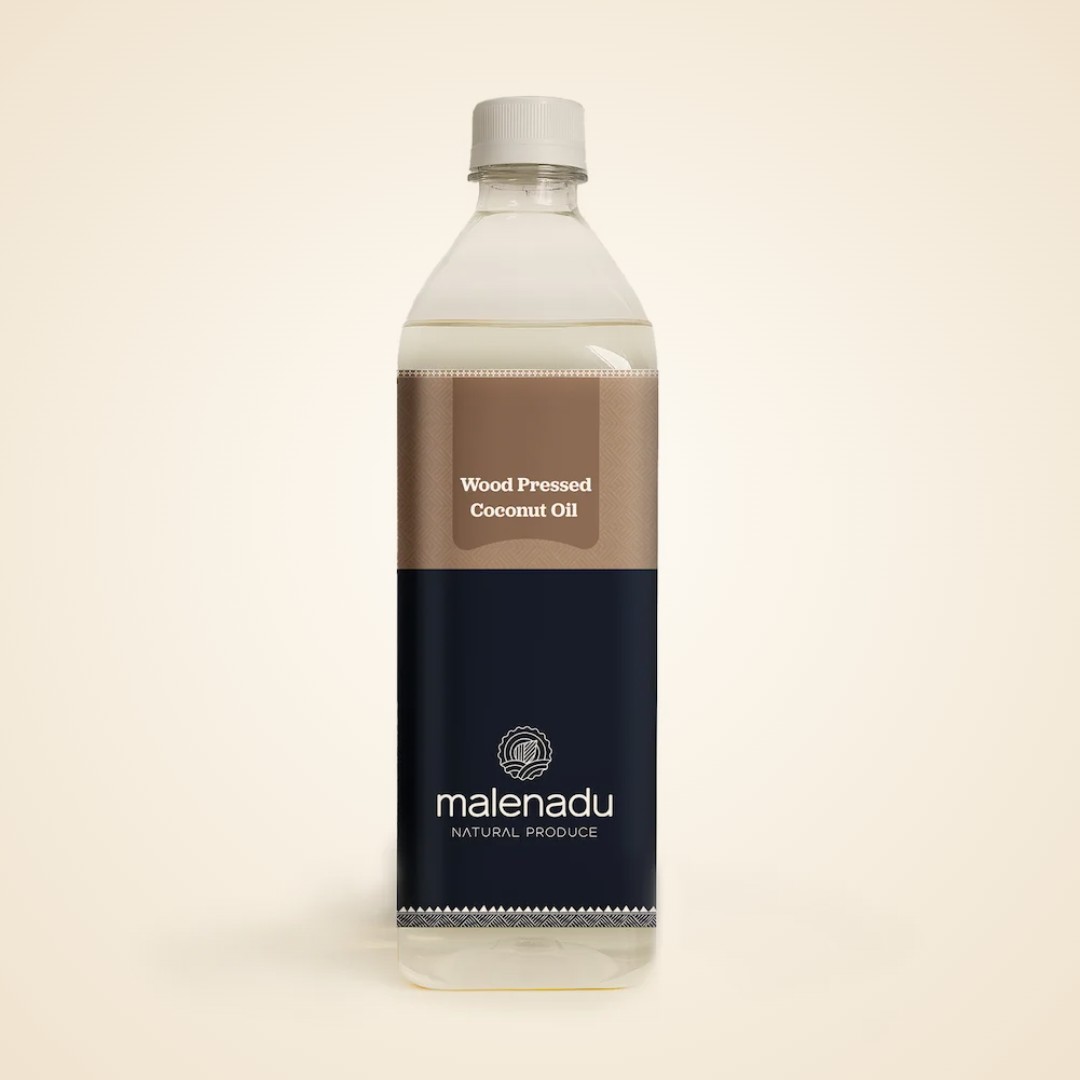
From the malenadu pantry
malenadu Wood Pressed Coconut Oil is made from sun dried copra in a wooden ghani. It gives the seasoning that warm, nutty coconut smell. You also use it to grease your hands while shaping the kadubu.
Kara kadubu recipe: how to make it at home
This kara kadubu recipe makes about 12 to 14 lemon-sized kadubu, enough for three or four people at breakfast. The method is simple: season, boil, cook the rava, cool, shape and steam. Read it once fully before you begin, because the dough must be shaped while it is still warm.
Recipe card
Kara Kadubu
Spicy steamed rice rava dumplings with coconut, chilli and cumin, seasoned in coconut oil the Malenadu way.
Ingredients
- 1 cup fine rice rava (akki tari), about 170 g
- 2 cups water
- 1/2 cup freshly grated coconut
- 2 to 3 green chillies or 2 bird eye chillies, finely crushed
- 1 teaspoon cumin seeds
- 3/4 teaspoon salt (adjust to taste)
- 2 tablespoons wood pressed coconut oil, divided
- 1/2 teaspoon mustard seeds
- 1 teaspoon urad dal
- 1 teaspoon chana dal (optional, for crunch)
- 12 to 15 curry leaves, torn
- 1 pinch asafoetida (hing)
- 1 pinch turmeric powder (optional)
- Ghee and coconut chutney, to serve
Method
- Heat 1 tablespoon coconut oil in a heavy pan. Add mustard seeds and let them splutter, then add urad dal and chana dal and fry until light golden. Add curry leaves, hing and turmeric.
- Pour in the 2 cups of water. Add the crushed chilli, cumin, salt and grated coconut. Bring to a rolling boil and taste the water: it should be slightly saltier than you want the kadubu.
- Lower the heat. Add the rice rava in a thin stream with one hand while you stir with the other, so no lumps form.
- Cover and cook on the lowest flame for 5 to 7 minutes, stirring once or twice, until the rava has soaked up all the water and the mixture pulls away from the pan as a soft mass.
- Switch off the heat and keep it covered for 5 minutes. Spread it on a plate until it is just cool enough to handle.
- Grease your palms with the remaining coconut oil. Knead the warm dough for a minute until smooth, then shape lemon-sized balls or press them into ovals with your fingers so they show finger marks.
- Place them on a greased idli plate or steamer plate and steam for 12 to 15 minutes, until the surface looks dry and glossy. Serve hot with ghee and chutney.
Local tip
Taste the boiling water before you add the rava. Once the rava goes in you cannot mix salt in evenly. A bland kadubu is the most common complaint.
Akki kadubu with rice flour instead of rava
Rice flour (akki hittu) gives a smoother, softer ball than rice rava (akki tari). To make akki kadubu with it, use 1 cup rice flour and about 1 1/4 cups water. Do the same seasoning and boil the water with chilli, cumin, coconut and salt. Switch off the heat, add the flour all at once, mix with the back of a spoon and keep covered for 10 minutes. Knead well while warm, shape and steam for about 10 minutes. The result is smoother and a little softer than the rava version.
How to steam kadubu without a steamer
You do not need an idli cooker to make kara kadubu. Any pot with a lid and something to hold the plate above the water will do. Here are three ways that work in an ordinary kitchen:
- Pressure cooker without the whistle. Pour 2 cups of water in the cooker, place the idli stand or a greased plate on a small stand, close the lid and remove the whistle. Steam on medium heat for 12 to 15 minutes.
- Big pot with a plate on top of a bowl. Put an upturned steel bowl or a small stand in a wide pot, add water to below its rim, rest a greased steel plate on it and cover tightly.
- Colander over a pot. A steel colander set over boiling water and covered with a lid steams a small batch well.
Whatever you use, make sure the water is boiling before the kadubu go in, keep the lid tight and do not let the pot run dry. Wrap the lid in a cloth if water drips back onto the kadubu.
What to serve with kara kadubu
Kara kadubu is best with a fresh coconut chutney and a spoon of ghee on top. Because the dumpling is mild in the middle and spicy in bits, it needs something moist and cool beside it. These are the usual partners in Malenadu homes:
- Kayi chutney (coconut chutney). Coconut, green chilli, a little tamarind or curd, seasoned with mustard and curry leaves.
- Huchellu chutney. Niger seed chutney, roasted and nutty, a Malenadu favourite with kadubu and rotti.
- Shunti chutney (ginger chutney). Sharp and warming, good on a cold monsoon morning.
- Gojju. A sweet, sour and spicy relish of tomato or pineapple with jaggery and tamarind.
- Majjige or tambuli. A cup of spiced buttermilk. For a fuller meal, a bowl of menthya tambuli.
- Kokum saaru on the side. If kara kadubu is part of lunch, pair it with a peppery kokum saaru.
Ghee on top is not optional in most homes. Break the kadubu open while it is steaming and let a spoon of ghee run into it.
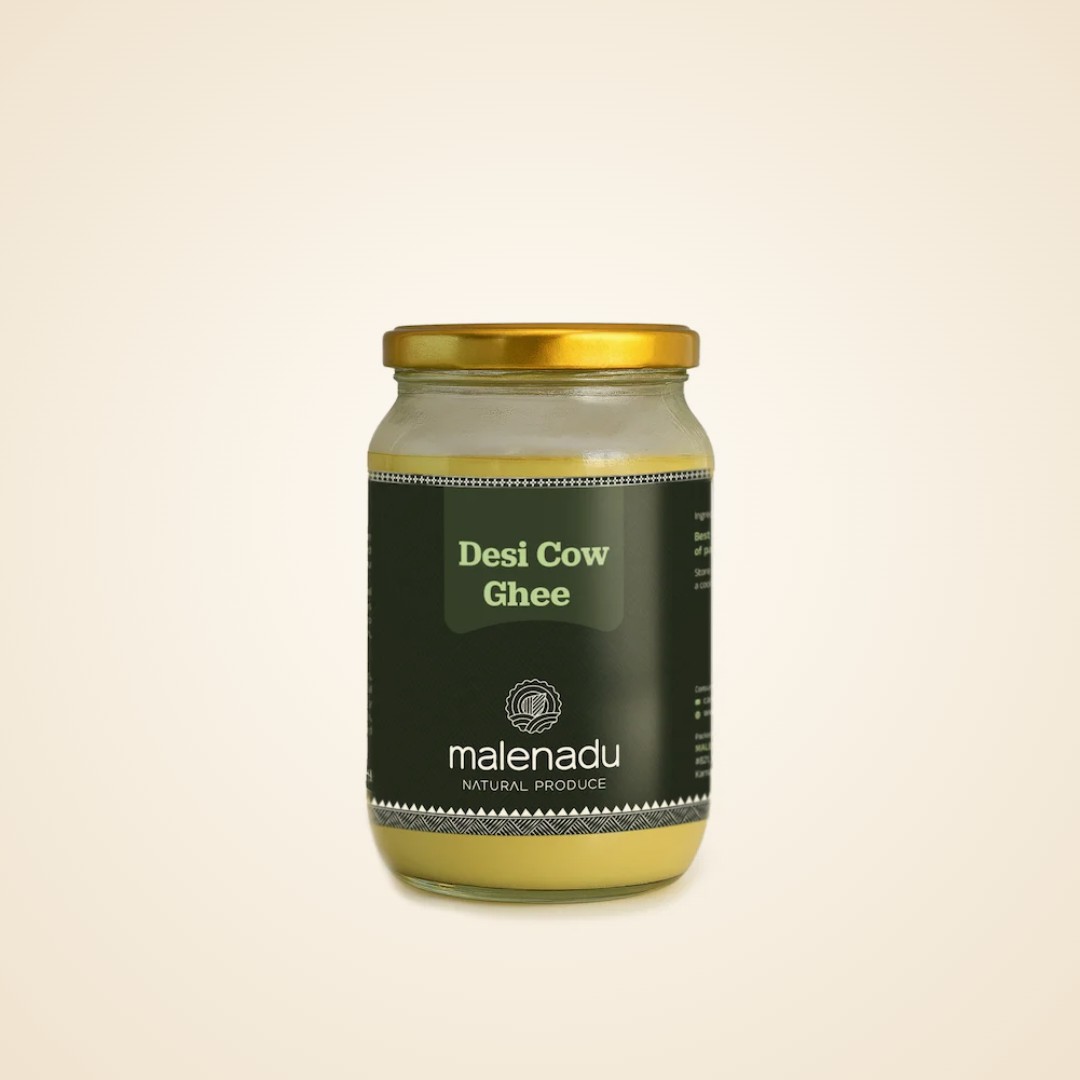
From the malenadu pantry
malenadu Desi Cow Ghee is hand churned by farmer families from the milk of desi breeds such as Malenadu Gidda. A spoon on hot kara kadubu is how most Malenadu people still eat it.
You can find all our oils and ghee together in the oil and ghee section of the shop.
Leftover kara kadubu ideas
Leftover kara kadubu keeps well and is often better the next day in a new form. Store it in a closed box in the fridge for up to two days and try one of these:
- Kadubu upma (oggarane kadubu). Crumble cold kadubu with your fingers. Heat coconut oil, add mustard, onion, green chilli and curry leaves, toss in the crumbs and finish with coriander and lemon. It is like idli upma but with more flavour.
- Pan-fried slices. Chill overnight, cut kadubu into thick rounds and fry on a hot tawa with a little coconut oil until crisp on both sides. Sprinkle crushed black pepper and serve with chutney.
- Curd kadubu. Break kadubu into a bowl of curd with salt and a seasoning of mustard and curry leaves on top. It is a cool, simple lunch for hot days.
Common kara kadubu mistakes and how to fix them
Most kara kadubu problems come from the water ratio, undercooked rava or shaping cold dough. This table shows what went wrong and what to do next time.
| Problem | Likely cause | Fix |
|---|---|---|
| Kadubu cracks while shaping | dough too dry or too cold | sprinkle warm water and knead while warm |
| Sticky, gummy kadubu | too much water | cook a few minutes longer uncovered before shaping |
| Hard and chewy | rava not fully cooked or too long in the steamer | cover and rest the dough for 5 minutes, steam only 12 to 15 minutes |
| Falls apart | too much coconut or coarse rava | keep coconut to half the rava by volume |
| Bland taste | salt added late | season the boiling water before adding rava |
Also grease your palms while shaping and leave space between kadubu on the steamer plate, because they swell a little.
Where to go next after kara kadubu
If you liked making kara kadubu, the sweet halasina kadubu and a bowl of menthya tambuli are the natural next dishes to try. Our Malenadu food guide brings all the recipes and ingredients together in one place. When you need coconut oil, ghee or chillies for your next batch, browse all malenadu products.
Bring Malenadu home
Grown and made by Malenadu farmer families, packed by malenadu, a farmer owned producer company in Honnavar.
-
24% OFF
Wood Pressed Coconut Oil
Original price was: ₹899.₹679Current price is: ₹679. -
40% OFF
Desi Cow Ghee
Original price was: ₹1,500.₹899Current price is: ₹899. -
Bird Eye Chilli
₹200 -
8% OFF
Black Pepper
Price range: ₹165 through ₹299 -
13% OFF
Turmeric Powder
Price range: ₹70 through ₹120 -
14% OFF
Liquid Jaggery
Original price was: ₹349.₹299Current price is: ₹299.
Frequently asked questions about kara kadubu
What is kara kadubu made of?
Kara kadubu is made from rice rava cooked with water, fresh grated coconut, green or bird eye chilli, cumin and salt. A seasoning of mustard seeds, urad dal and curry leaves in coconut oil goes into the water before the rava.
Is kara kadubu the same as idli?
No. Idli is made from a fermented rice and urad dal batter, while kara kadubu is made from rice rava cooked into a dough and shaped by hand. It needs no fermenting and is denser and more filling than idli.
Can I make kara kadubu with rice flour?
Yes. Use about 1 1/4 cups of water for 1 cup of rice flour, add the flour to the boiling seasoned water, cover for 10 minutes, knead and steam for about 10 minutes.
How long should I steam kara kadubu?
Steam lemon-sized kara kadubu for 12 to 15 minutes in an idli cooker or pressure cooker without the whistle. They are done when the surface looks dry and slightly glossy.
Why is my kara kadubu breaking?
The dough is usually too dry or has cooled too much before shaping. Sprinkle a little warm water, knead while warm and keep your hands greased with coconut oil.
What chutney goes with kara kadubu?
Coconut chutney is the most common, followed by huchellu (niger seed) chutney, ginger chutney and tomato gojju. Most Malenadu homes also add a spoon of ghee on top.
Is kara kadubu made for Ganesha Chaturthi?
Sweet sihi kadubu is the classic Ganesha Chaturthi offering, but many Karnataka homes make kara kadubu or uddina kadubu alongside it so the festival meal has a savoury dish too.
Explore more of Malenadu
Malenadu FoodMalenadu FoodRice, kokum, pepper and joni bella from the hills
Malenadu FoodHalasina KadubuSweet jackfruit dumplings steamed in leaves
Malenadu FoodSpices Names in KannadaEnglish, Kannada and Hindi names for a Malenadu kitchen
Malenadu FoodKokum SaaruThe sour, peppery everyday rasam of Malenadu homes
Malenadu FoodMenthya TambuliA cool fenugreek and curd side for the first rice course
Malenadu CultureMalenadu CulturePeople, arts and old ways of Karnataka’s rain hills
Malenadu FarmingMalenadu CropsWhat grows in Karnataka’s rain hills and why it grows
Start hereMalenadu in KarnatakaWhere Malenadu is, what the name means