
Malenadu Food
Kokum saaru is a thin, sour and peppery rasam made with dried kokum rind, a little dal, crushed pepper and jaggery, finished with a ghee tempering. It is everyday food in Uttara Kannada and across the Malenadu hills. This page gives a home recipe that works the first time, five variations, what to serve with it and the mistakes to avoid.
On this page
What is kokum saaru?
Kokum saaru is a light, sour soup-like curry that you mix with hot rice or drink from a cup. Saaru is the Kannada word for a thin, peppery rasam. Kokum gives this one its deep red colour and fruity sourness. A little jaggery rounds off the sour and a ghee tempering ties it together.
In Kannada it is often called murugalu saaru, because murugalu (ಮುರುಗಲು) is the Kannada name for kokum. On the Udupi coast some people call the dried rind punarpuli, so you may also hear punarpuli saaru. Whatever the name, a good kokum saaru should taste sour first, then peppery, with just a hint of sweet at the end.
Unlike tomato rasam, kokum saaru needs no rasam powder. The flavour comes from three things: kokum, freshly crushed pepper and cumin. That is why it is one of the quickest dishes in a Malenadu kitchen.
Where does kokum saaru come from?
Kokum saaru comes from the kokum growing belt of the Western Ghats, especially Uttara Kannada and the coastal and ghat homes of Karnataka. The kokum tree grows in the hills and along the coast from the Konkan down to Karnataka and Kerala, so most families there keep a jar of dried rind. In Sirsi, Siddapur, Kumta, Honnavar and Sagar, kokum saaru is ordinary weekday food.
Havyaka homes in Uttara Kannada and Shivamogga make it often, sometimes without dal and often without onion or garlic. Konkani families on the coast use the same rind in their own dishes. Further north, the Konkan coast drinks sol kadhi, made with kokum and coconut milk. You can see where these taluks sit on our page of Malenadu districts and taluks.
Is kokum saaru the same as kokum rasam or kokum curry?
Kokum rasam is the name most people outside Karnataka use for the same idea, a thin soup soured with kokum. Kokum saaru is the Kannada name and the Malenadu version, which uses more pepper and jaggery and very little dal. A kokum curry usually means a thicker dish, such as a fish curry or a coconut gravy soured with kokum.
What is kokum and how is the rind dried?
Kokum is the fruit of Garcinia indica, an evergreen tree of the Western Ghats. Its dark red rind is dried to make the souring agent used in kokum saaru. The ICAR Indian Institute of Spices Research notes that the fruits ripen between March and May and that the dried rind is used to sour curries, dals and chutneys.
The fresh fruit does not keep well, so it is processed soon after picking. An article in ICAR’s Indian Horticulture on kokum describes how the fruits are cut, the seeds removed and the rind dried. In Malenadu homes the halves are spread on mats in the hot summer sun and turned until they are leathery and dark.
At malenadu our kokum rind is sun dried, with no sulphur. Expect it to look dark red to almost black and slightly sticky, not bright and glossy.
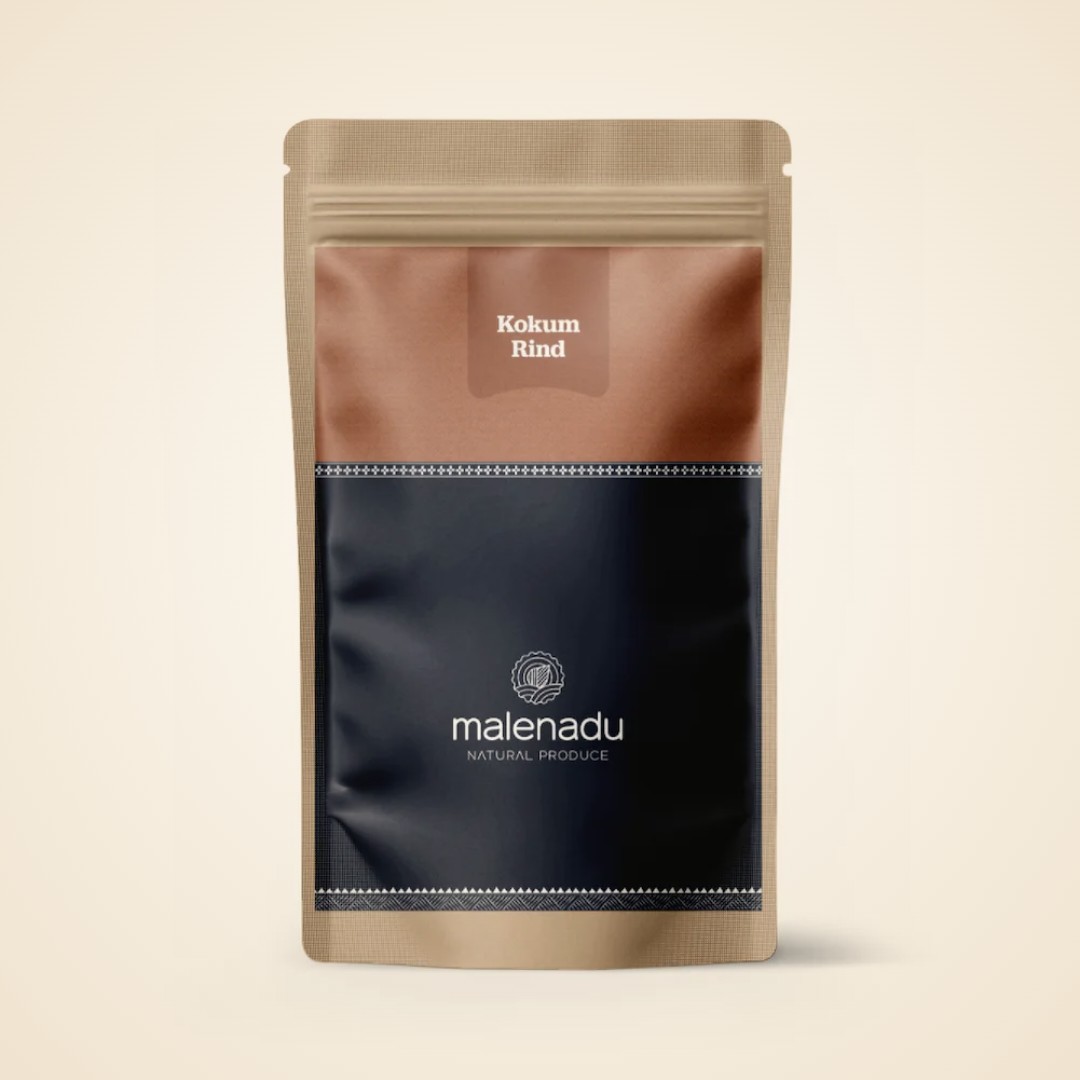
From the malenadu pantry
Our kokum rind is the murugalu that Malenadu farmer families dry every summer. Six to eight pieces are enough for a pot of kokum saaru for four people.
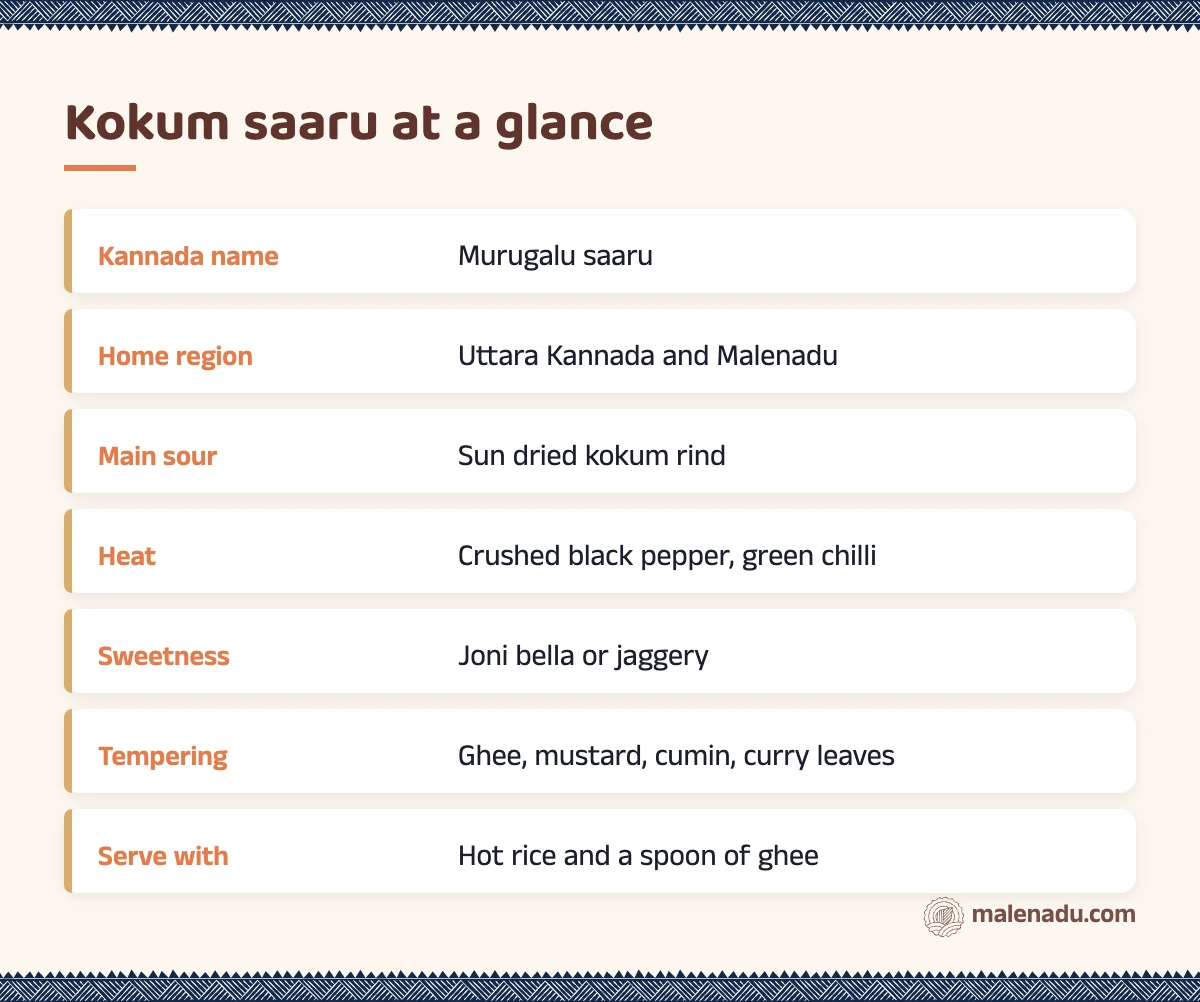
Ingredients for kokum saaru, explained
You need only a few ingredients and each one has a job. Here is what they are and why they matter.
- Kokum rind (murugalu): the souring agent. Darker, softer pieces give more colour and sourness.
- Toor dal: a small amount gives the saaru a little body. Leave it out for the quick version.
- Black pepper and cumin: crushed fresh, they are the main flavour. Malenadu pepper is sharp, so a teaspoon is enough.
- Green chilli or bird eye chilli: for a fresh heat on top of the pepper.
- Jaggery or joni bella: a spoon of sweetness to balance the sour.
- Turmeric: a pinch, cooked with the dal.
- Salt: add it last, after tasting, because some kokum is dried with salt.
- Ghee, mustard, cumin, dry red chilli, curry leaves and hing: the tempering that finishes the dish.
Fresh black pepper makes the biggest difference after the kokum itself. Crush it in a mortar just before cooking so the saaru smells of pepper the moment it hits the pot. A pinch of turmeric powder goes in with the dal for colour.
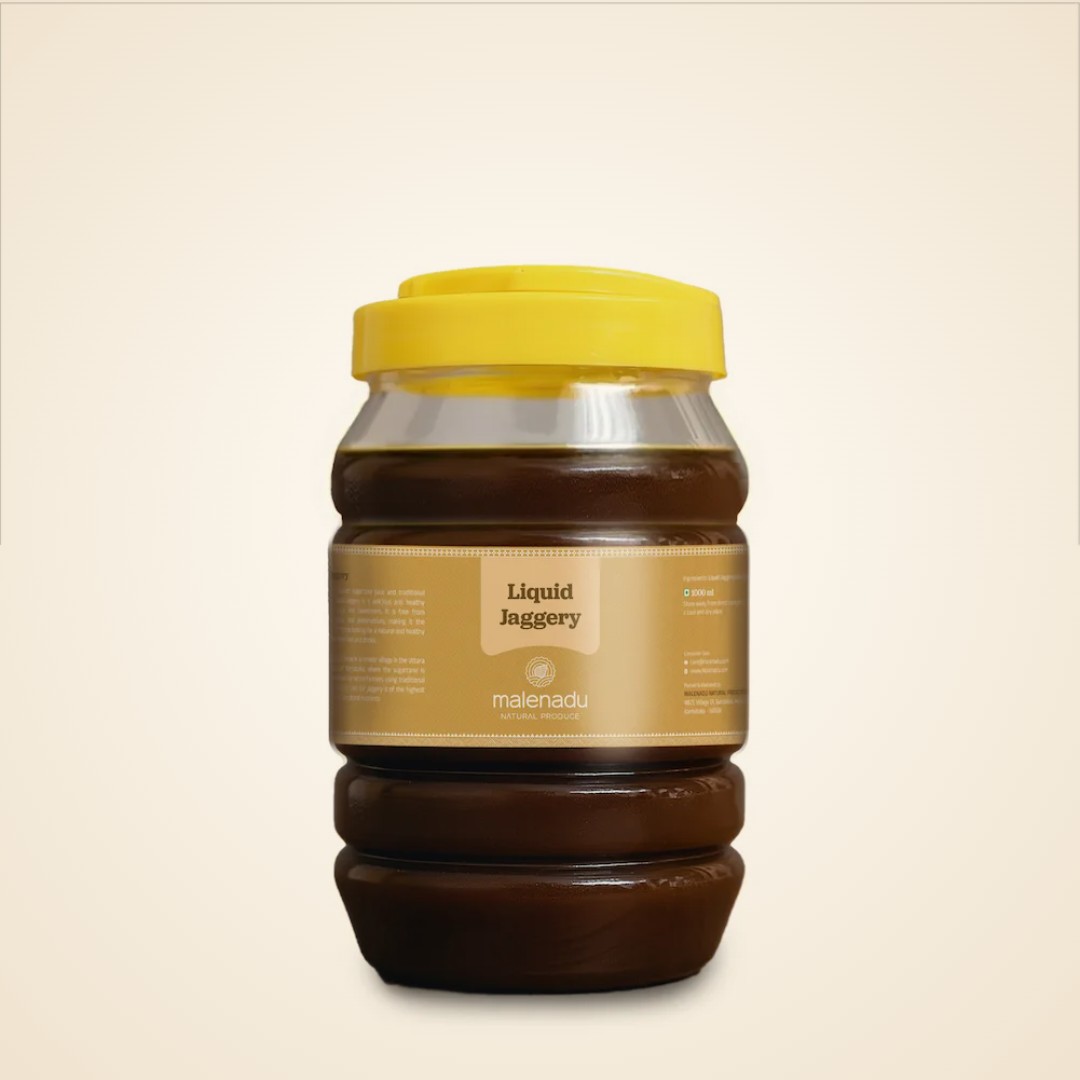
Liquid jaggery is the Malenadu way to sweeten saaru. It dissolves straight away, so you can add a little, taste and add more.
From the malenadu pantry
Our liquid jaggery, joni bella in Kannada, stirs straight into hot saaru without lumps. One tablespoon is usually right for a pot of saaru. It gives a softer sweetness than sugar.
Kokum saaru recipe: how to make it at home
Making kokum saaru takes about 35 minutes, most of it waiting for the kokum to soak and the dal to cook. This kokum saaru recipe serves four with rice. Step photos are not available, so each step tells you what to look for.
Recipe card
Kokum Saaru
A thin, sour and peppery Malenadu rasam made with sun dried kokum rind, a little toor dal and jaggery, tempered in ghee.
Ingredients
- 6 to 8 pieces kokum rind (murugalu), about 10 g
- 1 cup warm water, for soaking the kokum
- 1/4 cup toor dal
- 1/4 teaspoon turmeric powder
- 4 cups water (1 cup for the dal, 3 cups for the saaru)
- 1 teaspoon black pepper, coarsely crushed
- 1/2 teaspoon cumin seeds, coarsely crushed
- 1 green chilli, slit (or 1 bird eye chilli, crushed)
- 1 tablespoon liquid jaggery (or 1 tablespoon grated jaggery)
- 3/4 to 1 teaspoon salt, to taste
- 2 tablespoons chopped coriander leaves
- 2 teaspoons desi cow ghee, for tempering
- 1/2 teaspoon mustard seeds
- 1/2 teaspoon cumin seeds
- 1 dry red chilli, broken in two
- 8 to 10 curry leaves
- a small pinch of hing (asafoetida)
Method
- Rinse the kokum pieces quickly under running water and soak them in 1 cup of warm water for 15 minutes. The water will turn a deep red.
- While the kokum soaks, pressure cook the toor dal with 1 cup of water and the turmeric for 3 to 4 whistles, until very soft. Mash it smooth with a spoon.
- Squeeze the soaked kokum pieces with your fingers to release more colour and sourness into the water. Strain the red water and keep it aside. You can drop a few pieces into the pot for looks.
- In a pot, bring 3 cups of water to a boil with the mashed dal, crushed pepper, crushed cumin and green chilli. Let it simmer for 5 minutes so the pepper flavours the water.
- Pour in the kokum water and the liquid jaggery. Heat until it just starts to bubble, then lower the heat and simmer for 2 to 3 minutes only. Do not boil it hard.
- Taste and balance. Add salt a little at a time, more jaggery if it is too sharp or a splash of water if it is too sour. It should be sour first, then peppery, then faintly sweet.
- For the tempering, heat the ghee in a small pan. Add mustard seeds and let them splutter, then add cumin, the dry red chilli, curry leaves and hing. Pour it over the saaru at once and cover the pot.
- Add the chopped coriander, rest the saaru for 5 minutes and serve hot with rice and a spoon of ghee.
When it is ready, kokum saaru should be thin like a clear soup, with a deep pinkish red colour and flecks of pepper. It should smell of ghee, cumin and pepper as you lift the lid. If it looks thick and muddy, it has too much dal.
Local tip
Soak the kokum first thing, before you even wash the rice. By the time the rice and dal are cooked, the kokum water is ready and the saaru takes 10 minutes.
Kokum saaru variations to try
Kokum saaru changes from house to house. These five variations are the most common and each starts from the same kokum water.
With coconut
Grind 1/4 cup of grated coconut with 1/2 teaspoon of pepper and 1/2 teaspoon of cumin into a fine paste. Add it with the dal in step 4 and simmer gently. This version is richer and a little milder. It is popular on the coast.
Sweeter, with more jaggery
Some families like a clearly sweet and sour saaru, especially for children. Double the jaggery and cut the pepper by half. Joni bella gives the best flavour here because it is not as sharp as block jaggery.
Havyaka style, close to a tambuli
In some Havyaka homes kokum is used in a cooler, tambuli-like dish that is never boiled. Grind fresh coconut with cumin and pepper, stir in strained kokum water, a little jaggery and salt, then pour a ghee and cumin tempering on top. It is mixed with rice at the start of the meal, like the menthya tambuli that is served the same way.
Quick murugalu saaru without dal
This murugalu saaru is the fastest version and is often what Havyaka homes make on a busy day. Boil 3 cups of water with crushed pepper, cumin, a green chilli and salt for 5 minutes. Add the kokum water and jaggery, simmer for 2 minutes and temper in ghee.
With bird eye chilli
Swap the green chilli for one or two crushed gandhari menasu, the tiny bird eye chillies of Malenadu backyards. They give a sharp, fresh heat that cuts through the sour. Our bird eye chilli is very hot, so start with one.
What to serve with kokum saaru
Kokum saaru is best with plain hot rice and a spoon of ghee. In a Malenadu meal it usually comes after the tambuli course and before huli and majjige (buttermilk), but on simple days saaru and rice make the whole meal.
- Rice and ghee: the classic. Mix a little saaru into the rice at a time.
- A dry palya: beans, cabbage or raw jackfruit palya with coconut.
- Happala: a fried rice or jackfruit papad for crunch.
- Pickle: a slice of appe midi or lime pickle on the side.
- As a drink: many people sip a cup of hot kokum saaru on its own.
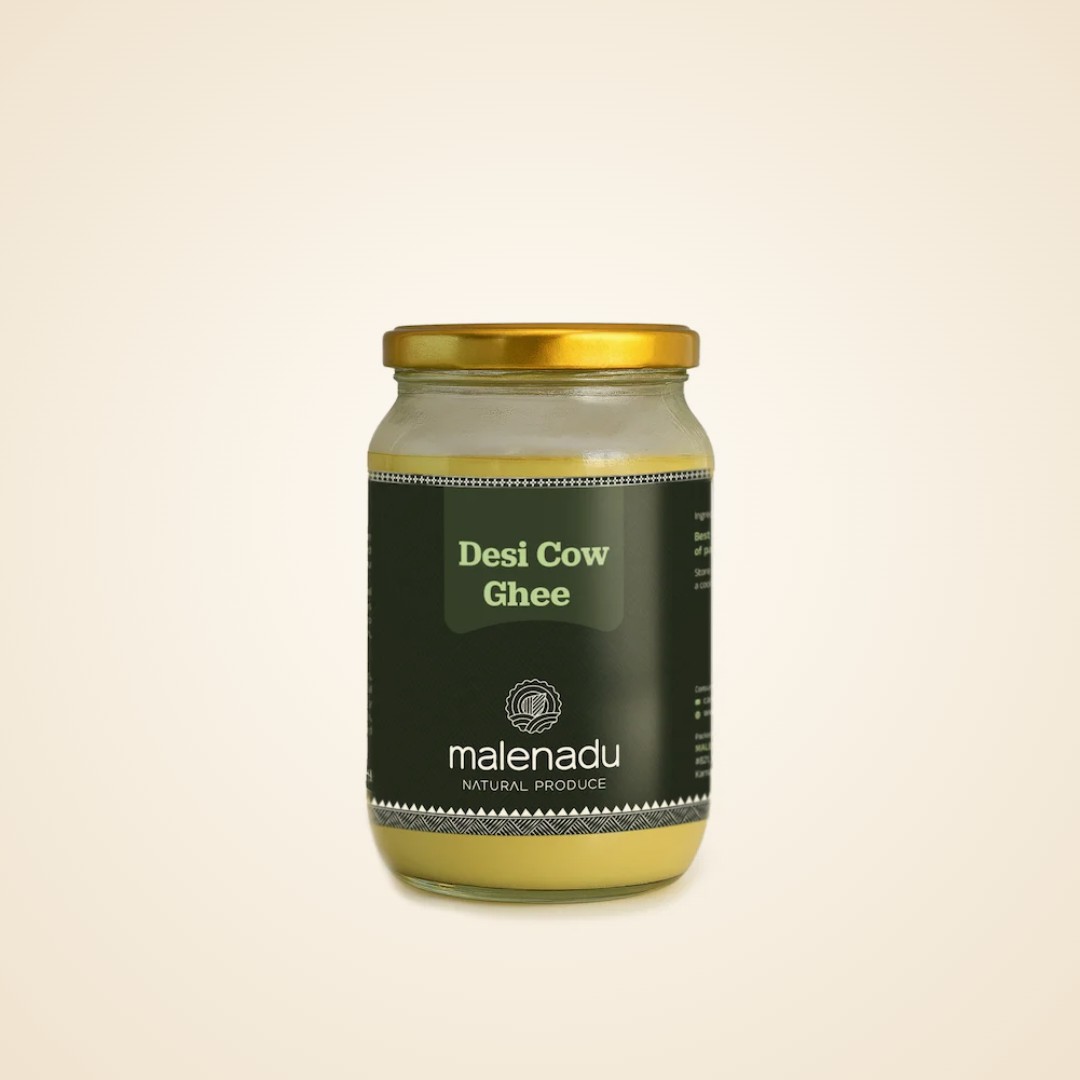
Ghee matters here. Our desi cow ghee goes into both the tempering and the rice, so its flavour runs through the whole plate.
From the malenadu pantry
Our desi cow ghee is hand churned by farmer families from the milk of desi breeds such as Malenadu Gidda. A spoon in the tempering makes kokum saaru smell like it does in Malenadu homes.
When is kokum saaru made in Malenadu homes?
In Malenadu homes kokum saaru is made all year, but most often in the hot months and after a heavy meal. On summer afternoons a light, sour saaru with rice feels right when nobody wants a heavy curry. After a wedding feast or festival lunch, many families cook a simple kokum saaru and rice the next day.
Kokum is also made into a sweet, cool drink in summer. Guests in Uttara Kannada are often offered a glass of kokum juice. These are habits of the region, passed down in families, rather than claims about health. The taste is simply refreshing when it is hot.
How should you store kokum at home?
Store kokum rind in a clean, dry glass or steel jar with a tight lid, in a cool place away from sunlight. Kept like this, it stays good for many months. Always use a dry spoon or dry hands, because moisture is what spoils dried kokum.
The rind may darken and turn a little sticky over time. That is normal for sun dried kokum and does not change how it cooks. If you see mould or it smells musty, throw it away.
Kokum vs tamarind: what is the difference?
Kokum and tamarind are both sour, but they come from different trees and taste quite different in saaru. Kokum is lighter and fruitier, while tamarind is heavier and slightly sweet.
| Kokum | Tamarind | |
|---|---|---|
| Plant | Garcinia indica | Tamarindus indica |
| Part used | Dried rind of the fruit | Pulp around the seeds |
| Colour in the pot | Deep red to purple | Brown |
| Taste | Clean, fruity sour | Sweet and sour, heavier |
| How to use | Soak and squeeze the rind | Soak and extract the pulp |
| Where it grows | Western Ghats and the coast | Across most of India |
| Best for | Thin saaru, drinks, fish curry | Sambar, rasam, gojju, puliyogare |
You can swap one for the other, but use less tamarind. For kokum saaru, one small lime-sized ball of tamarind replaces six to eight pieces of kokum, but the saaru will be browner and heavier. For a sour with a Malenadu character that is not kokum, try a teaspoon of monkey jack powder (vate huli) instead.
Common mistakes when making kokum saaru
Most problems with kokum saaru come from boiling it too long or getting the balance wrong. Here is what to watch for.
- Boiling the kokum hard. Long, hard boiling dulls the red colour and flattens the fresh sour taste. Add kokum water near the end and simmer briefly.
- Adding kokum to raw dal. Sour ingredients slow down the cooking of dal. Cook the dal fully first.
- Using too many pieces. Kokum is strong. Start with six pieces and add more soaking water only if needed.
- Skipping the jaggery. Without a little sweet, the saaru tastes sharp and thin.
- Salting too early. Some kokum is dried with salt, so taste before you add any.
- Burning the tempering. Take the pan off the heat as soon as the curry leaves crackle.
- Too much dal. Saaru should be thin. If it is thick, add hot water.
What to cook next
Once you have made kokum saaru, add a tambuli, a palya and rice for a full Malenadu lunch. Our Malenadu food guide shows the rest of the meal and the seasons, while our list of spice and ingredient names in Kannada helps with words like murugalu and joni bella. You can find pepper, chilli and turmeric in our spices section.
Bring Malenadu home
Grown and made by Malenadu farmer families, packed by malenadu, a farmer owned producer company in Honnavar.
-
17% OFF
Kokum Rind
Original price was: ₹240.₹200Current price is: ₹200. -
14% OFF
Liquid Jaggery
Original price was: ₹349.₹299Current price is: ₹299. -
8% OFF
Black Pepper
Price range: ₹165 through ₹299 -
Bird Eye Chilli
₹200 -
40% OFF
Desi Cow Ghee
Original price was: ₹1,500.₹899Current price is: ₹899. -
13% OFF
Turmeric Powder
Price range: ₹70 through ₹120
Frequently asked questions about kokum saaru
What is kokum called in Kannada?
Kokum is called murugalu in Kannada, so kokum saaru is also called murugalu saaru. On the Udupi coast the dried rind is also called punarpuli.
Is kokum saaru the same as kokum rasam?
Yes, they are very close. Kokum saaru is the Kannada and Malenadu name and usually has more pepper and a little jaggery.
Can I make kokum saaru without dal?
Yes. Boil water with crushed pepper, cumin, chilli and salt, add kokum water and jaggery, simmer briefly and temper in ghee.
How many kokum pieces should I use?
Six to eight pieces, about 10 g, are enough for kokum saaru for four people. Start with fewer if your kokum is very dark and sour.
Should I boil kokum?
Only briefly. Soak the rind in warm water and add the red water near the end, then simmer for 2 to 3 minutes so the colour and taste stay fresh.
Can I use tamarind instead of kokum?
Yes, but use less, about a small lime-sized ball for a pot. The saaru will be browner and heavier.
How long does kokum saaru keep?
It is best eaten the same day. Kept covered in the fridge, it is fine the next day if you reheat it gently without boiling hard.
Explore more of Malenadu
Malenadu FoodMalenadu FoodRice, kokum, pepper and joni bella from the hills
Malenadu FoodHalasina KadubuSweet jackfruit dumplings steamed in leaves
Malenadu FoodSpices Names in KannadaEnglish, Kannada and Hindi names for a Malenadu kitchen
Malenadu FoodKara KadubuSpicy steamed rice dumplings from Malenadu kitchens
Malenadu FoodMenthya TambuliA cool fenugreek and curd side for the first rice course
Malenadu CultureMalenadu CulturePeople, arts and old ways of Karnataka’s rain hills
Malenadu FarmingMalenadu CropsWhat grows in Karnataka’s rain hills and why it grows
Start hereMalenadu in KarnatakaWhere Malenadu is, what the name means